Humility might be the most misunderstood virtue in the Bible. Children often think humility means thinking you are bad at things, putting yourself down, or letting people walk over you. None of that is biblical humility.
C.S. Lewis described it best: "Humility is not thinking less of yourself; it is thinking of yourself less." Biblical humility means recognizing that everything we have comes from God, treating others as important, and being willing to serve instead of demanding to be served. It is not weakness. It is the kind of strength that comes from knowing exactly who you are and who God is.
Here are nine Bible stories that show children what humility looks like in real life, from the most powerful person in the universe washing dirty feet to a young woman saying yes to an impossible mission.
1. Jesus Washes the Disciples' Feet (John 13:1-17)
The story: On the night before His crucifixion, Jesus did something that shocked His disciples. He took off His outer garment, wrapped a towel around His waist, and began washing their feet, the dirtiest part of the body, a task reserved for the lowest servants. Peter protested: "You shall never wash my feet." Jesus replied, "Unless I wash you, you have no part with me" (John 13:8). After washing all twelve pairs of feet, Jesus said, "I have set you an example that you should do as I have done for you" (John 13:15).
The humility lesson: Jesus was God in human form. He created the universe. He had more authority than any king or emperor who ever lived. And He knelt on the floor and washed feet. This is the ultimate picture of humility: using your power and position to serve others, not to be served. If Jesus could wash feet, no act of service is beneath any of us.
Talk about it: "Jesus was the most powerful person in the room, but He chose to do the lowest job. What would it look like for you to 'wash feet' this week? Is there a job you think is beneath you that you could choose to do?"
2. Moses: The Most Humble Man on Earth (Numbers 12:3)
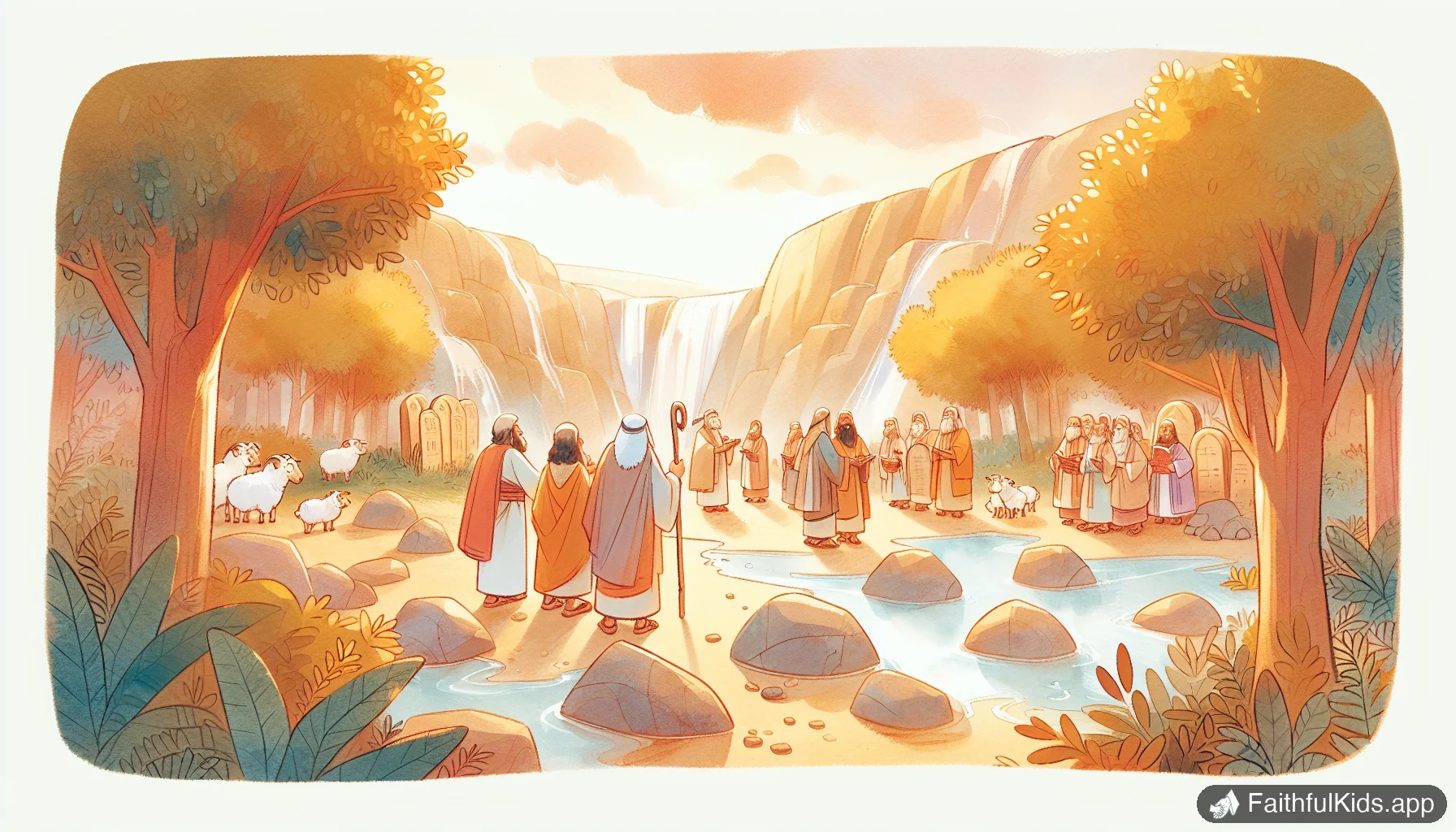
The story: The Bible makes a remarkable claim about Moses: "Now Moses was a very humble man, more humble than anyone else on the face of the earth" (Numbers 12:3). This was the man who confronted Pharaoh, parted the Red Sea, received the Ten Commandments, and led an entire nation. Yet he was the most humble person alive.
How did Moses show humility? When God first called him from the burning bush, Moses said, "Who am I that I should go to Pharaoh?" (Exodus 3:11). When the people complained, Moses interceded for them instead of defending himself. When his father-in-law Jethro suggested he delegate leadership, Moses listened immediately instead of insisting he knew best (Exodus 18:24). And when God told him he would not enter the Promised Land, Moses did not argue. He prepared Joshua to succeed him.
The humility lesson: Moses was powerful but never power-hungry. He took correction. He shared leadership. He advocated for others even when they were ungrateful. Humility does not mean lacking confidence. Moses confronted the most powerful ruler on earth. It means not making everything about yourself.
Talk about it: "Moses was called the most humble person on earth, but he was also one of the bravest. How can someone be both humble and brave? Are humble people weak?"
3. Mary Accepts God's Plan (Luke 1:26-38)
The story: The angel Gabriel appeared to a young woman named Mary, probably a teenager, in the small town of Nazareth. He told her she would become pregnant by the Holy Spirit and give birth to the Son of God. This would mean scandal (unmarried pregnancy), danger (Joseph could have rejected her), and upheaval of her entire life. Mary's response: "I am the Lord's servant. May your word to me be fulfilled" (Luke 1:38).
The humility lesson: Mary could have said no. She could have asked for a different assignment. She could have argued that she was too young, too poor, too unknown. Instead, she surrendered. "I am the Lord's servant." This is humility at its purest: putting God's plan above your own comfort, reputation, and preferences. Mary did not understand everything that was happening, but she trusted the One who did.
Talk about it: "Mary said yes to something really scary because she trusted God. Has God ever asked you to do something that felt uncomfortable or hard? What did you do?"
4. John the Baptist: He Must Increase (John 3:22-30)
The story: John the Baptist was the most popular preacher in Israel. Crowds traveled to the wilderness to hear him. He had disciples, influence, and a following. Then Jesus came, and John's disciples noticed that people were leaving John to follow Jesus. They were concerned. But John's response is one of the most beautiful statements of humility in Scripture: "He must become greater; I must become less" (John 3:30).
The humility lesson: John had every reason to be jealous. He was famous first. He was successful in his own right. But John understood his role: he was the warm-up act, not the main event. His purpose was to point to Jesus, and when Jesus arrived, John stepped aside gladly. Humility means celebrating when someone else gets the spotlight, especially when God is the one directing the show.
Talk about it: "John was famous and popular, but when Jesus came, John was happy to step back. Have you ever had to let someone else get the attention or the credit? How did it feel?"
5. David Dances Before the Ark (2 Samuel 6:14-22)
The story: When the Ark of the Covenant was being brought to Jerusalem, King David was so overjoyed that he danced in the streets "with all his might," wearing nothing but a simple linen garment, not his royal robes. His wife Michal watched from a window and despised him: "How the king of Israel has distinguished himself today, going around half-naked in full view of the slave girls" (2 Samuel 6:20). David replied, "I will celebrate before the Lord. I will become even more undignified than this" (2 Samuel 6:21-22).
The humility lesson: David was the king. Kings do not dance in the streets in their underwear. It was undignified. People mocked him. But David did not care about his image because he cared more about worshipping God. Humility means being willing to look foolish for the right reasons. It means caring more about God's opinion than people's opinion.
Talk about it: "David danced even though the queen made fun of him. He cared more about worshipping God than looking cool. Is there something you avoid doing because you are worried about what people will think? What would it look like to stop worrying about that?"
6. The Tax Collector's Prayer (Luke 18:9-14)
The story: Jesus told a parable about two men praying at the temple. A Pharisee stood and prayed, "God, I thank you that I am not like other people, robbers, evildoers, adulterers, or even like this tax collector. I fast twice a week and give a tenth of all I get" (Luke 18:11-12). A tax collector stood at a distance, would not even look up to heaven, and beat his chest, saying, "God, have mercy on me, a sinner" (Luke 18:13). Jesus said the tax collector, not the Pharisee, went home justified before God.
The humility lesson: The Pharisee's prayer was really about himself: look how good I am. The tax collector's prayer was about God: I need your mercy. Humility before God means recognizing that we are not impressive enough to save ourselves. We need grace. The Pharisee was blind to his need. The tax collector saw his need clearly, and that made all the difference.
Talk about it: "The Pharisee thought he was better than everyone else. The tax collector knew he needed God's help. Which person do you think you are more like sometimes? Why do you think God preferred the tax collector's prayer?"
7. Gideon: The Least of the Least (Judges 6:11-16)
The story: When the angel of the Lord appeared to Gideon and called him "mighty warrior," Gideon's response was pure humility: "But Lord, how can I save Israel? My clan is the weakest in Manasseh, and I am the least in my family" (Judges 6:15). Gideon did not see himself as a warrior. He was hiding from the enemy, secretly threshing wheat in a winepress. But God saw something different.
The humility lesson: Gideon was genuinely humble about his abilities, and God used him anyway. In fact, God specifically chose someone from the weakest clan and then reduced his army from 32,000 to 300 to make it undeniably clear that the victory came from God, not from human strength. Humility positions us for God to work through us because it removes the temptation to take credit.
Talk about it: "Gideon thought he was the least important person in his family. But God called him a mighty warrior. Have you ever felt like you were not enough? What does Gideon's story tell you about how God sees you?"
8. Jesus as a Baby: God Becomes Small (Philippians 2:5-8, Luke 2:7)
The story: The creator of the universe, the one who spoke galaxies into existence, chose to enter the world as a helpless baby. Not in a palace. In a stable. Not to a powerful family. To a poor carpenter and a teenage girl. "He made himself nothing by taking the very nature of a servant, being made in human likeness. And being found in appearance as a man, he humbled himself by becoming obedient to death, even death on a cross!" (Philippians 2:7-8).
The humility lesson: The incarnation is the greatest act of humility in history. God had every right to come in glory, power, and majesty. Instead, He came as a baby who needed to be fed, changed, and held. He chose vulnerability over power. He chose service over sovereignty. If God Himself was willing to become small, then no one is too important to be humble.
Talk about it: "God could have come to earth as a powerful king in a golden chariot. Instead, He came as a tiny baby in a barn. Why do you think He chose to come that way? What does it tell us about what God thinks is important?"
9. Naaman's Servant Girl: Humble Advice That Changed Everything (2 Kings 5:1-4)
The story: Naaman was a mighty commander of the Syrian army, but he had leprosy. In his household was a young Israelite girl, captured in a raid, who served Naaman's wife. Despite being a slave in the home of her people's enemy, this girl said, "If only my master would see the prophet who is in Samaria! He would cure him of his leprosy" (2 Kings 5:3). Her humble advice set in motion the entire chain of events that led to Naaman's healing and conversion.
The humility lesson: This unnamed servant girl had every reason to be bitter. She was taken from her family and forced to serve an enemy. But she still cared enough to help. She offered humble advice that she could not enforce. She did not demand credit. She just quietly pointed the way. Her humility and kindness, given from a position of powerlessness, changed the life of one of the most powerful men in Syria.
Talk about it: "This girl was a servant with no power, but her quiet words changed everything. Have you ever thought your voice was too small to matter? What does this story teach us about the power of humble people?"
Teaching Humility Without Crushing Confidence
Parents sometimes worry that teaching humility will make their child a doormat. Here is the distinction: biblical humility is not low self-esteem. It is accurate self-assessment in light of who God is.
- Celebrate their strengths as gifts from God. "You are really good at math. That is a gift God gave you. How could you use it to help someone else?"
- Model humility yourself. Apologize to your kids when you are wrong. Say "I do not know" when you do not know. Ask for help in front of them.
- Praise effort and character, not just achievement. "I am proud of how hard you worked" matters more than "You are the best."
- Teach them to celebrate others. When a friend succeeds, practice being genuinely happy for them. "That is awesome that Sophia won the science fair!"
- Read stories of humble heroes. The Bible is full of them. David, Mary, Moses, John the Baptist, Jesus Himself. These are not weak people. They are the strongest people in Scripture. Jesus even built humility into His most famous sermon -- see the Beatitudes explained for kids.