Ages 5+·11 min read··By Faithful Kids Team·Updated August 16, 2026
"I hate reading."
If your child has said those words, you are not alone — and you are not failing as a parent. According to Scholastic's Kids and Family Reading Report, more than one in four children ages 6-17 say they do not enjoy reading. Among boys, the number is even higher. For many kids, the issue is not intelligence or willfulness. It is a mismatch between how they learn best and how most content is delivered.
And here is the thing that matters for your family: a child who hates reading does not have to miss out on the Bible. Scripture existed as oral tradition — spoken, sung, performed, and memorized — for centuries before it was written down. The idea that the only way to engage with God's word is by sitting quietly with a book is historically inaccurate and developmentally limiting.
Your child can know the Bible deeply without being a bookworm. This article gives you the ten most engaging Bible stories for reluctant readers, explains why some kids resist reading, and offers alternative formats that deliver the same spiritual content in ways your child will actually absorb.
Why Some Kids Resist Reading
Understanding the "why" helps you avoid blame and find solutions:
Learning differences. Dyslexia, dysgraphia, and processing disorders make reading physically difficult and mentally exhausting. A child is not lazy because reading is hard for them. (If your child has ADHD, we also have a dedicated guide to Bible stories for kids with ADHD.)
Developmental timing. Some children, especially boys, develop reading fluency later than their peers. Being "behind" in second grade does not mean they will be behind forever, but it does mean they may develop negative associations with reading during a critical window.
Sensory preferences. Some children are visual learners, some are auditory learners, and some are kinesthetic learners. A child who struggles with text may thrive with video, audio, or hands-on activities.
Negative associations. If reading has always been homework, testing, and correction, it becomes associated with stress. The Bible — which should be associated with love, adventure, and hope — inherits that stress unfairly.
Competition with screens. Books cannot match the dopamine output of video games, YouTube, and social media. This is not a moral failure; it is a neurological reality that requires intentional strategy.
10 Bible Stories That Hook Reluctant Readers
These stories are selected for maximum engagement: high stakes, clear action, emotional resonance, and satisfying resolutions. Even kids who will not pick up a book will sit up and listen to these.
1. David and Goliath (1 Samuel 17)
A shepherd boy with a slingshot versus a nine-foot warrior in full armor. The whole army is terrified, but David runs straight at the giant. One stone, one shot, and Goliath falls face-first into the dirt. This is the ultimate underdog story, and every kid loves an underdog. Our kid-friendly David and Goliath retelling takes just a few minutes.
2. Jonah and the Whale (Jonah 1-3)
Man runs from God. God sends a storm. Man gets thrown overboard. Giant fish swallows him whole. Man lives inside the fish for three days, prays, and the fish vomits him up on shore. The gross factor alone makes this story unforgettable for kids.
3. Daniel in the Lions' Den (Daniel 6)
Daniel's enemies set a trap, and he gets thrown into a pit full of hungry lions. He spends the night there. But in the morning, he is alive — without a scratch. The lions' mouths were shut by an angel. The bad guys who set the trap end up in the den instead.
4. The Ten Plagues of Egypt (Exodus 7-12)
Water turning to blood. Frogs everywhere. Gnats, flies, boils, hail, locusts, darkness, and more. Each plague escalates, and Pharaoh stubbornly refuses to let the Israelites go. It is dramatic, it is intense, and the repetition of "Let my people go" creates a rhythm that kids remember.
5. The Fiery Furnace (Daniel 3)
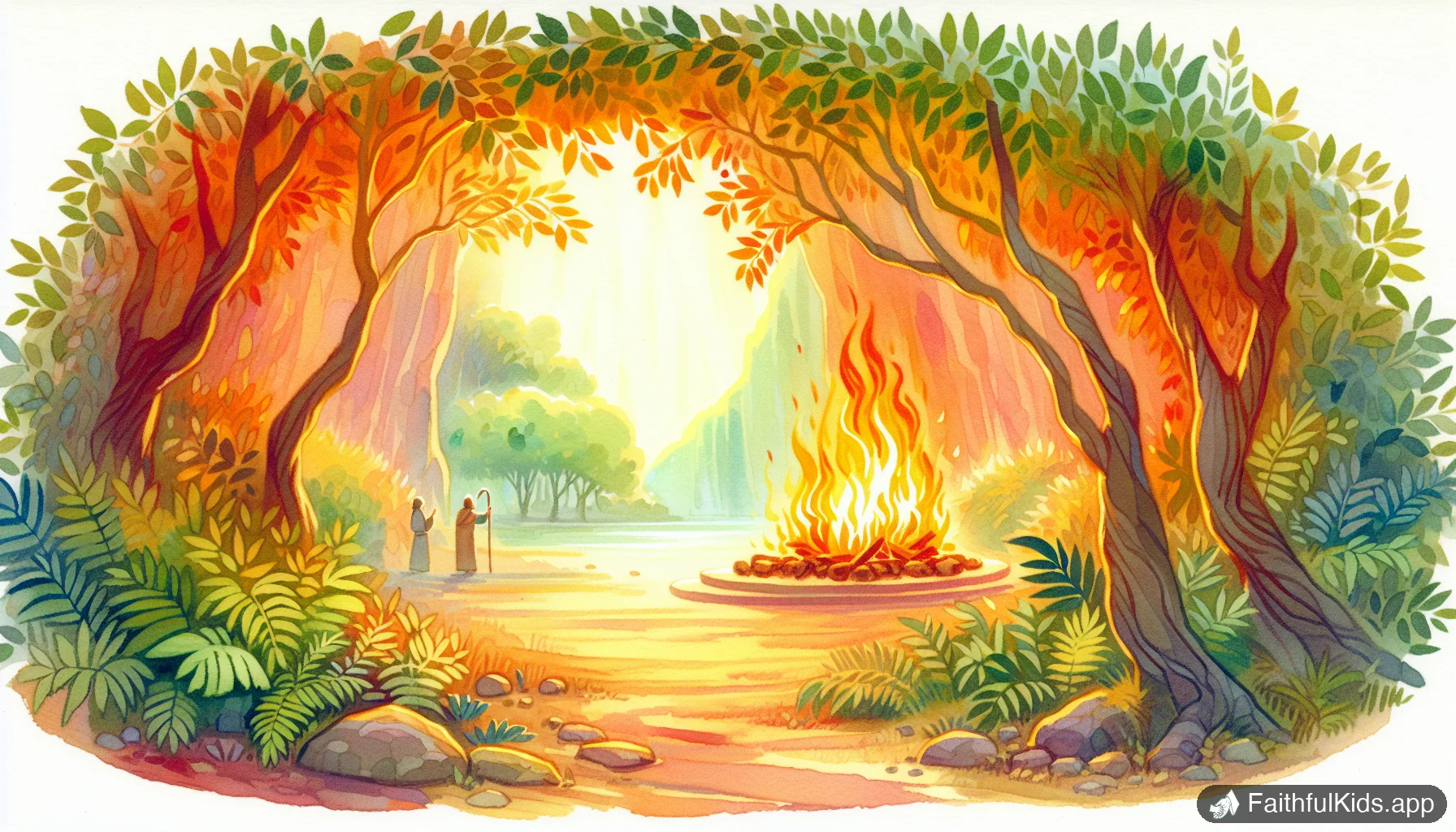
Three men refuse to bow to a golden statue and get thrown into a furnace heated seven times hotter than normal. The soldiers who throw them in die from the heat. But the three men walk around inside the fire, untouched, with a mysterious fourth figure beside them. They come out without even the smell of smoke on their clothes.
6. Samson (Judges 13-16)
The strongest man who ever lived, whose power comes from God through his long hair. He fights a lion with his bare hands. He defeats an entire army with the jawbone of a donkey. He is betrayed by Delilah, captured, blinded — and then, in his final act, pushes down the pillars of a temple. Samson's story is epic, tragic, and deeply human.
7. Peter Walks on Water (Matthew 14:22-33)
A storm is raging. Jesus walks across the lake. Peter gets out of the boat and walks on water too — until he looks at the waves and starts to sink. "Lord, save me!" he shouts, and Jesus grabs his hand. The visual of walking on water is so striking that it captures attention instantly.
8. The Great Flood (Genesis 6-9)
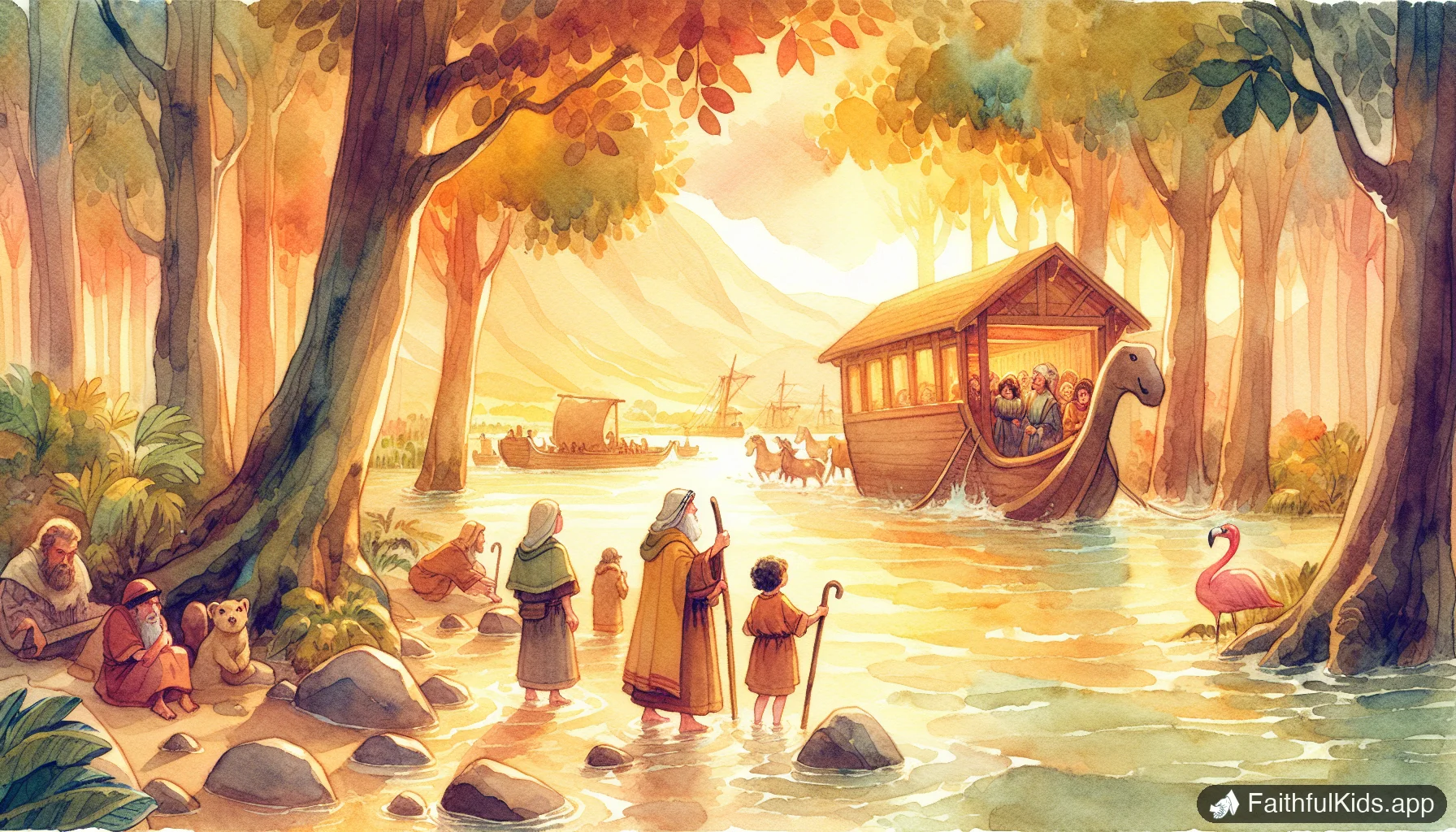
God tells one man to build a massive boat because the entire world is about to be flooded. Noah builds the ark, loads it with two of every animal, and survives the biggest storm in history. The rainbow at the end is God's promise. The scale of this story — world-ending flood, floating zoo, divine rescue — makes it inherently captivating.
9. The Escape from Egypt (Exodus 14)
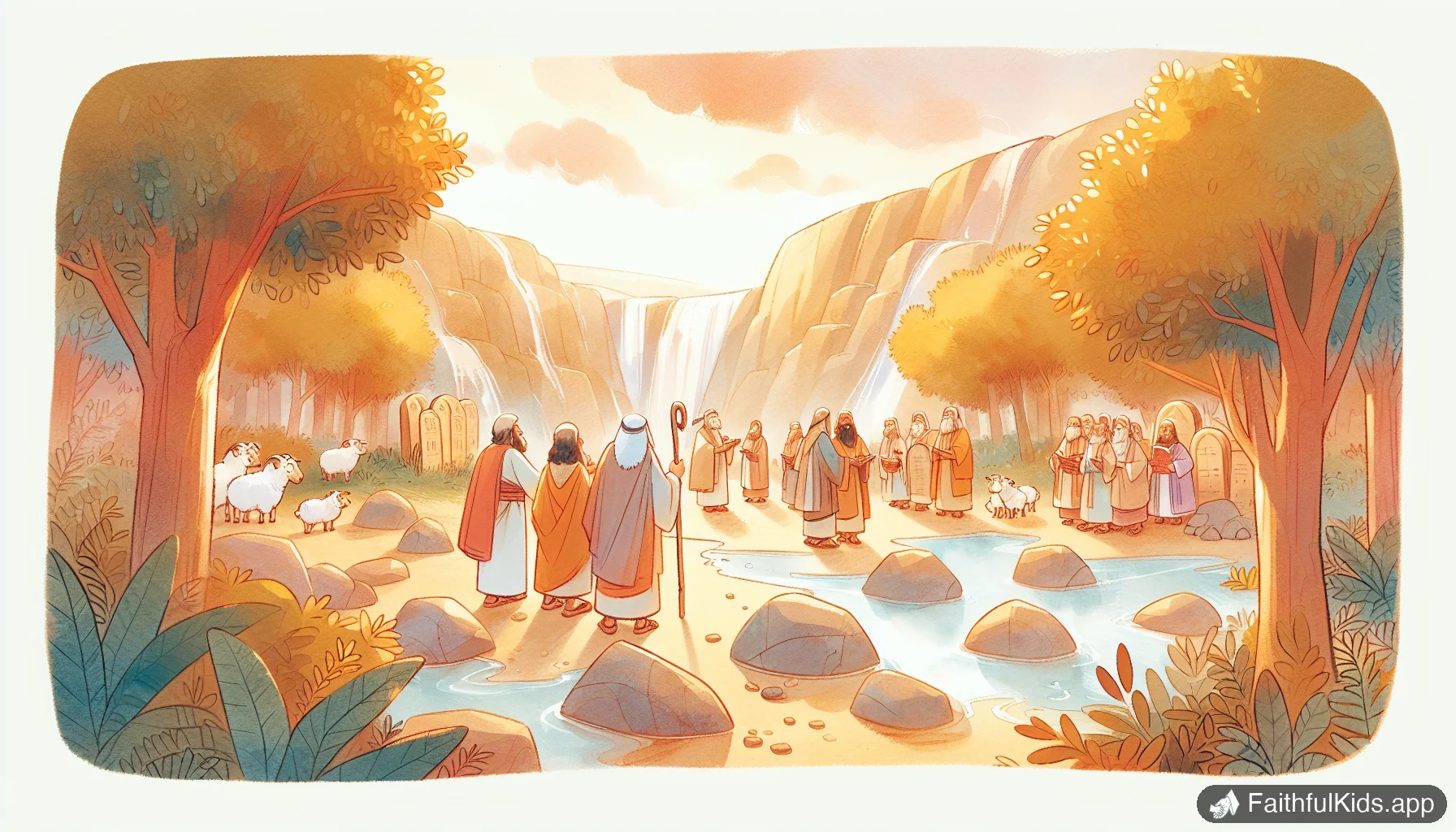
The Israelites are trapped between the Egyptian army and the Red Sea. There is nowhere to go. Then Moses stretches out his staff, and the sea splits in half. The people walk through on dry ground with walls of water on either side. When the Egyptians follow, the water crashes back down. This is one of the most visually dramatic moments in all of Scripture.
10. Jesus Calms the Storm (Mark 4:35-41)
The disciples are in a boat. A violent storm hits. Water is pouring in. They are terrified they are going to die. Jesus is asleep in the back. They wake Him up, and He simply says, "Quiet! Be still!" Everything stops. Dead calm. The disciples are stunned: "Who is this? Even the wind and waves obey him!"
Alternative Formats That Work
If your child will not pick up a Bible storybook, meet them where they are with these formats:
Video Bible Stories
Short video retellings are the single most effective alternative for reluctant readers. They combine visual storytelling, voice acting, music, and pacing that maintains attention. Look for videos that are:
Short (60-90 seconds to 5 minutes)
Visually engaging without being overly cartoonish
Faithful to the biblical text
Age-appropriate in content and tone
Video is not a lesser form of learning. Research from educational psychology shows that narrative video can produce equal or greater comprehension and retention compared to text, particularly for visual and auditory learners.
Audio Bible Stories
Christian audiobooks and Bible story podcasts let kids absorb Scripture while doing other things — riding in the car, getting ready for bed, or playing quietly. The audio format leverages the ancient oral tradition of storytelling and works especially well for auditory learners.
Interactive Apps
Bible apps with touch interaction, quizzes, and gamified elements turn passive consumption into active engagement. When a child taps, swipes, and answers questions about a story, they are processing it at a deeper level than passive reading alone.
Acted-Out Stories
Family Bible time does not have to involve a book at all. Tell the story out loud and assign roles. Let your child be David, Goliath, or the giant fish. Physical engagement creates muscle memory that reinforces the narrative.
Graphic Novels and Comic-Style Bibles
For kids who resist traditional text but enjoy visual storytelling, graphic novel Bibles present the stories with illustrations that carry the narrative. The combination of image and text reduces the reading load while maintaining the story.
Faithful Kids was designed specifically for kids who might not sit down and read a Bible storybook. Each episode is a short video — typically two to three minutes — that tells one complete Bible story with engaging narration and captioning. Kids can:
Watch a story in about the time it takes to brush their teeth
Follow along with captions if they are building reading skills
Take a quiz after each story to reinforce what they learned
Respond to reflection questions that connect the story to their life
Earn XP and level up, adding a gamified motivation layer
The result is that kids who "hate reading" end up knowing dozens of Bible stories deeply — not because they forced themselves through a book, but because the stories came to them in a format their brain naturally engaged with.
See what they get
Watch David and Goliath Come Alive
David and Goliath is one of 300+ short narrated video lessons your child will love. Watch the whole episode right here — in the app, every lesson ends with a fun quiz to check what they learned.
A real lesson from the app — watch the whole thing free.
What Parents Can Do
Stop associating faith with reading ability. Your child's relationship with God is not measured by how many chapters they read. It is measured by how well they know His character, His promises, and His love.
Use multiple formats together. Watch a video, then have a conversation. Listen to an audio story, then draw a picture of it. Or turn the story into one of these Bible games for kids. Each format reinforces the others.
Let them choose. Autonomy increases engagement. Give your child a menu of stories and formats and let them pick.
Celebrate what they know. When your child retells a Bible story from a video they watched, praise that. "You know that story so well!" Knowledge is knowledge, regardless of how it was acquired.
Be patient. Many reluctant readers become avid readers later in life. The reading skill may come. In the meantime, make sure the Bible stories are flowing in through every available channel.
Watch on Faithful Kids
Your child does not have to love reading to love the Bible. Start your free trial on Faithful Kids and give them 200+ Bible stories in short, engaging video format — complete with quizzes, reflections, and a level-up system that makes learning Scripture feel like a game, not a chore.
Every story mentioned here is retold in full in our 200 Bible stories for kids -- simple retellings of the whole Bible, free, Genesis to Revelation.
Frequently Asked Questions
Will watching Bible videos instead of reading make my child's reading worse?
No. In fact, research suggests that high-quality video content can actually support reading development by building vocabulary, narrative comprehension, and background knowledge. When videos include captions (as Faithful Kids videos do), they can even improve reading fluency. The key is not eliminating reading but supplementing it with other formats while the skill develops.
My child has dyslexia. How can they engage with the Bible?
Audio and video formats are excellent for children with dyslexia. Many dyslexic learners have strong auditory processing and visual-spatial skills that make them excellent candidates for video-based and story-based learning. Also consider large-print Bibles, audiobook Bibles, and apps with text-to-speech functionality.
At what point should I be concerned about my child's reading resistance?
If your child is consistently struggling with reading after second grade, has difficulty sounding out words, frequently loses their place, or avoids reading despite genuine effort, talk to their teacher and pediatrician about screening for learning differences like dyslexia. Early identification and intervention make a significant difference. Meanwhile, keep the Bible stories flowing through non-reading channels.
Is it okay to use Bible videos as a replacement for family Bible reading?
Videos are best used as a complement to — not a replacement for — shared family faith practices. But if the choice is between forced reading that creates resentment and a video that creates engagement, choose the video. You can always discuss what they watched, ask questions, and build on the content verbally. A family conversation about a video Bible story is far more valuable than silent, frustrated reading.
🌙 Free: The Bedtime Bible Kit
Seven nights of five-minute stories — a story, a prayer, and one question to whisper about.
Free printable + a few helpful emails. Unsubscribe anytime.