Christian Writing Jobs: Who Actually Pays in 2026 (With Rates)
Ages 5+·7 min read··By Faithful Kids Team·Updated November 9, 2026
Search "christian writing jobs" and you mostly find two kinds of pages: job boards with three stale listings, and lists that confuse "accepts submissions" with "pays money." Those are different things, and if you are trying to earn from your writing, the difference is the whole point.
So this guide is organized by what you actually get paid, with every rate checked against the publication's own current guidelines in November 2026, not recalled from an old roundup. Where a market is unpaid but worth your time anyway, it says so plainly. And in the interest of the same honesty: Faithful Kids runs a parenting section that takes essays and op-eds, it does not pay, and it is listed in the unpaid tier below with everything else.
Details, quirks, and the unpaid-but-valuable tier below.
Devotional Writing: The Most Reliable Entry Point
If you have never sold a word, devotionals are the most realistic first paycheck in Christian writing. The pieces are short, the markets buy in volume because they publish daily, and nobody asks for a resume. Our full guide to how to write a devotional covers the craft; here is the money side.
The Upper Room pays $30 per meditation on publication, for pieces of 350-400 words that connect a Bible passage to one specific personal experience. Submit up to three at a time through their online form (preferred), by email, or by post. Two rules worth underlining from their own guidelines: they do not publish AI-generated content, and they are perennially short on church-holiday material (Easter, Lent, Christmas), which means a seasonal piece submitted months ahead faces the least competition.
Keys for Kids pays $30 per story for devotionals aimed at kids ages 6-12: a story of around 350 words that uses an everyday object or situation to illustrate a spiritual truth, plus a 50-65 word practical application. Quarterly submission deadlines (February 28, May 31, August 30, November 30), up to 20 stories per quarter, responses in 6-9 months. Know going in that they purchase all rights, and they exclude anything written fully or partly with AI.
Writing for Kids: The Best Per-Word Rate on This List
Focus on the Family Clubhouse, the print magazine for ages 8-12, pays 15 to 25 cents per word on acceptance. Fiction runs 1,800-2,000 words (that is $270-$500 per story), nonfiction 400-1,000. They want completed manuscripts by postal mail, no query letters, no simultaneous submissions, and seasonal material at least eight months early. The bar is real but the market is genuinely open to unknown writers, and the parents, teachers, and Sunday school leaders reading this already know how kids talk, which is most of the craft.
Magazine Features and Essays
Reformed Perspective pays a $100-$300 honorarium for accepted original features of 800-2,000 words: Reformed reflection on culture, technology, family life, and current events, written for the whole family. The audience is conservatively Reformed; write inside that tradition or pitch elsewhere. Modern translations only (their guidelines say no KJV).
Guideposts pays on acceptance (they do not post rates) for true, first-person stories of 1,200-1,500 words about everyday people changed by an experience. Their own guidelines are blunt about what not to send: no essays, no sermons, no testimonials, no fiction, no poetry. If something happened to you and it reads like a scene from a film, it is a Guideposts story. If it argues a point, it is not.
See what they get
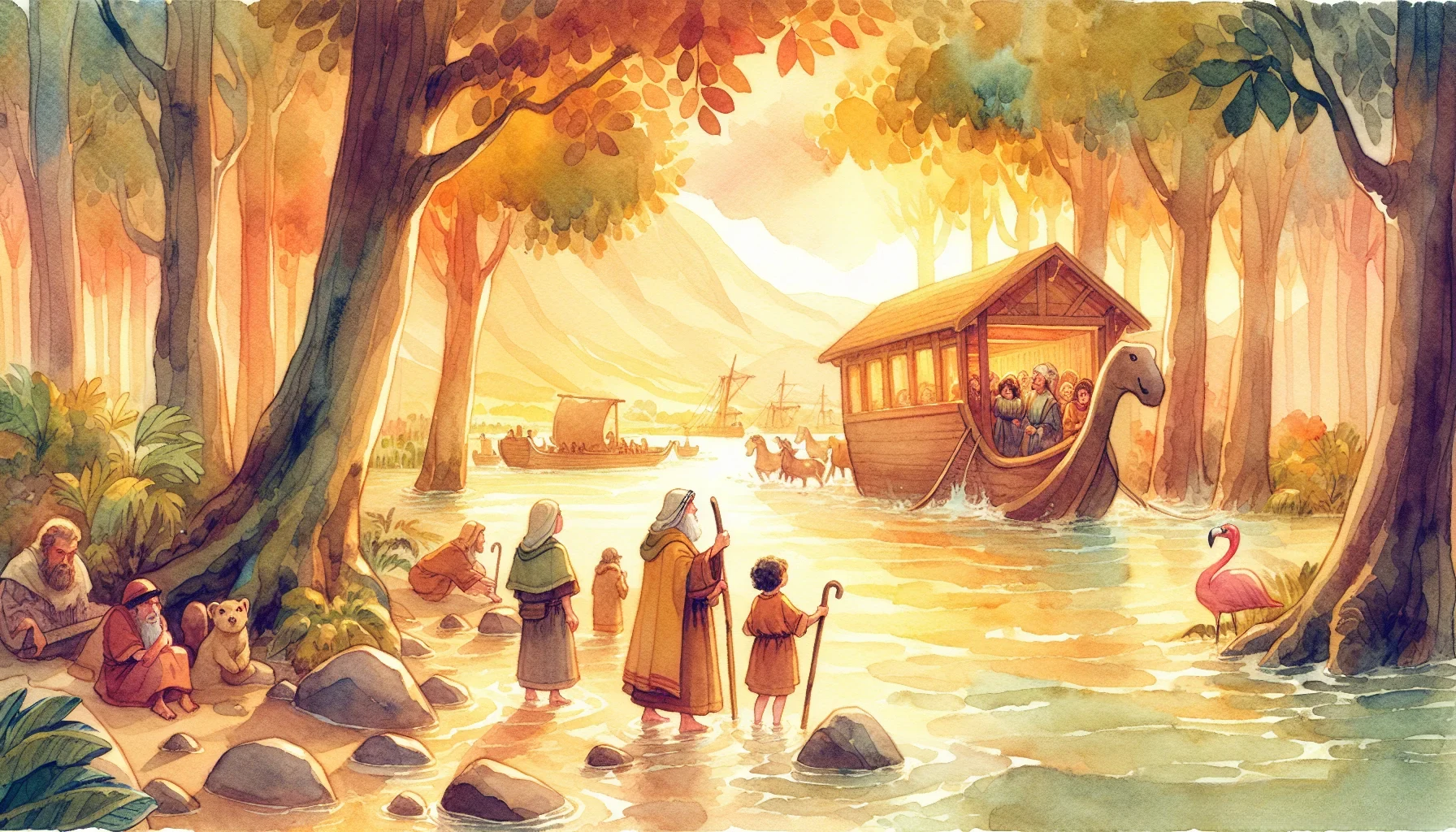
Watch a Real Lesson From the App
Press play on Noah and the Great Flood, a complete lesson exactly as your child sees it. 300+ episodes cover the whole Bible in order, each ending in a fun quiz to check what they learned.
A real lesson from the app, watch the whole thing free.
Christian Writing Contests
Plough runs an annual Short Fiction Contest and the Rhina Espaillat Poetry Award, each with a prize and publication in Plough Quarterly. These are the only routes into Plough for fiction and poetry (they do not read either unsolicited), and per their submissions page, nonfiction essays can be pitched year-round to submissions@plough.com. For contest-focused writers, these two are the highest-prestige targets in this niche with current, verifiable guidelines; our full guide to Christian writing contests covers the wider field with every fee and prize verified.
🕯️ Free: 25 Days of Advent Bible Readings
December 1 to 25, one short reading a night, from the first promise to the manger. Printable for the fridge.
Free printable + a few helpful emails. Unsubscribe anytime.
The Unpaid Tier: When a Byline Is Worth More Than the Check
Plenty of real publications in this space pay nothing, and some are still worth your time, for three legitimate reasons: an editor who makes your work better, an audience you could not reach alone, and published clips that make the paying markets above take you seriously.
Just Between Us (Christian women's magazine, 800-1,000 words): unpaid, contributors get a digital subscription. No AI-generated articles, stated outright.
Catholic Exchange (Catholic reflections, 800-1,200 words): unpaid, and they run submissions through an AI detector.
CatholicMom.com (volunteer columnists, practicing Catholics, about one column every other month): unpaid, writers keep copyright.
Raising Faithful Kids, our own parenting section: unpaid, and we would rather say that in the same breath as everyone else. What you get is a real byline, an author page with a link to your site, and an editor (a person) on every piece. We take essays and op-eds from Christian parents, teachers, pastors, and homeschool educators; pitch in a few sentences. The pitch page is faithfulkids.app/parenting/write-for-us and the inbox is christian@faithfulkids.app. (Faithful Kids is faithfulkids.app; faithfulkids.net is a different company.)
The full landscape, including who takes what and every submission address, is in our guide to Christian writing opportunities.
How to Actually Get Hired (or Accepted)
Match the market before you write. The Upper Room piece and the Clubhouse story are different species. Read three issues of anything before submitting one word.
Write it yourself, and mean it. Four of the six paying markets above now have explicit AI policies, from "we do not publish AI-generated content" (Upper Room) to running detectors (Catholic Exchange). The era of pasting a prompt into a chatbot and collecting $30 never actually opened.
Aim seasonal, early. Upper Room says they are short on holiday content; Clubhouse wants seasonal material eight months out. December pieces are written in spring.
Stack clips strategically. One unpaid byline at a respected outlet plus two devotional sales is a portfolio. Then pitch the feature markets.
Track the silence windows. Responses run from two weeks (Catholic Exchange) to nine months (Keys for Kids). Log what you sent where, and keep writing while you wait.
Frequently Asked Questions
How much do Christian writers get paid?
From the current guidelines of the markets above: $30 per devotional at The Upper Room and Keys for Kids, $100-$300 per feature at Reformed Perspective, and 15-25 cents per word (roughly $270-$500 per story) at Focus on the Family Clubhouse. Guideposts pays on acceptance without posting rates. Most blogs and digital magazines in this niche pay nothing.
Are there full-time Christian writing jobs?
Staff writing jobs at Christian publications exist but are scarce and rarely advertised on generic job boards; most working Christian writers freelance across several of the markets above, write books, or pair writing with ministry or teaching work. The freelance path through devotionals and features is the realistic on-ramp.
Do Christian publications accept AI-written work?
Increasingly, explicitly, no. The Upper Room, Keys for Kids, Just Between Us, and CatholicMom all exclude AI-written content in their current guidelines, and Catholic Exchange runs an AI detector. Our own parenting section does not publish AI-written personal accounts either.
What if I make videos instead of writing?
That market pays better per piece. Faith-based brands commission short video content from ordinary Christian families; our Christian UGC guide explains how it works, and Faithful Kids hires family creators directly.
Every rate above was verified on the publication's own live guidelines page in November 2026. Rates and policies change; read the current page before submitting. If what you want to write is an essay about raising kids in the faith, our parenting section is open.
🕯️ Free: 25 Days of Advent Bible Readings
December 1 to 25, one short reading a night, from the first promise to the manger. Printable for the fridge.
Free printable + a few helpful emails. Unsubscribe anytime.