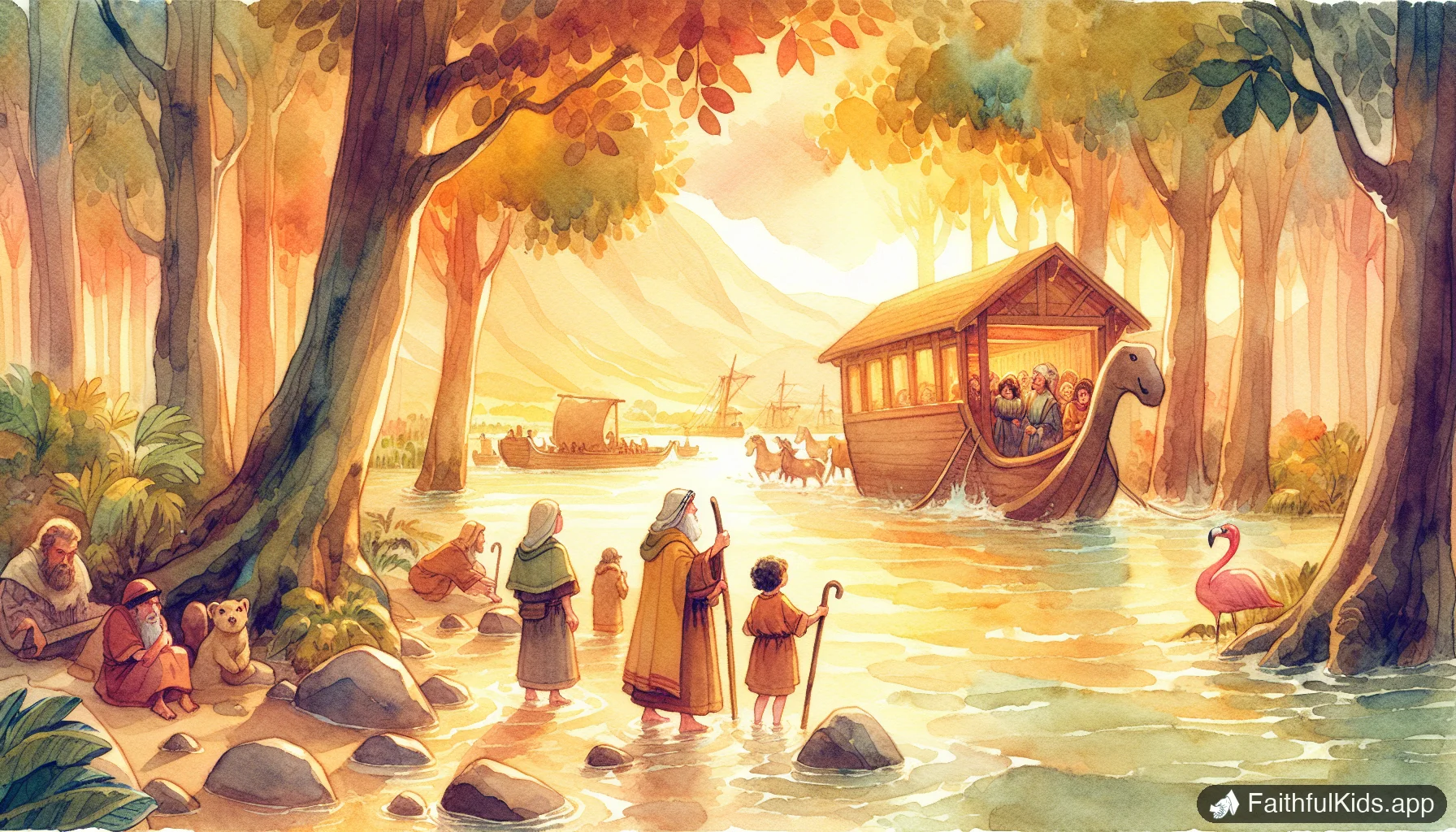
There is no parenting moment that feels heavier than trying to explain death to your child. Whether they have lost a grandparent, a pet, a family friend, or are simply asking the questions that every child eventually asks, "What happens when you die?" and "Will I die too?", you want to get this right.
The Bible does not shy away from death. It is woven through the entire narrative, from Genesis to Revelation. But it also does not leave death as the final word. Every story of death in Scripture points toward something greater: the promise that death is not the end.
This guide walks you through five Bible stories that address death and the hope of heaven, with empathetic, age-appropriate language you can use with your child. We also cover what to say, what not to say, and how to hold space for your child's grief without rushing them toward a "lesson."
Before the Stories: Meeting Your Child Where They Are
Children grieve differently at different ages.
Ages 4-6: Children this age often do not understand that death is permanent. They may ask when the person is coming back. They need simple, concrete language: "Grandma's body stopped working and she died. She is not coming back to our house, but we believe she is with God in heaven." (For this age group, see our guide on how to explain heaven to a preschooler.)
Ages 7-9: Children begin to understand that death is final and irreversible. They may become worried about their own death or yours. They need reassurance and honest answers: "Yes, everyone dies someday. But that is not something you need to worry about right now. God has a plan for your whole life."
Ages 10-12: Preteens can grasp abstract concepts like the soul, eternity, and the difference between physical death and spiritual life. They may have theological questions: "If God is good, why do people die?" "How do we know heaven is real?" Meet these questions with honesty, not deflection. Our post on why bad things happen, explained from the Bible can help with the hardest ones.
The most important thing you can do is be present.
Your child does not need a perfectly constructed theological explanation. They need you, sitting with them, willing to say "I do not know" when you do not know, and "I am sad too" when you are sad.
5 Bible Stories About Death and Heaven
1. Jesus Raises Lazarus (John 11:1-44)
The story: Lazarus was one of Jesus' close friends. When Lazarus became gravely ill, his sisters Mary and Martha sent word to Jesus, begging Him to come. But Jesus waited. By the time He arrived, Lazarus had been dead for four days. Martha met Jesus on the road and said, "Lord, if you had been here, my brother would not have died." Jesus wept. Then He walked to the tomb and called out, "Lazarus, come forth!" And Lazarus walked out, alive.
Why this story matters for kids: This story shows two crucial things. First, Jesus cried when His friend died. God is not distant from our grief. He enters into it with us. Second, Jesus has power over death itself. He did not just comfort the sisters with kind words. He reversed death entirely.
What to say: "When Lazarus died, Jesus cried. That tells us it is okay to be sad when someone dies. Even Jesus was sad. But then Jesus did something amazing. He called Lazarus back to life because Jesus is stronger than death."
Key verse: "Jesus said to her, 'I am the resurrection and the life. The one who believes in me will live, even though they die'" (John 11:25).
You can read a kid-friendly retelling of this story in the raising of Lazarus for kids.
2. The Resurrection of Jesus (Matthew 28:1-10, Luke 24:1-12)
The story: Jesus was crucified on a Friday and buried in a tomb sealed with a heavy stone. On Sunday morning, women who came to care for His body found the stone rolled away and the tomb empty. An angel told them, "He is not here; he has risen, just as he said." Over the next forty days, Jesus appeared to His followers many times, eating with them, talking with them, showing them that He was truly, physically alive.
Why this story matters for kids: The resurrection is the foundation of the Christian hope about death. If Jesus defeated death, then death is not the end for anyone who trusts in Him. Paul wrote in 1 Corinthians 15:17, "And if Christ has not been raised, your faith is futile." But Christ has been raised, and that changes everything about how we face death.
What to say: "The most amazing thing that ever happened is that Jesus died and came back to life. Not pretend. For real. And because He came back to life, He promised that everyone who believes in Him will live with God forever too. Death is not the end of the story. It is more like a doorway."
Key verse: "Where, O death, is your victory? Where, O death, is your sting?" (1 Corinthians 15:55).
For a simple version to share with younger children, see the empty tomb for kids.
3. Elijah Taken Up to Heaven (2 Kings 2:1-12)
The story: The prophet Elijah did not die a normal death. At the end of his life on earth, as he walked with his student Elisha, a chariot of fire appeared in the sky, drawn by horses of fire, and Elijah was carried up to heaven in a whirlwind. Elisha watched and cried out, "My father! My father! The chariots and horsemen of Israel!"
Why this story matters for kids: This story makes heaven feel real and tangible. Elijah did not just "pass away" into an abstract concept. He was taken to a real place by God Himself. For children struggling with the abstractness of heaven, wondering where it is, what it looks like, whether people really go there, this story provides a vivid, concrete picture of God bringing someone home.
What to say: "God loved Elijah so much that He sent a special chariot to take him straight to heaven. Elijah did not have to be afraid. God came and got him. And that is what God does for everyone who loves Him. When it is time, God comes and brings them home to be with Him."
Key verse: "Suddenly a chariot of fire and horses of fire appeared and separated the two of them, and Elijah went up to heaven in a whirlwind" (2 Kings 2:11).
4. Stephen Sees Heaven Open (Acts 7:54-60)
The story: Stephen was one of the first followers of Jesus after the resurrection. He was arrested for preaching about Jesus and brought before an angry crowd. As they prepared to stone him to death, Stephen looked up to heaven and said, "Look! I see heaven open and the Son of Man standing at the right hand of God." As he was dying, his last words were, "Lord, do not hold this sin against them." Then he fell asleep in the Lord.
Why this story matters for kids (best for ages 9+): Stephen saw heaven while he was still alive. He was not afraid because he could literally see where he was going. This story tells children that heaven is real and that Jesus is there, waiting. Stephen's remarkable peace in the face of death is a powerful picture of what deep faith looks like in practice.
What to say: "Stephen was very brave. Even when people were hurting him, he looked up and saw heaven open. He saw Jesus standing there, waiting for him. He was not scared because he knew exactly where he was going. That is what faith does. It helps us not be afraid of death because we know God is waiting for us on the other side."
Key verse: "Stephen, full of the Holy Spirit, looked up to heaven and saw the glory of God, and Jesus standing at the right hand of God" (Acts 7:55).
5. A New Heaven and a New Earth (Revelation 21:1-5)
The story: In the very last book of the Bible, God gives the apostle John a breathtaking vision of the future. John sees a new heaven and a new earth, a place where God lives with His people face to face. There is no more death, no more crying, no more pain, no more grief. God Himself wipes every tear from their eyes. And God says, "I am making everything new."
Why this story matters for kids: Children who are grieving need to know that the sadness will not last forever. This passage promises a future where everything broken is repaired, everything lost is restored, and everything that hurts is healed. For a child asking "Will Grandma be sad in heaven?" or "Will there be crying in heaven?", this is your answer: no. Not ever again.
What to say: "The Bible tells us that in heaven, there is no more crying, no more pain, and no more dying. God Himself will wipe every tear from our eyes. Everyone in heaven is happy and safe and together with God forever. The sad things we feel now will not last forever. God is going to make everything new."
Key verse: "He will wipe every tear from their eyes. There will be no more death or mourning or crying or pain, for the old order of things has passed away" (Revelation 21:4).
There is a child-friendly walkthrough of this vision in a new heaven and new earth for kids.
What to Say and What Not to Say
Say This:
- "It is okay to be sad. I am sad too."
- "Crying is not bad. Even Jesus cried when His friend died." (John 11:35)
- "You can talk to me about this anytime. There are no wrong questions."
- "I believe [person's name] is with God in heaven, and they are not in pain anymore."
- "We will always remember them and the love they shared with us."
- "God promises that one day there will be no more sadness at all."
Do Not Say This:
- "God needed another angel." This is not biblical (humans do not become angels), and it can make a child angry at God for "taking" someone they love.
- "They are in a better place." While theologically true for believers, this phrase can feel dismissive to a grieving child who wants the person here, not somewhere else.
- "Everything happens for a reason." Even if true in God's sovereignty, this is not what a grieving child needs to hear in the moment. It can sound like "there is a good reason your person died."
- "You need to be strong." Children need permission to grieve fully, not pressure to perform composure for the adults around them.
- "They are just sleeping." This well-meaning phrase can cause a literal fear of going to sleep. Be direct: they died, and dying is different from sleeping.
- "At least they are not suffering anymore." True, but it minimizes the child's suffering happening right now.
Watch on Faithful Kids
Faithful Kids covers all five of these stories and many more in short, age-appropriate video lessons. Your child can watch the story of Lazarus, the resurrection of Jesus, and the promise of Revelation 21 at their own pace, with quizzes and reflections that help them process what they are learning and connect it to their own life.
Start Your Free Trial
Frequently Asked Questions
At what age should I talk to my child about death?
Do not wait for a death to occur. Children encounter death naturally through wilting flowers, dead bugs, pets that pass away, and stories they hear. Age 4-5 is a good time to introduce the concept gently using simple language and Bible stories. Let their questions guide the depth of the conversation.
What if my child asks "Are you going to die?" or "Am I going to die?"
Be honest but reassuring. "Yes, everyone dies someday, but most people live for a very, very long time. I plan to be here for you for a long time. And the Bible tells us that death is not the end. It is the beginning of being with God forever." Do not lie, but do not catastrophize either.
How do I explain death to my child if I am struggling with grief myself?
It is okay to let your child see your grief. Saying "I am sad because I miss Grandpa, and it is okay to be sad" models healthy emotional processing. If your grief feels overwhelming, involve a trusted family member, pastor, or counselor in conversations with your child. You do not have to carry this alone.
What if my child does not seem upset when someone dies?
This is common in younger children. It does not mean they do not care. They may not fully understand the permanence of death, or they may process emotions differently than adults expect. Stay available, keep the door open for conversation, and do not force a grief response that is not there naturally. It may surface weeks or months later.