Blog/How to Explain the Real Meaning of Christmas to a Child
Guide
How to Explain the Real Meaning of Christmas to a Child
Ages 5+·11 min read··By Faithful Kids Team·Updated August 16, 2026
The tree is decorated, presents are wrapped, and your child is buzzing with excitement about Christmas morning. But somewhere between the cookies for Santa and the wrapping paper chaos, you want them to know what this day is really about.
Christmas is the celebration of the most extraordinary event in human history: God Himself came to earth as a baby. The Creator of the universe became a tiny, helpless infant — born not in a palace, but in a stable. And He did it all because He loves us.
Here is how to share that story with your child in a way they will never forget.
The Christmas Story (Luke 2:1-20)
A Girl Named Mary
"A long time ago, in a small town called Nazareth, there was a young woman named Mary. One day, an angel named Gabriel appeared to her and said, 'Do not be afraid, Mary. God has chosen you for something very special. You are going to have a baby, and you will name Him Jesus. He will be the Son of God.'
Mary was surprised — and probably a little scared. But she trusted God and said, 'I am God's servant. Let it happen as you say.'"
"Mary was engaged to a man named Joseph. He was a good man who loved God. Around the time the baby was going to be born, the king ordered everyone to go to the town where their family was originally from to be counted. Joseph's family was from Bethlehem, so he and Mary had to travel there — a long trip, probably on a donkey, while Mary was very pregnant." Our story of the journey to Bethlehem fills in this leg of the adventure for kids.
No Room at the Inn
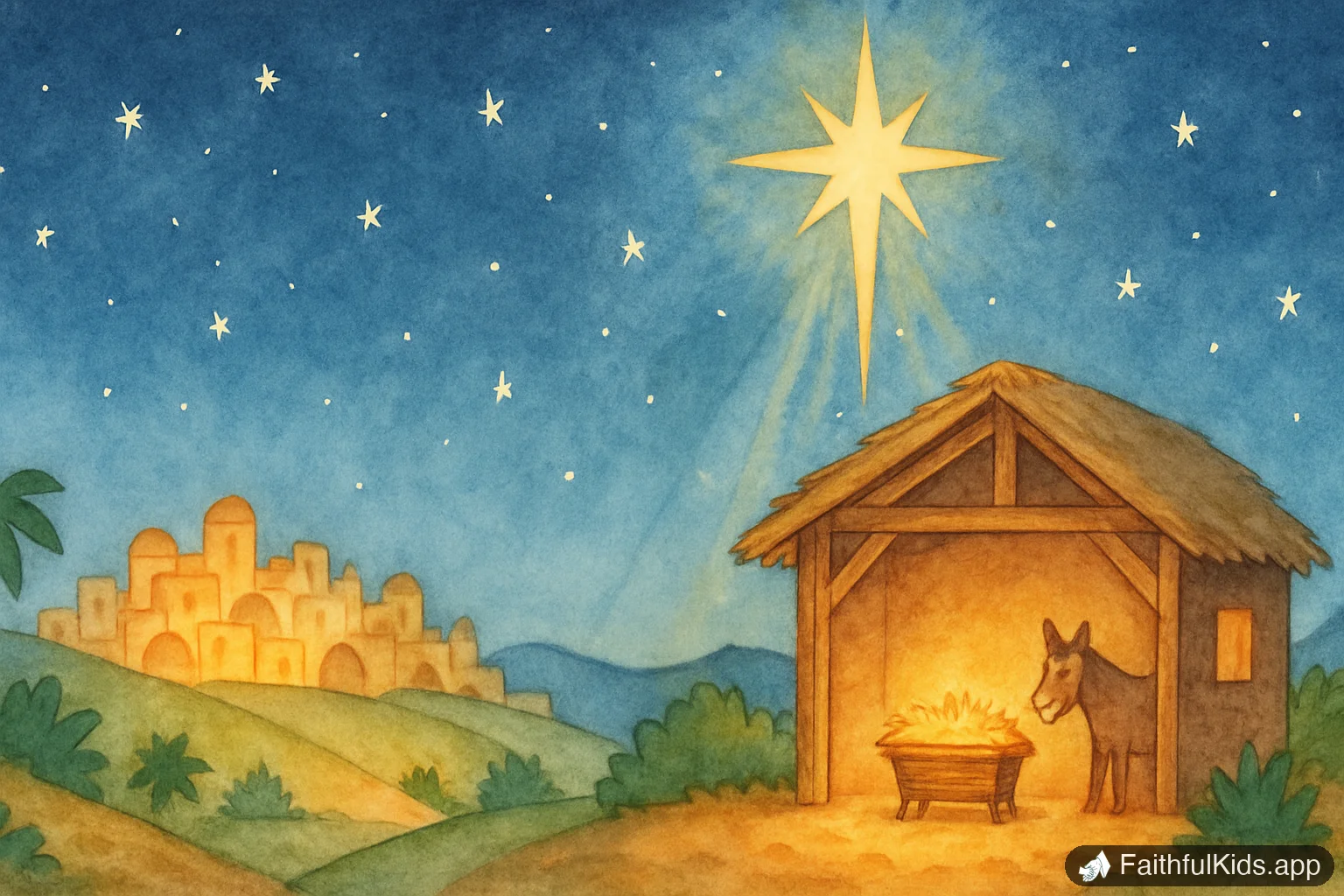
"When they finally arrived in Bethlehem, the town was packed with other people who had also come to be counted. Joseph looked everywhere for a place to stay, but every inn was full. 'No room,' they were told again and again. Finally, someone let them stay in a stable — the place where animals slept."
For your child: "Can you imagine? The King of the whole universe was about to be born, and there was not even a bed for Him. He came into the world in the humblest place possible."
The Birth of Jesus
"That night, in that simple stable, surrounded by animals, Mary gave birth to her baby boy. She wrapped Him in strips of cloth, called swaddling clothes, and laid Him in a manger — a feeding trough for animals."
Luke 2:7: "She wrapped him in cloths and placed him in a manger, because there was no guest room available for them."
"The manger was Jesus's first bed. No castle, no gold cradle — just a feeding box filled with hay. This tells us something important about God: He did not come to show off His power. He came in humility, close to ordinary people."
The Shepherds
"Out in the fields near Bethlehem, shepherds were watching their sheep in the middle of the night. Suddenly, an angel appeared in the sky, shining with the glory of God. The shepherds were terrified."
Luke 2:10-11: "But the angel said to them, 'Do not be afraid. I bring you good news that will cause great joy for all the people. Today in the town of David a Savior has been born to you; he is the Messiah, the Lord.'"
"Then the whole sky filled with angels — an army of them — all praising God and saying, 'Glory to God in the highest heaven, and on earth peace to those on whom his favor rests.' The shepherds rushed to Bethlehem and found baby Jesus, just as the angel had said."
For your child: "God did not send the announcement to kings or important people first. He told the shepherds — regular working people out in a field. That tells us that this good news is for everyone, not just special or important people."
The Wise Men (Magi)
"Some time after Jesus was born, wise men from far away in the east saw a special star in the sky. They knew it meant a new king had been born, so they followed the star all the way to where Jesus was. They brought gifts: gold, frankincense, and myrrh — expensive gifts fit for a king."
Matthew 2:11: "On coming to the house, they saw the child with his mother Mary, and they bowed down and worshiped him. Then they opened their treasures and presented him with gifts of gold, frankincense and myrrh."
"The wise men traveled a very long distance to find Jesus. They recognized that this baby was worth the journey." For the longer version of their story, see the wise men for kids.
Why Did Jesus Come?
After telling the story, your child will likely ask, "But why? Why did God become a baby?"
To Be Close to Us
"God loved people so much that He did not want to just watch us from far away in heaven. He wanted to be with us — to walk where we walk, to feel what we feel, to laugh and cry and eat and sleep just like we do. Jesus is called 'Emmanuel,' which means 'God with us.'"
To Show Us What God Is Like
"Nobody can see God directly. But when God became the person Jesus, people could see Him, hear Him, and know Him. Everything Jesus said and did shows us what God is like — loving, kind, forgiving, brave, and good."
To Save Us
"Jesus did not just come to be a baby in a manger. He came to grow up and eventually give His life for us on the cross so that our sins could be forgiven. Christmas is the beginning of the rescue mission. Easter is when it was completed." (When spring comes, here is how to explain Easter to a child.)
To Give Us the Best Gift Ever
"People love giving gifts at Christmas, and that is wonderful. But the very first Christmas gift was God giving us His Son. It is the greatest gift ever given, and it is free to everyone who believes."
John 3:16: "For God so loved the world that he gave his one and only Son, that whoever believes in him shall not perish but have eternal life."
How to Keep Christ in Christmas (Practical Ideas)
1. Read the Story Together
Make it a family tradition to read Luke 2:1-20 on Christmas Eve or Christmas morning. Even young children can sit and listen. You can use a children's Bible for younger kids and the actual text for older ones.
2. Set Up a Nativity Scene
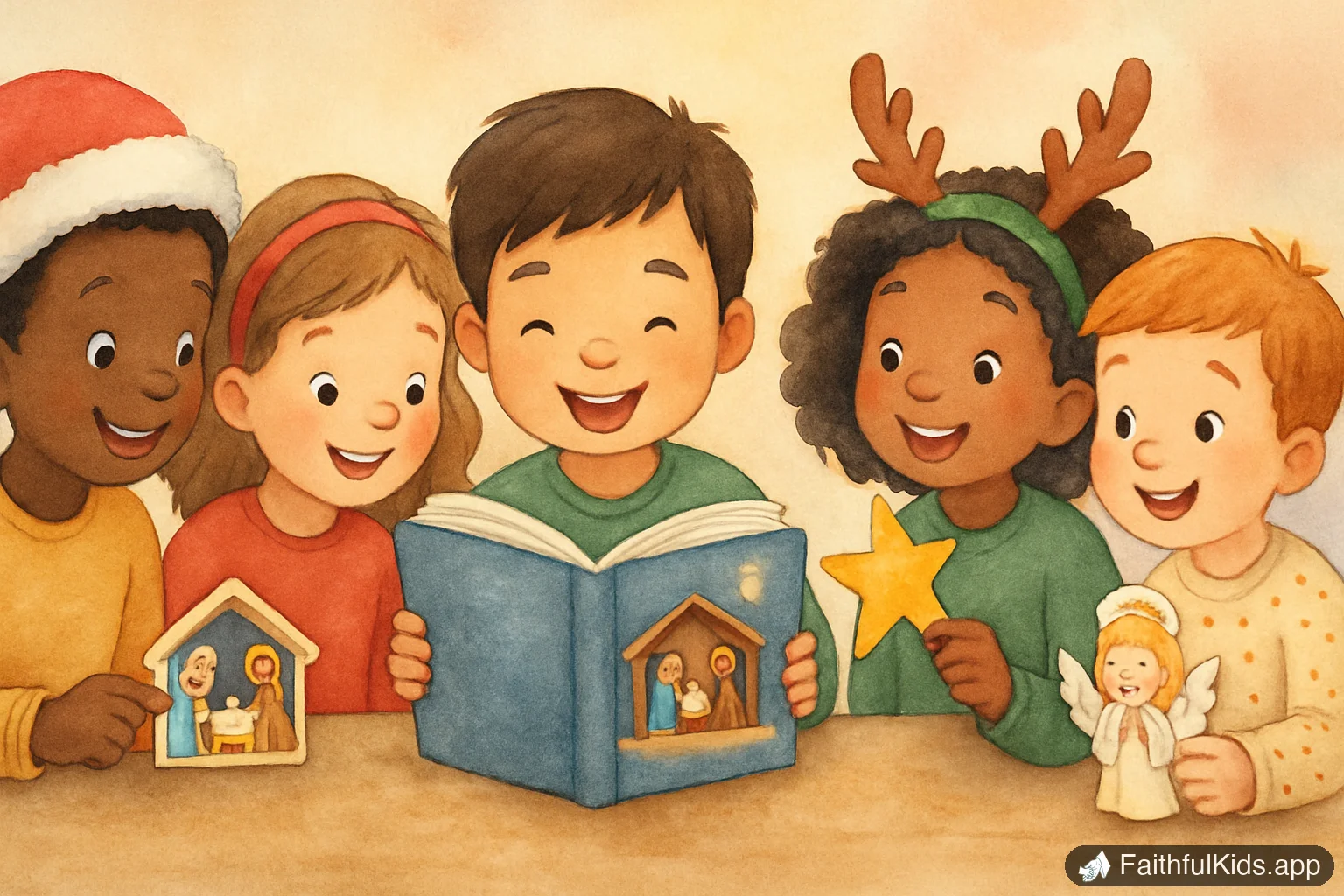
Let your child arrange the figures — Mary, Joseph, baby Jesus, the shepherds, the animals, and the wise men. Talk about each character as they place them. Many families keep the baby Jesus piece hidden until Christmas morning, then let the youngest child place Him in the manger.
3. The Birthday Cake Tradition
"If Christmas is Jesus's birthday, we should have a birthday cake!" Bake a cake, put candles on it, and sing "Happy Birthday" to Jesus. Kids love this because it connects Christmas to something they already understand.
4. Give First, Then Receive
Before opening presents, have each family member share one thing they are thankful to God for. Or give to someone else first — donate toys, serve at a shelter, or deliver cookies to a neighbor who is alone.
5. Advent Calendar with the Christmas Story
Instead of (or alongside) a candy advent calendar, use one that tells a piece of the Christmas story each day in December. By Christmas, your child will know the whole story. Need inspiration? Browse these advent calendar ideas for kids.
6. The Gift of the Wise Men
Talk about what the wise men's gifts meant. Gold for a king, frankincense for God, myrrh (a burial spice) pointing to His death. Then ask: "If you could give Jesus a gift, what would it be?" Help your child think about giving Jesus their heart, their obedience, or their kindness to others.
Planning the whole month? The Christmas hub lists every Advent devotion, story, and printable we publish.
If you need a handout too, the free printable Christmas word search covers the Luke 2 story — Mary, the shepherds, Bethlehem and the manger — with an answer key.
See what they get
Watch Born in a Manger Come Alive
Born in a Manger is one of 300+ short narrated video lessons your child will love. Watch the whole episode right here — in the app, every lesson ends with a fun quiz to check what they learned.
A real lesson from the app — watch the whole thing free.
Addressing the Santa Question
This is the question every parent faces. Here are some approaches:
Option 1: Santa as a fun tradition alongside the real story. Many Christian families enjoy Santa as a cultural tradition while making sure their children know that Jesus is the reason for the season. You might say, "Santa is a fun game we play at Christmas, but the real story — the one that actually happened — is about Jesus."
Option 2: Share the story of Saint Nicholas. The real Saint Nicholas was a Christian bishop who loved Jesus and was famous for his generosity, especially to children and the poor. Telling your child about the real person behind the legend can connect the tradition back to faith.
Option 3: Skip Santa entirely. Some families choose not to include Santa at all, focusing entirely on Jesus. This is a valid choice too.
Whatever you decide, the goal is the same: make sure your child knows that Christmas is ultimately about God's love for us, shown through the gift of His Son.
Age-by-Age Guide
Ages 3-5: "Christmas is when we celebrate baby Jesus being born. God sent His Son to earth as a tiny baby because He loves us so much. Angels sang, shepherds came to visit, and a special star shone in the sky. It was the most wonderful night ever."
Ages 6-8: Tell the full Nativity story with all the characters. Explain why Jesus came — to be close to us and to save us. Do hands-on activities like a nativity scene or birthday cake for Jesus. Read Luke 2 together.
Ages 9-12: Go deeper into the meaning. Why a manger? Why shepherds first? What did the wise men's gifts symbolize? Discuss the concept of the incarnation — God becoming human — and why that is mind-blowing. Connect Christmas to Easter: the birth was the beginning of God's rescue plan.
Ages 13+: Explore the prophecies about Jesus's birth (Isaiah 7:14, Micah 5:2) and how they were fulfilled. Discuss the historical context — Roman occupation, the census, Herod's fear. Talk about what it means that God entered into the mess of the real world, not a sanitized version of it.
Watch on Faithful Kids
Bring the Christmas story to life for your kids with animated video lessons, quizzes, and reflections. Faithful Kids covers the birth of Jesus, the shepherds, the wise men, and so much more — designed for ages 7-15. Start your free trial today and give your child the gift of understanding the real meaning of Christmas.
Add the kids' nativity play script -- free, ten minutes, scales from 8 kids to 40 -- and the evening plans itself.
Frequently Asked Questions
At what age should I start teaching my child the real Christmas story?
You can start as young as 2-3 years old with a very simple version: "Baby Jesus was born, and everyone was so happy." Children's Bibles with pictures are wonderful for toddlers. As they grow, add more detail and depth each year. By age 6-8, most children can understand the full narrative.
How do I handle it when my child's friends talk about Santa being the main point of Christmas?
Teach your child that different families celebrate in different ways. You might say, "Our family celebrates Christmas because of Jesus. Other families focus on different traditions, and that is okay. But we know the real story, and it is the best story ever."
What if my child asks why Jesus had to be born in a stable instead of a nice place?
This is a wonderful teachable moment. Explain that God chose humility on purpose. Jesus did not come for the rich and powerful — He came for everyone. Being born in a stable shows that God meets us wherever we are, even in the most ordinary and humble places.
How do I explain the gifts of the wise men to a child?
Keep it simple: "The wise men brought three special gifts. Gold because Jesus is a king. Frankincense, which is a sweet-smelling spice used in worship, because Jesus is God. And myrrh, which was used to prepare bodies for burial, because Jesus came to give His life for us." For younger kids, you can just say they brought their very best gifts because Jesus was worth it.
🌙 Free: The Bedtime Bible Kit
Seven nights of five-minute stories — a story, a prayer, and one question to whisper about.
Free printable + a few helpful emails. Unsubscribe anytime.