Blog/How to Explain Sin to a Child (Age-Appropriate Language)
Guide
How to Explain Sin to a Child (Age-Appropriate Language)
Ages 5+·11 min read··By Faithful Kids Team·Updated August 16, 2026
It is one of those words that can feel heavy even for adults — "sin." And when it comes to explaining it to your child, you might wonder: How do I teach them about this without making them feel terrible about themselves? How do I be honest about sin without crushing their little spirit?
The good news is that the Bible never talks about sin without also talking about grace. And your conversation with your child should be the same way. Here is how to explain sin in a way that is honest, age-appropriate, and ultimately hopeful.
What Is Sin? (The Simple Definition)
At its core, sin is choosing to do what we know is wrong. It is going against what God says is good and right.
For a young child: "Sin is when we choose to do something we know is wrong. Like when you know you should not hit your brother, but you do it anyway. Or when you know you should tell the truth, but you tell a lie instead. Anytime we choose our way instead of God's way, that is sin."
For an older child: "Sin is anything we think, say, or do that goes against God's plan for how things should be. God designed the world to work in a certain way — with love, kindness, truth, and fairness. When we go against that design, it is like coloring outside the lines of how life was meant to work."
Why Does Sin Matter?
Kids are naturally going to ask, "So what? Why is it a big deal?" Here is how to explain why sin matters:
1. Sin Hurts Other People
"When we sin, it almost always hurts someone. When you lie to a friend, it hurts their feelings and breaks their trust. When you are selfish, it hurts the people around you. When you say something mean, it can wound someone's heart. Sin is a big deal because people are a big deal to God."
2. Sin Hurts Us
"Sin also hurts us. When you do something wrong, you feel that yucky feeling inside — guilt. That is your conscience telling you something is not right. Living with a pattern of sin makes us feel far from God, unhappy, and stuck."
3. Sin Separates Us from God
"God is perfectly good. He has never done a single wrong thing. Because He is so pure and holy, sin creates a gap between us and Him. It is like if you had muddy hands and tried to hold a clean white blanket — the mud makes it so you cannot be close to it without messing it up. But here is where the story gets really good: God did not leave us stuck on the other side of that gap." The story of the garden and the fall shows kids exactly where that gap began.
Everyone Sins (Yes, Everyone)
One of the most important things to teach your child is that sin is universal. It is not just them. It is everyone.
Romans 3:23 puts it simply: "For all have sinned and fall short of the glory of God."
For your child: "Here is something really important — everyone sins. Mom and Dad sin. Your teacher sins. The pastor at church sins. Every single person in the whole world has done things that are wrong. You are not a bad person because you sin. You are a normal person. But that does not mean sin is okay — it just means you are not alone, and you do not need to be embarrassed about it."
This is crucial because children can easily slip into shame. Shame says, "I am bad." But that is not what the Bible teaches. The Bible says we are made in the image of God (Genesis 1:27), deeply loved, and valuable — AND we make wrong choices. Both things are true at the same time.
Help your child understand the difference between healthy guilt and toxic shame:
Guilt (from God): "I did something wrong. I feel bad about it. I want to make it right." This leads to confession, apology, and growth.
Shame (not from God): "I AM something wrong. I am a terrible person. God must hate me." This leads to hiding, fear, and hopelessness.
"When you do something wrong and feel bad about it, that is actually a good thing — it is God's Holy Spirit helping you see that you need to make a change. But if you ever feel like God does not love you or that you are worthless because of a mistake, that is NOT from God. God always loves you, even when you mess up."
God Still Loves You (The Grace Part)
This is the most important part of the conversation. Never talk about sin without talking about grace.
1 John 1:9 says: "If we confess our sins, he is faithful and just and will forgive us our sins and purify us from all unrighteousness."
For your child: "Here is the best news in the world: no matter what you have done wrong, God still loves you. Nothing — NOTHING — can make God stop loving you. And when you tell God you are sorry and ask for forgiveness, He forgives you every single time. Not just sometimes. Every. Single. Time."
Jesus Is the Solution
"God knew that we could not fix the sin problem on our own. We could not be good enough. So He sent Jesus. Jesus never sinned — He was the only person who ever lived a perfect life. And then He died on the cross to take the punishment that we deserved. When we believe in Jesus, God sees us as clean and forgiven — not because of anything we did, but because of what Jesus did." When your child is ready for that bigger conversation, here is how to explain salvation to a child.
For a young child: "Think of it like this. You spill red juice all over a white shirt. No matter how hard you scrub, you cannot get it totally clean. But Jesus takes that stained shirt, gives you a brand-new sparkling clean one, and says, 'Here, wear this.' That is what His forgiveness does for your heart."
How to Talk About Specific Sins Without Shame
When your child does something wrong, here is a framework:
1. Name the behavior, not the child
Say: "What you did was wrong." Do NOT say: "You are a bad kid." There is a world of difference. One addresses behavior. The other attacks identity.
2. Connect it to God's design
"God made us to be kind to each other. When we say mean things, we are going against God's design for how friends should treat each other."
3. Invite confession
"It is okay to tell God you are sorry. He already knows what happened, and He loves you just the same. He is just waiting for you to talk to Him about it."
4. Celebrate forgiveness
"When you say sorry and mean it, God forgives you instantly. You do not have to carry that heavy feeling around. Let it go. You are forgiven." If forgiveness itself is the sticking point, our guide on explaining forgiveness to a child can help.
5. Encourage making it right
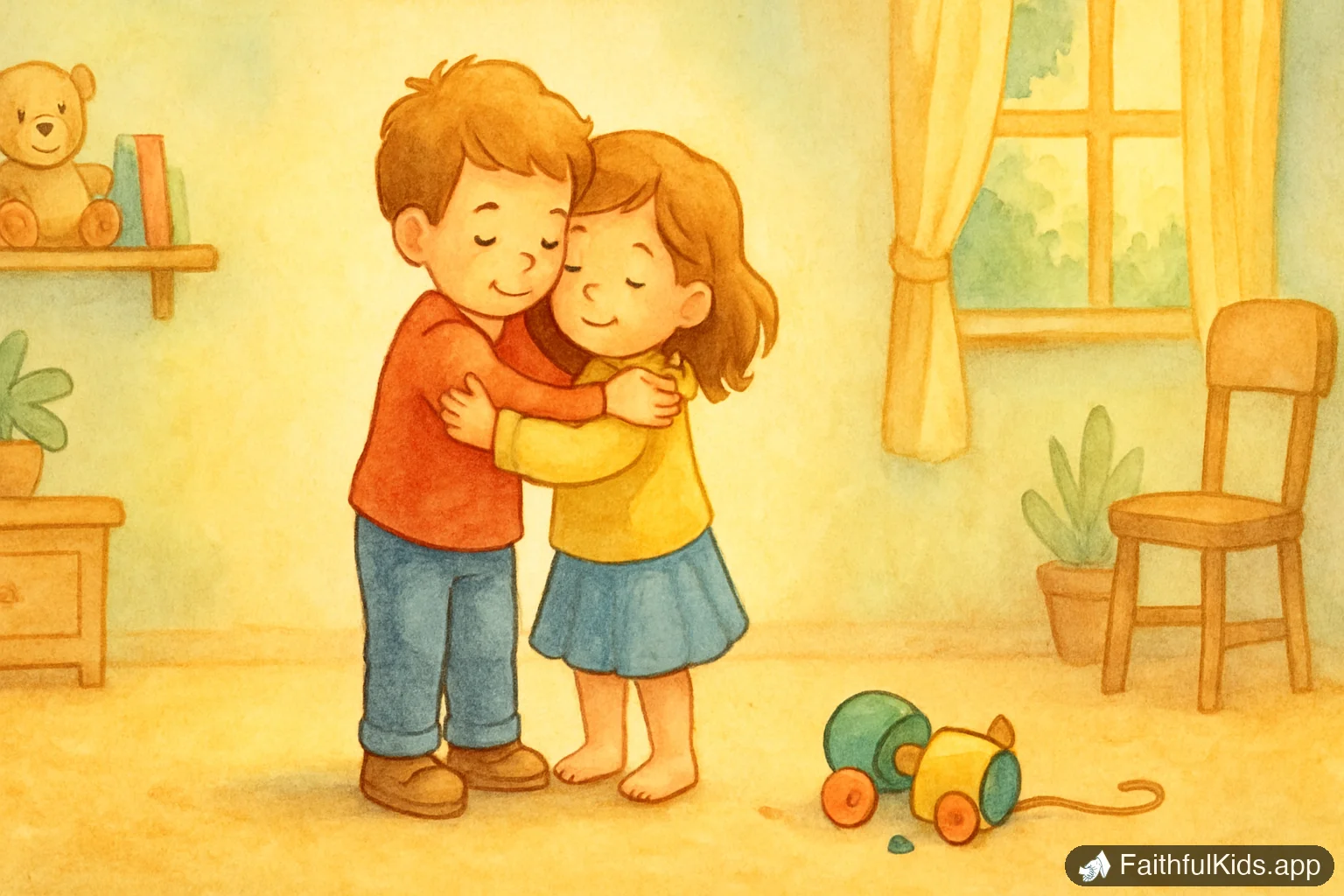
"Now, is there anything you need to do to make it right with the person you hurt? Sometimes saying sorry to them is important too."
See what they get
Watch The Garden and the Fall Come Alive
The Garden and the Fall is one of 300+ short narrated video lessons your child will love. Watch the whole episode right here — in the app, every lesson ends with a fun quiz to check what they learned.
A real lesson from the app — watch the whole thing free.
Common Types of Sin Kids Can Understand
Help your child recognize sin in everyday terms:
Lying — saying something that is not true (Proverbs 12:22)
Disobeying parents — not following the rules Mom and Dad set (Ephesians 6:1)
Being mean or unkind — hurting someone's feelings on purpose (Ephesians 4:32)
Selfishness — always wanting things your way (Philippians 2:3)
Jealousy — being angry that someone else has something you want (James 3:16)
Cheating — being dishonest to get ahead (Proverbs 11:1)
Holding a grudge — refusing to forgive someone (Colossians 3:13)
"All of these are things we all struggle with. Recognizing them is the first step to growing past them." Bible stories about honesty can make these everyday examples feel concrete for kids.
Teaching Kids About Repentance
Repentance is a big word, but the concept is simple: turning around and going the other way.
"Imagine you are walking down a path, and you realize you are going the wrong direction. What do you do? You stop, turn around, and start walking the right way. That is what repentance means. When we realize we have been going against God's way, we stop, say sorry, and start going His way instead." Jesus told a story that paints this picture perfectly -- read the prodigal son for kids together.
Repentance is not just feeling bad. It is deciding to change direction. Help your child understand that God gives us the power to change through the Holy Spirit — we do not have to do it alone.
A Simple Prayer for Kids
If your child wants to talk to God about their sins, here is a prayer they can use:
"Dear God, I know I have done things that are wrong. I am sorry. Thank You for loving me no matter what. Thank You for sending Jesus to forgive me. Please help me do what is right and follow Your way. I love You. Amen."
Age-by-Age Approach
Ages 3-5: "Sometimes we do things that make God sad, like hitting or lying. That is called sin. But God always loves you, and when you say sorry, He forgives you."
Ages 6-8: "Sin is choosing to do what we know is wrong. Everyone does it. But God loves us so much that He sent Jesus to forgive us. When we tell God we are sorry, He makes our hearts clean again."
Ages 9-12: "Sin is anything that goes against God's character and design. It separates us from God, but it does not separate us from His love. Jesus died to bridge that gap. First John 1:9 promises that if we confess our sins, God is faithful to forgive."
Ages 13+: Discuss the nature of sin more deeply — original sin, the difference between sins of commission and omission, and the concept of living in a fallen world. Talk about systemic sin, personal responsibility, and how grace empowers us to live differently.
Watch on Faithful Kids
Help your child understand God's love, forgiveness, and grace through animated Bible stories, quizzes, and reflections. Faithful Kids makes faith concepts age-appropriate and engaging for kids 7-15. Start your free trial today and give your child a foundation of faith built on love, not fear.
Frequently Asked Questions
How do I explain sin without making my child feel ashamed?
Always pair the conversation about sin with the truth about God's love and forgiveness. Emphasize that sin is something we all do — it does not make your child uniquely bad. Focus on behavior, not identity. Say "You made a wrong choice" rather than "You are a bad kid." And always end with grace: God loves you, forgives you, and helps you do better.
At what age do children begin to understand right and wrong?
Most children develop a basic sense of right and wrong between ages 2-4. By ages 5-7, they can understand simple moral concepts like fairness, honesty, and kindness. By ages 8-10, they can grasp more abstract ideas like the universality of sin and the need for forgiveness. Tailor your conversations to your child's developmental stage.
What if my child asks, "Why did God make us able to sin?"
This is a deep question. You might say, "God wanted us to be able to choose to love Him — and real love has to be a choice. If God made us so that we could only do good things, we would be like robots. God gave us the ability to choose so that when we choose to love Him and do right, it really means something."
How do I teach my child about sin without making them afraid of God?
Focus on God's character — He is love (1 John 4:8). He is not an angry judge waiting to punish, but a loving Father who wants to forgive. Use examples from Jesus's life: how He treated sinners with compassion, ate with outcasts, and told the woman caught in adultery, "Neither do I condemn you. Go and sin no more." God hates sin because it hurts us, not because He enjoys punishing.
🌙 Free: The Bedtime Bible Kit
Seven nights of five-minute stories — a story, a prayer, and one question to whisper about.
Free printable + a few helpful emails. Unsubscribe anytime.