Ages 5+·11 min read··By Faithful Kids Team·Updated August 16, 2026
Your child picks up the family Bible and their eyes go wide. It is thick. The words are small. There are no pictures. "What even is this?" they ask.
It is a fair question. The Bible is unlike any other book in the world — and that is exactly what makes it so special. Here is how to introduce your child to the most important book ever written, in a way that makes them want to open it rather than be intimidated by it.
What Is the Bible? (The Big Picture)
Start with the simplest, truest thing you can say:
"The Bible is God's story — the true story of how God made the world, how people messed it up, and how God sent Jesus to make everything right again."
For a young child: "The Bible is a letter from God to you. It tells you how much He loves you, what He has done for people throughout history, and how you can know Him."
For an older child: "The Bible is a collection of 66 books written over about 1,500 years by about 40 different people. But even though lots of different people wrote it, there is one big story running through the whole thing — God's plan to rescue the world through Jesus."
The Bible Is Not Just One Book
This surprises a lot of kids. The Bible is actually a whole library bound into one cover.
"Think of the Bible like a bookshelf. It has 66 different books on it — some are history, some are poetry, some are letters, some tell the future, and some are stories about real people and what happened to them. All together, they tell one big story." Learning the books of the Bible in order is a fun first challenge for kids.
The Two Main Parts
The Old Testament — 39 books
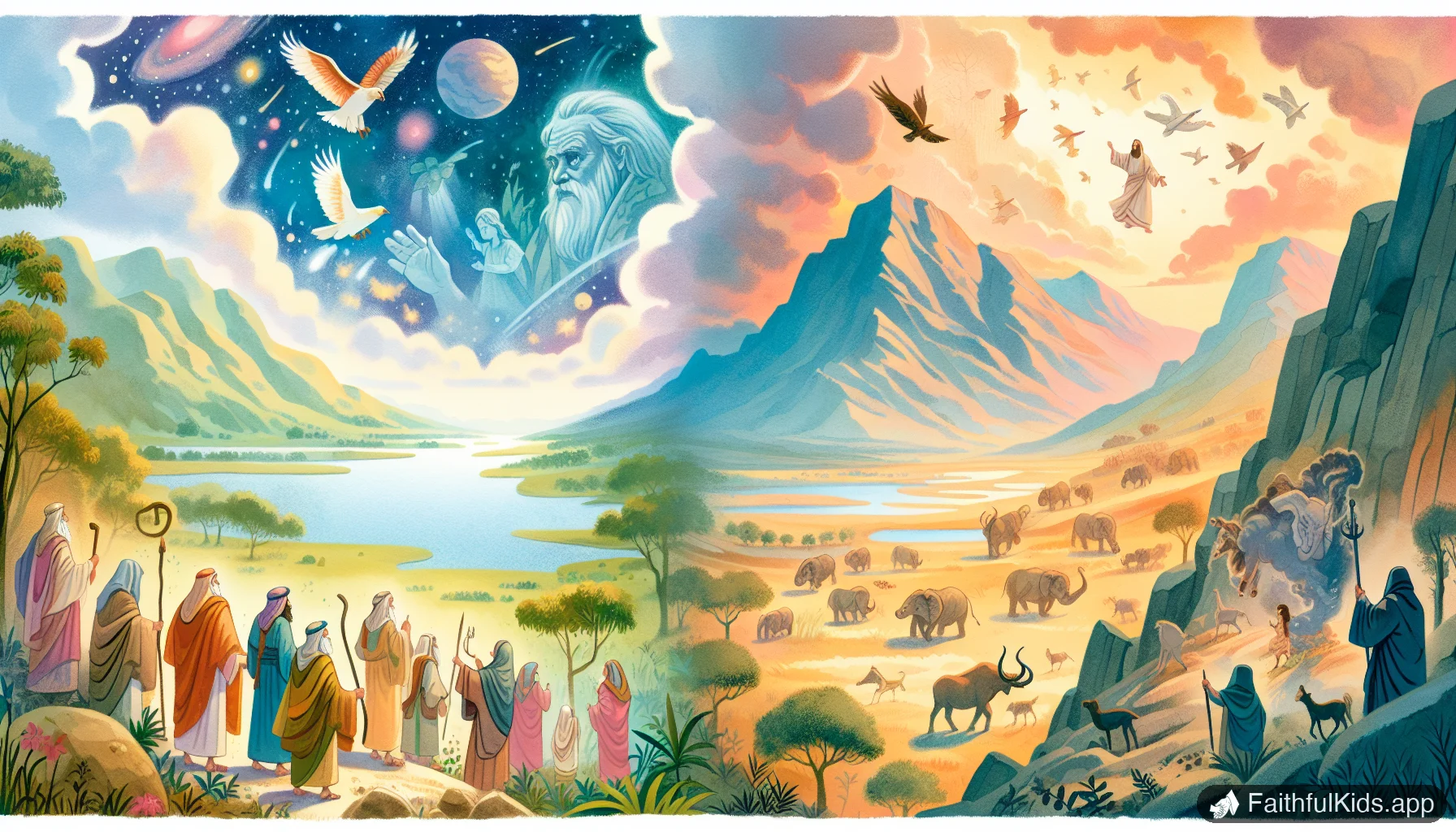
"The first part of the Bible is called the Old Testament. It tells the story of how God made the world, how He chose a special group of people (the Israelites) to be His family, and how He promised that one day He would send a Rescuer to save everyone. The Old Testament is like the first half of a movie — it sets up the story and builds toward something incredible."
Key Old Testament moments for kids:
Creation — God makes the world (Genesis 1-2)
Adam and Eve — the first people choose sin (Genesis 3)
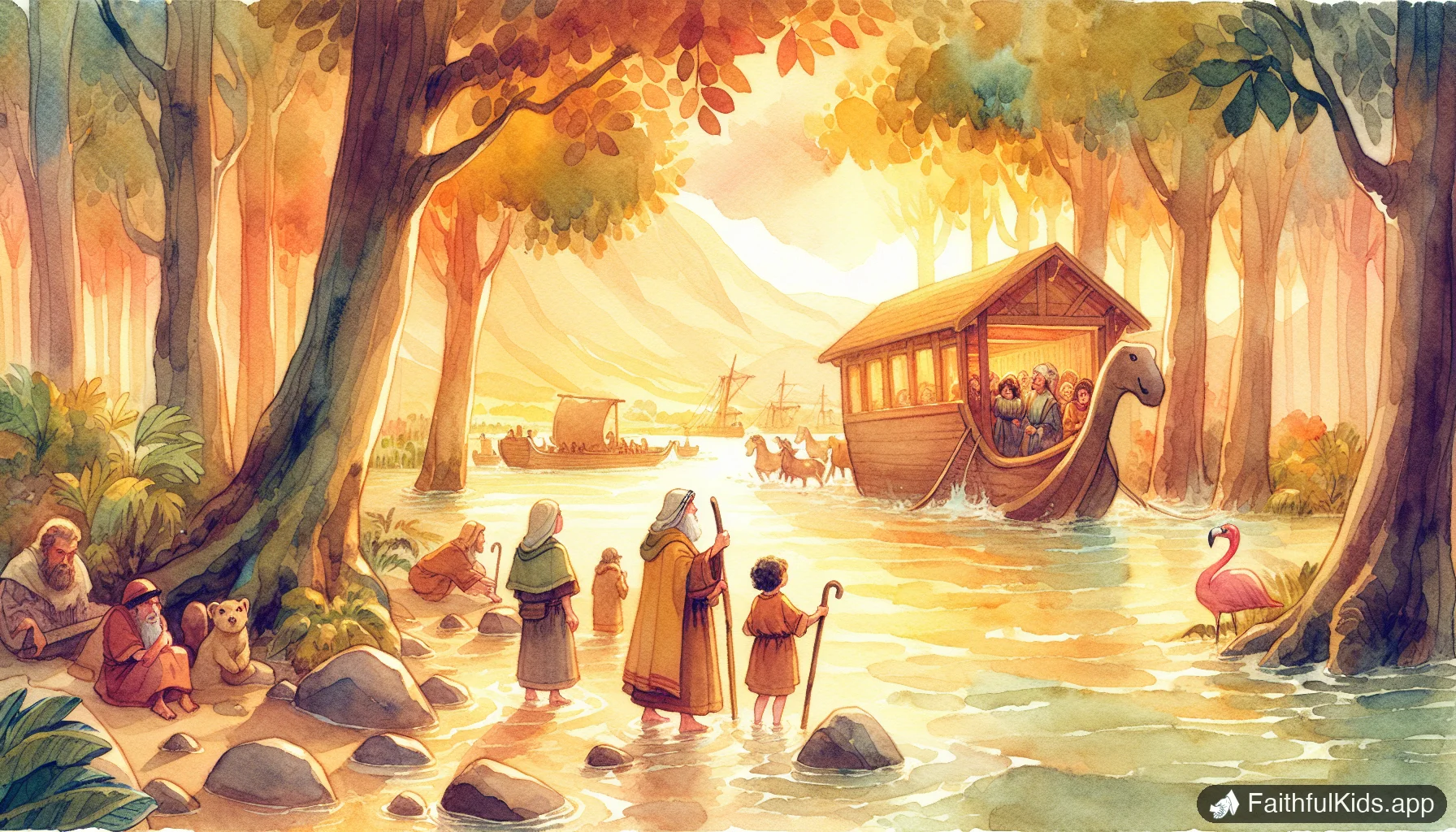
Noah — God saves Noah and the animals in a flood (Genesis 6-9)
Abraham — God promises to bless all nations through his family (Genesis 12)
Moses — God rescues His people from slavery in Egypt (Exodus)
David — a shepherd boy becomes king (1-2 Samuel)
The Prophets — God's messengers who point toward the coming Rescuer
The New Testament — 27 books
"The second part of the Bible is called the New Testament. This is where the Rescuer arrives — Jesus! It tells the story of Jesus's life, death, and resurrection. Then it tells about how His followers spread the good news all over the world. The New Testament is like the second half of the movie — the hero arrives and everything changes."
Key New Testament sections for kids:
The Gospels (Matthew, Mark, Luke, John) — four accounts of Jesus's life
Acts — how the first Christians spread the faith
The Letters (Romans through Jude) — advice and teaching for believers
Revelation — the end of the story, when Jesus makes everything new
Who Wrote the Bible?
"The Bible was written by about 40 different people over about 1,500 years. Some were kings, some were shepherds, some were fishermen, some were doctors, and some were prophets. They lived in different countries, spoke different languages, and lived in different time periods. But the Bible says that God guided all of them as they wrote."
2 Timothy 3:16 says: "All Scripture is God-breathed and is useful for teaching, rebuking, correcting and training in righteousness."
For your child: "Even though people held the pens, God was guiding what they wrote. It is kind of like if a teacher helped you write a letter — you are the one writing, but the teacher is making sure the important stuff gets in there. God used regular people to write His message, and He made sure it was exactly right."
Why Is the Bible Important?
1. It Tells Us About God
"The Bible is the main way we learn about who God is — His character, His love, His plans. Without the Bible, we would just be guessing about God. But with the Bible, we can know Him."
2. It Tells Us About Ourselves
"The Bible tells us that we are made in God's image, that we are deeply loved, and that we matter to God. It also tells us the truth about our problems — that we all sin and need a Savior. It is the most honest book in the world."
3. It Shows Us How to Live
"The Bible is full of wisdom for everyday life — how to treat people, how to make good decisions, how to handle fear and sadness, and how to love well. It is like a guidebook for life."
Psalm 119:105 says: "Your word is a lamp for my feet, a light on my path."
"Imagine walking through a dark forest at night. The Bible is like a flashlight that shows you where to step next."
4. It Introduces Us to Jesus
"Everything in the Bible points to Jesus. The Old Testament looks forward to Him. The New Testament tells His story and what it means for us. If you want to know Jesus, the Bible is where you meet Him."
The Bible Is True
Kids may wonder how we know the Bible is not just a made-up story. Here are some things you can share:
It has been tested for thousands of years. Scholars, historians, and archaeologists have studied the Bible more than any other book in history. Again and again, its historical details have been confirmed.
The prophecies came true. The Old Testament contains hundreds of predictions about Jesus — where He would be born, how He would die, that He would rise again — all written hundreds of years before He was born. They all came true.
It has changed millions of lives. People all over the world, in every culture and every century, have read the Bible and been transformed by it. That kind of lasting impact is unique.
It has survived everything. People have tried to ban the Bible, burn it, and destroy it throughout history. But it is still here, still the best-selling book in the world every single year.
See what they get
Watch In the Beginning Creation Come Alive
In the Beginning Creation is one of 300+ short narrated video lessons your child will love. Watch the whole episode right here — in the app, every lesson ends with a fun quiz to check what they learned.
A real lesson from the app — watch the whole thing free.
How to Start Reading the Bible With Your Child
1. Get an Age-Appropriate Bible
For ages 3-6, a picture Bible with colorful illustrations is perfect. For ages 7-10, a children's study Bible with simple explanations works well. For ages 11+, an easy-to-read translation like the NIV or NLT is great. If you are wondering about timing, here is when kids should start reading the Bible.
2. Start With the Stories
Do not start at Genesis 1 and try to read straight through. Start with the best Bible stories for kids -- the ones that will capture your child's imagination:
Creation (Genesis 1-2)
Noah's Ark (Genesis 6-9)
David and Goliath (1 Samuel 17)
Daniel in the Lion's Den (Daniel 6)
Jonah and the Big Fish (Jonah 1-4)
The Birth of Jesus (Luke 2)
Jesus Calms the Storm (Mark 4:35-41)
The Good Samaritan (Luke 10:25-37)
The Prodigal Son (Luke 15:11-32)
The Resurrection (Matthew 28)
3. Read a Little Every Day
You do not need to read a lot. Even 5-10 minutes a day builds a habit that lasts a lifetime. Bedtime is a natural fit for many families. Our guide on how to start family Bible time walks you through a simple routine.
4. Ask Questions
After reading, ask your child:
"What happened in this story?"
"What do you think God was doing in this story?"
"Is there anything you want to ask about?"
"How does this change the way we should act?"
5. Make It a Conversation, Not a Lecture
Let your child ask questions, share their thoughts, and even disagree. The goal is engagement, not perfection. When they ask something you cannot answer, say, "I am not sure. Let us find out together."
Fun Bible Facts for Kids
The Bible has 66 books, 1,189 chapters, and 31,102 verses
The longest book is Psalms (150 chapters)
The shortest book is 3 John (just 1 chapter, 15 verses)
The longest verse is Esther 8:9 (78 words in the NIV)
The shortest verse is John 11:35 — "Jesus wept" (just 2 words)
The Bible has been translated into over 700 languages
The first book printed on a printing press was the Bible (by Gutenberg in 1455)
"Is the Bible boring?"
"Parts of it might seem hard to understand, but boring? No way. It has battles, heroes, villains, miracles, love stories, escapes, and the greatest rescue mission in history. It has a guy who gets swallowed by a huge fish, a shepherd boy who defeats a giant, and a man who walks on water. Give it a chance — you might be surprised."
"Did everything in the Bible really happen?"
"Christians believe the Bible is true. The historical events — like the exodus from Egypt, the life of Jesus, and the early church — really happened. Some parts of the Bible use poetry or symbolic language (like Psalms or Revelation), but even those communicate real truth about God and life."
"Why is the Bible so long?"
"Because it covers a really long time — from the creation of the world to the future God has planned. And it was written by many different people who each had something important to share. Think of it as the longest, most amazing story ever told."
Watch on Faithful Kids
Want to bring the Bible to life for your kids? Faithful Kids turns Bible stories into animated video lessons with quizzes and reflections, designed for ages 7-15. Your child can journey from Genesis to Revelation through engaging episodes that make Scripture stick. Start your free trial today and watch your child fall in love with God's Word.
Frequently Asked Questions
What is the best age to introduce a child to the Bible?
You can start as early as infancy with board book Bibles that have simple pictures and words. By age 3-4, children enjoy picture Bible story books. By age 6-8, they can engage with more detailed retellings and begin to read simple verses themselves. There is no "too early" when it comes to planting seeds of faith.
Which Bible translation is best for children?
For younger kids (under 8), paraphrased or simplified versions are great — the International Children's Bible (ICB) or the New Living Translation (NLT) use simple language. For older kids, the New International Version (NIV) balances accuracy and readability. Avoid the King James Version for young readers, as the archaic language can be confusing.
How do I keep my child interested in the Bible?
Make it interactive. Ask questions, act out stories, draw pictures of what you read, or watch animated versions of Bible stories. Connect Bible lessons to your child's everyday life. And keep sessions short — 5-10 minutes is plenty for young children. Consistency matters more than length.
What should I do when my child asks a question about the Bible that I cannot answer?
Be honest. Say, "That is a great question, and I am not sure of the answer. Let us look into it together." This teaches your child that the Bible is worth exploring and that it is okay to have questions. You might consult a study Bible, ask your pastor, or search for age-appropriate resources together.
🌙 Free: The Bedtime Bible Kit
Seven nights of five-minute stories — a story, a prayer, and one question to whisper about.
Free printable + a few helpful emails. Unsubscribe anytime.