Ages 5+·10 min read··By Faithful Kids Team·Updated August 20, 2026
Let's be honest: raising kids who love God in today's world can feel like swimming upstream. Your children are immersed in a culture that often contradicts what you teach at home. The shows they watch, the apps they scroll, the conversations they overhear at school -- it all adds up. And at some point, every Christian parent lies awake wondering the same thing: Am I doing enough?
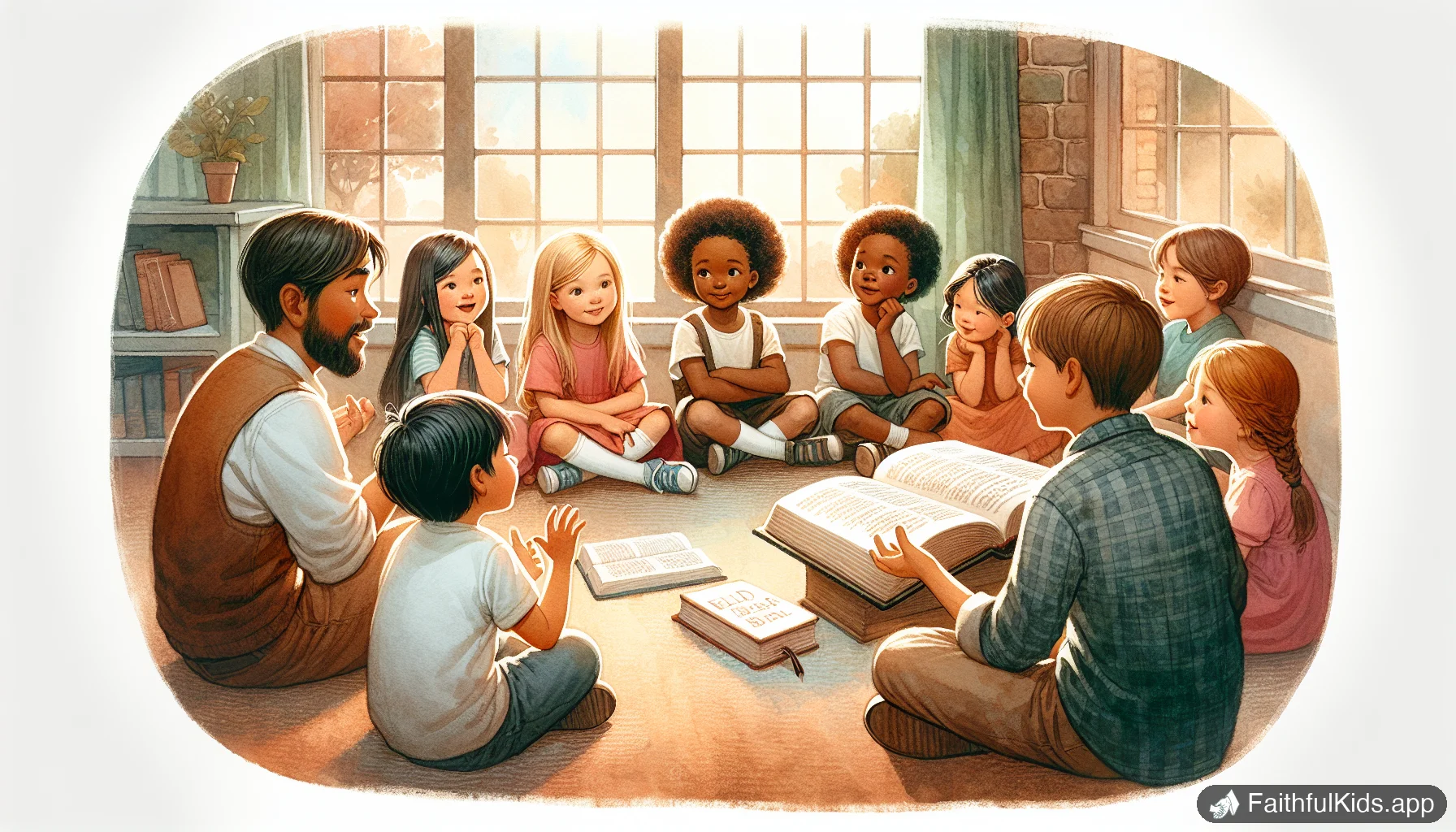
Here is the encouraging truth. God does not ask you to be a perfect parent. He asks you to be a faithful one. Deuteronomy 6:6-7 says, "These commandments that I give you today are to be on your hearts. Impress them on your children. Talk about them when you sit at home and when you walk along the road, when you lie down and when you get up." Faith is not transferred through a single dramatic event. It is woven into the ordinary fabric of daily life.
Here are eight practical, biblical strategies for raising godly kids -- not in a bubble, but right in the middle of the real world.
1. Model Faith Daily (They Watch More Than They Listen)
Children are excellent observers and terrible listeners. They may not remember the devotional you read last Tuesday, but they will remember how you handled a stressful situation, whether you prayed when things got hard, and how you treated people who were difficult.
Your faith has to be real before it can be transferred. Let your kids see you reading the Bible, not just telling them to read it. Let them hear you pray honestly, not just formally. When you mess up, apologize and tell them you need God's grace too. Authenticity is the most powerful parenting tool you have. If your own faith feels thin right now, a good book can refill the tank before you try to pour it out -- our list of must-read Christian parenting books is a place to start.
Scripture: "In everything set them an example by doing what is good" (Titus 2:7).
2. Create Spiritual Rhythms (Not Just Rules)
Kids thrive on routine, and spiritual habits are no different. The goal is not to create a rigid religious schedule but to build natural rhythms that make God a part of everyday life:
Morning: A one-sentence prayer before school. "God, help us be kind today."
Mealtime: A simple thank-you before eating. Let kids take turns.
Bedtime: A short Bible story or verse, followed by prayer. This is often the most meaningful moment of the day because kids are settled and open.
Weekly: Church together. Not as an obligation but as a family priority.
Seasonal: Mark Easter, Christmas, and other moments with their true meaning.
The rhythm matters more than the length. Five minutes of consistent daily connection with God will shape your child more than one marathon Bible study per month. If you are not sure where to begin, learn how to pray together as a family or build a simple family Bible time habit. Seasonal rhythms give you easy on-ramps too: a week of gratitude devotions around the Thanksgiving table often turns into a habit that outlasts November.
Scripture: "Train up a child in the way he should go; even when he is old he will not depart from it" (Proverbs 22:6).
3. Address Culture Honestly (Do Not Hide From It)
Some parents try to shield their kids from everything in secular culture. The intention is good, but the strategy has a shelf life. Eventually your child will encounter ideas that challenge their faith, and it is far better for them to encounter those ideas with you first than to be blindsided alone.
When a movie, a news story, or a schoolyard conversation brings up something that conflicts with your faith, do not panic. Use it as a conversation starter:
"What did you think about that?"
"What does the Bible say about this?"
"Why do you think other people believe differently?"
Your home should be the safest place for your child to ask hard questions. If they cannot ask you, they will ask someone else -- and you may not like the answers they get.
Scripture: "Always be prepared to give an answer to everyone who asks you to give the reason for the hope that you have. But do this with gentleness and respect" (1 Peter 3:15).
4. Build Church Community (Kids Need Other Believing Adults)
Your child needs more than just you to build a lasting faith. They need a community. Research consistently shows that young people who stay in the faith as adults typically had at least five non-parental adults who invested in their spiritual lives -- a Sunday school teacher, a youth leader, a family friend, a grandparent.
Get involved in a local church. Not because the church is perfect, but because faith was never meant to be a solo project. Your kids need to see that following Jesus is not just something your family does. It is something a whole community of people has committed their lives to.
Scripture: "Let us not giving up meeting together, as some are in the habit of doing, but encouraging one another" (Hebrews 10:25).
5. Use Stories and Media Wisely
Kids today spend hours each day in front of screens. You cannot eliminate that reality, but you can redeem it. Be intentional about what fills their eyes and ears:
Books: The Jesus Storybook Bible, The Action Bible, and the Chronicles of Narnia are classics for a reason.
Videos: Platforms like Faithful Kids offer animated Bible stories with quizzes and reflections that actually hold a child's attention.
Music: Worship music in the car or at home creates an atmosphere that sinks in over time.
Podcasts: There are wonderful Bible story podcasts made specifically for children.
The point is not to ban secular media but to make sure the balance tips toward content that feeds their soul. If your child spends three hours on entertainment and zero hours on anything faith-related, the math is working against you. Our guide to healthy screen time for Christian kids offers a practical framework.
Scripture: "Finally, brothers and sisters, whatever is true, whatever is noble, whatever is right, whatever is pure, whatever is lovely, whatever is admirable -- if anything is excellent or praiseworthy -- think about such things" (Philippians 4:8).
See what they get
Watch a Real Lesson From the App
Press play on In the Beginning Creation — a complete lesson exactly as your child sees it. 300+ episodes cover the whole Bible in order, each ending in a fun quiz to check what they learned.
A real lesson from the app — watch the whole thing free.
6. Teach Apologetics Age-Appropriately (Why We Believe)
At some point, your child will ask, "How do we know God is real?" or "Why do we believe the Bible?" These questions are not threats to faith. They are signs of a healthy, growing mind. Be ready for them, and keep our guide on explaining God to a child close at hand.
For young children, keep it simple: "Look at the trees, the stars, the ocean. Someone incredible made all of this." For older kids and tweens, go deeper: talk about the historical evidence for Jesus, the reliability of the Bible, answered prayers in your own life, and the changed lives you have seen.
You do not need a theology degree. You just need to be honest. "That is a great question. Let me think about it and we can talk more." A parent who takes their child's questions seriously will earn the right to shape their answers.
Scripture: "Come now, let us reason together, says the Lord" (Isaiah 1:18).
7. Celebrate Spiritual Milestones
We celebrate birthdays, graduations, and sports achievements. Why not celebrate spiritual milestones with the same enthusiasm?
First prayer: When a child prays on their own for the first time, make it a big deal.
First Bible: Give them their own Bible with their name inside. Let them choose a cover they love.
Baptism: Throw a party. Invite people. Take photos.
First time serving others: Whether it is helping at church or sharing with a friend, notice it and name it.
When you celebrate spiritual growth, you send a clear message: this matters. This is the most important part of your life, and we are proud of who you are becoming.
Scripture: "I have no greater joy than to hear that my children are walking in the truth" (3 John 1:4).
8. Give Them Room to Own Their Faith (Especially Teens)
This is the hardest one. At some point, your child's faith has to become their faith, not just yours. That means there may be seasons of questioning, doubt, or even rebellion. As painful as that is, it is often part of the process.
Do not tighten your grip so hard that you push them away. Instead, keep the door open. Keep praying. Keep showing up. Keep being the parent who loves unconditionally, just like God does.
Many adults who walk away from faith in their teens come back in their twenties or thirties -- often because the seeds their parents planted were deeper than anyone realized. Your job is to plant and water. God's job is to make it grow (1 Corinthians 3:6).
Scripture: "Fathers, do not exasperate your children; instead, bring them up in the training and instruction of the Lord" (Ephesians 6:4).
You Are Not Alone in This
Raising godly kids is not about having all the answers, running a perfect household, or never making mistakes. It is about showing up, day after day, with your own imperfect faith and trusting God to work through it.
Joshua 24:15 says it best: "But as for me and my household, we will serve the Lord." That declaration is not about perfection. It is about direction. You have chosen a direction for your family, and that choice matters more than you know.
Keep going. Keep praying. Keep reading the stories, having the conversations, and living the faith in front of your kids. And when you need backup, there is plenty of it: our roundup of tools and ministries built for Christian families covers everything from devotionals to curriculum. The seeds you plant today will bear fruit for generations.
Watch on Faithful Kids
Looking for a daily way to weave faith into your child's screen time? Faithful Kids offers animated Bible story videos, quizzes, and reflections designed for kids ages 7-15. It is Duolingo for the Bible -- and kids actually ask to watch it. Start your free trial today.
Frequently Asked Questions
At what age should I start teaching my child about God?
Start as early as possible. Even toddlers can learn simple prayers and hear Bible stories. The key is adjusting the complexity to their age. A 3-year-old can learn "God made you and loves you." A 10-year-old can discuss why David was called a man after God's own heart. Faith formation is a journey, not a single event.
How do I compete with all the secular influences my child is exposed to?
You do not have to compete. You have something secular culture cannot offer: a consistent, loving relationship built on truth. Focus on creating a home where faith feels natural, questions are welcome, and God's love is experienced, not just talked about. Over time, that foundation holds firm.
What if my child says they do not believe in God?
Do not panic. Doubt is normal and often healthy. Respond with curiosity, not anger. Ask what changed, what questions they have, and what they are struggling with. Keep praying for them, keep loving them, and keep living your faith authentically. Many people who question their faith as teens return to it as adults.
How do I handle disagreements with my spouse about how to raise kids spiritually?
Start with what you agree on and build from there. Even if one parent is more devout than the other, you can usually agree on values like kindness, honesty, gratitude, and service. Pray together about the differences and consider meeting with a pastor or counselor who can help you find common ground.
🌙 Free: The Bedtime Bible Kit
Seven nights of five-minute stories — a story, a prayer, and one question to whisper about.
Free printable + a few helpful emails. Unsubscribe anytime.