Blog/How to Start a Kids Bible Study Group at Your Church
Guide
How to Start a Kids Bible Study Group at Your Church
Ages 5+·10 min read··By Faithful Kids Team·Updated August 16, 2026
Starting a kids Bible study group at your church is one of the most impactful things you can do for the next generation. When children gather together to explore God's Word, they build friendships, deepen their faith, and develop habits that last a lifetime.
Whether you're a children's ministry director, a volunteer with a heart for kids, or a parent who wants more for your church community, this guide walks you through every step -- from choosing age groups to keeping parents engaged.
Step 1: Define Your Age Groups
Not all kids learn the same way. A five-year-old and a twelve-year-old need very different approaches to Scripture. Here's a breakdown that works well for most churches:
Early Elementary (Ages 5-7)
These kids are concrete thinkers. They love stories with clear heroes and villains, bright visuals, and hands-on activities. Focus on the major Bible narratives: Creation (Genesis 1-2), Noah's Ark (Genesis 6-9), David and Goliath (1 Samuel 17), and the birth of Jesus (Luke 2).
Upper Elementary (Ages 8-10)
Kids in this range are starting to ask "why" questions. They can handle deeper themes like forgiveness, courage, and trust. Stories like Joseph's journey (Genesis 37-50), Daniel in the lion's den (Daniel 6), and the parables of Jesus work beautifully.
Preteens (Ages 11-13)
Preteens are ready for application. They want to know how the Bible connects to their real lives -- friendships, school pressure, identity. The letters of Paul, the life of David, and Jesus' Sermon on the Mount (Matthew 5-7) give them plenty to wrestle with.
Pro tip: If your church is small, you can combine ages 5-10 into one group and 11-13 into another. Two groups is manageable and still allows age-appropriate teaching.
Step 2: Choose Your Curriculum
The curriculum you pick sets the tone for everything. Here are the main approaches:
Published Curriculum
Programs like Gospel Project for Kids, Orange/252 Kids, and Answers in Genesis offer complete lesson plans with videos, crafts, and discussion guides. The upside is that everything is done for you. The downside is cost -- expect $100-300 per quarter depending on the program.
Free Resources
Websites like Ministry-to-Children.com and The Bible App for Kids offer free lesson plans and printables. These require more preparation time but work well for churches on a budget. Our roundup of free Bible printables for kids is a good place to start.
Video-Based Learning
This is where modern tools shine. Programs like Faithful Kids use AI-generated video lessons where kids watch engaging Bible stories, then answer quiz questions and reflect on what they learned. Video-based approaches work especially well for volunteer-led groups because the teaching is built into the content -- your volunteers facilitate discussion rather than lecture.
DIY Approach
Some groups simply read a Bible passage together and discuss it. This works beautifully with preteens but can be challenging with younger kids who need more structure and visual engagement.
Step 3: Recruit and Train Volunteers
You need at least two adults per group (never one adult alone with children -- this is a safety and liability standard). Here's how to build your team:
Where to find volunteers:
Sunday morning announcements (be specific about the time commitment)
Personal invitations (people are 4x more likely to say yes when asked personally)
Parents of kids in the group (they're already invested)
College students and young adults (many are looking for ways to serve)
Training essentials:
Background checks for every volunteer (non-negotiable)
A 30-minute orientation covering your church's child safety policy
A walkthrough of the curriculum so they know what to expect
Permission to say "I don't know -- let's find out together" (this takes pressure off new volunteers)
As Proverbs 22:6 reminds us: "Train up a child in the way he should go; even when he is old he will not depart from it." Your volunteers are part of that sacred work.
If small hands need something to do while you read, the free wise men coloring page is made for exactly that.
Step 4: Structure Your Sessions
A typical kids Bible study session runs 45-60 minutes. Here's a structure that works across all age groups:
Opening (5-10 minutes)
Welcome, attendance, and an icebreaker question. Examples: "What's the best thing that happened this week?" or "If you could have any Bible character as a friend, who would it be?"
Worship (5-10 minutes)
Singing together builds community. You don't need a worship band -- a phone connected to a speaker playing kids' worship songs works great. Songs from Hillsong Kids, Yancy, or Seeds Family Worship are popular choices.
Lesson (15-20 minutes)
This is the core teaching time. Whether you're reading Scripture together, watching a video lesson, or having a volunteer teach, keep it interactive. Ask questions throughout. Use props. Move around the room.
Activity (10-15 minutes)
Reinforce the lesson with a craft, game, or hands-on object lesson. For the story of Noah, build an ark out of popsicle sticks. For David and Goliath, have kids write their "giants" (fears) on paper and crumple them up. For the feeding of the 5,000 (John 6:1-14), share a snack together and talk about generosity.
Closing (5 minutes)
Recap the main point, pray together, and give kids a take-home card with a verse to remember and a question to discuss with their parents.
Step 5: Create an Inviting Space
Your meeting space matters more than you think. Kids decide within the first 30 seconds whether they feel comfortable.
Decorate intentionally. You don't need a budget -- printed Bible verse posters, colorful tablecloths, and a designated "prayer wall" where kids can pin requests go a long way.
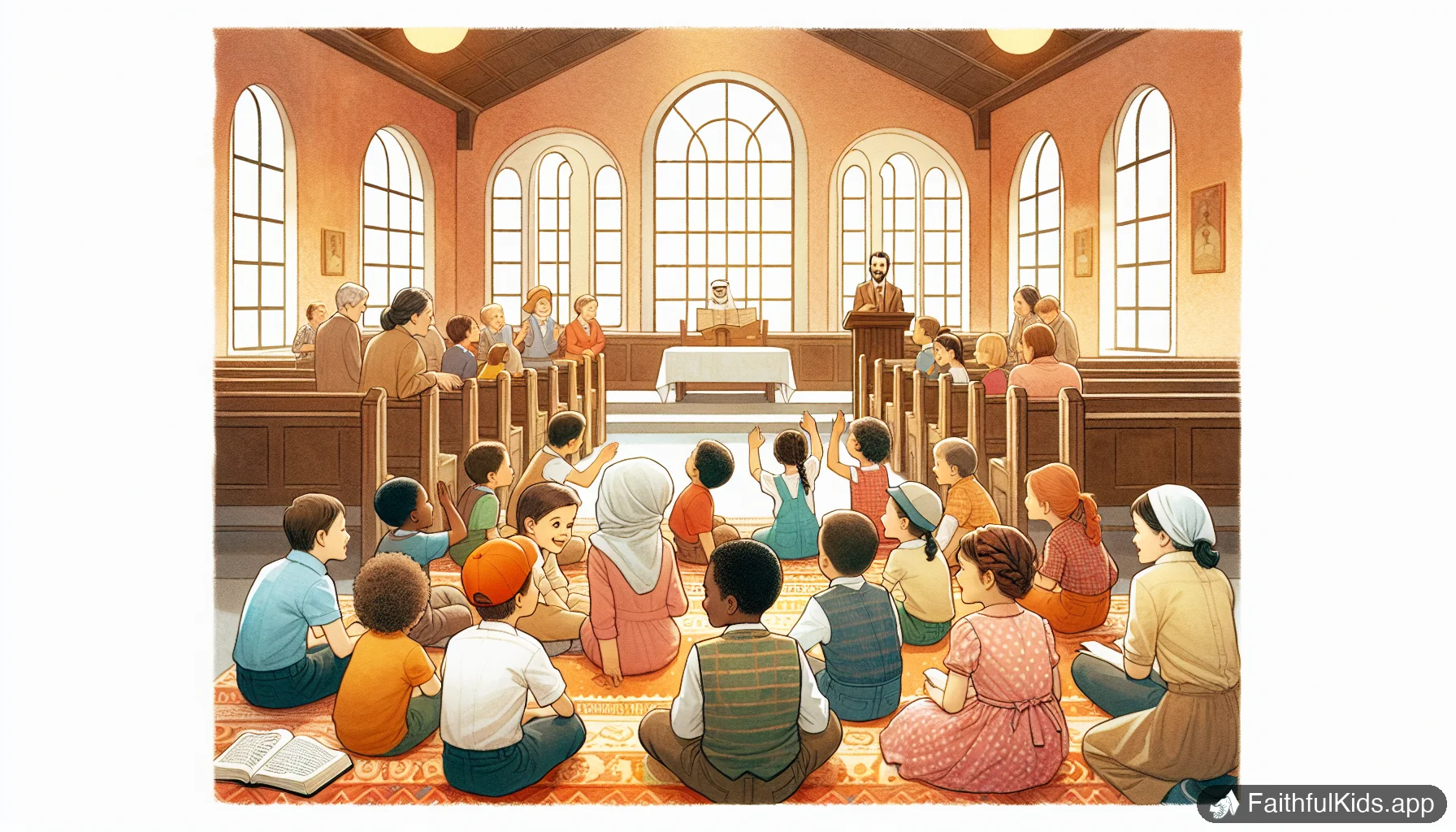
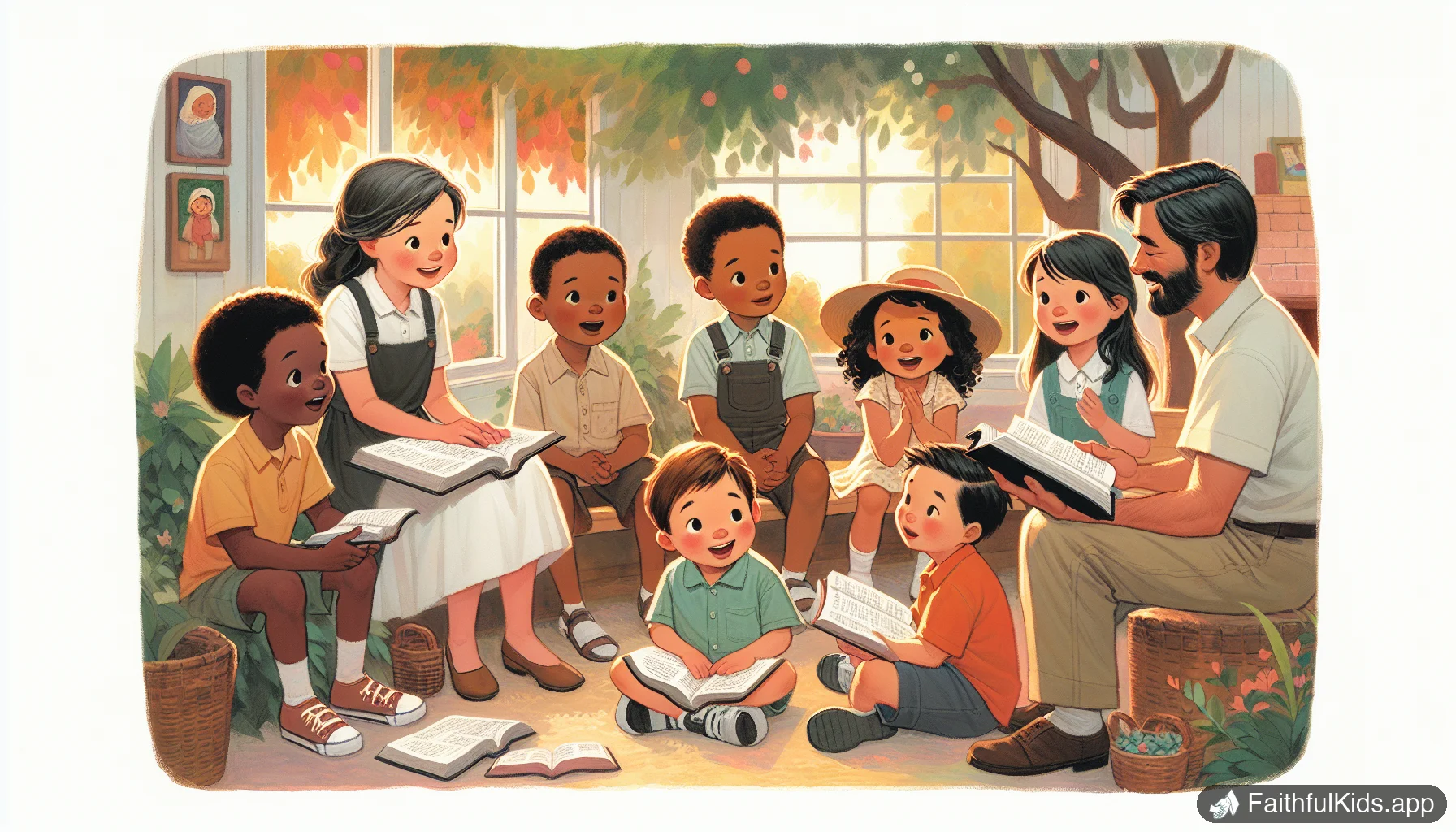
Have a consistent seating arrangement. Circles work better than rows for discussion. Floor cushions or beanbags create a relaxed atmosphere.
Set up a check-in system. Even if it's just a clipboard at the door, parents need to know their kids are accounted for.
Keep snacks simple. Goldfish crackers and water cups are classic for a reason. Always check for allergies.
Step 6: Engage Parents
This is the step most churches skip -- and it's the most important one. Research consistently shows that parents are the primary faith influencers in their children's lives. Your Bible study group is a supplement, not a replacement.
Weekly parent emails:
Send a short email after each session with three things: what the kids learned, the Bible verse of the week, and one dinner table question they can ask at home.
Take-home materials:
Give kids a physical card or printout to bring home. Something as simple as "This week we learned about Daniel's courage in Daniel 6. Ask me what happened in the lion's den!" bridges the gap between church and home.
Parent night:
Once a quarter, invite parents to sit in on a session. Let them see what their kids are learning. This builds trust and often turns parents into volunteers.
Digital tools:
Platforms like Faithful Kids let families continue the learning at home with video lessons, quizzes, and reflections. When kids can watch a Bible story on their tablet during the week, the conversation continues beyond Sunday.
See what they get
Watch a Real Lesson From the App
Press play on Daniel in the Lions Den — a complete lesson exactly as your child sees it. 300+ episodes cover the whole Bible in order, each ending in a fun quiz to check what they learned.
A real lesson from the app — watch the whole thing free.
Step 7: Plan Your Calendar
Consistency is everything with kids. They thrive on routine. Here's a sample annual calendar:
September-November: Old Testament Heroes (12 weeks)
December: Advent/Christmas Stories (4 weeks)
January-March: The Life of Jesus (12 weeks)
April: Holy Week Deep Dive (4 weeks)
May: Acts and the Early Church (4 weeks)
June-August: Summer break or lighter schedule (optional VBS tie-in)
Plan at least one special event per quarter: a family Bible trivia night, a service project, a movie night featuring a Bible-based film, or a family potluck.
Step 8: Measure and Adjust
After your first month, ask these questions:
Are kids coming back each week? (Retention matters more than attendance.)
Are kids engaged during the lesson, or restless?
Are volunteers feeling supported or overwhelmed?
Are parents receiving and reading your weekly updates?
Don't be afraid to adjust. Maybe your lesson time is too long. Maybe your preteens need a separate small group. Maybe video-based teaching works better than volunteer-led lectures. The best Bible study groups evolve.
Common Challenges (and How to Solve Them)
"We don't have enough volunteers."
Start with one group instead of three. It's better to do one age group well than three poorly. As the group grows, volunteers will emerge from within.
"Kids are distracted and won't sit still."
Shorten your lesson time and add more movement. Bible games for kids, acting out Bible stories, and hands-on activities keep energy focused. A quick round of Bible trivia at the end of a lesson also works wonders for review.
"Parents aren't engaged."
Make it easy. A two-sentence text message with the week's verse and one question is more effective than a long email most parents won't read.
"We can't afford curriculum."
Use free online resources, or go DIY with a Bible, printed discussion questions, and a simple craft. Video platforms like Faithful Kids offer affordable subscriptions that cover the teaching for you.
The Eternal Impact
Jesus said in Matthew 19:14, "Let the little children come to me and do not hinder them, for the kingdom of heaven belongs to such as these." Starting a kids Bible study group is answering that call.
You don't need a perfect plan. You don't need a big budget. You need willing hearts, open Bibles, and a commitment to showing up week after week. The seeds you plant today will bear fruit for generations.
Watch on Faithful Kids
Ready to supplement your kids Bible study with engaging video lessons? Faithful Kids offers hundreds of animated Bible stories with built-in quizzes and reflections -- perfect for church groups and family devotions.
When the kids' round ends, hand the grown-ups our Bible trivia for adults -- the warm-up round catches almost everyone on the stories they think they know.
Frequently Asked Questions
What age is best to start a kids Bible study group?
Kids as young as five can participate in a structured Bible study group with age-appropriate materials. Stories with strong visuals and simple lessons work best for younger children, while kids ages 8 and up can handle deeper discussion and application questions.
How many volunteers do I need for a kids Bible study?
Plan for at least two adults per group as a safety standard. For groups larger than 15 kids, add one volunteer for every 5-7 additional children. This ensures every child gets attention and every volunteer has support.
How long should a kids Bible study session last?
Aim for 45-60 minutes for elementary-age kids. Younger children (ages 5-7) do best with 30-45 minute sessions, while preteens can handle a full hour. The key is variety within the session -- don't spend more than 15-20 minutes on any single activity.
Can I use video lessons for kids Bible study at church?
Absolutely. Video-based curriculum like Faithful Kids is increasingly popular because it provides consistent, engaging teaching regardless of volunteer experience. Many churches use video lessons as the core teaching and then have volunteers lead discussion and activities afterward.
🌙 Free: The Bedtime Bible Kit
Seven nights of five-minute stories — a story, a prayer, and one question to whisper about.
Free printable + a few helpful emails. Unsubscribe anytime.