Lent is one of the most meaningful seasons in the Christian calendar, but for kids, it can feel mysterious. Why 40 days? Why do people give stuff up? What does it all have to do with Easter?
This guide explains Lent in language kids understand, then gives your family a complete 40-day plan with weekly themes, daily Bible readings, and simple activities. By the time Easter arrives, your children won't just know the holiday -- they'll feel it.
What Is Lent?
Lent is a 40-day season of preparation before Easter. It starts on Ash Wednesday and ends on Holy Saturday (the day before Easter Sunday). Sundays are not counted in the 40 days because every Sunday is a mini-celebration of the resurrection.
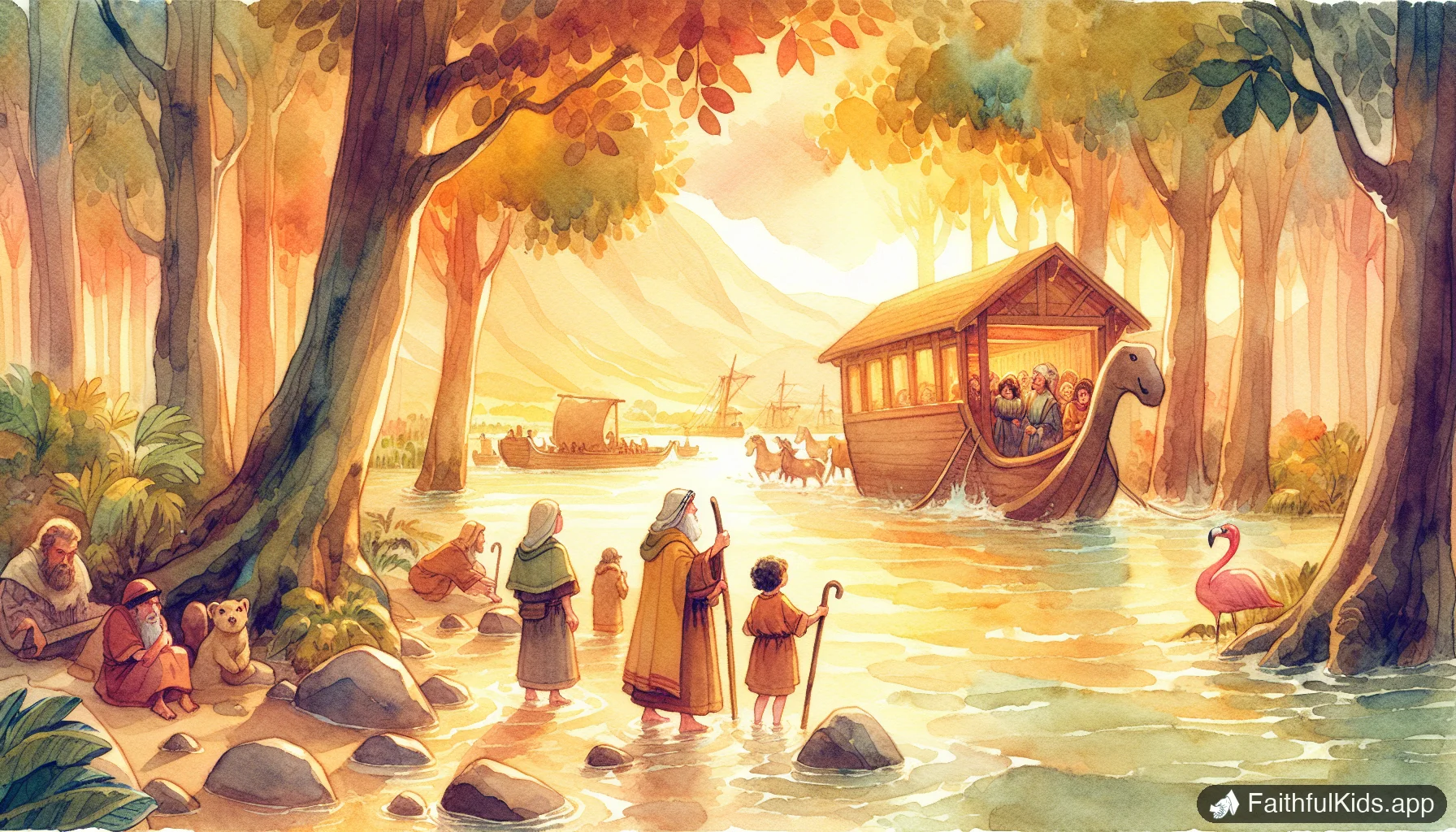
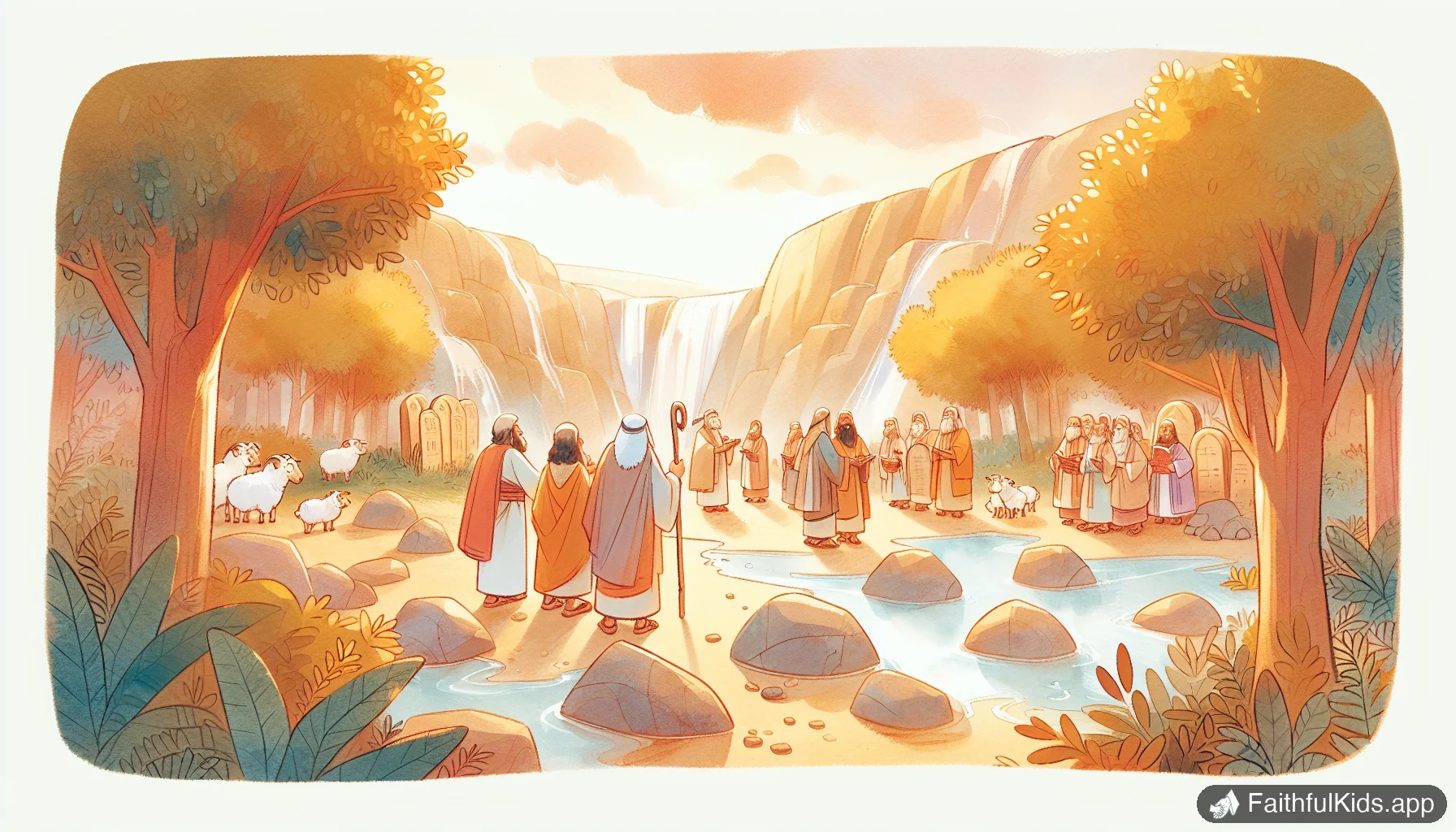
Why 40 days? The number 40 appears all over the Bible. It rained 40 days during the flood (Genesis 7:12). Moses spent 40 days on Mount Sinai (Exodus 24:18). The Israelites wandered 40 years in the wilderness (Numbers 14:33). And Jesus fasted 40 days in the desert before beginning His ministry (Matthew 4:1-2) -- a story we retell in The Temptation in the Desert for kids. Forty is a number of testing, preparation, and transformation.
Why do people give something up? Giving up something during Lent (like sweets, TV, or video games) is a way of practicing self-discipline and making space for God. When you feel the urge for the thing you gave up, it's a reminder to pray instead. But Lent isn't just about giving up -- many families also take something on, like a daily Bible reading, a service project, or extra prayer time.
How to explain it to a young child: "Lent is 40 days when we get our hearts ready for Easter. We remember what Jesus went through for us, and we practice listening to God more than usual. Some people give up something they like to make more room for God. Some people add something good, like helping others. It's like training your heart."
The 40-Day Plan: Weekly Themes and Daily Readings
Week 1: Creation and the Fall (Days 1-6)
Theme: God made a beautiful world, and sin broke it. Lent begins with why we need a Savior.
| Day | Reading | Focus |
|---|
| 1 (Ash Wed) | Genesis 1:1-5 | God creates light from darkness |
| 2 | Genesis 1:26-31 | God creates people in His image |
| 3 | Genesis 2:15-17 | The one rule in the garden |
| 4 | Genesis 3:1-13 | The fall: sin enters the world |
| 5 | Genesis 3:14-24 | The consequence -- and the first promise (3:15) |
| 6 | Psalm 51:10 | "Create in me a clean heart, O God" |
On Ash Wednesday, talk about what your family will do differently during Lent. Each person picks one thing to give up and one thing to add. Write them on a poster and hang it where everyone can see.
Week 2: God's Faithfulness (Days 7-12)
Theme: Even after the fall, God never stopped loving His people or keeping His promises.
| Day | Reading | Focus |
|---|
| 7 | Genesis 6:9-14 | Noah: faithful in a broken world |
| 8 | Genesis 9:12-17 | God's rainbow promise |
| 9 | Genesis 12:1-3 | God's promise to Abraham |
| 10 | Genesis 22:1-14 | Abraham trusts God with Isaac |
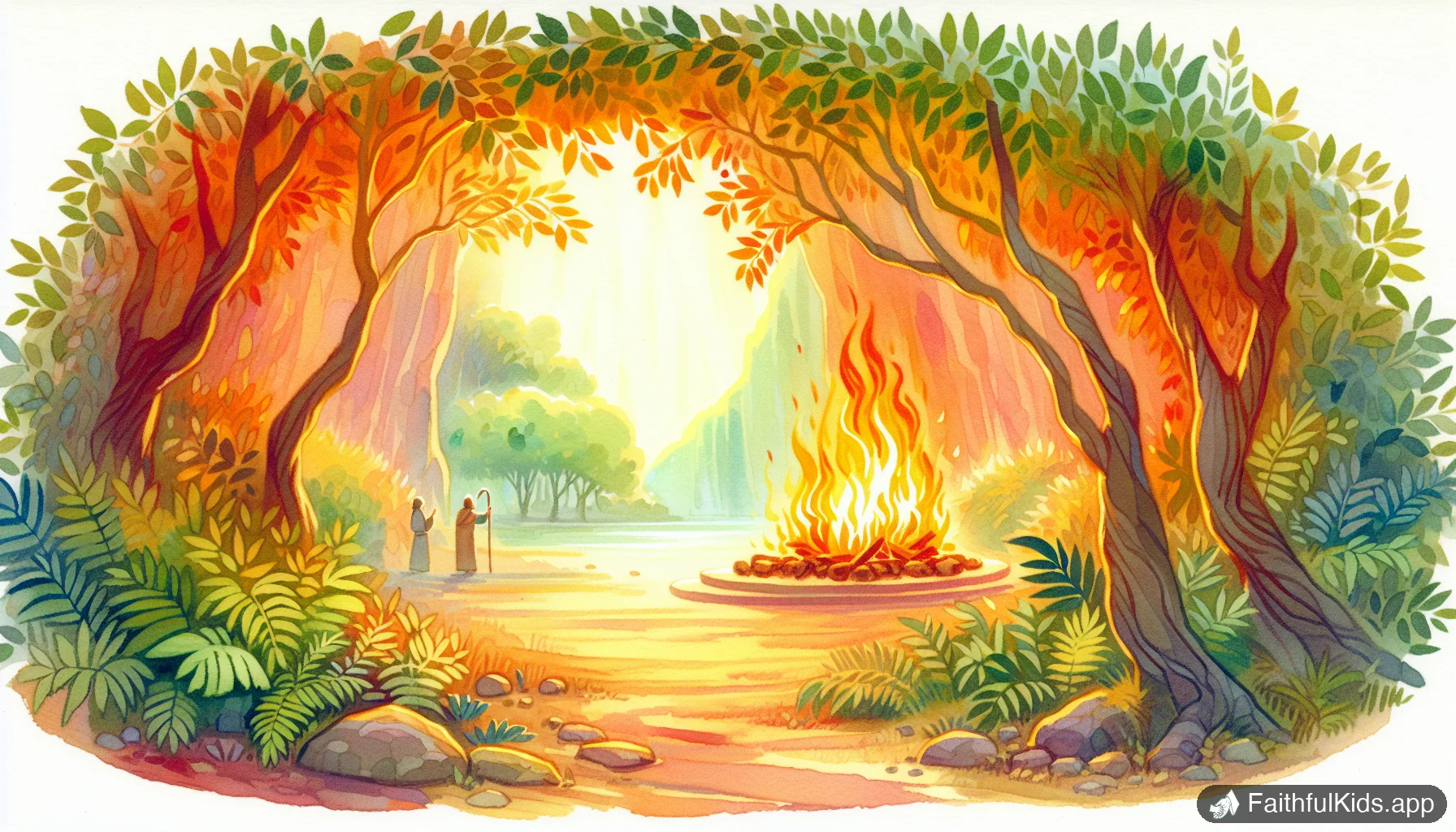
| 11 | Exodus 3:1-14 | God calls Moses from the burning bush |
| 12 | Exodus 14:21-29 | God parts the Red Sea |
Make a "God is faithful" jar. Each day this week, write one way God has been faithful to your family on a slip of paper and drop it in the jar. Read them all together at the end of the week.
Week 3: The Law and the Prophets (Days 13-18)
Theme: God gave His people laws to live by and prophets to point them toward the coming Messiah.
| Day | Reading | Focus |
|---|
| 13 | Exodus 20:1-17 | The Ten Commandments |
| 14 | Deuteronomy 6:4-9 | Love God with all your heart |
| 15 | 1 Samuel 16:7 | God looks at the heart |
| 16 | Isaiah 9:6-7 | A child will be born -- the Prince of Peace |
| 17 | Isaiah 53:3-6 | The suffering servant |
| 18 | Micah 5:2 | The Messiah will come from Bethlehem |
Write Isaiah 9:6 on a large piece of paper. Decorate it together. Talk about each of Jesus' names: Wonderful Counselor, Mighty God, Everlasting Father, Prince of Peace. Which name means the most to your family right now?
Week 4: Jesus' Life and Ministry (Days 19-24)
Theme: Jesus came, and everything changed. This week covers His birth, baptism, temptation, and teaching.
| Day | Reading | Focus |
|---|
| 19 | Luke 2:1-7 | Jesus is born in Bethlehem |
| 20 | Matthew 3:13-17 | Jesus is baptized |
| 21 | Matthew 4:1-11 | Jesus is tempted for 40 days |
| 22 | Matthew 5:1-12 | The Beatitudes |
| 23 | Matthew 6:9-13 | Jesus teaches us to pray (The Lord's Prayer) |
| 24 | John 13:34-35 | A new commandment: love one another |
Memorize the Lord's Prayer together this week. Say it at bedtime each night. By the end of the week, see if everyone can say it from memory. Talk about what each line means -- our
Lord's Prayer for kids explained guide breaks it down line by line.
Week 5: Jesus' Miracles and Parables (Days 25-30)
Theme: Jesus showed His power through miracles and His wisdom through stories.
| Day | Reading | Focus |
|---|
| 25 | John 6:1-14 | Feeding the 5,000 |
| 26 | Mark 4:35-41 | Jesus calms the storm |
| 27 | Luke 15:11-24 | The prodigal son |
| 28 | Luke 10:25-37 | The Good Samaritan |
| 29 | John 11:38-44 | Jesus raises Lazarus |
| 30 | Matthew 14:22-33 | Jesus walks on water |
Act out one of this week's stories. Assign roles, use simple props (blankets for waves, crackers for bread), and perform it together. Kids who are shy can be the narrator. Take a video to watch later.
Week 6: The Road to the Cross (Days 31-36)
Theme: Jesus sets His face toward Jerusalem. The tension builds. This week covers the events leading up to His arrest. For a fuller walkthrough of this final week, see Holy Week day by day for kids.
| Day | Reading | Focus |
|---|
| 31 | Matthew 21:1-11 | Palm Sunday: the triumphal entry |
| 32 | John 13:1-17 | Jesus washes the disciples' feet |
| 33 | Luke 22:14-20 | The Last Supper |
| 34 | Matthew 26:36-46 | Gethsemane: "Not my will, but yours" |
| 35 | Matthew 26:47-56 | Jesus is arrested |
| 36 | Matthew 26:69-75 | Peter denies Jesus three times |
On the day you read about the Last Supper, have a special family meal. Break bread together. Pour grape juice. Read Luke 22:19-20. Talk about what it means that Jesus shared a meal with His friends knowing what was about to happen.
Final Days: The Cross and the Tomb (Days 37-40)
Theme: The hardest days -- and the most important. Jesus' trial, death, and burial.
| Day | Reading | Focus |
|---|
| 37 | Matthew 27:11-26 | Jesus before Pilate |
| 38 | Matthew 27:27-44 | The crucifixion |
| 39 | Luke 23:44-49 | "Father, into your hands I commit my spirit" |
| 40 | Matthew 27:57-66 | Jesus is buried; the tomb is sealed |
On Good Friday (Day 38 or 39), make a simple wooden cross from sticks or craft sticks. Each family member writes one sin or burden on a small piece of paper and tapes it to the cross. Pray together, thanking Jesus for carrying those things for you. Keep the cross until Easter morning.
Easter Sunday: He Is Risen
Read: Matthew 28:1-10
This isn't part of the 40 days -- it's the day everything Lent has been building toward. The tomb is empty. The stone is rolled away. Jesus is alive.
Family Activity: Bring the cross from Good Friday outside. Remove the papers with sins and burdens. Replace them with flowers, ribbons, or colorful paper. The cross of death has become a symbol of life. Celebrate with a special breakfast, worship music, and the best news in history: He is risen. Keep the celebration going with these Easter Bible stories for kids and a round of Easter Bible trivia.
Helping Kids Understand Sacrifice
One of the hardest concepts for kids during Lent is sacrifice -- why Jesus had to die and what it means for them. Here's a simple way to explain it:
"Imagine you broke something very valuable -- something that could never be repaired with money. The cost was too high for you to pay. But someone who loved you stepped in and said, 'I'll pay for it.' That's what Jesus did. The 'broken thing' is sin -- everything in the world that goes wrong when people turn away from God. The cost was a perfect life. And Jesus paid it willingly because He loves you more than you can understand."
Don't rush through the hard parts of Lent to get to Easter. The joy of resurrection is deepest when you've felt the weight of the cross.
For the season, we keep a set of free Easter coloring pages — print as many as your class needs.
Making Lent a Family Tradition
Lent works best when it's consistent and communal:
- Read together at the same time each day -- bedtime works well.
- Use a visual tracker. Color in one square per day on a chart, or move a figure along a path toward the cross and then the empty tomb.
- Talk about what you're experiencing. Did giving something up feel hard today? Did the Bible reading make you think about something? Share openly.
- Let kids lead. By week 3, your kids might want to read the passages themselves or choose the family activity. Let them.
Watch on Faithful Kids
Bring Lent to life with animated Bible stories your kids will love. Faithful Kids covers the full journey from creation to resurrection with engaging video lessons, interactive quizzes, and guided reflections -- perfect for daily Lenten devotions.
Start your free trial at faithfulkids.app/quiz
Frequently Asked Questions
At what age should I start observing Lent with my kids?
Children as young as 4-5 can participate in simplified Lent activities -- giving up a treat, reading a short Bible story, and counting down to Easter. By ages 7-8, kids can engage with the daily readings and deeper discussions. Adjust the complexity to your child's maturity.
Do kids have to give something up for Lent?
No. While giving something up is a traditional Lenten practice, it's not required. Many families focus on adding something instead: daily Bible reading, acts of service, extra prayer time, or giving to those in need. The goal is drawing closer to God, not just self-denial.
Is Lent only for Catholic families?
While Lent has deep roots in Catholic and Orthodox tradition, many Protestant and evangelical families observe it too. The practices -- prayer, fasting, Scripture reading, and reflection on the cross -- are universally Christian. Adapt it to fit your family's tradition.
How do I explain Good Friday to young children without scaring them?
Focus on the love, not the violence. "Jesus loved us so much that He chose to go through something very painful so we could be close to God forever." Answer questions honestly but age-appropriately. Emphasize that the story doesn't end on Friday -- Sunday is coming. For more help, read how to explain Easter to a child.