Philemon Bible Trivia: 20 Questions and Answers for Kids
Ages 5+·8 min read··By Faithful Kids Team·Updated August 15, 2026
These 20 Philemon Bible trivia questions cover the shortest of Paul's letters -- just one chapter and 25 verses -- with answers and verse references included after every question. They're sorted into easy (ages 5-8), medium (ages 9-12), and hard (teens and adults) rounds so the whole family can play together.
Philemon is the Bible book most people have never actually read, which makes it a secret weapon for trivia night -- and once your kids hear the story of the runaway slave Onesimus, they won't forget it. You can read the entire book out loud in about two minutes before you start the quiz.
▶ PLAY NOW · FREE
Philemon Bible Trivia
10 questions · about 2 min · no sign-up
Question 1 of 10Score: 0
Who wrote the letter to Philemon?
Guess out loud first — then see if you got it.
What Is the Book of Philemon About?
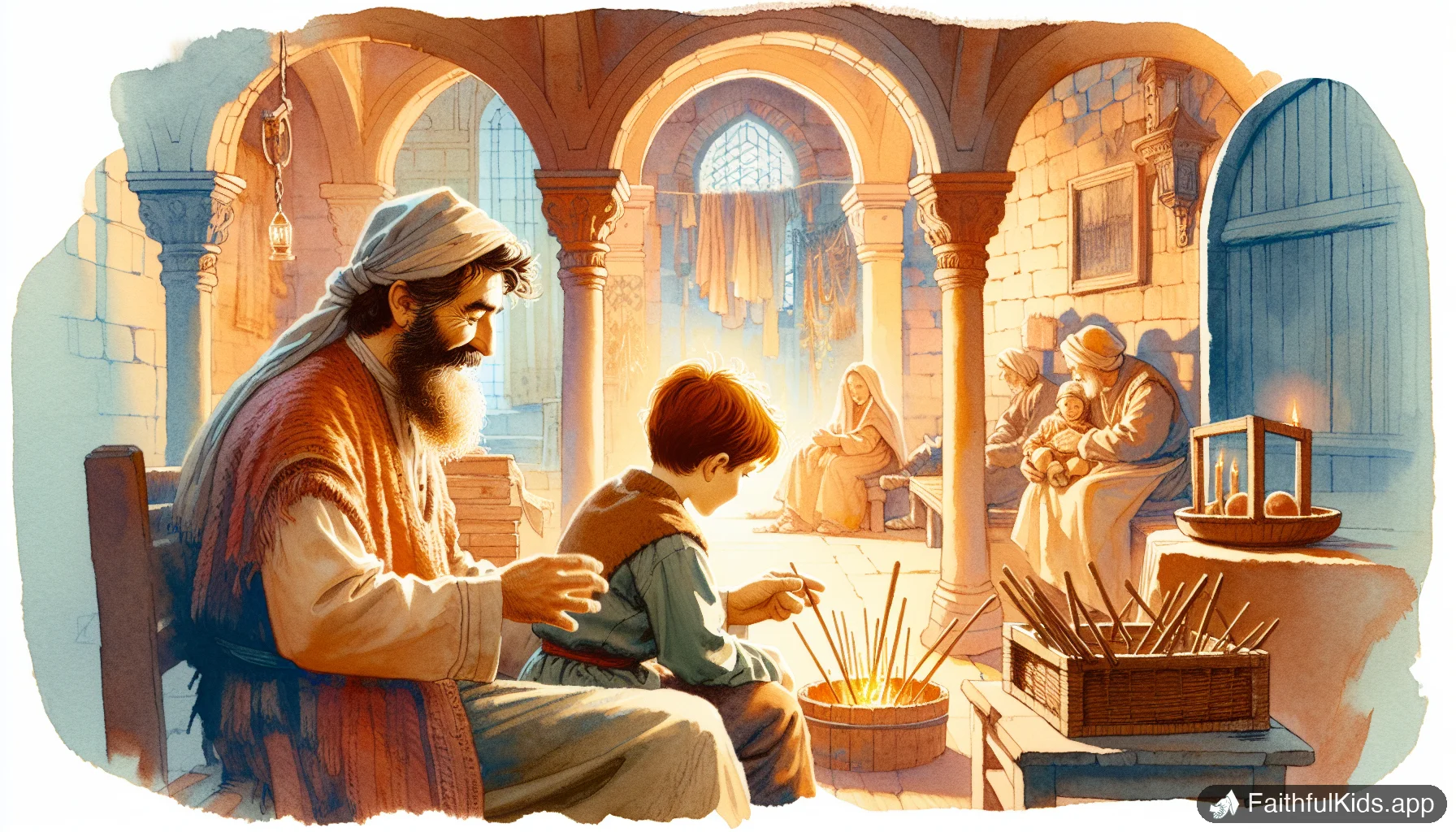
The book of Philemon is a short personal letter from the apostle Paul asking a Christian named Philemon to welcome back his runaway slave, Onesimus -- not as a slave, but "as a dear brother" (Philemon 1:16). Onesimus had left Philemon, crossed paths with Paul in prison, and become a Christian there -- Paul calls him "my son... who became my son while I was in chains" (Philemon 1:10).
Paul wrote the letter during an imprisonment, traditionally his house arrest in Rome around AD 60, and sent it along with Onesimus himself -- imagine carrying the letter that decides your own future. Philemon most likely lived in Colossae, since Paul's letter to the Colossians calls Onesimus "one of you" (Colossians 4:9), and several of the same people appear in both letters. It's the closest thing in the Bible to reading someone's private mail, and every line is a masterclass in how to ask someone to forgive.
Why Does This Tiny Letter Matter?
Philemon matters because it shows the gospel quietly dismantling the walls between people: in Christ, a master and his runaway slave become brothers. Paul had every right as an apostle to simply give orders -- and he says so -- "yet I prefer to appeal to you on the basis of love" (Philemon 1:8-9). He doesn't demand; he persuades, vouches, and even offers to pay Onesimus's debts himself: "If he has done you any wrong or owes you anything, charge it to me" (Philemon 1:18).
There's also a tantalizing "what happened next" for curious kids. The Bible never records Philemon's answer -- but the fact that the letter survived and was copied into the New Testament strongly suggests he said yes. And about fifty years later, a church leader named Ignatius wrote about a bishop of Ephesus named Onesimus; some scholars think he may have been the same man, the runaway slave who became a leader in the church. We can't be sure, but it makes a great dinner-table debate.
That's also what makes the letter such a vivid picture of what Jesus does for us -- someone innocent stepping in and saying "put it on my account." Parents can pair it with our posts on Bible stories about forgiveness and Bible verses about forgiveness for a full lesson. And there's a wordplay kids love: the name Onesimus means "useful," so Paul jokes that the runaway was "formerly... useless to you, but now he has become useful both to you and to me" (Philemon 1:11). The Bible has puns -- and this is one of them.
Easy Philemon Trivia Questions (Ages 5-8)
Who wrote the letter to Philemon? The apostle Paul, along with Timothy (Philemon 1:1)
How many chapters does Philemon have? One -- just 25 verses, the shortest of Paul's letters (Philemon 1)
Who was Onesimus? Philemon's slave, who had run away and met Paul in prison (Philemon 1:10, 15-16)
What happened to Onesimus while Paul was in chains? He became a believer -- Paul calls him "my son" (Philemon 1:10)
Where did the church meet? In Philemon's home (Philemon 1:2)
Paul asked Philemon to take Onesimus back no longer as a slave, but as a what? A dear brother (Philemon 1:16)
Medium Philemon Trivia Questions (Ages 9-12)
What does the name Onesimus mean? "Useful" (see the wordplay in Philemon 1:11)
Complete Paul's pun: "Formerly he was to you, but now he has become both to you and to me." Useless... useful (Philemon 1:11)
What did Paul offer to do about anything Onesimus owed? Charge it to Paul -- "I will pay it back" (Philemon 1:18-19)
What did Paul gently remind Philemon that he owed Paul? His very self (Philemon 1:19)
What did Paul ask Philemon to prepare, because he hoped to visit? A guest room (Philemon 1:22)
Besides Philemon, which woman and which "fellow soldier" are greeted at the start of the letter? Apphia and Archippus (Philemon 1:2)
How did Paul describe sending Onesimus back? "I am sending him -- who is my very heart -- back to you" (Philemon 1:12)
Hard Philemon Trivia Questions (Teens and Adults)
Paul said he could be bold and order Philemon to do the right thing -- but he preferred to appeal on the basis of what? Love (Philemon 1:8-9)
How does Paul describe himself in verse 9, besides being a prisoner? As an old man (Philemon 1:9)
Which "fellow prisoner" sends greetings at the end of the letter? Epaphras (Philemon 1:23)
Four other coworkers send greetings -- name two of them. Mark, Aristarchus, Demas, and Luke (any two) (Philemon 1:24)
In which city did Philemon most likely live, based on Colossians calling Onesimus "one of you"? Colossae (Colossians 4:9)
What had Philemon's love done for the Lord's people? Refreshed their hearts (Philemon 1:7)
What was Paul confident Philemon would do? Even more than Paul asked (Philemon 1:21)
How to Use These Questions
Read the whole letter aloud first -- it takes about two minutes -- and then quiz, which turns trivia into a memory game and guarantees even the youngest kids can score. Philemon makes a great "mystery book" round at a family Bible trivia night, since almost no adult can answer these cold. Afterward, talk through the big question together: why did Paul ask instead of command?
For more rounds, pull from our New Testament trivia questions, and use our books of the Bible for kids guide to show where this one-page letter hides between Titus and Hebrews. If your kids catch the quizzing bug, our video lessons at Faithful Kids pair every Bible story with a quiz and keep the streak going all week.
For a screen-based round, our Bible trivia game keeps score for you so everyone can just play.
Leaders who want a round for themselves should try our hard Bible trivia for adults, 50 questions with answers and verse references.
Frequently Asked Questions
Who wrote the book of Philemon?
The apostle Paul wrote Philemon, opening the letter as "Paul, a prisoner of Christ Jesus," with Timothy alongside him (Philemon 1:1). He wrote it from prison, traditionally during his house arrest in Rome around AD 60, and sent it with Onesimus himself. For Paul's full story, see our guide to who Paul was.
How many chapters does Philemon have?
Philemon has exactly one chapter with 25 verses, making it the shortest of Paul's thirteen letters. That's why verses are cited as "Philemon 1:6" or simply "verse 6."
Who was Onesimus in the Bible?
Onesimus was Philemon's slave, who ran away, met Paul in prison, and became a Christian there (Philemon 1:10). His name means "useful," and Paul sent him back to Philemon with this letter, asking that he be received "no longer as a slave... but as a dear brother" (Philemon 1:16). Colossians 4:9 calls him "our faithful and dear brother," showing he carried that letter too.
What is the main message of Philemon?
The main message is forgiveness and reconciliation: in Christ, a wronged master and his runaway slave become brothers. Paul models it by offering to pay Onesimus's debts himself -- "charge it to me" (Philemon 1:18) -- a living picture of what Jesus does for us.
Does the book of Philemon condemn slavery?
Philemon doesn't issue a command about slavery as an institution -- it does something more personal, asking a master to receive his slave "no longer as a slave" but as "a dear brother" (Philemon 1:16). Christians through history, including many abolitionists, have seen in that verse the seed that makes owning a brother unthinkable.
What age can kids start learning Philemon?
Kids as young as 5 or 6 can follow Philemon, because at heart it's a simple story: someone ran away, someone forgave, and a friend paid the debt. Older kids and teens can dig into the deeper questions -- why Paul persuaded instead of commanded, and how the letter echoes the gospel itself.
🎯 Free: The Family Bible Trivia Pack
100 printable questions for game night, car rides, and Sunday school — answers included.
Free printable + a few helpful emails. Unsubscribe anytime.