Blog/Who Was Moses? Bible Story for Kids Explained Simply
Guide
Who Was Moses? Bible Story for Kids Explained Simply
Ages 5+·11 min read··By Faithful Kids Team·Updated August 16, 2026
Moses is one of the most important people in the entire Bible. God used him to free an entire nation from slavery, to part the Red Sea, to receive the Ten Commandments, and to lead the Israelites through the wilderness for 40 years. His story is full of adventure, miracles, and faith -- and it all started with a tiny baby in a basket.
If your child has ever wondered who Moses was and why he matters, this guide walks through his incredible life in a way kids can understand and remember.
A Baby in a Basket (Exodus 1-2)
Moses was born at a very dangerous time. The Israelites -- God's people -- were living in Egypt, and they had become slaves to Pharaoh, the king of Egypt. Pharaoh was afraid because there were so many Israelites. He worried they might become too powerful. So he gave a terrible order: every Israelite baby boy must be thrown into the Nile River.
When Moses was born, his mother, Jochebed, knew she had to protect him. She hid him for three months. But when she couldn't hide him any longer, she came up with a brave plan. She made a waterproof basket, placed baby Moses inside, and set it among the reeds along the bank of the Nile River. His big sister, Miriam, stood nearby to watch.
Then something amazing happened. Pharaoh's own daughter came to the river to bathe. She spotted the basket, opened it, and found the crying baby inside. She felt sorry for him. Miriam bravely stepped forward and asked, "Shall I go and get one of the Hebrew women to nurse the baby for you?" Pharaoh's daughter agreed, and Miriam ran to get their own mother.
So Moses's mother got to raise him -- and she was even paid to do it. When Moses was old enough, he went to live in Pharaoh's palace and was raised as an Egyptian prince. (We retell this rescue in A Baby in a Basket for kids.)
Key lesson for kids: God was watching over Moses from the very beginning. Even when things seemed hopeless, God had a plan. He can protect us in ways we never expect.
Running Away (Exodus 2:11-25)
When Moses grew up, he saw how badly the Egyptian slave masters were treating the Israelites. One day, he saw an Egyptian beating a Hebrew slave, and in anger, Moses killed the Egyptian. When Pharaoh found out, Moses had to run for his life.
He fled far away to a land called Midian. There, he became a shepherd, married a woman named Zipporah, and lived a quiet life for 40 years. It might have seemed like Moses's story was over. But God was just getting started.
Key lesson for kids: Sometimes our biggest mistakes don't disqualify us from God's plans. Moses made a terrible choice, but God didn't give up on him. God is a God of second chances.
The Burning Bush (Exodus 3-4)
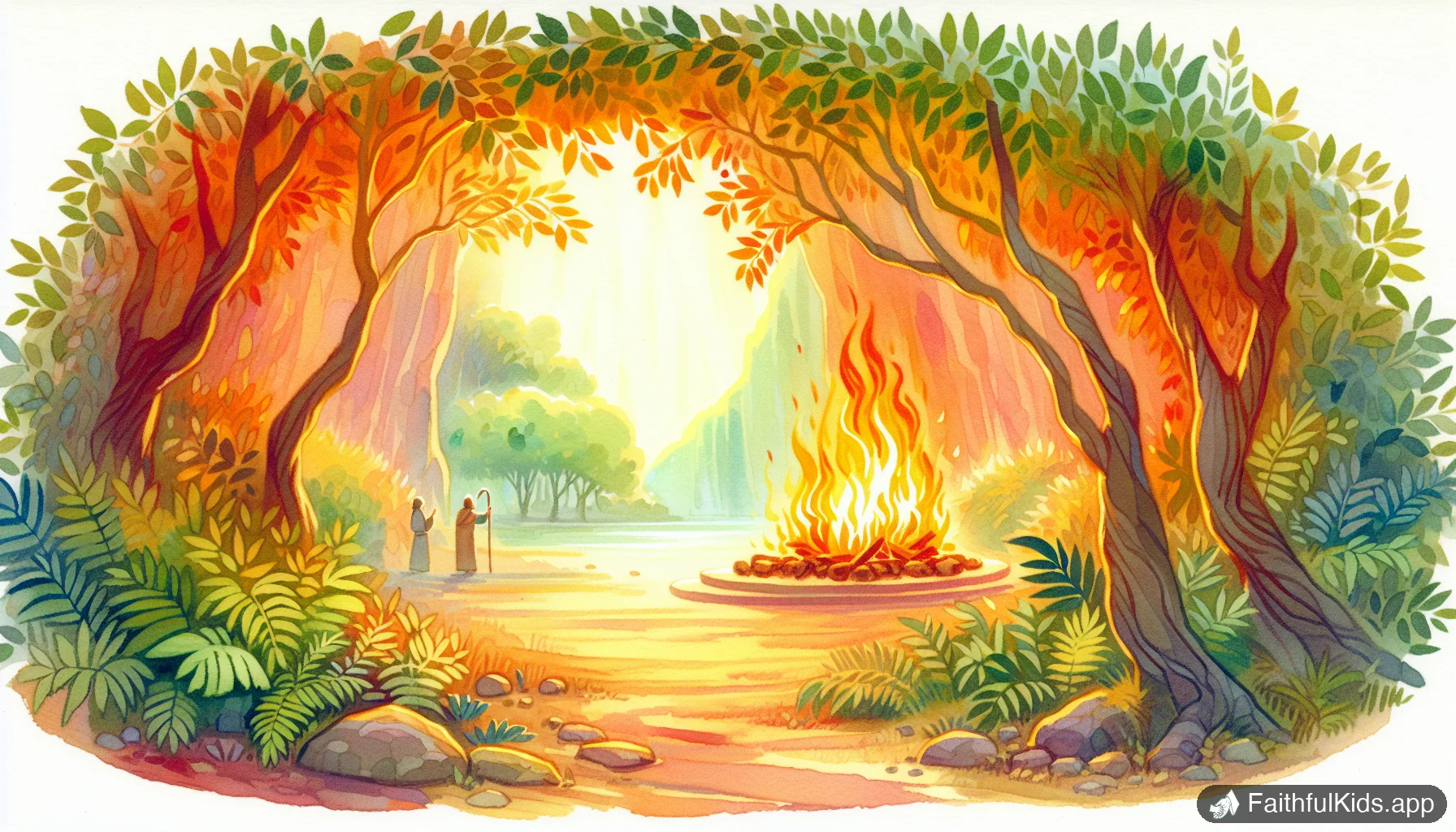
One day, while Moses was tending his sheep near a mountain called Horeb, he saw something strange -- a bush that was on fire but wasn't burning up. When Moses went closer to look, God spoke to him from the bush.
"Moses! Moses!"
"Here I am," Moses replied.
God told Moses that He had seen the suffering of His people in Egypt and had come to rescue them. And He wanted Moses to be the one to go to Pharaoh and say, "Let my people go."
Moses was scared. He gave God excuse after excuse. "Who am I to do this?" "What if they don't believe me?" "I'm not a good speaker." But God answered every objection. He even gave Moses his brother Aaron to help him speak. Finally, Moses said yes.
Key lesson for kids: God doesn't call people who are perfect or confident. He calls people who are willing. Moses was afraid and full of doubts, but God equipped him for everything He asked him to do. (There's more in The Burning Bush for kids.)
There is a free Red Sea coloring page on our site too, printable on one sheet with no sign-up.
The Ten Plagues (Exodus 7-12)
Moses went to Pharaoh and delivered God's message: "Let my people go." But Pharaoh refused. His heart was hard, and he didn't believe in Moses's God. So God sent ten plagues on Egypt to show His power and convince Pharaoh to free the Israelites.
The ten plagues were:
Water turned to blood -- The Nile River turned to blood, and all the fish died.
Frogs -- Frogs swarmed everywhere, even in people's beds and ovens.
Gnats -- Dust turned to gnats that covered people and animals.
Flies -- Thick swarms of flies filled Egyptian homes (but not Israelite homes).
Livestock disease -- Egyptian cattle, horses, and donkeys died.
Boils -- Painful sores broke out on Egyptian people and animals.
Hail -- Massive hailstones destroyed crops and killed animals left outside.
Locusts -- Swarms of locusts ate every green plant left in Egypt.
Darkness -- Total darkness covered Egypt for three days (but the Israelites had light).
Death of the firstborn -- The firstborn son in every Egyptian family died.
Before the last plague, God told the Israelites to mark their doorposts with the blood of a lamb. When the angel of death passed through Egypt, he "passed over" the homes with the blood on them. This is where the celebration of Passover comes from, which Jewish families still observe today.
After the tenth plague, Pharaoh finally said, "Go!" (Get the full story in The Ten Plagues for kids.)
Key lesson for kids: God keeps His promises. He said He would free His people, and He did -- even when the most powerful ruler on earth stood in the way.
Crossing the Red Sea (Exodus 14)
The Israelites left Egypt in a hurry, but Pharaoh changed his mind and sent his army after them. The Israelites found themselves trapped -- the Red Sea in front of them and the Egyptian army behind them. They were terrified.
But Moses told the people, "Do not be afraid. Stand firm and you will see the deliverance the Lord will bring you today" (Exodus 14:13).
Then God told Moses to raise his staff over the sea. Moses stretched out his hand, and God sent a strong east wind that blew all night long, dividing the sea in two. The Israelites walked through on dry ground with walls of water on both sides. When the Egyptians tried to follow, God released the water, and the sea closed over them.
The Israelites were free.
Key lesson for kids: When it looks like there's no way out, God can make a way. Nothing is impossible for Him. (Dive deeper into Crossing the Red Sea for kids.)
See what they get
Watch The Burning Bush Come Alive
The Burning Bush is one of 300+ short narrated video lessons your child will love. Watch the whole episode right here — in the app, every lesson ends with a fun quiz to check what they learned.
A real lesson from the app — watch the whole thing free.
The Ten Commandments (Exodus 19-20)
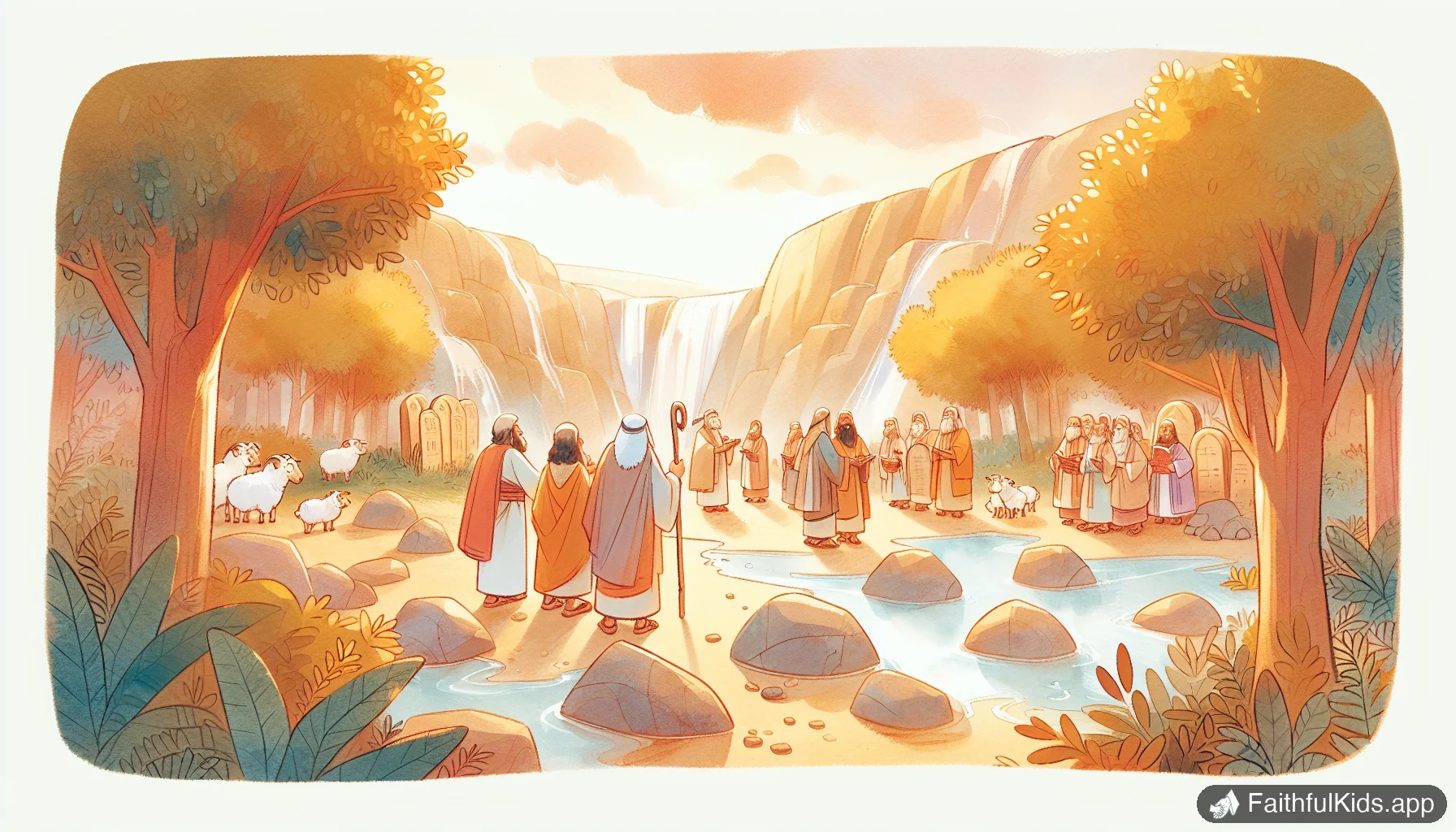
Three months after leaving Egypt, the Israelites arrived at Mount Sinai. God called Moses to climb the mountain, and there He gave Moses the Ten Commandments -- the rules for how God's people should live. These commandments covered loving God and loving other people:
You shall have no other gods before Me.
You shall not make idols.
You shall not misuse the name of the Lord.
Remember the Sabbath day and keep it holy.
Honor your father and mother.
You shall not murder.
You shall not commit adultery.
You shall not steal.
You shall not lie.
You shall not covet what belongs to others.
God wrote these commandments on two stone tablets and gave them to Moses to bring down to the people. (Each one is unpacked in our guide to the Ten Commandments for kids.)
Key lesson for kids: God's rules aren't meant to take away our fun. They're meant to help us live good lives and treat each other well. When we follow God's ways, life works better.
40 Years in the Wilderness (Numbers 13-14, Deuteronomy 34)
God wanted to lead the Israelites to the Promised Land -- a beautiful land flowing with milk and honey. But when they sent twelve spies to check it out, ten of the spies came back scared. "The people there are giants! We can't conquer them!" Only two spies, Joshua and Caleb, trusted God.
Because the people didn't trust God, they had to wander in the wilderness for 40 years -- one year for each day the spies had explored the land. During those 40 years, Moses led them faithfully. God provided food (manna) from heaven, water from rocks, and their clothes never wore out.
At the end of the 40 years, Moses climbed Mount Nebo and God showed him the Promised Land in the distance. Moses could see it, but he wouldn't enter it. He died there on the mountain at 120 years old, and God Himself buried him.
Key lesson for kids: Trusting God matters. The Israelites missed out on entering the Promised Land right away because they let fear win over faith. When God says He'll take care of something, we can believe Him.
Why Moses Matters
Moses's life teaches us so many things:
God uses ordinary people. Moses was a baby in a basket, a runaway, a shepherd. God turned him into a leader of nations.
Obedience matters. When Moses obeyed God, incredible things happened. When he didn't, there were consequences.
God is faithful. Through every plague, every miracle, every year in the wilderness, God never abandoned His people.
Fear is normal, but faith is the answer. Moses was afraid many times. But he kept saying yes to God, and God kept showing up.
Moses's story isn't just ancient history. It's a reminder to every child that God has a plan for their life too, and He's powerful enough to make it happen. When you've covered his life, keep going with Wandering in the Wilderness for kids or test your family's memory with Exodus Bible trivia.
Watch on Faithful Kids
Want your kids to experience the story of Moses through animated videos they'll love? Faithful Kids brings every major Bible story to life with short video lessons, interactive quizzes, and reflection activities. The Moses series is one of our most popular.
If you're choosing a name, we keep full lists of biblical boy names and biblical girl names -- each with its meaning, verse, and the story it comes from.
Frequently Asked Questions
How old was Moses when God called him at the burning bush?
Moses was about 80 years old when God spoke to him from the burning bush. He had spent 40 years as an Egyptian prince and then 40 years as a shepherd in Midian. It's a powerful reminder that God can call us at any age and that the quiet seasons in our lives are often preparation for something big.
Did Moses really part the Red Sea?
According to the Bible (Exodus 14), yes. God told Moses to stretch his staff over the sea, and God sent a strong wind that divided the waters so the Israelites could walk through on dry ground. This is one of the most famous miracles in Scripture and a core event in Jewish and Christian faith.
Why wasn't Moses allowed to enter the Promised Land?
In Numbers 20, God told Moses to speak to a rock to bring water for the thirsty Israelites. Instead, Moses struck the rock with his staff in anger. Because Moses didn't trust God enough to honor Him in front of the people, God said he wouldn't enter the Promised Land. Moses could see it from Mount Nebo, but Joshua would lead the people in. It's a sobering reminder that even great leaders face consequences for disobedience.
What's the best way to teach kids about Moses?
Start with the most exciting parts: the baby in the basket, the burning bush, the plagues, and the Red Sea crossing. Kids are drawn to adventure and miracles. Then talk about the deeper lessons -- God's faithfulness, the importance of obedience, and how God uses imperfect people. Animated Bible videos, like those on Faithful Kids, are an excellent way to bring the story to life for visual learners.
🌙 Free: The Bedtime Bible Kit
Seven nights of five-minute stories — a story, a prayer, and one question to whisper about.
Free printable + a few helpful emails. Unsubscribe anytime.