Blog/16 Christian Christmas Traditions for Families to Start Now
Guide
16 Christian Christmas Traditions for Families to Start Now
Ages 5+·12 min read··By Faithful Kids Team·Updated August 14, 2026
The best Christian Christmas traditions for families are simple, repeatable, and centered on the story of Jesus' birth -- and you only need one or two to change how December feels in your home. Below are 16 traditions, from five-minute nightly rituals like the advent wreath to bigger commitments like the Jesse tree, each with exact instructions for starting this year.
One warning before you begin: do not attempt all 16. Traditions work through repetition, and repetition requires sustainability. Pick one or two that fit your family's actual energy level, do them every year, and add more only when the first ones run on autopilot.
Advent Traditions (All Month Long)
1. The Advent Wreath
The anchor tradition of a Christ-centered December: four candles around a wreath, one lit each Sunday of Advent, marking hope, peace, joy, and love -- with an optional white Christ candle in the center for Christmas Day.
How to start: Buy any four candles (traditionally three purple, one pink, but nobody's checking) and set them in a circle on your table -- a wreath form is optional. Each Sunday night of Advent at dinner, light the new candle plus the previous ones, read a short verse, and pray one sentence. Total time: three minutes. Let kids rotate who blows the candles out; it prevents wars. Ready-made candle prayers are in our post of Christmas prayers for kids.
2. The Jesse Tree
An advent tradition that walks through the whole Old Testament -- one symbol ornament per day tracing Jesus' family tree from Creation to Bethlehem, named for Isaiah 11:1: "A shoot will come up from the stump of Jesse."
How to start: Use a small tabletop tree or even a large branch in a vase. Each night from December 1-24, hang one ornament representing that day's story (an apple for the Fall, an ark for Noah, a ram for Abraham, a crown for David) and read the matching short passage. Buy a printed ornament set, or -- better with kids -- have them draw each symbol on a paper circle that night. Our guide to advent Bible stories for kids maps out the story sequence.
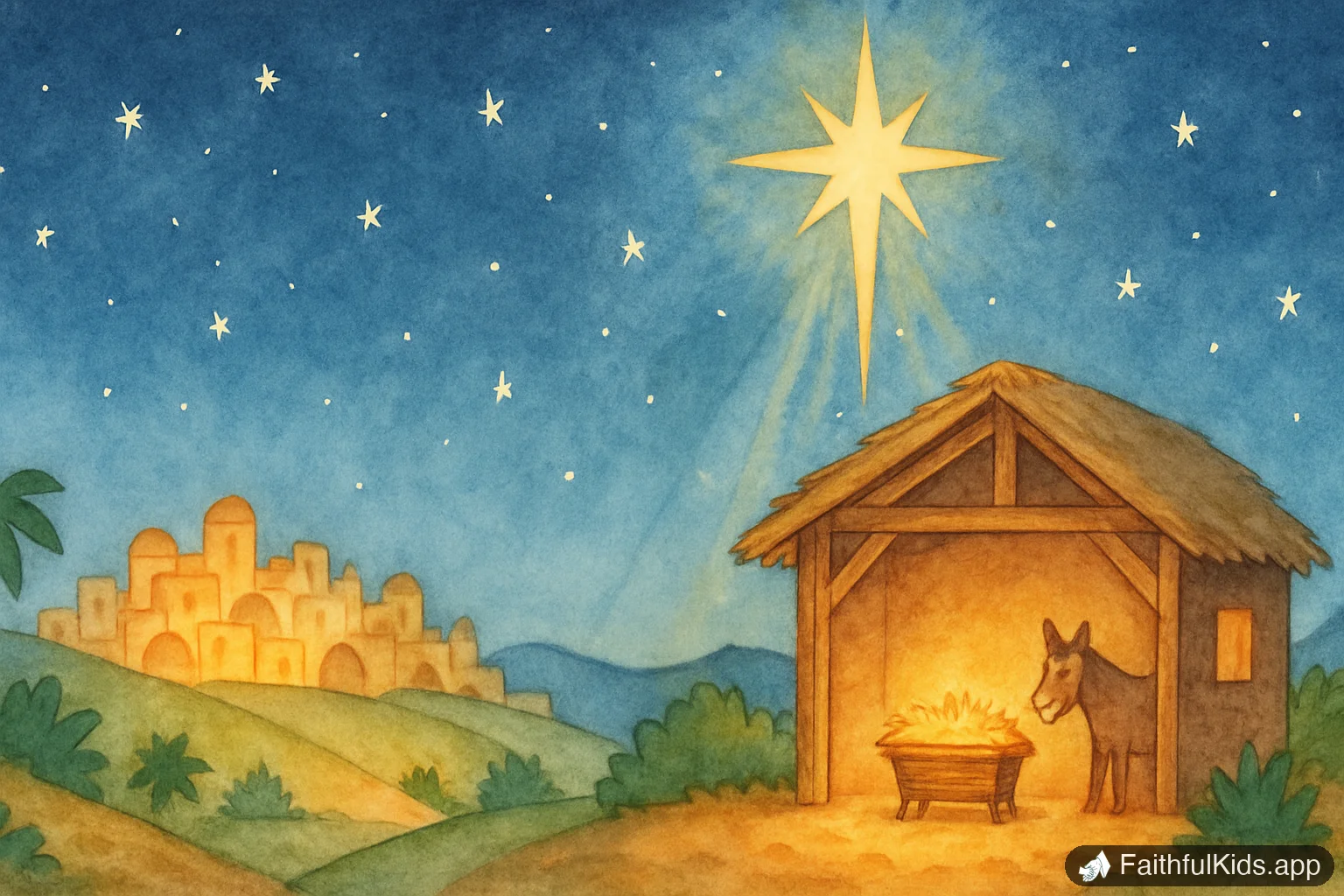
3. Nativity-First Decorating
A simple ordering rule: the nativity scene goes up first, before the tree, the lights, or anything else -- a physical statement about what the season is built on.
How to start: On decorating day, gather the family and set up the nativity together before any other box is opened. Say one sentence about why ("Jesus goes up first because Christmas starts with Him"), then decorate everything else with the music blasting. Takes zero extra time -- it's purely about sequence.
4. The Traveling Wise Men
The wise men figurines start somewhere far from the nativity -- a bookshelf across the house -- and migrate a little closer each day, arriving at the manger on Epiphany (January 6) or Christmas morning.
How to start: Remove the magi from your nativity set on day one and station them in a distant room. Move them a few feet each evening after kids are in bed. Kids hunt for them each morning like a treasure hunt that preaches. Bonus: baby Jesus can stay hidden until Christmas morning, when He "arrives."
5. The Empty Manger with Straw
Kids earn pieces of straw for the manger through secret acts of kindness during December, so that by Christmas Eve, baby Jesus has a soft bed built entirely out of love.
How to start: Set out an empty manger (or small box) and a bowl of raffia, yarn, or actual straw. Every time a child does an unprompted kind act, they quietly add a piece. No scorekeeping, no comparing siblings -- the point is that kindness prepares room for Jesus.
Story and Scripture Traditions
6. The Christmas Eve Luke 2 Reading
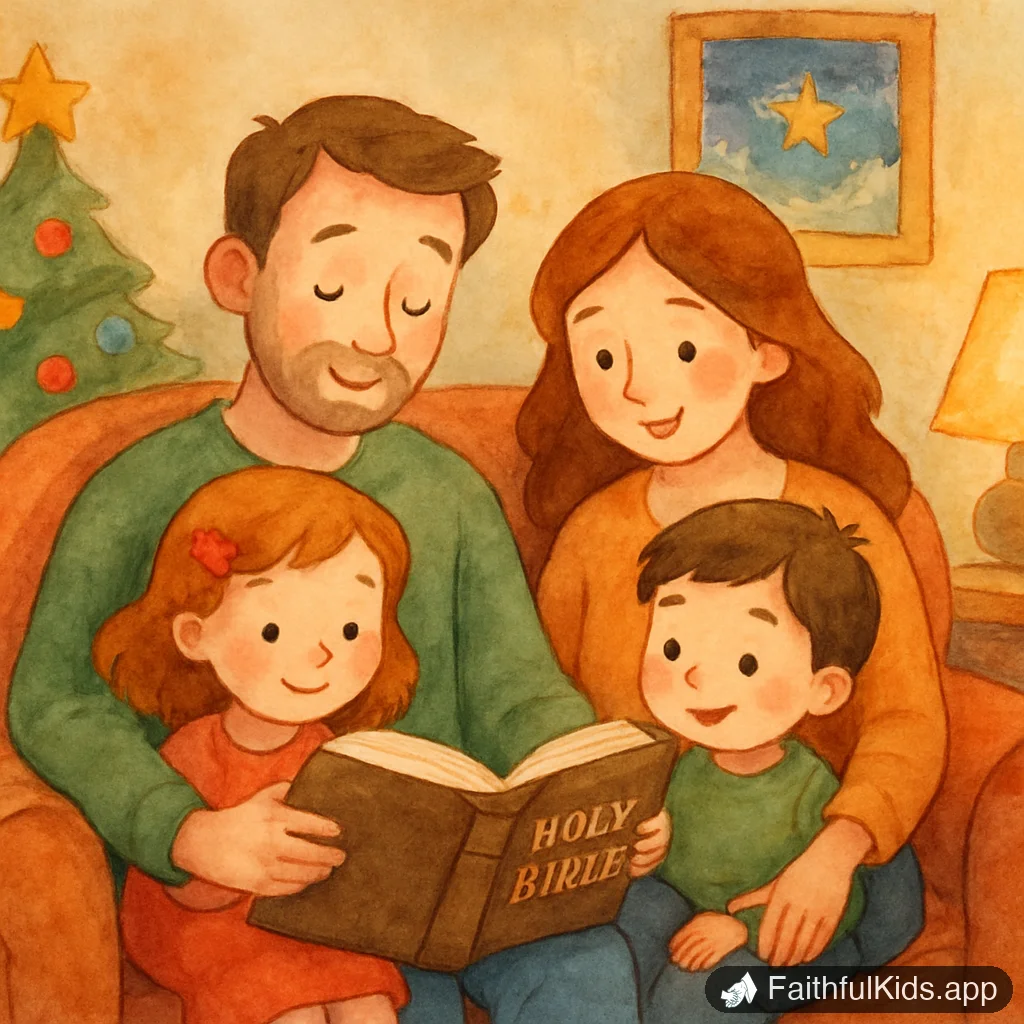
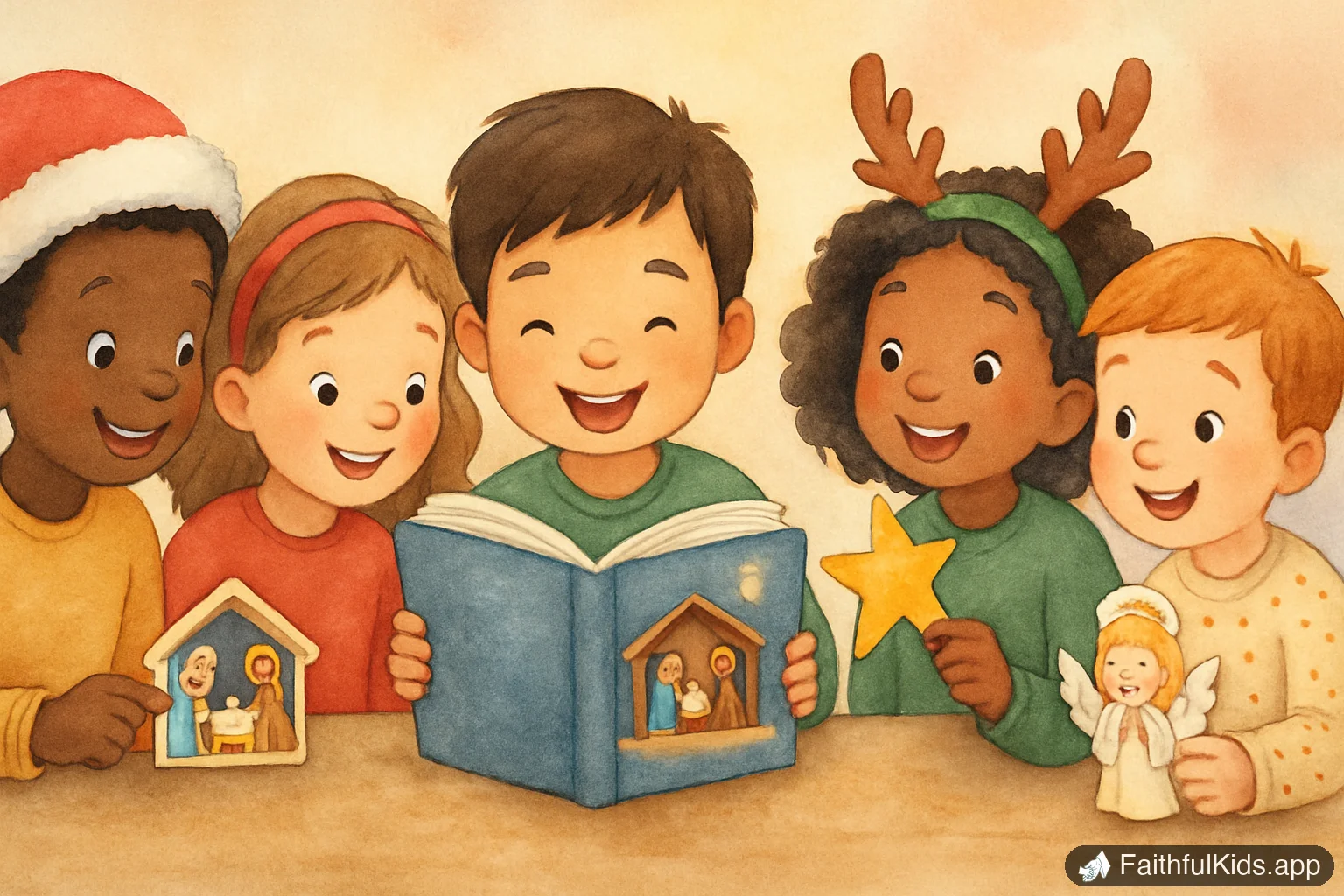
The most classic tradition on this list: before bed on December 24, the family reads the Christmas story from Luke 2:1-20, aloud, by the light of the tree.
How to start: Tonight's the easiest tradition to launch -- you need a Bible and ten minutes. Turn off the overhead lights, gather by the tree, and read Luke 2:1-20. Assign parts as kids become readers: narrator, angel ("Do not be afraid..."), the crowd of shepherds. End with a short prayer and one carol, even if you sing badly. Especially if you sing badly.
7. The Advent Story Countdown
Instead of (or alongside) a chocolate advent calendar, read one piece of the Christmas story each night of December, so the narrative arrives at the manger exactly on Christmas Eve.
How to start: Break the story into nightly chunks -- prophecies, the angel visiting Mary, Joseph's dream, the journey, the birth, shepherds, wise men -- and read one per night at bedtime. Our Christmas Bible stories for kids roundup breaks the story into kid-sized scenes you can follow. Families who use screens for this can queue the nativity episodes on Faithful Kids, where each story comes with a quiz kids actually beg to take.
8. Christmas Card Prayers
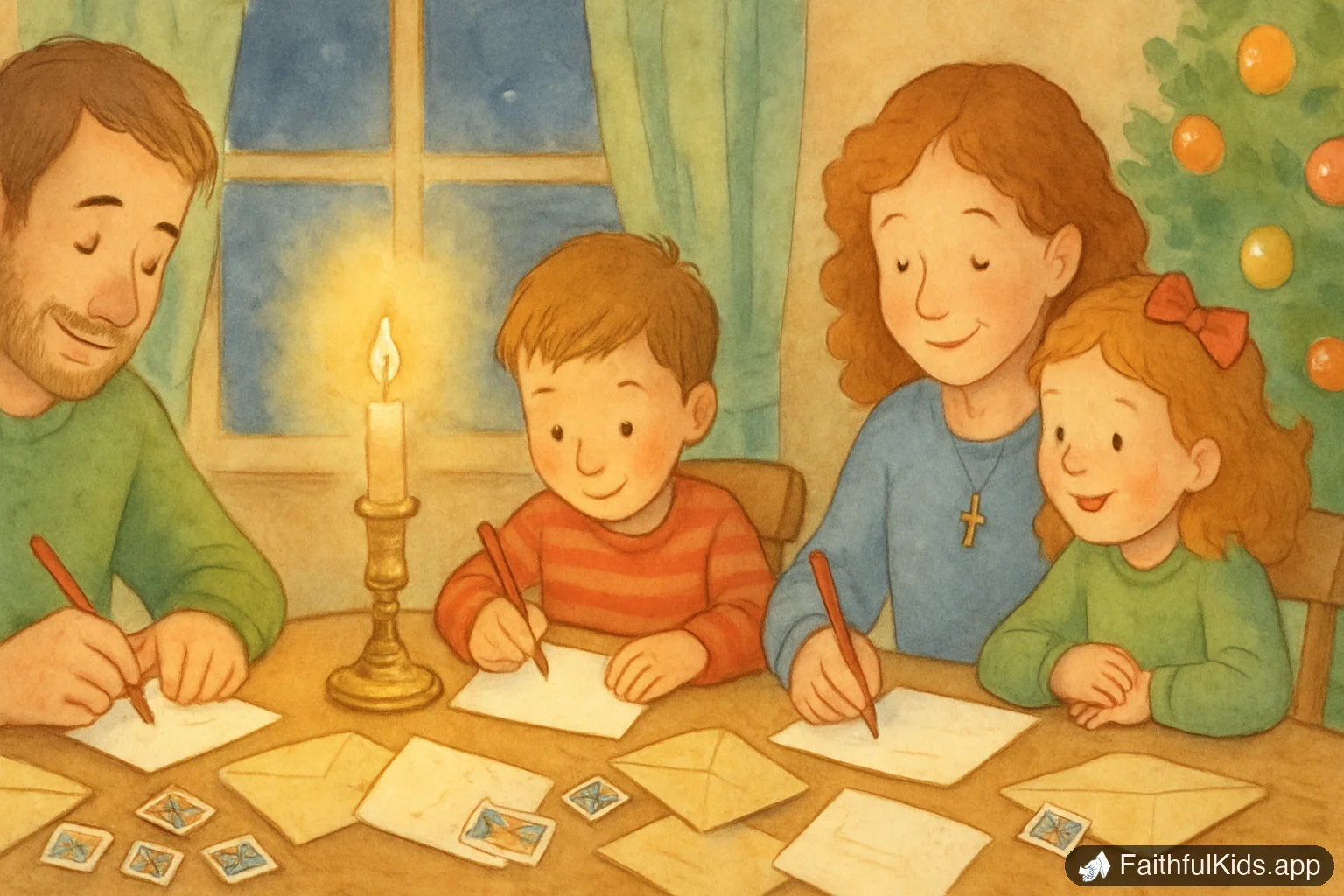
Every Christmas card your family receives becomes a prayer prompt: at dinner, pick one card from the basket and pray for that family by name.
How to start: Put a basket by the table. As cards arrive, they go in. Each night at dinner, a kid draws one card, you look at the photo together, and someone prays one sentence for that family. It converts a pile of mail into a month of intercession -- and teaches kids that prayer is for real, named people.
9. The Christmas Story Quiz Night
One night in December, run a family trivia night on the real Christmas story -- kids are routinely shocked to learn the Bible never says there were three wise men or that they arrived at the stable.
How to start: Pop popcorn, split into teams (kids vs. parents is the crowd favorite), and quiz away. Our ready-made Christmas Bible trivia for kids has questions sorted by age with answers included, so prep time is zero.
Celebration Traditions
10. Birthday Cake for Jesus
Exactly what it sounds like: a birthday cake, candles and all, served on Christmas Day, with "Happy Birthday" sung to Jesus before dessert.
How to start: Bake or buy any cake -- realistically, whatever the kids vote for. After Christmas dinner, light a candle, sing "Happy Birthday, dear Jesus," and let the youngest child blow it out. A four-year-old cannot forget whose birthday Christmas is when there's been cake and singing. This is the easiest tradition on the list and often the most beloved.
11. Christmas Morning Prayer Before Presents
A twenty-second family prayer before the first gift is opened -- a joyful pause, not a sermon.
How to start: Establish the rule the night before so nobody's ambushed: "Tomorrow we pray first, then presents -- and the prayer is short, I promise." Keep it to two or three sentences, thank God for Jesus the first gift, and say amen with enthusiasm. Kids accept this instantly when the prayer is genuinely brief.
12. The Christmas Eve Box
Each child opens exactly one gift on Christmas Eve: a box containing new pajamas, a Christmas book (rotate in a nativity storybook), and hot chocolate fixings -- which conveniently produces adorable matching-pajama photos and a calm, story-filled bedtime.
How to start: Assemble one box per kid: pajamas, a book, cocoa packet, maybe a candy cane. Open after dinner, change into the pajamas, make the cocoa, and roll straight into the Luke 2 reading (#6). The box becomes the on-ramp to the most sacred night of the tradition calendar.
For the season, we keep a set of free Christmas coloring pages — print as many as your class needs.
Pair it with our free Advent Bible reading calendar — 25 short readings from the first promise to the manger, one a night.
For the rest of the season, our Christmas hub collects every Advent and nativity resource in one place.
See what they get
Watch The Shepherds Come Alive
The Shepherds is one of 300+ short narrated video lessons your child will love. Watch the whole episode right here — in the app, every lesson ends with a fun quiz to check what they learned.
A real lesson from the app — watch the whole thing free.
Giving Traditions
13. The Giving Tree Gift
Every year, each child chooses a gift for a child they'll never meet -- through an angel tree, Operation Christmas Child shoebox, or a local family in need -- and shops for it with their own input (or, for older kids, their own money).
How to start: In late November, grab a tag from your church or a store angel tree, or pack a shoebox together. The crucial step: the child does the choosing. A seven-year-old agonizing between the soccer ball and the art set for "a boy just like me" is doing the actual spiritual work.
14. The Three-Gift Rule
Each child receives three gifts -- echoing the wise men's gold, frankincense, and myrrh -- often framed as "something you want, something you need, something to read."
How to start: Announce it before December (never spring a gift reduction on children mid-season) and explain the why: Jesus got three gifts, so we do too. Grandparents' gifts don't count against the total; you'll lose that negotiation anyway. Families report this kills comparison shopping, gift-pile inflation, and the December 26th toy graveyard in one move.
15. Secret Family Elves
For one week in December, each family member draws another's name and does secret acts of kindness for them all week -- with the big reveal on Christmas Eve.
How to start: Draw names from a hat on December 17. Kindnesses must be free and secret: making a sibling's bed, leaving a note, doing their chore. At the Christmas Eve dinner, everyone guesses their elf. It's the rare tradition where being sneaky is the whole point, which is why kids love it.
16. The Christmas Thank-You Walk
Sometime during Christmas week, take a family walk (or drive) to look at lights, with one rule: everyone names things they're thankful for from the year as you go.
How to start: Pick a night, load up the cocoa from the Christmas Eve boxes, and walk the best-lit street in town. Prompt each person: "Best thing that happened this year? Hardest thing God got us through?" It's a gratitude tradition disguised as a lights tour, and teenagers who won't talk at the dinner table will talk on a dark sidewalk.
How Do You Start a Family Tradition That Actually Sticks?
Start with one tradition, attach it to a date you can't miss, and repeat it for three consecutive years -- that's the entire formula. Traditions die from ambition (choosing six), vagueness, and perfectionism (skipping the wreath because you missed the first Sunday). A candle lit late is a tradition; a Pinterest board is not.
A realistic starter set by stage: toddlers -- birthday cake for Jesus (#10) and nativity-first decorating (#3); elementary kids -- the advent wreath (#1) and the giving tree gift (#13); tweens and teens -- the Luke 2 reading (#6) with assigned parts and the thank-you walk (#16). And when kids ask bigger questions about what it all means, our post on how to explain Christmas to a child gives you the words.
There is a free Christmas word search to go with this, playable on a phone and printable for a class.
Frequently Asked Questions
What is the easiest Christian Christmas tradition to start this year?
Birthday cake for Jesus -- it requires one cake, one candle, and one song, and children instantly grasp the point. The Christmas Eve reading of Luke 2 is a close second, needing only a Bible and ten minutes. Start with one of those two, and add the advent wreath next year.
What's the difference between an advent wreath and a Jesse tree?
The advent wreath is weekly -- four candles lit across the Sundays of Advent, themed hope, peace, joy, and love. The Jesse tree is daily -- one ornament per day from December 1-24, tracing Jesus' family line through the Old Testament. The wreath takes about 3 minutes a week; the Jesse tree 5-10 minutes a night, so pick by your family's real capacity.
How do I add Christ-centered traditions without ditching Santa and the fun stuff?
You don't have to choose -- these traditions add Jesus-focused moments alongside the fun rather than replacing it. Families handle Santa differently (as a fun game, a historical St. Nicholas story, or not at all), and every version can coexist with an advent wreath and a Luke 2 reading. The center of Christmas is set by what you celebrate most warmly, not by what you ban.
At what age should we start Christmas traditions with kids?
Around age 2-3, kids can join simple traditions (blowing out the Jesus birthday candle, hanging a Jesse tree ornament), and by 4-5 they'll be the ones reminding you. There's no expiration date either -- teenagers often appreciate new traditions more than they'll admit. The best age to start is whatever age your kids are now.
How many Christmas traditions should a family have?
Two to four well-kept traditions beat ten abandoned ones. A good portfolio is one daily or weekly advent rhythm (wreath or Jesse tree), one Christmas Eve anchor (the Luke 2 reading), and one giving tradition. Add a new one only after the existing ones feel automatic.
What if my spouse isn't interested in faith-based traditions?
Choose traditions that are warm and inclusive rather than heavily liturgical -- a birthday cake for Jesus, a giving-tree gift, or a gratitude lights walk are meaningful without feeling like church. Lead them with joy instead of pressure, and let your spouse participate at whatever level is comfortable. A tradition experienced as delight wins over a reluctant spouse far better than one experienced as obligation.
🌙 Free: The Bedtime Bible Kit
Seven nights of five-minute stories — a story, a prayer, and one question to whisper about.
Free printable + a few helpful emails. Unsubscribe anytime.