Was Abraham real? Christians believe Abraham was a real person, because the Bible tells his life as history and Jesus himself spoke of Abraham as a real man (John 8:56-58). Archaeology has not found any direct evidence of Abraham, such as an inscription with his name, so our confidence rests mainly on Scripture.
That should not surprise us. Abraham, as the Bible describes him, was a traveling herdsman who lived in tents, and individual people like him almost never leave a trace in the ground. The places in his story, like Ur and Haran, were real cities, and you can visit their ruins today.
If your child has asked "Was Abraham a real person?", this guide gives you the Bible's story, the real evidence and its limits, the scholarly debate stated fairly, and simple scripts you can use at every age.
What the Bible says about Abraham
Abraham's story begins at the end of Genesis 11 and runs through Genesis 25. In brief:
From Ur to Haran. Abram (his name at first) set out with his father Terah from "Ur of the Chaldeans" and settled for a time in Haran (Genesis 11:31).
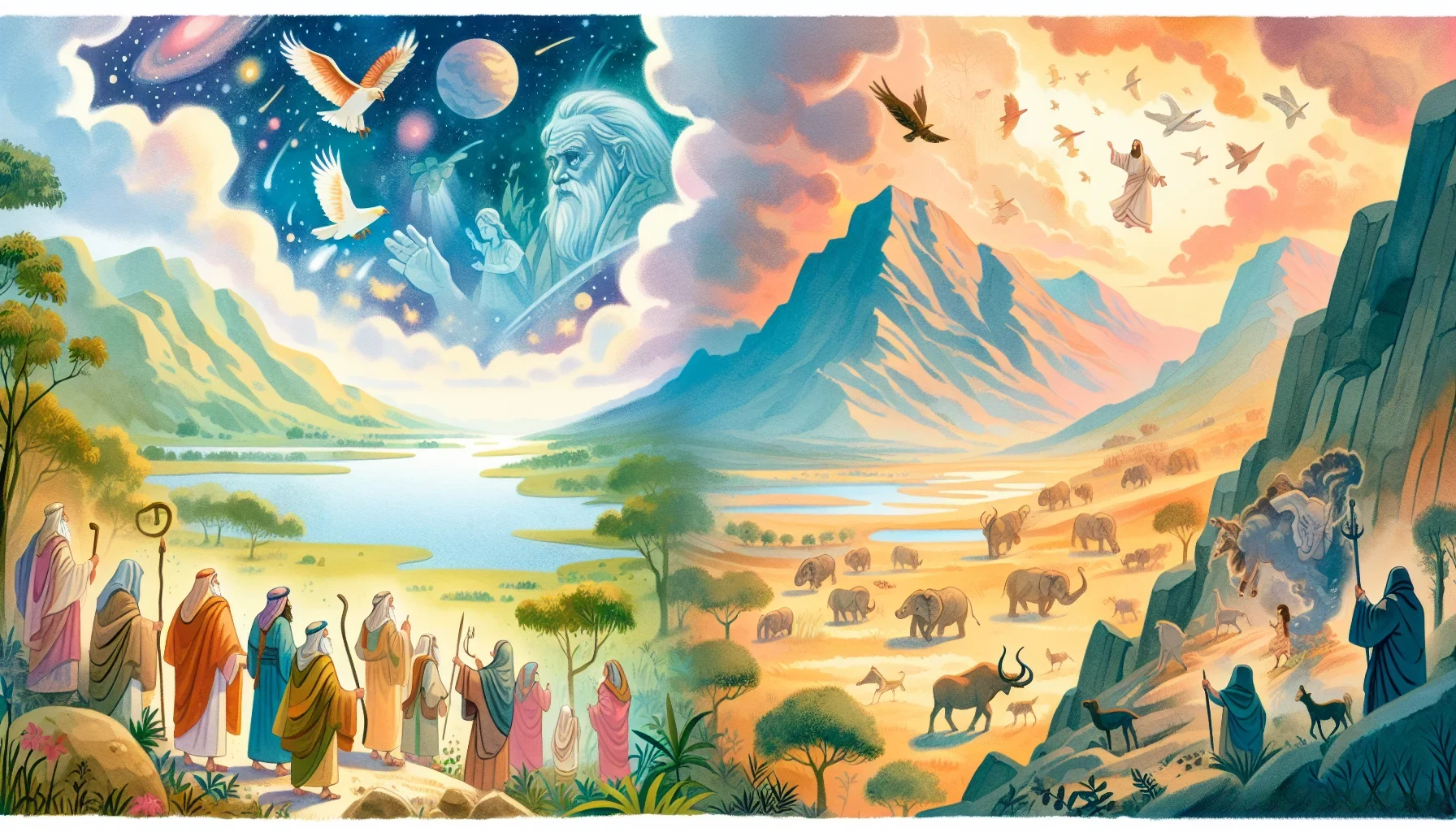
God's call and promise. God told Abram to leave his country and go to a land God would show him, and promised: "I will make you into a great nation... and all peoples on earth will be blessed through you" (Genesis 12:2-3, NIV).
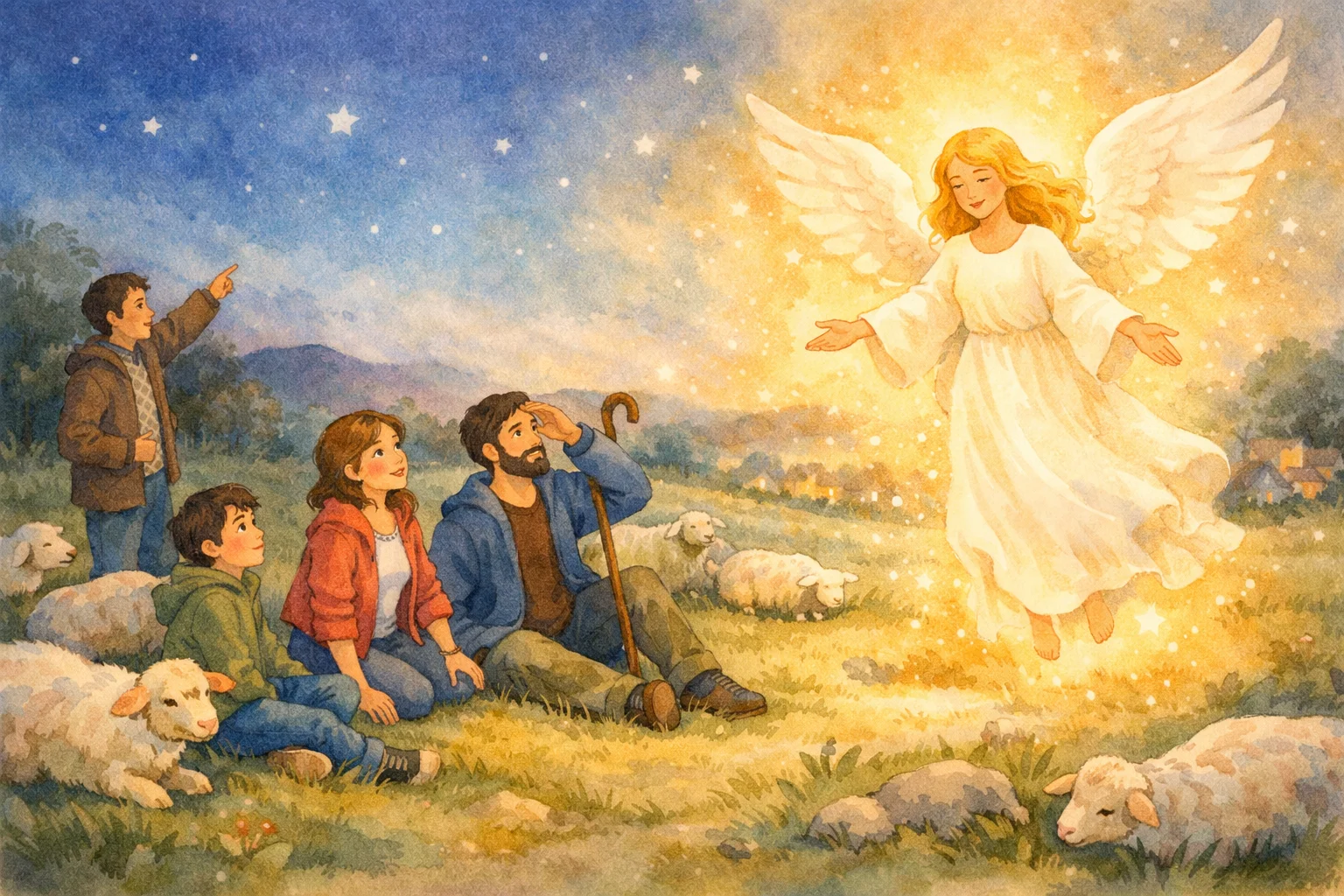
Counting the stars. God promised descendants as many as the stars. "Abram believed the Lord, and he credited it to him as righteousness" (Genesis 15:6, NIV).
A new name. God renamed him Abraham, "father of many nations," and his wife Sarai became Sarah (Genesis 17:5, 15).
Isaac, the promised son. In their old age, Abraham and Sarah had a son, Isaac, just as God had said, and Sarah laughed for joy (Genesis 21:1-6).
Trusting God to provide. When God tested Abraham, he trusted that "God himself will provide," and God did (Genesis 22:8, NIV).
The story is not mainly about Abraham being a hero. It is about God making a promise and keeping it, and about one man learning to trust that promise.
What Jesus and Paul said about Abraham
For Christian families, this is the strongest reason to believe Abraham was real. The New Testament speaks of him again and again:
Jesus said, "Your father Abraham rejoiced at the thought of seeing my day," and then, "before Abraham was born, I am!" (John 8:56-58, NIV).
Paul held up Abraham as the great example of faith, the "father of all who believe" (Romans 4:11, NIV), and wrote a whole chapter about him (Romans 4).
Hebrews says, "By faith Abraham, when called to go to a place he would later receive as his inheritance, obeyed and went" (Hebrews 11:8, NIV).
Matthew begins Jesus' family tree with Abraham (Matthew 1:1-2).
For a child, the bridge is simple: "We trust Jesus, and Jesus talked about Abraham as a real person."
Was Abraham real? What history and archaeology can (and cannot) tell us
No direct evidence of Abraham
No inscription, tablet or object from the ancient world has been found that names the Abraham of Genesis. That is the honest state of the evidence. It is also what we would expect for a family of herders who moved from place to place: tents rot, flocks leave no ruins, and ancient kings rarely wrote about ordinary travelers.
Ur was a real and remarkable city
Ur was a major Sumerian city in southern Mesopotamia, at a site now called Tell el-Muqayyar in southern Iraq. The British archaeologist Leonard Woolley excavated it from 1922 to 1934, in a joint project of the British Museum and the University of Pennsylvania. His team uncovered about 1,850 burials, including the famous royal tombs, and treasures such as the Standard of Ur. The city's great stepped temple tower, the ziggurat, was built in the 21st century BC.
Is this the same "Ur of the Chaldeans" in Genesis? Many people think so, and this Ur is the traditional identification. Some scholars propose other places instead, including Şanlıurfa (Urfa) in southeastern Turkey, which is near Haran. It is fine to tell a child, "Most people think it's this Ur, but experts still discuss it."
Haran was a real city too
Haran (often spelled Harran) is in Şanlıurfa Province in southeastern Turkey, near the Syrian border. It was an important ancient city, first clearly mentioned in the Ebla tablets of the 24th century BC, and famous for its temple to the moon god. Interestingly, Ur was also a center of moon-god worship, so Terah's family moved between two cities with strong religious links. Joshua later recalled that Abraham's ancestors "worshiped other gods" before God called Abraham (Joshua 24:2, NIV).
The debate over the "patriarchal age"
Scholars have argued about Abraham's historical setting for a century, and it is worth describing fairly.
The older view. In the first half of the 20th century, scholars such as the archaeologist William F. Albright and the historian John Bright held that the stories of Abraham, Isaac and Jacob fit a real "patriarchal age" in the 2nd millennium BC.
The 1970s challenge. Thomas L. Thompson (1974) and John Van Seters (1975) argued that the evidence for that setting was weak and that the stories reflected a much later time. Since then, most mainstream scholars have come to regard the patriarchal narratives as written or shaped much later, though some say they may preserve older memories.
Conservative scholars. Others, such as the Egyptologist Kenneth Kitchen, argued that details in Genesis fit the early 2nd millennium BC well. One example he gave: Joseph, Abraham's great-grandson, was sold for 20 shekels of silver (Genesis 37:28), which matches the standard slave price of the 19th and 18th centuries BC. The scholar Ronald Hendel answered that 20 shekels was also the price of a boy in later times (compare Leviticus 27:5), so the detail cannot settle the date.
That exchange is a good picture of the whole debate: careful people looking at the same evidence and reaching different conclusions. Archaeology alone cannot prove or disprove that Abraham lived.
How Christians read the story of Abraham
Catholic, Orthodox and Protestant Christians all honor Abraham as a real ancestor in faith, the man through whom God promised to bless all nations. The Catholic Mass even speaks of "Abraham, our father in faith" in its first Eucharistic Prayer. On the details, Christians differ:
Dates. Some Christians add up the Bible's own numbers and place Abraham early in the 2nd millennium BC. Others hold that the Bible's chronology is not meant to be added up precisely and leave the date open.
How the stories were written. Some believe the stories were written down close to the events. Others believe they were passed down by memory and gathered later under God's guidance. Both groups receive them as the inspired Word of God.
Our statement of faith says the Bible is the inspired, true Word of God, and on details like these we leave room for families to follow their own church.
See what they get
Watch a Real Lesson From the App
Press play on Walking on Water, a complete lesson exactly as your child sees it. 300+ episodes cover the whole Bible in order, each ending in a fun quiz to check what they learned.
A real lesson from the app, watch the whole thing free.
Abraham in Judaism, Christianity and Islam
Older kids are often curious to learn that Abraham matters to three world religions, which are sometimes called the "Abrahamic" faiths. Jewish people call him Avraham Avinu, "our father Abraham," the first patriarch of the Jewish people. Christians see him as an ancestor of Jesus and, in Paul's words, a spiritual father of all who believe. Muslims honor him as Ibrahim, a prophet called the "Friend of God," who is mentioned in 35 chapters of the Quran. You can explain this simply and kindly: many people around the world remember Abraham, and Christians remember him especially as a man who trusted God's promise, a promise fulfilled in Jesus.
🕯️ Free: 25 Days of Advent Bible Readings
December 1 to 25, one short reading a night, from the first promise to the manger. Printable for the fridge.
Free printable + a few helpful emails. Unsubscribe anytime.
How to answer your child, by age
Ages 5-7
"Yes, Abraham was a real person. God asked him to go on a long trip to a new home, and Abraham trusted God and went. God promised him a family as big as all the stars in the sky. And Jesus talked about Abraham too!"
Tip: On a clear night, go outside and try to count the stars together. Then read Genesis 15:5.
Ages 8-11
"Christians believe Abraham was real because the Bible tells his story and Jesus and Paul talked about him. Archaeologists haven't found anything with Abraham's name on it, but that's normal for someone who lived in tents. They have dug up the city of Ur, where his family came from, with a giant temple tower and royal treasures. Want to see pictures?"
Tip: Look up the Ziggurat of Ur and the Standard of Ur online together. Seeing the world Abraham left makes his obedience feel brave and real.
Ages 12-15
"There's no direct archaeological evidence for Abraham, and many historians think the stories were written down much later. Other scholars argue that details in Genesis fit the early 2nd millennium BC. Archaeology probably can't settle it either way, because a family of herders leaves almost nothing behind. Christians believe Abraham was real mainly because Jesus spoke of him as real, and because his story is the start of God's promise that runs all the way to Jesus."
Tip: Read Romans 4 or Hebrews 11 together. Teens often find it powerful that the New Testament's big lesson from Abraham is about trusting God when you can't see the whole picture.
Questions kids ask next
"How old was Abraham?"
The Bible says he was 75 when he left Haran (Genesis 12:4) and 100 when Isaac was born (Genesis 21:5). Christians differ on how to read the long ages in Genesis, but the point is clear: God kept his promise when it seemed impossible.
"Where is Abraham buried?"
Genesis says his sons Isaac and Ishmael buried him in the cave of Machpelah near Hebron, beside Sarah (Genesis 25:9-10).
"Why did God choose Abraham?"
The Bible does not say Abraham was special first. God chose him by grace and promised to bless the whole world through his family (Genesis 12:3).
"Are we part of Abraham's family?"
Paul says yes, in a spiritual sense: everyone who has faith in Jesus is a child of Abraham (Galatians 3:7).
Watch the story together
Our Who Was Abraham? lesson tells his life in kid-friendly language, and God Calls Abraham has a free two-minute video lesson with a quiz. Watching one together is an easy way to turn a big question into a good conversation. Faithful Kids has 300+ short Bible video lessons for ages 5-15, Genesis to Revelation, each with a quiz.
Frequently Asked Questions
Was Abraham real?
Christians believe Abraham was a real person because the Bible presents his life as history and Jesus spoke of him (John 8:56-58). No artifact or inscription naming Abraham has been found, so belief rests mainly on Scripture.
Is there archaeological evidence for Abraham?
There is no direct evidence of Abraham himself. Archaeologists have excavated places in his story, such as Ur in southern Iraq, which Leonard Woolley dug from 1922 to 1934, and Haran in southeastern Turkey.
Was Abraham a real person according to historians?
Historians are divided. Many mainstream scholars think the stories of the patriarchs were written much later, while conservative scholars such as Kenneth Kitchen argued that they fit the early 2nd millennium BC.
Where is Ur of the Chaldees?
It is traditionally identified with the ancient city of Ur at Tell el-Muqayyar in southern Iraq. Some scholars suggest other sites, such as Urfa in southeastern Turkey.
Why is Abraham important to Jews, Christians and Muslims?
All three faiths honor Abraham. Jews call him "our father Abraham," Christians see him as Jesus' ancestor and a father in faith, and Muslims honor him as the prophet Ibrahim.