15-Minute Family Devotions: A Realistic Weekly Plan
Ages 5+·13 min read··By Faithful Kids Team·Updated September 16, 2026
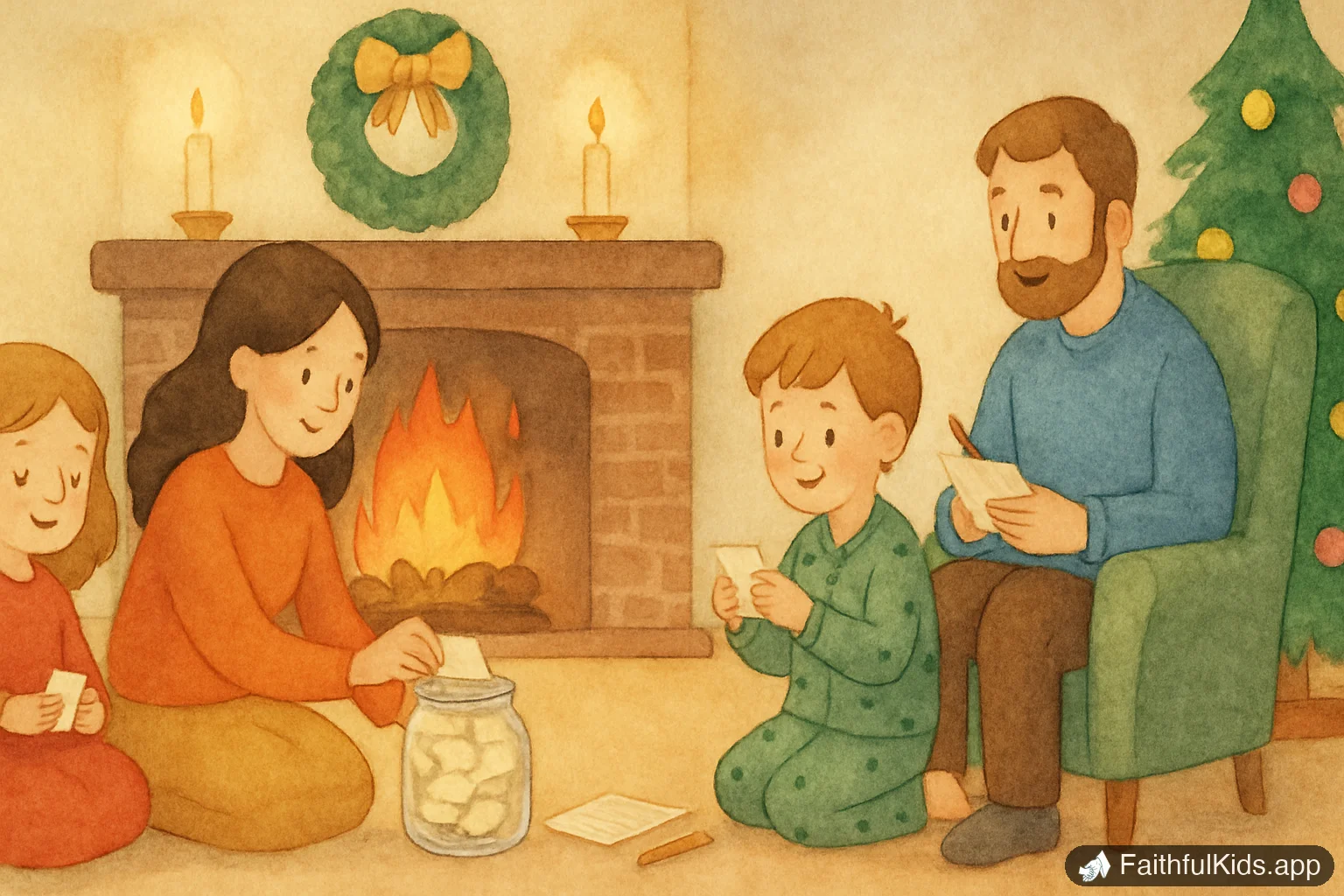
A 15-minute family devotion breaks into three five-minute pieces: five minutes reading a passage out loud, five minutes talking about one question, and five minutes praying. That structure is the whole method -- it never changes, which is exactly why it survives a school night. Below is the format in detail, a full four-week plan with specific passages and questions, and an honest section on what to do when it collapses.
Let's be clear about the difficulty first. Fifteen minutes with a toddler climbing the couch, a nine-year-old who wants to finish a game, and a thirteen-year-old whose default response to everything is a shrug is not a peaceful scene. Any plan that assumes attentive, quiet children is written for a family that doesn't exist. This one assumes interruptions and works anyway.
Why 15 Minutes Is the Right Size
Five minutes is enough for a verse and a question, and it's the right starting point for a family beginning from zero -- our 5-minute devotions for kids cover that format with a month of ready-to-read days. But five minutes can't hold a real story. You can't read the fiery furnace, or the Good Samaritan, or the resurrection in five minutes and still talk about it.
Thirty minutes, on the other hand, is a fantasy for most households. It requires everyone to be regulated, fed, and unhurried simultaneously, which happens roughly twice a month.
Fifteen is the seam. Long enough for an actual passage and a real conversation, short enough that a tired parent can still say yes to it at 7:45 on a Tuesday. And it fits inside a routine that already exists -- the end of dinner, or the half hour before lights-out -- which means you are not asking your family for a new time slot, only for a new use of one.
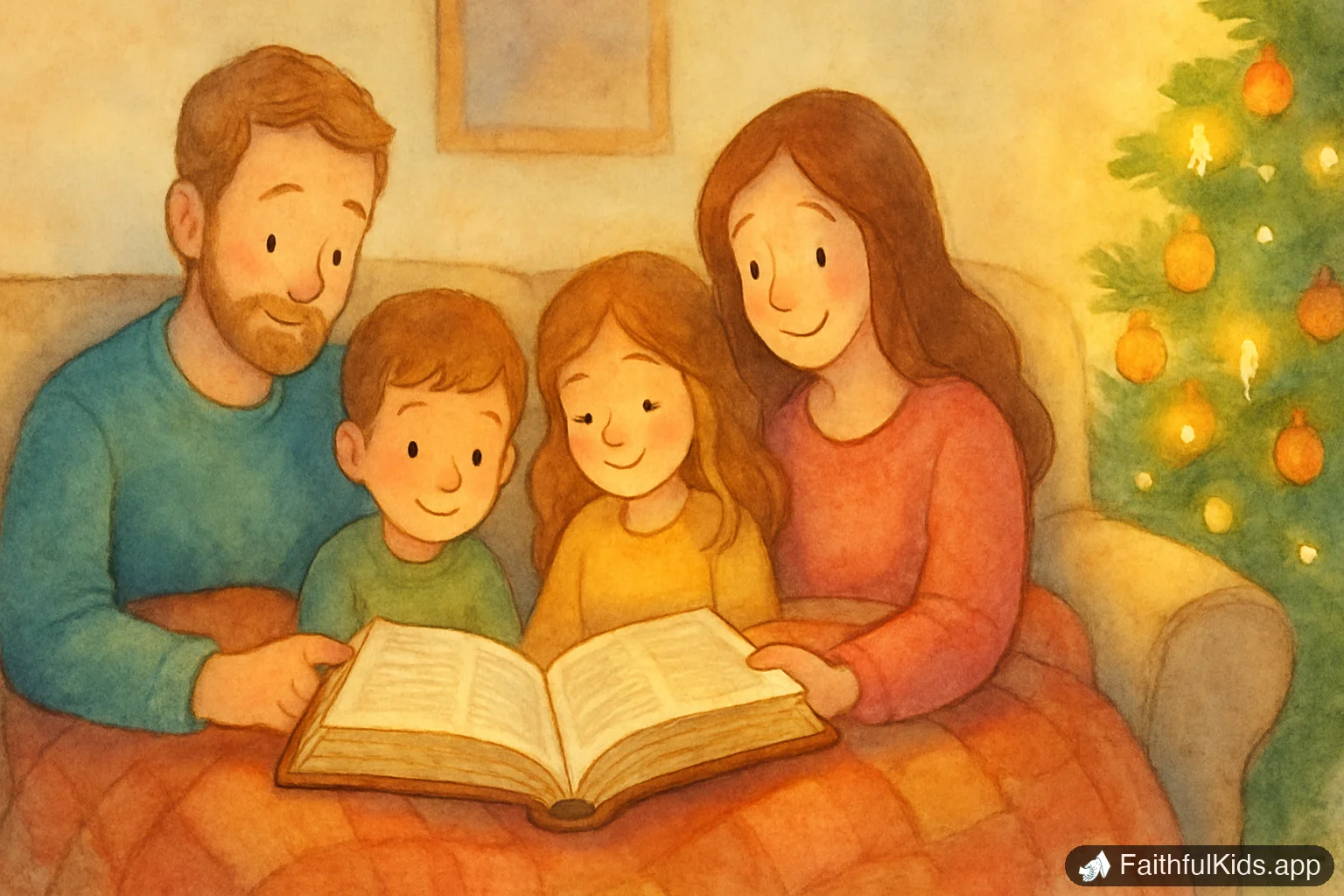
Minutes 1-5: Read. One person reads the passage aloud. Not silently, not everyone in their own Bible -- out loud, so the youngest child is included. Assign the reading to a different family member each night once kids can read fluently. If the passage runs long for young kids, summarize the first half in your own words and read the last half straight from the text.
Minutes 6-10: Talk. One question. Not five. Ask it, then be quiet long enough to be uncomfortable -- most kids need eight or ten seconds of silence before they'll speak, and most parents fill that gap at four. The rule that makes this work: parents answer too, and answer honestly. A child who hears a parent say "I don't actually know" or "that verse bothers me" learns that this is a conversation, not a quiz.
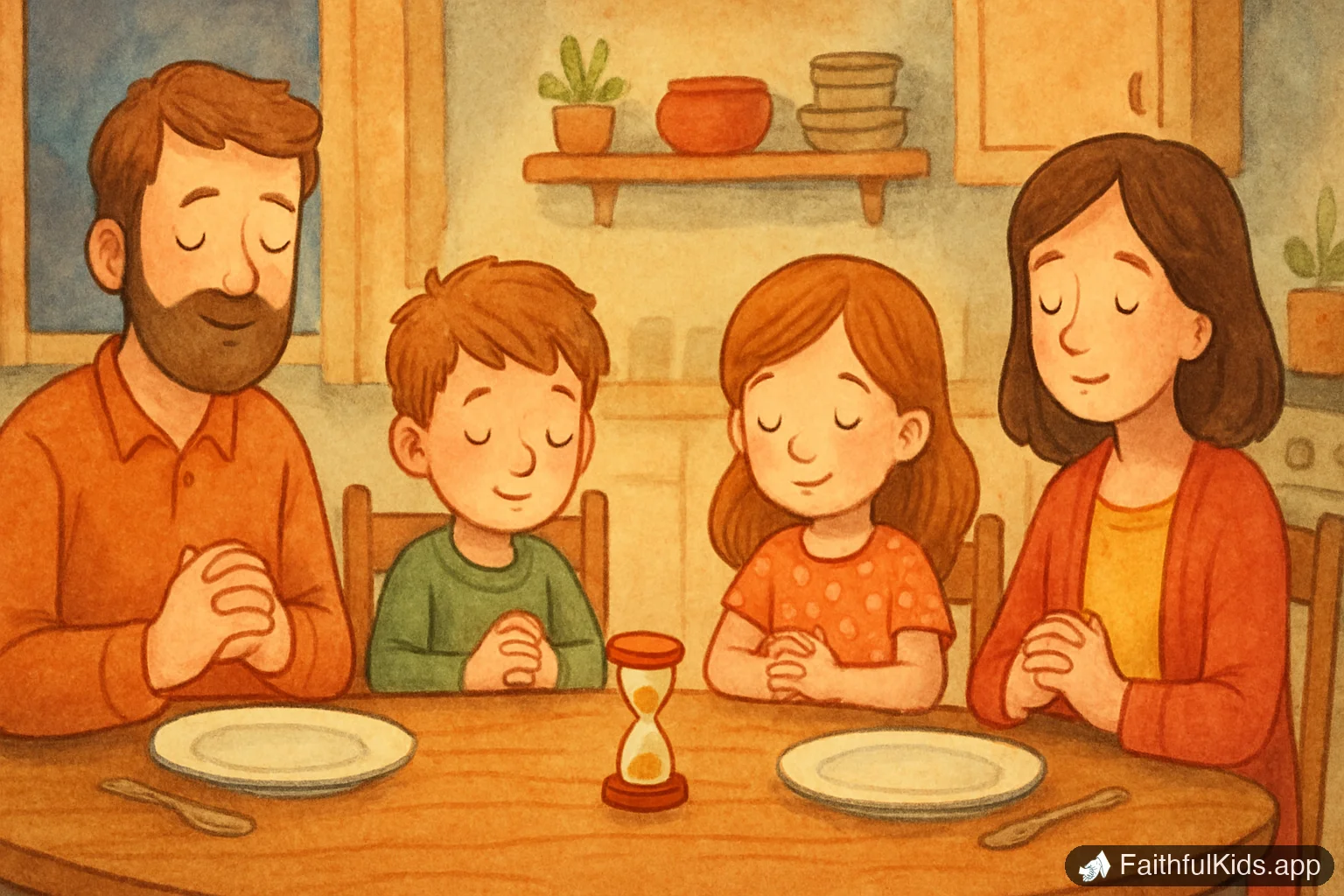
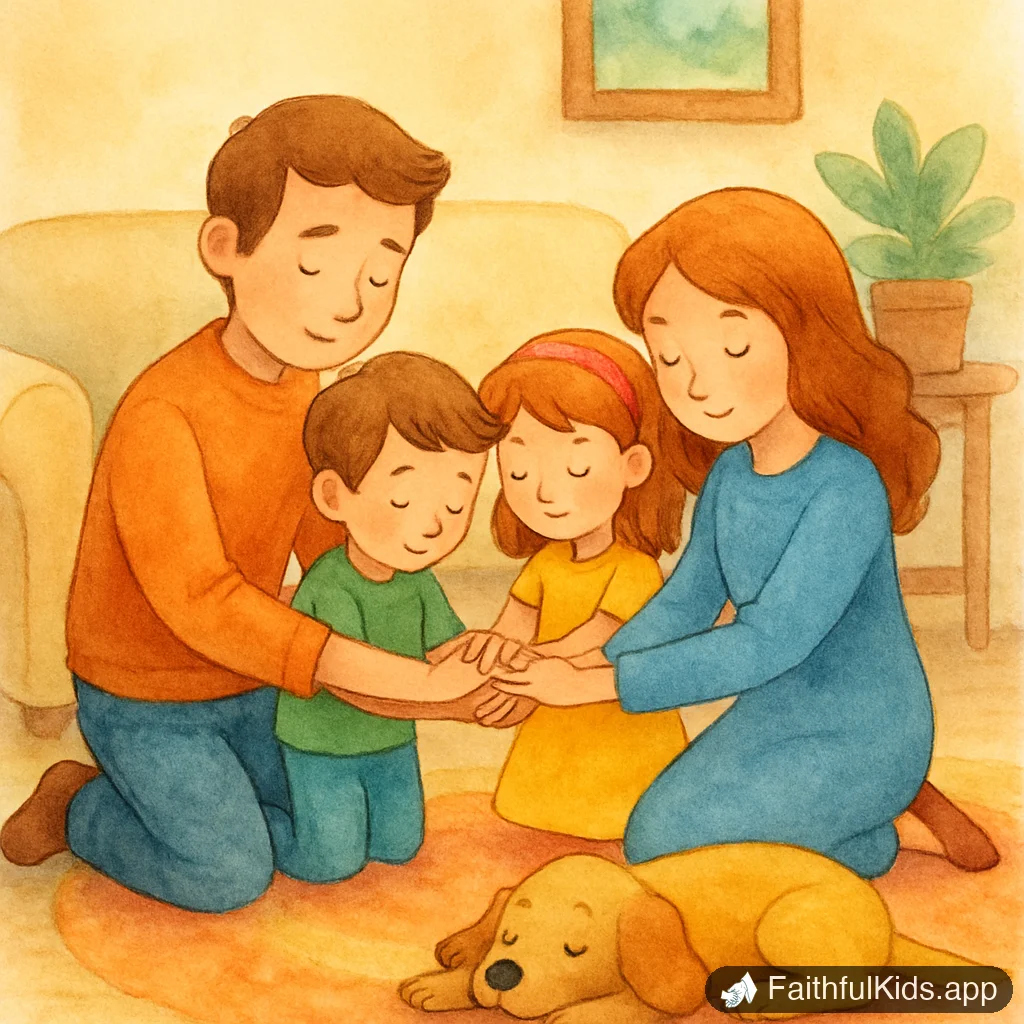
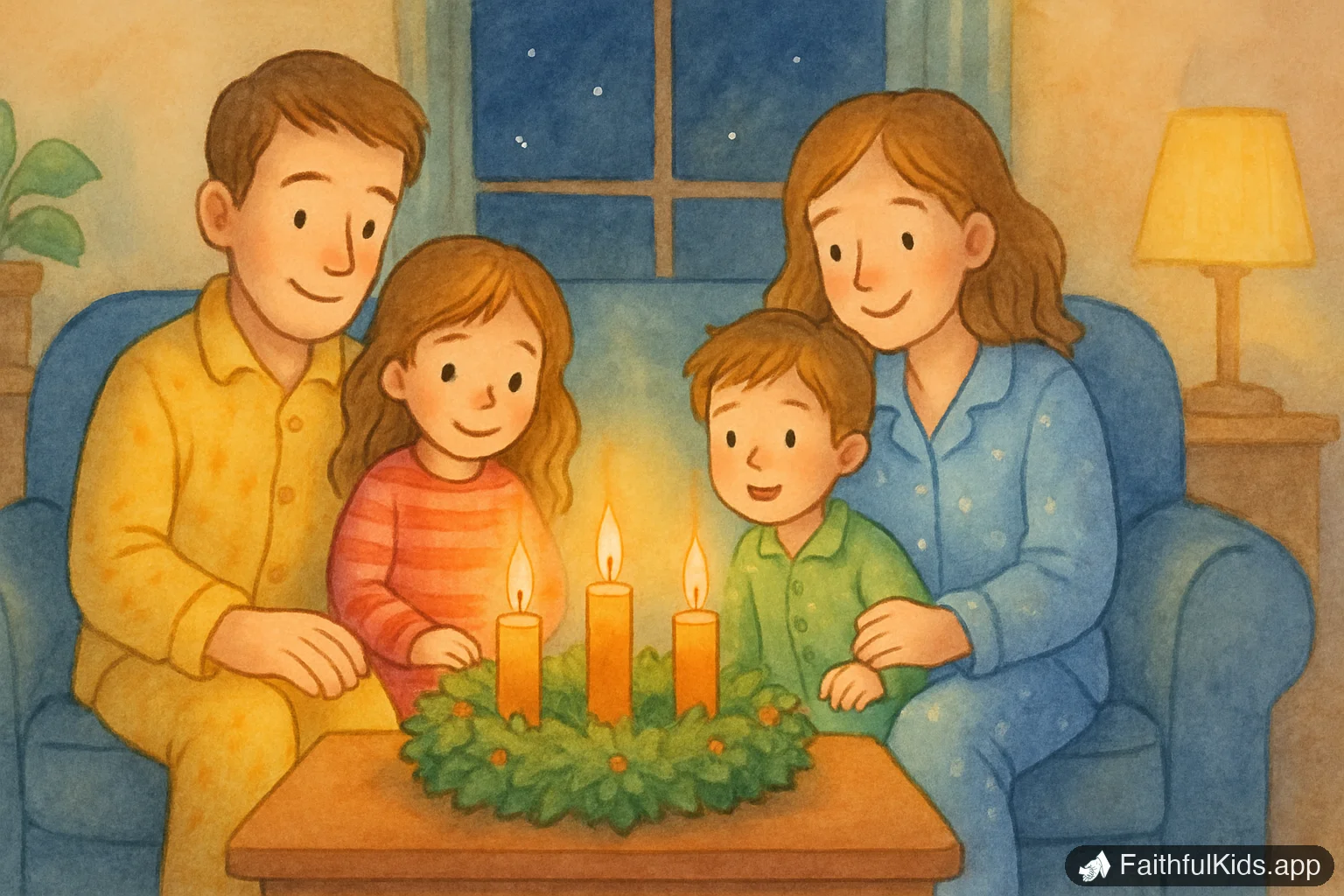
Minutes 11-15: Pray. Go around the room. Each person prays one or two sentences -- something they're thankful for and something they need. A child who doesn't want to pray aloud can say "pass," always, with no comment. Close it yourself in under thirty seconds. Long parental prayers are where the whole thing goes to die.
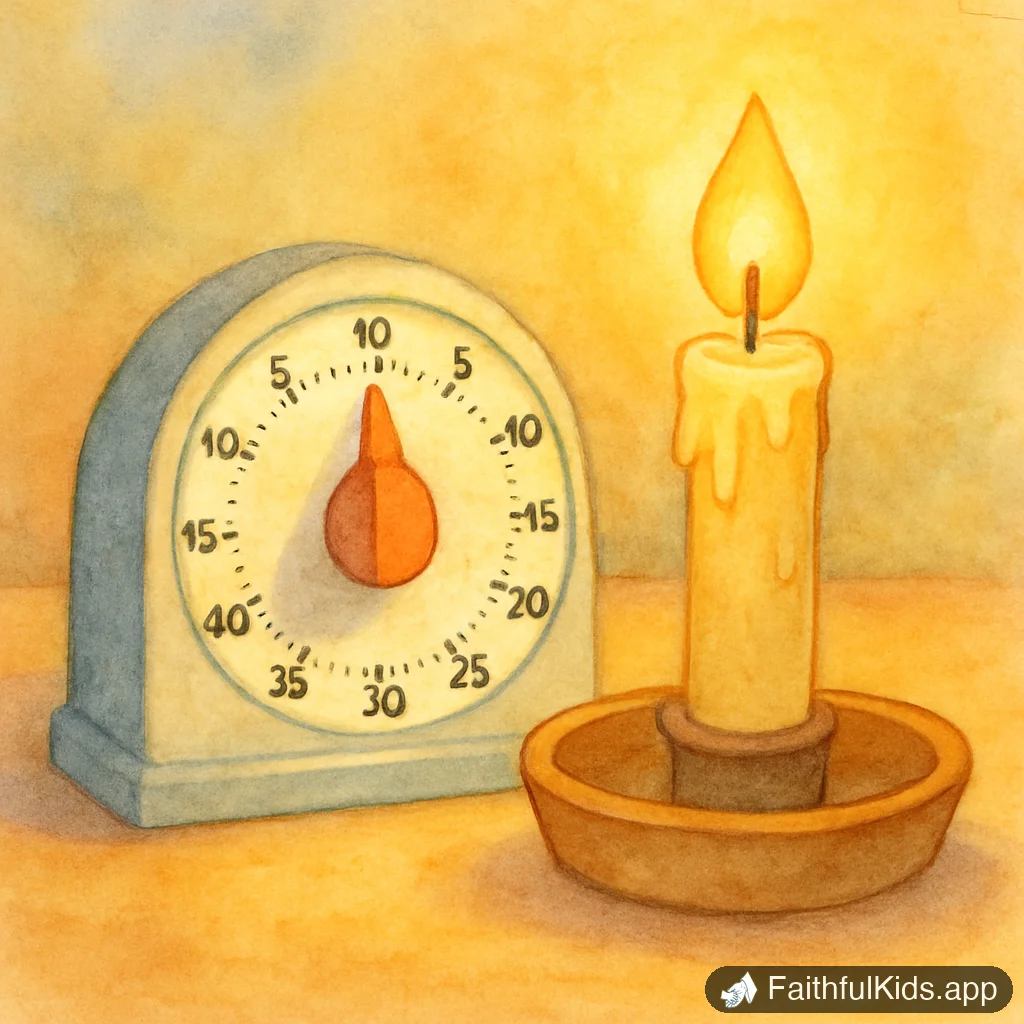
Set a timer if you have to. Ending on time when kids are still engaged is what makes them willing to sit down again tomorrow. The devotion that runs to forty minutes because it was "going so well" is the one your kids will dread next week.
The 4-Week Plan
Five sessions per week, Monday through Friday, leaving weekends open. Each day gives you a passage and one question. That's deliberate -- if you have to prepare, you will eventually stop.
Week 1: Who God Is
Day 1 -- Genesis 1:1-5. God speaks light into existence.
Question: If God made everything just by talking, what does that tell you about how powerful He is?
Day 2 -- Psalm 139:1-14. God knows every detail of you.
Question: How does it feel to know that God knows everything about you -- comforting, uncomfortable, both?
Day 3 -- Exodus 3:1-15. Moses and the burning bush.
Question: Moses gave God four reasons he was the wrong guy. What's something you feel too small or unqualified to do?
Day 4 -- Psalm 23. The Lord is my shepherd.
Question: Sheep can't take care of themselves. What's one thing in your life you can't handle on your own right now?
Day 5 -- Isaiah 40:25-31. God's strength never runs out.
Question: What made you tired this week, and what would it look like for God to renew your strength in it?
Week 2: Who Jesus Is
Day 6 -- Luke 2:1-20. Jesus is born, and the announcement goes to shepherds.
Question: God told the news to shepherds before kings. Why do you think He did it that way?
Day 7 -- Mark 4:35-41. Jesus calms the storm.
Question: The disciples asked, "Don't you care?" Have you ever wondered that about God? What happened?
Day 8 -- John 6:1-14. Jesus feeds five thousand from a boy's lunch.
Question: A kid handed over everything he had. What's something small you have that God could use?
Day 9 -- Luke 15:11-24. The father runs to the son who wasted everything.
Question: The son had a speech ready and never got to finish it. What does that say about how God receives us when we've messed up?
Day 10 -- Luke 24:1-12. The empty tomb.
Question: The disciples thought the women's report was nonsense. Why do you think the resurrection is hard to believe -- and what would change if it's true?
Week 3: How We Treat People
Day 11 -- Luke 10:25-37. The Good Samaritan.
Question: Two religious people walked past. What makes it easy to walk past someone who needs help?
Day 12 -- Matthew 5:1-12. The Beatitudes.
Question: Jesus called the poor, the sad, and the gentle "blessed." Which of those sounds most backwards to you, and why?
Day 13 -- Ephesians 4:29-32. Words that build up instead of tear down.
Question: What's something someone said to you that you still remember -- good or bad?
Day 14 -- Matthew 18:21-35. The servant who was forgiven and wouldn't forgive.
Question: Is there someone you're still holding something against? What makes letting it go hard?
Day 15 -- 1 Corinthians 13:1-7. What love actually is.
Question: Which item in that list is hardest for you -- patient, kind, not envious, not proud, not easily angered?
Week 4: Trusting God When Life Is Hard
Day 16 -- Daniel 3:8-28. Three friends and the furnace.
Question: They said God could rescue them, "but even if he does not," they still wouldn't bow. What does trusting God look like when you don't get what you asked for?
Day 17 -- Daniel 6:1-23. Daniel keeps praying anyway.
Question: Daniel didn't change his routine even when it became illegal. What's one good habit you'd keep even if it got you in trouble?
Day 18 -- 1 Samuel 17:32-50. David and Goliath.
Question: David's confidence came from what God had already done for him. What's something God has already gotten you through?
Day 19 -- Philippians 4:4-9. Do not be anxious about anything.
Question: What's the worry you carry most often, and what would it look like to hand that one to God tonight?
Day 20 -- Psalm 46. God is our refuge and strength.
Question: "Be still, and know that I am God." What in our family's life right now needs us to be still instead of scrambling?
At the end of four weeks, you have read through the shape of the whole Bible story in miniature: God, Jesus, how we live, and how we hold on. Run it again with different passages, or take on a longer commitment like the 30-day family Bible challenge to keep the momentum.
See what they get
Watch The Lords Prayer Come Alive
The Lords Prayer is one of 300+ short narrated video lessons your child will love. Watch the whole episode right here — in the app, every lesson ends with a fun quiz to check what they learned.
A real lesson from the app — watch the whole thing free.
What to Do When It Falls Apart
It will. Here is what each failure actually means and what to do about it.
You missed three days in a row. Restart tonight with no speech about it. Do not attempt to make up the missed days -- that turns a habit into a debt, and nobody keeps paying a debt. The rule is never miss twice, and when you break the rule, the fix is starting again, not apologizing.
Nobody will talk. You're probably filling the silence too fast, or the question is a comprehension question in disguise. Ask, then count to ten silently. If it's still dead, answer it yourself first and honestly -- vulnerability from a parent unlocks kids more reliably than any technique.
A younger sibling wrecks it every night. Give the youngest a job: they hold the Bible, turn the page, or say the one-sentence closing prayer. A three-year-old with a role is an asset. A three-year-old with no role is a wrecking ball.
Your teenager is checked out. Stop requiring participation and keep requiring presence. Let them listen without answering for a few weeks, and give them the reading or the question choice when they're willing. Forced sharing from a thirteen-year-old buys you compliance now and absence later.
It always gets skipped because evenings are chaos. Move it. Breakfast, the drive to school, or right after dinner before anyone leaves the table all work. If you have never established a slot at all, our guide on how to start family Bible time walks through choosing one that matches your family's real schedule rather than your ideal one.
You feel unqualified to lead it. Most parents do. You are not teaching a class; you are reading a passage with your kids and asking one question you don't have to know the answer to. "Let's find out together" is a completely legitimate response, and modeling curiosity teaches more than modeling expertise.
Age Adaptations
Ages 3-5. Cut the read block to two minutes and tell the story instead of reading every verse. Replace the question with something concrete -- "who was kind in this story?" Let them draw during the talk block; drawing hands usually mean listening ears. Total time: about eight minutes.
Ages 6-9. This is the format's home turf. Kids can read short passages themselves, answer the real question, and pray aloud without prompting. Let them pick which night they lead.
Ages 10-13. Give them the harder questions and let them push back. This age needs to be allowed to disagree out loud -- a preteen who can argue with a passage at your table is a preteen who is actually thinking about it. Hand over the reading and the closing prayer permanently.
Ages 14+. Shorten rather than deepen. Fifteen focused minutes beats a long study, and letting a teen choose the passage once a week does more for engagement than any curriculum. Never require them to share a prayer request aloud.
Mixed ages under one roof. Read for the middle child and adapt at the edges: give the little one a job, and give the oldest a follow-up question afterward while doing dishes. Trying to pitch the whole thing at the youngest bores the oldest; pitching it at the oldest loses everyone else.
If your family does better with conversation than with reading, the 52 prompts in our family dinner Bible questions list can carry the talk block for a full year. And on the nights when nobody has fifteen minutes, a short animated Bible lesson on Faithful Kids covers the story with a built-in reflection question so the streak doesn't break.
For the wind-down nights specifically, our free Bedtime Bible Kit gives you seven short readings, a question, and a goodnight prayer already formatted -- print it once and it covers the week you would otherwise skip.
The App Route: Devotions With the Prep Done for You
Some seasons of life have no margin for planning even a 15-minute structure — and a devotional app is the honest fallback, not a failure. The shape to look for is the one this whole guide teaches: a short anchor in Scripture, then talk, then prayer. Faithful Kids compresses that into about ten minutes with the prep done for you: one Bible story video, one short quiz (three to five questions on most lessons), one reflection question to talk about — then you close in prayer. For audio-first families, Keys for Kids publishes a free daily audio devotional that works well in the car. Whatever tool you use, keep the talking part human: the app can carry the story, but the conversation is the devotion.
Fifteen minutes is the practical ceiling for most families with elementary-age kids, and five to eight minutes is right if you have preschoolers or are just starting. The number that actually matters is consistency: fifteen minutes four nights a week shapes a family far more than an hour on Sunday. Whatever length you choose, end on time even when it's going well.
What time of day works best for family devotions?
Whichever slot already exists in your routine. The end of dinner and the half hour before bed are the two most common, because everyone is already in one place. Mornings win on consistency, since evening schedules get wrecked by practices and homework more often than breakfasts do. Pick one, protect it for a month, and only then evaluate.
What if my kids are very different ages?
Aim the reading and the question at your middle child, then adapt at both ends -- give the youngest a physical job like holding the Bible, and follow up with your oldest separately afterward. Mixed-age devotions work better than most parents expect, largely because younger kids absorb far more from listening to an older sibling's answer than from a simplified version aimed at them.
Do we need a devotional book or curriculum?
No. A Bible, a passage list, and one question per night is enough, and it removes the most common failure point -- finishing a book and never starting another one. The four-week plan above needs no purchase and no preparation. Books add variety, but they are a convenience, not a requirement.
What do we do after the four weeks are finished?
Repeat the four themes with new passages, or move into a longer plan with a defined finish line. Families do best with concrete commitments -- "we're doing 30 days" is finishable in a way that "we do devotions now" is not. By the second month, the habit usually runs on its own and you can extend without a plan.
How do I lead family devotions if I don't know the Bible well?
Read the passage and ask the question -- that is the entire job. You are not expected to explain difficult texts, and pretending to have answers is worse than admitting you don't. "That's a good question, I don't know, let's look it up this week" teaches your kids that faith holds up to honest questions, which is a more durable lesson than any answer you could have given.
🌙 Free: The Bedtime Bible Kit
Seven nights of five-minute stories — a story, a prayer, and one question to whisper about.
Free printable + a few helpful emails. Unsubscribe anytime.