A New Year's family devotion tradition has three simple parts: a year-in-review gratitude night on New Year's Eve, choosing a "verse for the year" together, and five short devotions for the first week of January to carry the momentum. Each part takes 10-20 minutes, uses nothing but a Bible and some paper, and works for kids from preschool through the teen years.
New Year's is the most underused holiday on the Christian family calendar. The culture hands you a built-in moment of reflection and fresh starts -- and most of us spend it on confetti and resolutions that die by February. The traditions below redirect that same energy toward gratitude and Scripture, and they're simple enough to become the thing your kids expect every year. Here's the full guide.
What Is a Year-in-Review Gratitude Night?
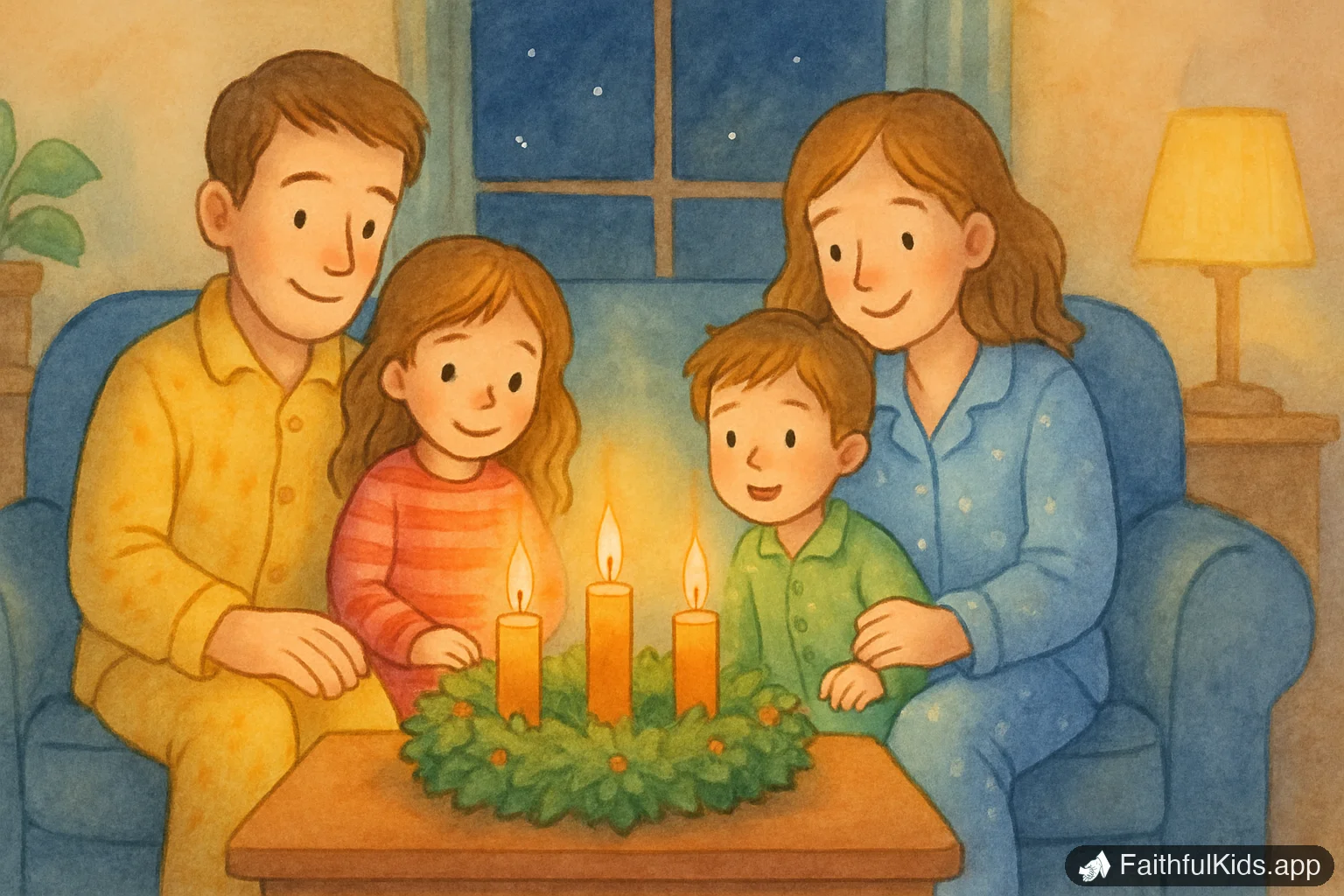
A year-in-review gratitude night is a New Year's Eve tradition where your family walks back through the year month by month and names what God did in it. It takes 15-30 minutes, and it works because it's concrete -- kids don't have to feel grateful in the abstract; they just have to remember.
Here's the simple version:
- Gather the memory joggers. Pull up the year's photos on a phone or laptop -- scrolling the camera roll month by month is the fastest way to resurrect a year. A calendar works too.
- Walk the year month by month. For each month, ask two questions: "What happened?" and "Where do you see God in it?" Keep it moving -- a minute or two per month.
- Write the highlights down. One person scribes a list titled "What God Did in [Year]" -- answered prayers, hard things survived, friendships, growth, laughter. Aim for 15-20 items.
- Include the hard stuff. Don't skip the bad months. "That was a hard one -- and God got us through it" teaches kids more theology than ten easy months. Psalm 77:11 is the anchor verse: "I will remember the deeds of the Lord; yes, I will remember your miracles of long ago."
- Read the list out loud and pray. One parent reads the whole list, then anyone who wants to prays a one-sentence thank-you. Close by reading Lamentations 3:22-23: "His compassions never fail. They are new every morning; great is your faithfulness."
Save the list. A folder of these, one per year, becomes your family's own book of remembrance -- and reading last year's list aloud is the perfect way to open next year's gratitude night.
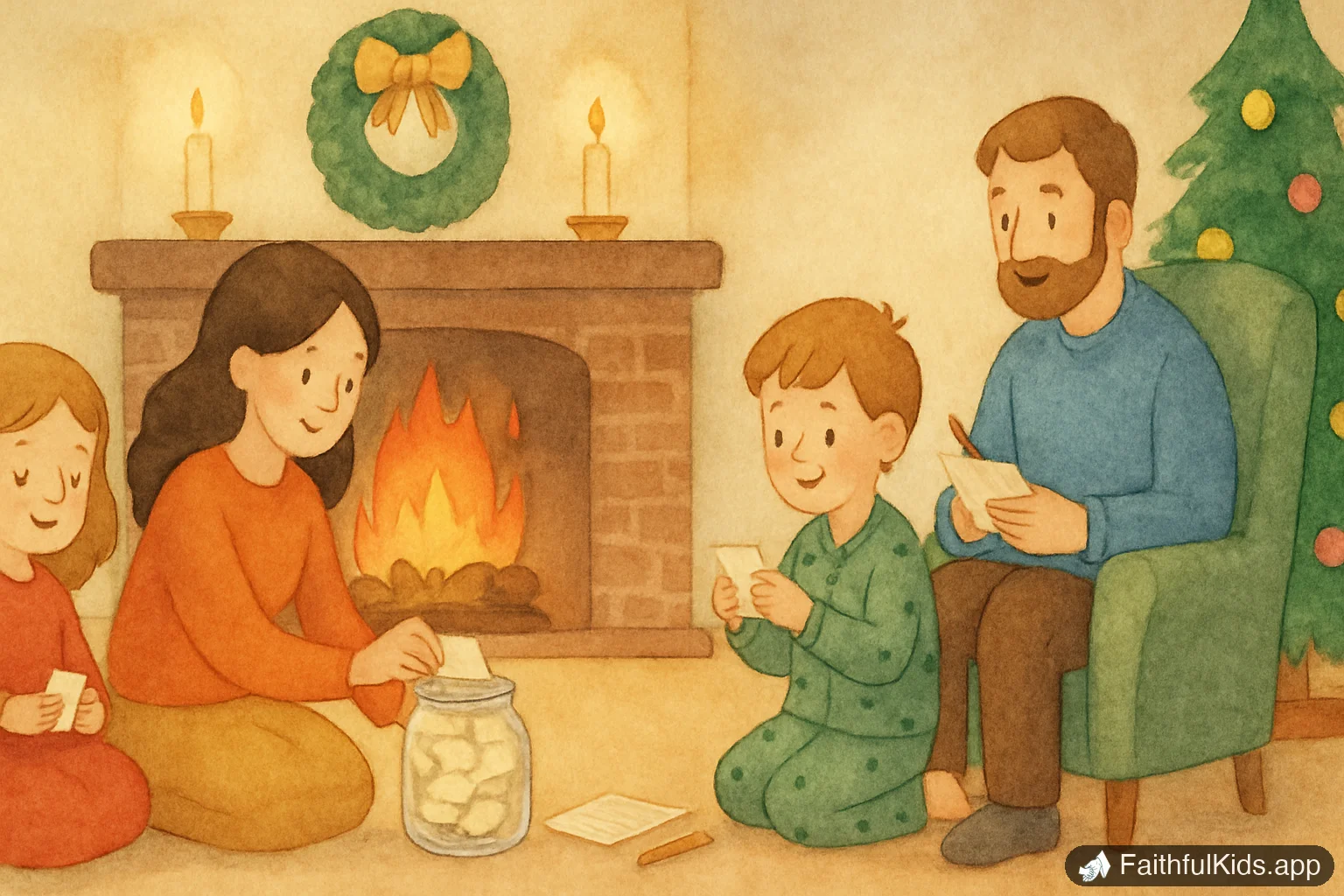
Variations that work: a "gratitude jar" emptied and read on December 31 (if you filled one all year); a tablecloth family members write highlights on each New Year's Eve in different ink colors; or "high-low-God" around the table for families short on time -- each person names the year's high point, low point, and one place they saw God.
How Does the "Verse for the Year" Tradition Work?
Each family member chooses one Bible verse to be their verse for the coming year -- their theme, their anchor, the words they'll come back to when the year gets complicated. It's the Christian upgrade to a resolution: instead of "what will I achieve," the question is "what do I want God to build in me?"
How to run it:
- Offer a short menu. Kids freeze when told "pick any verse in the Bible." Give six to ten options on slips of paper. Good starters: Joshua 1:9 (courage), Philippians 4:13 (perseverance), Proverbs 3:5-6 (trust), Psalm 118:24 (joy), Ephesians 4:32 (kindness), Micah 6:8 (justice and humility), Colossians 3:23 (working heartily). Our list of New Year Bible verses for kids is built for exactly this.
- Let each person choose their own -- including parents. A seven-year-old picking "Be strong and courageous" because of a swim test is doing real theology. Don't upgrade their pick to something more impressive.
- Say why. Each person shares one sentence: "I picked this because..." That sentence is often the most honest spiritual conversation of the season.
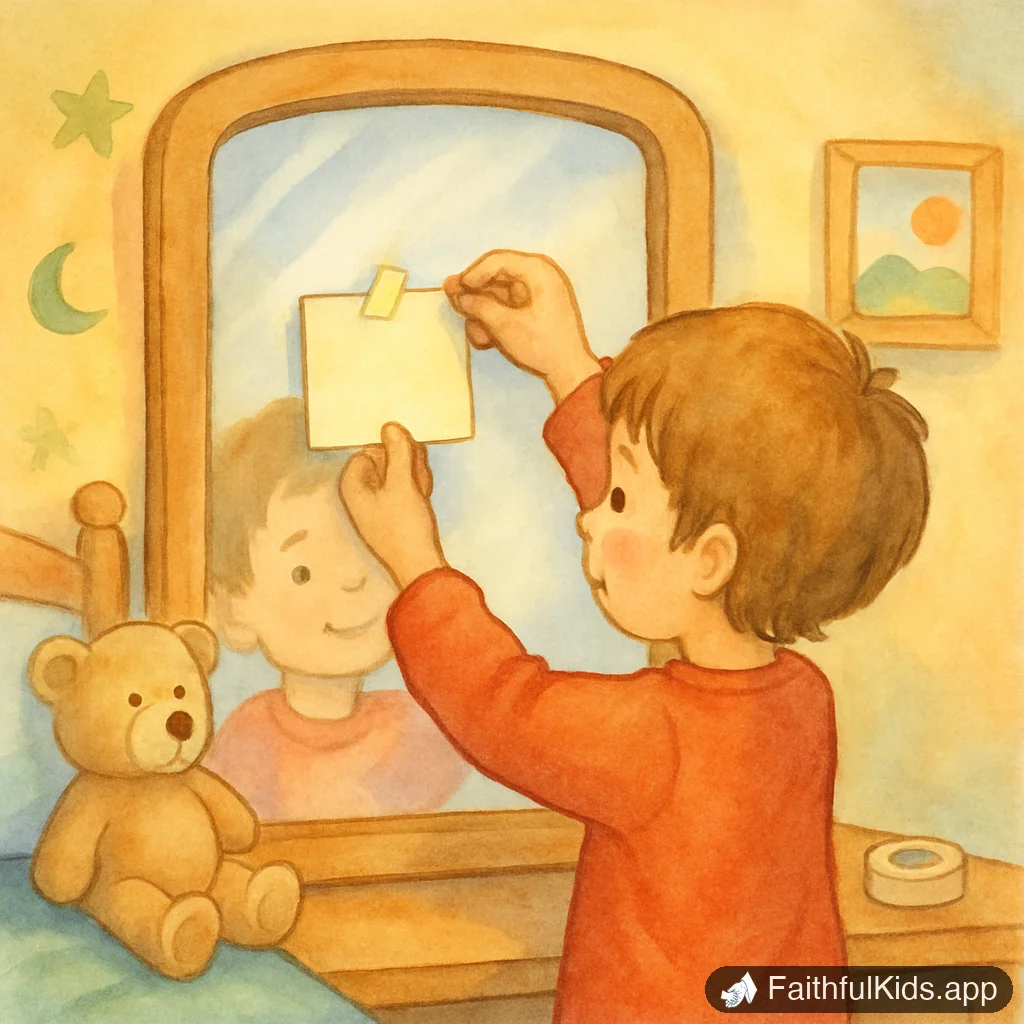
- Make it visible. Write each verse on a card for a bedroom mirror or the fridge, or let kids decorate theirs. Visibility is the difference between a verse for the year and a verse for the week.
- Revisit it quarterly. At dinner sometime in spring, ask: "How's your verse going?" And next New Year's Eve, before choosing new verses, have everyone report on the old one. That closing loop is what turns this from an activity into a tradition.
A family verse (one shared verse for the household, chosen together) works too -- some families do both.
5 Short Devotions for the First Week of January
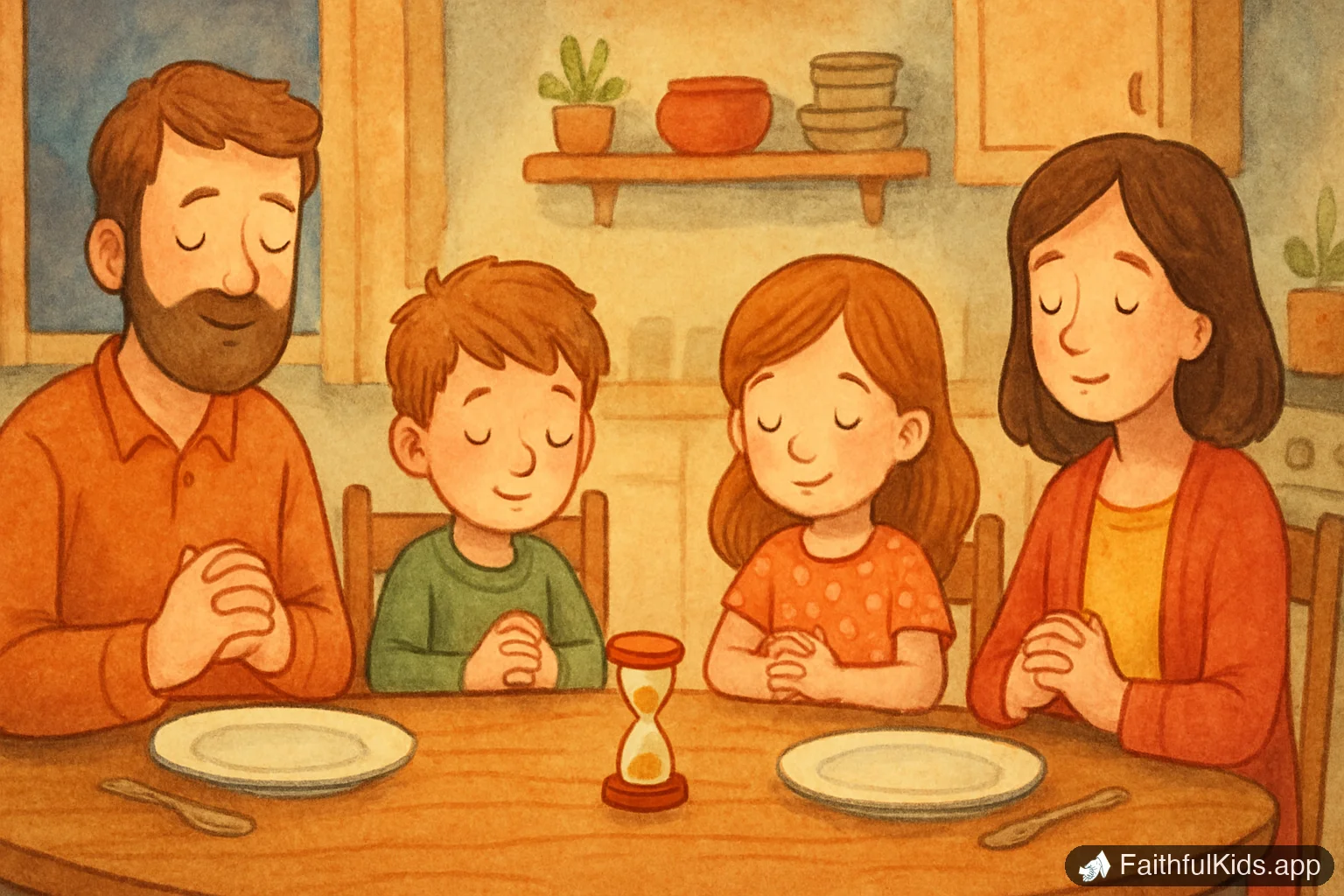
These five devotions -- about five minutes each -- carry your family through the first week of the year. If your family did our Christmas family devotions in December, these pick up right where those left off. And if December's countdown rhythm was new to your family, our explainer on what Advent is for kids is worth bookmarking for next year -- these January devotions borrow the same seasonal-rhythm idea. Do them January 1-5, or spread them across the week. Each has a verse, a short reflection to read aloud, a question, and a prayer.
Devotion 1 (New Year's Day): New Every Morning
Verse: "Because of the Lord's great love we are not consumed, for his compassions never fail. They are new every morning; great is your faithfulness." (Lamentations 3:22-23)
Read aloud: Here's a surprise: this verse about newness comes from one of the saddest books in the Bible, written in the ruins of a destroyed city. Even there, the writer looked up and said: God's mercies are new every morning. Not just every January -- every morning. Today the whole world is talking about a fresh start, but for God's family, fresh starts arrive daily, 365 times a year. Whatever last year held -- wins, losses, things you'd rather forget -- today's mercy is already here, unused and brand new.
Question: What's one thing from last year you're glad to leave behind, and one mercy you're hoping for this year?
Prayer: God, thank You that Your mercies never run out. Make this whole year feel like morning. Amen.
Devotion 2: Strong and Courageous
Verse: "Be strong and courageous. Do not be afraid; do not be discouraged, for the Lord your God will be with you wherever you go." (Joshua 1:9)
Read aloud: God spoke these words to Joshua at a threshold -- Moses was gone, the Jordan River was ahead, and everything familiar was behind. A new year is a threshold too. Notice that God doesn't say "be strong because you're capable." He says be strong for one reason only: "the Lord your God will be with you wherever you go." Courage isn't a feeling you gin up; it's a conclusion you draw from who's coming with you. Every new thing this year -- new grade, new team, new school, new job -- comes with the same escort.
Question: What's one new thing coming this year that you're nervous about?
Prayer: Lord, thank You that You cross every threshold with us. Make us strong and courageous this year -- not because we're big, but because You're near. Amen.
Devotion 3: Forgetting What Is Behind
Verse: "Forgetting what is behind and straining toward what is ahead, I press on toward the goal to win the prize for which God has called me heavenward in Christ Jesus." (Philippians 3:13-14)
Read aloud: Paul, who wrote this, had a past worth forgetting -- he'd once hunted Christians. If anyone could have spent his life stuck in regret, it was him. Instead he ran like a racer: eyes forward, pressing on. Here's what this means for a new year: last year's failures don't get a vote in this year. The test you bombed, the friendship you fumbled, the temper you lost -- confessed and forgiven, they're behind you. God isn't dragging your old year around, so you don't have to either. Runners who keep looking backward trip. Eyes forward.
Question: Is there anything from last year -- a mistake, an embarrassment, a grudge -- that you need to leave behind the starting line?
Prayer: Father, thank You for forgiveness that actually clears the record. Help each of us run this year with our eyes forward. Amen.
Devotion 4: Planning with Open Hands
Verse: "In their hearts humans plan their course, but the Lord establishes their steps." (Proverbs 16:9)
Read aloud: New Year's is planning season -- goals, calendars, resolutions. The Bible is pro-planning; wisdom literature is full of it. But this proverb adds the part resolutions forget: we plan the course, God establishes the steps. Some of this year will go according to your plan. Some of it will be a plot twist nobody saw coming -- and looking back at our gratitude list, some of last year's best things were plot twists. So we plan with open hands: make the goal, do the work, and trust the God who reserves the right to improve the route.
Question: What's one thing you're hoping or planning to do this year? Can you hold it with open hands?
Prayer: Lord, here are our plans for this year -- we make them and we hand them to You. Establish our steps, and surprise us well. Amen.
Devotion 5: Grow Like a Tree
Verse: "That person is like a tree planted by streams of water, which yields its fruit in season and whose leaf does not wither -- whatever they do prospers." (Psalm 1:3)
Read aloud: Psalm 1 says the person who delights in God's Word grows like a tree by a river -- steady, rooted, fruitful in season. Notice what trees don't do: they don't sprint, and they don't grow by New Year's resolution. They grow by staying planted next to the water, every ordinary day. That's the invitation for this year: not a spiritual sprint that dies in February, but roots -- a little Scripture, a little prayer, together, most days. This week was five devotions. A tree by the river is just this week, repeated.
Question: What would "staying planted" look like for our family this year -- when and where could we keep meeting like this?
Prayer: God, plant our family by Your streams this year. Make us the slow, steady, fruitful kind of strong. Amen.
How Do You Keep the Momentum Past the First Week?
Decide the next step on January 5, before the streak breaks -- momentum converts to habit only if it has somewhere to go. Devotion 5's question tees this up. Three good next steps, in increasing commitment:
| Next step | Time/day | Best for |
|---|
| Two nights a week, same nights | 5-10 min | Families brand new to this |
| A 30-day story challenge | 15 min | Families ready for a daily rhythm |
| A book of the Bible, one chapter a night | 15-20 min | Families with older kids |
If family devotions are new territory for you, our guide on
how to start family Bible time covers the practical stuff -- timing, wiggly kids, what to do when it flops. Families ready for the daily rhythm can roll straight into the
30-day family Bible challenge, which walks from Creation to the early Church one story per night -- a fitting January project. And on nights when the parent tank is empty, a short video lesson keeps the streak alive; the story series at
Faithful Kids pairs each Bible story with a quiz kids genuinely like.
The goal of all of it is the Psalm 1 picture: a family planted by the water, growing at tree speed. Slow is fine. Rooted is the win.
Frequently Asked Questions
When should we do New Year's family devotions -- New Year's Eve or New Year's Day?
Do the gratitude review and verse-choosing on New Year's Eve, and start the five devotions on New Year's Day. The Eve activities are reflective and pair naturally with staying up together; the devotions are forward-looking and benefit from morning-of-the-new-year energy. If you only have one sitting, combine the gratitude list and verse pick into a single 30-minute New Year's Day brunch tradition.
What ages can participate in a year-in-review gratitude night?
Every age -- that's its superpower. Preschoolers can answer "what was fun this year?" while scrolling photos, elementary kids can name answered prayers, and teens (who may roll their eyes and then talk the longest) handle the "where was God in the hard month?" questions. The photo-scroll format matters most for young kids, because pictures unlock memories that questions alone can't.
How is a verse for the year different from a New Year's resolution?
A resolution is a performance goal you keep or break; a verse for the year is a truth you return to, which means it can't fail by February. A kid who picks Joshua 1:9 doesn't "break" it by being scared in March -- the verse is exactly for that moment. Many families do both, letting the verse shape the resolutions rather than replace them.
What if my kids think devotions are boring?
Keep them under seven minutes, give kids real jobs (reading the verse, choosing who prays, running the photo scroll), and anchor them to something pleasant like dessert or hot chocolate. Boredom usually means too long or too passive, not too spiritual. The five devotions above are deliberately short with one concrete question each -- and it's fine to do just three of the five.
Do we need any materials for these traditions?
Just a Bible, paper, a pen, and your phone's photo library. Optional upgrades: a jar for year-round gratitude slips, index cards for verse-of-the-year displays, and a folder to archive each year's "What God Did" list. The low prep is intentional -- traditions survive when they're easy to repeat.
What should we do after the first week of January ends?
Pick your next rhythm on day five, while the streak is alive: two set nights a week for beginners, or a daily plan like a 30-day story challenge for families ready for more. The single biggest predictor of a lasting habit is naming the specific time and place ("Tuesdays and Sundays after dinner at the table"), not enthusiasm. Revisit everyone's verse for the year each quarter to keep the January spark connected to the rest of the year.