Blog/Armor of God Printable Activities for Kids (Ephesians 6)
Guide
Armor of God Printable Activities for Kids (Ephesians 6)
Ages 5+·11 min read··By Faithful Kids Team·Updated August 16, 2026
The armor of God comes from Ephesians 6:10-18, where Paul lists six pieces of a Roman soldier's equipment -- the belt of truth, breastplate of righteousness, shoes of the gospel of peace, shield of faith, helmet of salvation, and sword of the Spirit -- as a picture of how God protects and equips believers. This guide explains each piece in words a 6-year-old can understand, then gives you 8 hands-on activities to make the lesson stick.
The armor of God is one of the best passages in the whole Bible to teach kids, because it's already visual. Kids love armor. You don't have to invent an illustration -- Paul did it for you. Your job is just to connect each piece to what it means on a regular Tuesday: telling the truth, making right choices, trusting God when you're scared.
Let's suit up.
What Does Each Piece of the Armor of God Mean for Kids?
Each piece of armor stands for something God gives us to stay strong against temptation, lies, and fear -- here's every piece in kid-level language, with the verse it comes from.
Armor Piece
Verse
What It Means for a Kid
Belt of Truth
Ephesians 6:14
Knowing and telling the truth holds everything together
Breastplate of Righteousness
Ephesians 6:14
Right choices guard your heart
Shoes of the Gospel of Peace
Ephesians 6:15
Being ready to share Jesus and make peace wherever you go
Shield of Faith
Ephesians 6:16
Trusting God blocks the enemy's lies and fear
Helmet of Salvation
Ephesians 6:17
Knowing you belong to Jesus protects your mind
Sword of the Spirit
Ephesians 6:17
God's Word is your one weapon to fight back with
A little more depth on each, in the words I'd use with my own kids:
The belt of truth. A Roman soldier's belt held his whole outfit together -- armor and sword hung from it. Truth works the same way: when you know what's true about God and you tell the truth yourself, everything else in your life stays in place. Lies make everything fall apart.
The breastplate of righteousness. The breastplate covered the soldier's heart. "Righteousness" is a big word for doing what's right in God's eyes. When you choose kindness instead of meanness, honesty instead of cheating, your heart stays protected.
The shoes of the gospel of peace. Soldiers wore sturdy sandals with grips so they could stand firm and move fast. Our "shoes" are being ready -- ready to tell people the good news about Jesus, and ready to be a peacemaker instead of a fight-starter.
The shield of faith. Roman shields were huge -- nearly door-sized -- and soldiers could soak them in water so flaming arrows fizzled out on impact. Paul says faith "extinguishes all the flaming arrows of the evil one" (Ephesians 6:16). When scary thoughts or lies fly at you ("God doesn't love you," "you're not good enough"), trusting God blocks them.
The helmet of salvation. The helmet guards your head -- your thoughts. Salvation means Jesus saved you and you belong to Him, no matter what. When you know that for sure, the enemy can't mess with your mind.
The sword of the Spirit. Here's the detail kids love: five pieces are protection, and only one is a weapon -- "the sword of the Spirit, which is the word of God" (Ephesians 6:17). When Jesus was tempted in the desert, He fought back by quoting Scripture (Matthew 4:1-11). Knowing Bible verses by heart means you're never unarmed.
One more thing worth telling kids: Paul ends the passage with prayer (Ephesians 6:18). Prayer isn't a seventh piece of armor -- it's how a soldier stays in contact with the Commander. For a fuller walkthrough of the passage itself, see our companion lesson on the armor of God for kids.
8 Armor of God Activities for Kids
These eight activities run from 5-minute games to a full craft afternoon -- pick by age, time, and how much cardboard you're willing to sacrifice.
1. Cardboard Dress-Up Armor (the big one)
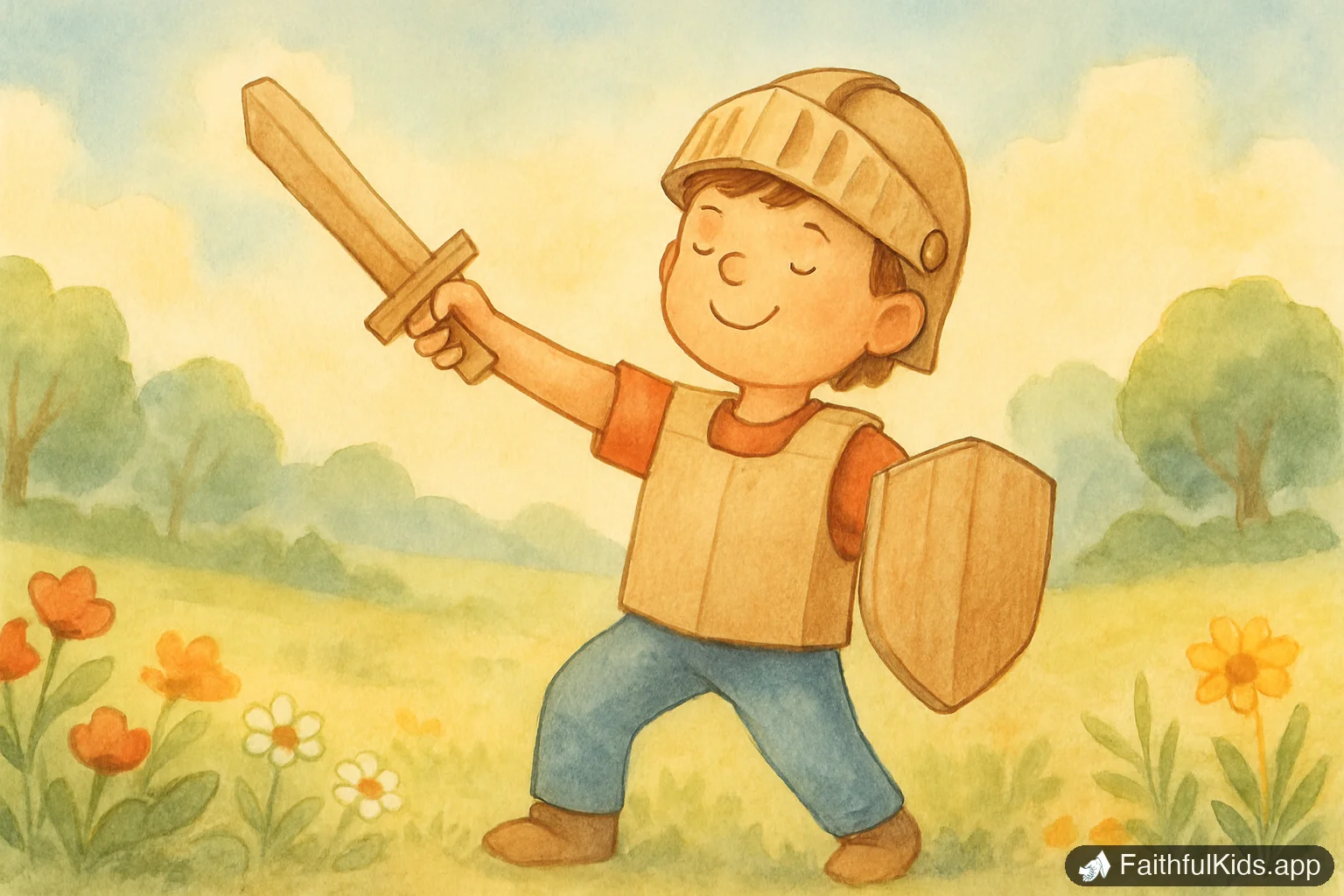
Build a wearable armor set from cardboard and foil -- this is the activity kids remember for years. Instructions:
Breastplate: Cut a large cardboard rectangle to chest size, round the corners, cut a neck notch at the top, cover in aluminum foil, and attach yarn or duct-tape straps over the shoulders. Write "RIGHTEOUSNESS" across the front in marker.
Belt: A strip of cardboard or wide ribbon, labeled "TRUTH," fastened with tape or velcro.
Helmet: The no-craft option is a bike helmet with a taped-on "SALVATION" label. The craft option: a strip of cardboard sized to the head, stapled into a ring, with two crossing strips over the top.
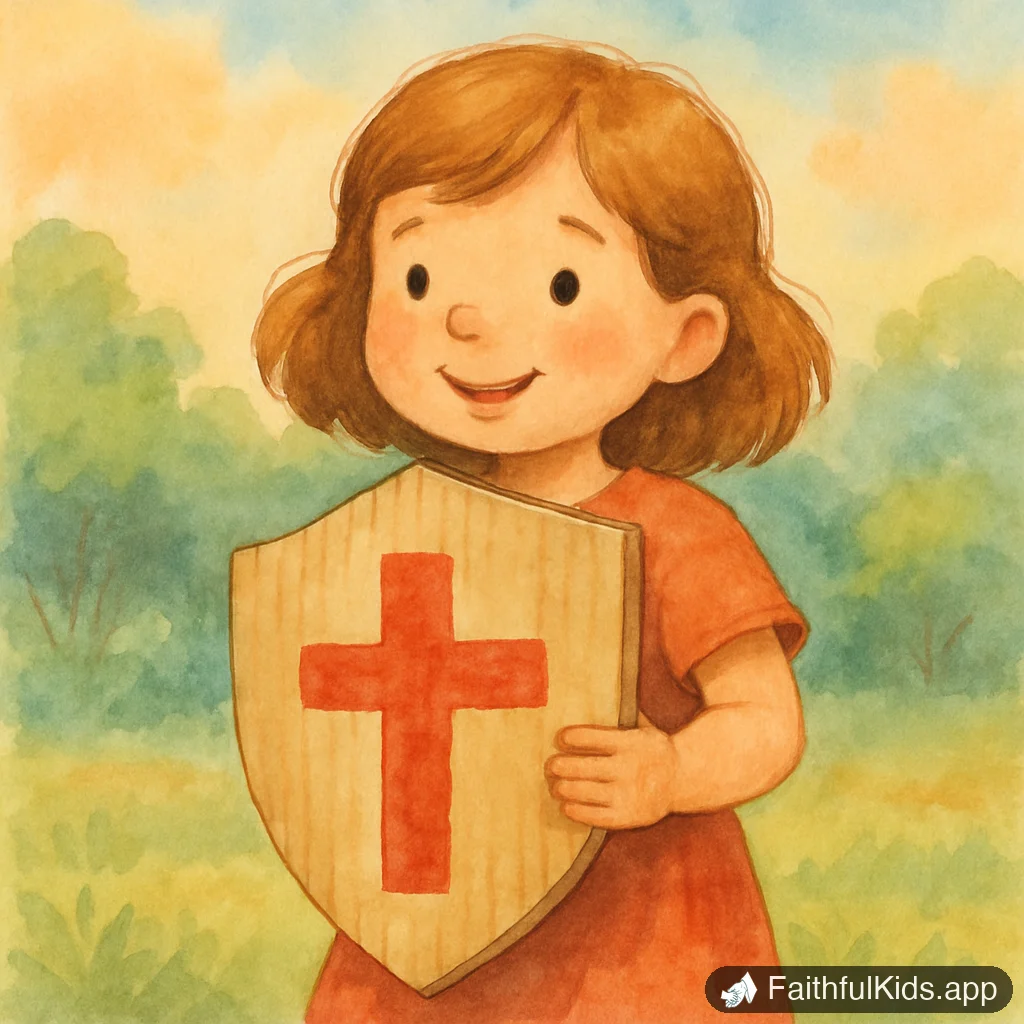
Shield: Cut a large oval or rectangle from a cardboard box, cover with foil, tape a cardboard handle-loop on the back, and write "FAITH" on the front.
Sword: Cut a sword shape from cardboard (or tape two paper-towel tubes together), wrap in foil, and label it "GOD'S WORD."
Shoes: Simplest of all -- kids decorate paper labels reading "PEACE" and tape one to each of their own shoes.
As your child puts on each piece, say what it is and what it means. That put-it-on-say-it ritual is the lesson.
2. Match-Up Memory Game
Make 12 index cards: six with armor piece names, six with their meanings ("Belt" pairs with "Truth," "Sword" pairs with "God's Word"). Lay them face-down and play classic memory -- flip two, keep the pair if they match. For younger kids, play face-up as a simple matching race. This 10-minute game drills the piece-to-meaning connections better than any lecture.
3. Draw-and-Label Soldier
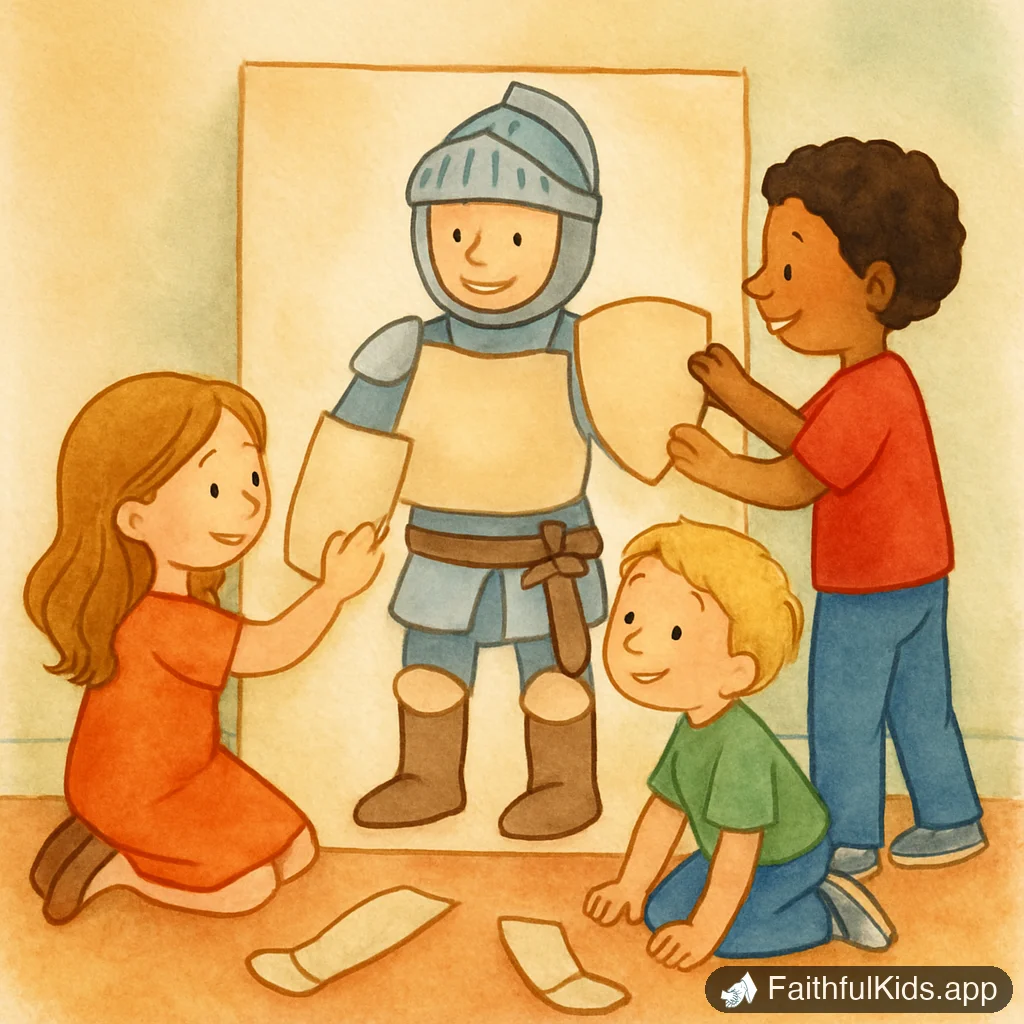
Kids draw a soldier (or trace themselves on butcher paper, life-sized) and draw on each piece of armor, labeling every piece with its name and meaning. Hang the finished soldier on the bedroom door. This works especially well for kids who'd rather draw than glue -- and the poster keeps re-teaching the lesson every time they walk past it.
4. Flaming Arrow Shield Game
One kid holds the cardboard shield from Activity 1 (or a couch cushion labeled "FAITH"). The rest of the family wads up paper balls -- the "flaming arrows" -- and before each throw, calls out a lie or fear the arrow represents: "You're all alone!" "God forgot you!" The shield-holder blocks it and shouts back a truth: "God is always with me!" Loud, silly, and unforgettable -- this is an object lesson kids feel in their arms. It pairs well with the other hands-on ideas in our Bible object lessons for kids.
5. Armor Scavenger Hunt
Hide six objects around the house, one per armor piece -- a belt, a vest or bib, a shoe, a pot lid (shield), a hat or helmet, and a ruler or toy sword. Kids hunt them down, then must correctly name which armor piece each represents and what it means before their find "counts." Add Ephesians 6:14-17 written on slips inside each hiding spot for readers.
6. Memory Verse Challenge: Ephesians 6:10-11
Work on memorizing the passage's opening: "Be strong in the Lord and in his mighty power. Put on the full armor of God, so that you can take your stand against the devil's schemes" (Ephesians 6:10-11). Write it on a whiteboard, read it together five times, then erase two words per round and recite until the board is blank and the verse is memorized. More erase-a-word style techniques are in our guide to Bible memory verse strategies for kids.
7. "Suit Up" Freeze Game
A Simon-says-style movement game: the caller shouts an armor piece and kids mime putting it on -- buckling the belt, strapping the breastplate, stomping into shoes, raising the shield, donning the helmet, drawing the sword. Shout them faster and faster; anyone who mimes the wrong piece sits down. Perfect 5-minute energy burner for ages 4-8, and a good fit for a classroom -- you'll find more like it in our Bible crafts with lessons collection.
8. Morning Armor Checklist
Turn the lesson into a habit: make a small poster for the bathroom mirror or bedroom door listing all six pieces with checkboxes. For one week, kids "put on the armor" each morning by tapping each box and saying a one-line prayer -- "God, help me tell the truth today. Help me make right choices..." It takes 45 seconds and moves the armor from a craft project into an actual spiritual practice, which was Paul's point all along.
If your kids want to see the passage taught before they build it, the armor of God lesson in our video library at Faithful Kids walks through each piece with a quiz at the end -- watch it first, then let the crafts reinforce what they learned.
See what they get
Watch a Real Lesson From the App
Press play on Daniel in the Lions Den — a complete lesson exactly as your child sees it. 300+ episodes cover the whole Bible in order, each ending in a fun quiz to check what they learned.
A real lesson from the app — watch the whole thing free.
What Age Is the Armor of God Lesson Best For?
Ages 4-12 can all engage with the armor of God, but aim the lesson differently by age. Ages 4-6 grasp "God protects me" plus the fun of dress-up -- keep it concrete and physical (Activities 1, 5, and 7). Ages 7-9 can connect each piece to its meaning and memorize Ephesians 6:10-11 (Activities 2, 3, and 6). Ages 10-12 are ready for the real-life layer: what a "flaming arrow" actually looks like at school, and how quoting Scripture under pressure works in practice (Activities 4 and 8, plus honest conversation).
Sunday school leaders: the Bible word searches print one to a sheet with the answer key included.
There is a free Armor of God word search to go with this, playable on a phone and printable for a class.
Frequently Asked Questions
What are the 6 pieces of the armor of God in order?
In the order Paul lists them in Ephesians 6:14-17: the belt of truth, the breastplate of righteousness, feet fitted with the readiness of the gospel of peace, the shield of faith, the helmet of salvation, and the sword of the Spirit, which is the word of God. Five pieces are defensive; only the sword -- God's Word -- is a weapon.
How do I explain the armor of God to a 5-year-old?
Keep it to one sentence per piece: "God gives us invisible armor -- truth is our belt, doing right guards our heart, peace is our shoes, trusting God is our shield, knowing Jesus saved us is our helmet, and the Bible is our sword." Then let them dress up in cardboard armor while you repeat the meanings. At five, the physical experience of putting on each piece teaches more than any explanation.
Is prayer part of the armor of God?
Prayer is not listed as a seventh piece of armor, but Paul commands it immediately after describing the armor: "pray in the Spirit on all occasions with all kinds of prayers and requests" (Ephesians 6:18). A helpful way to frame it for kids is that prayer is how the soldier talks to the Commander -- the armor doesn't work if you never report for duty.
What Bible verse should kids memorize from the armor of God passage?
Start with Ephesians 6:10-11 -- "Be strong in the Lord and in his mighty power. Put on the full armor of God, so that you can take your stand against the devil's schemes." It's short, it summarizes the whole passage, and it gives kids the "why" behind the armor. Older kids can extend to the full list in verses 14-17.
What supplies do I need for an armor of God craft?
For the full cardboard dress-up set: two or three large cardboard boxes, aluminum foil, duct tape, scissors, yarn or ribbon for straps, and markers. Total cost is usually under five dollars since most of it is recycling-bin material. If you're short on time, the draw-and-label soldier needs nothing but paper and crayons.
Why did Paul use armor as an illustration?
Paul wrote Ephesians while under Roman guard, likely chained to a soldier whose equipment he could see every day (see Ephesians 6:20 -- "an ambassador in chains"). He borrowed the most familiar image in his world to teach that the Christian life involves real spiritual opposition and real God-given protection. Kids don't need the history to get the point, but older ones find it fascinating that Paul was literally looking at his illustration.
🌙 Free: The Bedtime Bible Kit
Seven nights of five-minute stories — a story, a prayer, and one question to whisper about.
Free printable + a few helpful emails. Unsubscribe anytime.