Bible Curriculum With Quizzes: Why It Beats Passive Reading
Ages 5+·10 min read··By Faithful Kids Team·Updated August 18, 2026
A Bible curriculum with quizzes beats passive reading because of a century of memory research: kids remember what they retrieve, not what they receive. A child who answers three questions after a Bible story will hold onto it for weeks, while a child who simply hears the story -- even twice -- forgets most of it within days.
That is not a knock on your child or your teaching. It is how every human memory works, and it is why the quiz is quietly the most underrated feature in children's Bible education. This guide explains the science in kid-simple terms, shows you what to look for in a quiz-based curriculum, and honestly compares the main options.
Why Do Kids Forget Bible Stories So Fast?
Kids forget Bible stories fast for the same reason adults forget conference talks fast: information that enters the brain without being pulled back out fades on a predictable schedule. Psychologists call this the forgetting curve, first mapped by Hermann Ebbinghaus in the 1880s, and the shape of the curve is brutal -- most new material fades within days unless something interrupts the decay.
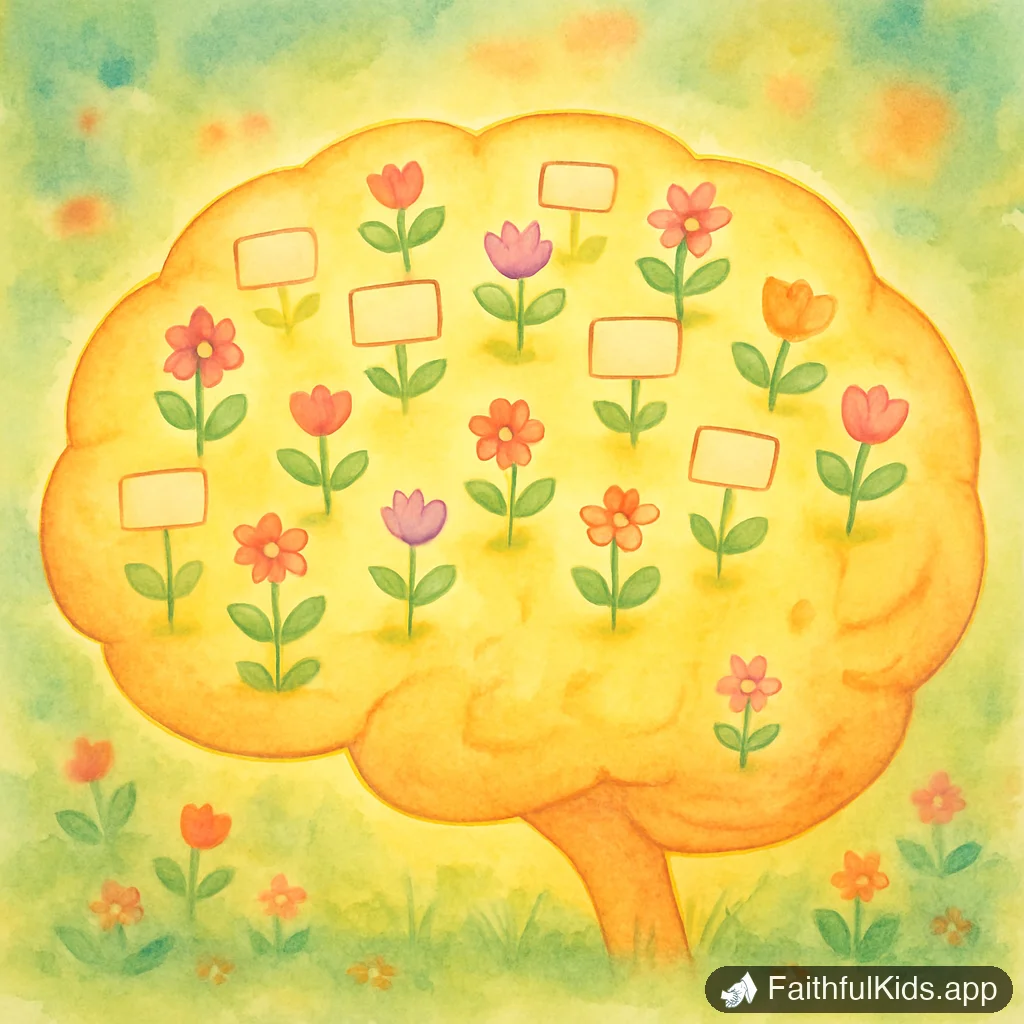
Here is the kid-simple version: your child's memory is like a path through tall grass. Hearing a story walks the path once. If nobody walks it again, the grass springs back and the path disappears. Every time your child recalls the story -- answers a question about it, retells it, gets quizzed on it -- someone walks the path again, and it gets a little more permanent.
This is why a child can watch the same Bible cartoon a dozen times and still be unable to tell you why David fought Goliath. Watching walks no path. Recalling does.
What Is Retrieval Practice (and Why Do Quizzes Work)?
Retrieval practice is the act of pulling information out of memory instead of putting it in again -- and it is one of the most reliably proven techniques in all of learning science. In the landmark studies on the "testing effect" (Roediger and Karpicke, 2006), students who were quizzed on material dramatically outperformed students who spent the same time re-reading it, especially when tested days or weeks later.
The counterintuitive part: re-reading feels better. The material seems familiar, so kids (and adults) believe they know it. Quizzing feels harder because it exposes the gaps -- and that struggle is precisely what strengthens the memory. Learning scientists call it "desirable difficulty."
Applied to Bible learning, this means:
A quiz after the story beats a second reading of the story. Same time invested, several times the retention.
Wrong answers are not failures. A child who guesses wrong and then hears the right answer remembers it better than one who was never asked.
Spacing multiplies the effect. A question today, another in three days, another next week -- each retrieval flattens the forgetting curve further.
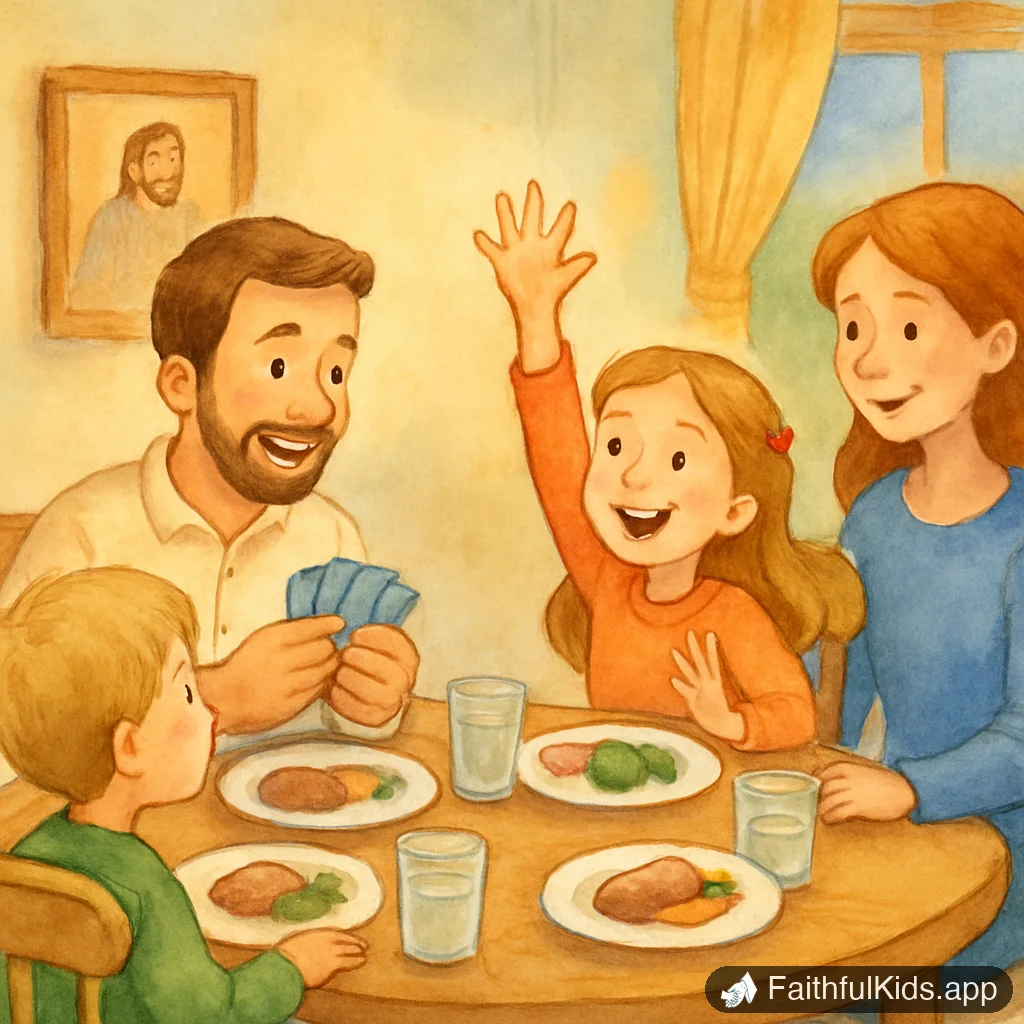
Even simple Bible trivia questions for kids at the dinner table are retrieval practice in disguise. The format matters less than the retrieving.
What Should You Look For in a Quiz-Based Bible Curriculum?
Look for a curriculum where the quiz is built into every lesson, checks understanding rather than trivia, and gives kids immediate feedback. Specifically:
Quizzes after every lesson, not every unit. Retrieval works best when it happens close to the learning, then again later. A test at the end of a 6-week unit is too little, too late.
Comprehension questions, not just recall. "Who built the ark?" is fine; "Why did Noah obey when nobody else believed him?" is better. The best programs mix both.
Immediate feedback. Kids should learn the right answer seconds after guessing wrong, while the question is still live in their mind.
Low stakes, high frequency. Quizzes should feel like a game, not an exam. Points, streaks, and levels turn retrieval practice into something kids ask to do.
Visibility for parents. If nobody can see the results, you are back to hoping the material stuck. A record of what your child got right and wrong tells you what to talk about at dinner.
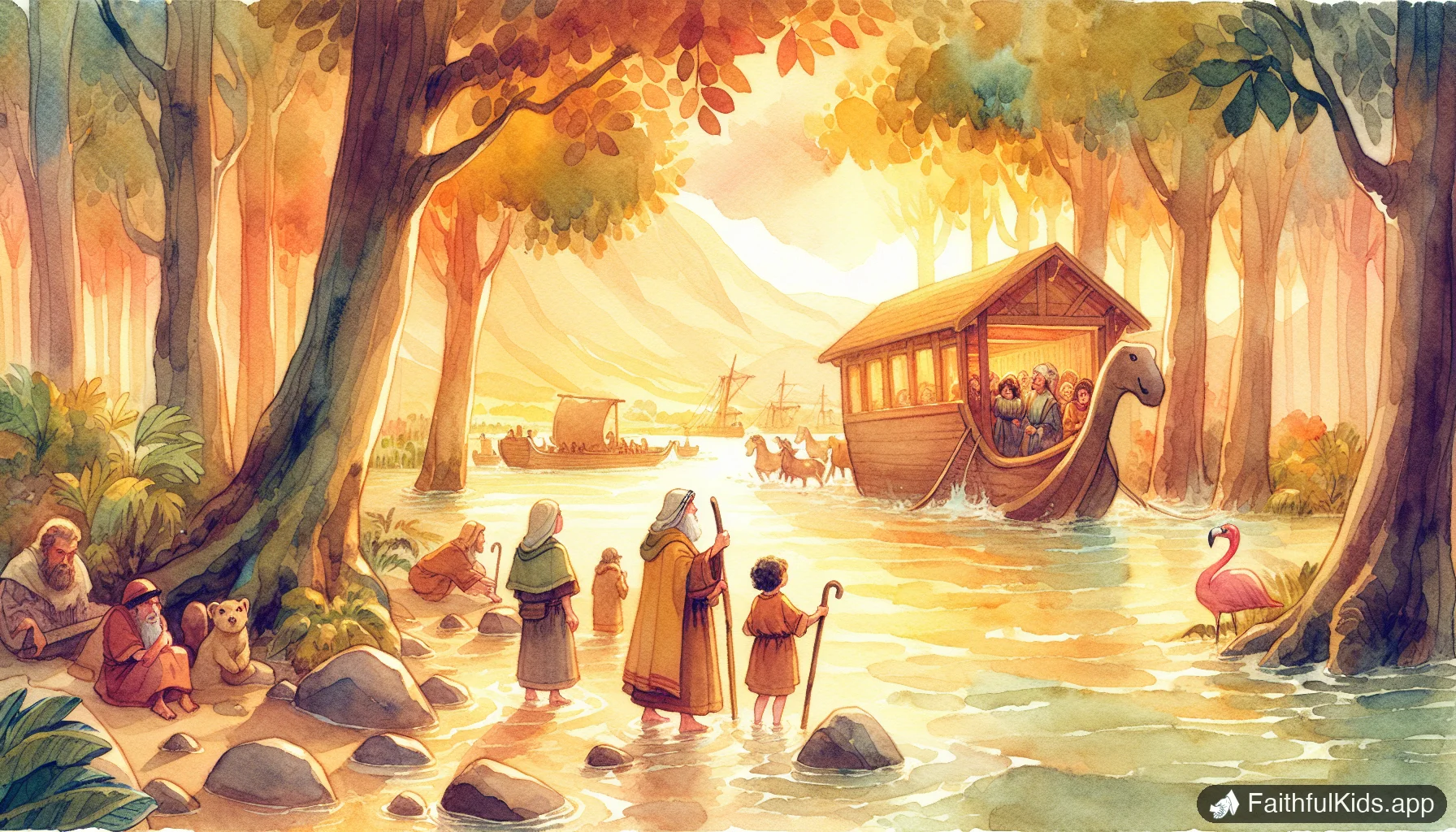
Press play on Noah and the Great Flood — a complete lesson exactly as your child sees it. 300+ episodes cover the whole Bible in order, each ending in a fun quiz to check what they learned.
A real lesson from the app — watch the whole thing free.
Which Bible Curricula Actually Include Quizzes?
Surprisingly few. Most children's Bible resources are stories plus crafts, with comprehension left to chance. Here are the honest standouts, from free to paid. (For the full landscape including non-quiz programs like Apologia and Sonlight, see our homeschool Bible curriculum comparison.)
Superbook Academy (free)
CBN offers its Superbook Academy curriculum free, built around the animated Superbook episodes and used by over a thousand churches. Lessons pair each episode with teaching plans, activities, and review and discussion questions, and the related Superbook app adds Bible-themed games.
The honest read: it is a genuinely generous free resource, but it was designed for church classrooms, so home use takes adapting, and the question component leans toward discussion and games rather than scored, per-lesson comprehension checks. The episodes themselves are entertainment-first -- engaging, but the fictional adventure frame can crowd out the Bible content, a trade-off we unpack in Superbook vs Faithful Kids.
Answers Bible Curriculum from Answers in Genesis (~$70/year)
AiG's Answers Bible Curriculum walks through the whole Bible chronologically over three years, with a home edition that covers the entire family for about $69.99. Lessons include review questions and memory verses, and the multi-age design is a real gift for homeschool families teaching several kids at once.
The honest read: the review questions are solid but paper-and-discussion based -- there is no instant feedback loop or game layer, so the retrieval practice depends on a parent running it faithfully. And the curriculum is unapologetically young-earth creationist and apologetics-heavy; if that matches your family's convictions it is a strength, and if it does not, this is not your program.
Faithful Kids ($8.08-12.99/month)
Faithful Kids is the quiz-native option on this list: the entire platform is built around the watch-quiz-reflect loop rather than adding questions to a video library after the fact. Every one of its 300+ short video lessons (Genesis through Revelation, ages 7-15) is followed by an immediate comprehension quiz with instant feedback, XP for correct answers, levels, and streaks -- retrieval practice dressed up as a game -- plus a parent dashboard showing exactly what each child completed and how they scored. There is a 7-day free trial on the annual plan to see whether the loop clicks with your child.
The honest read: it is a paid subscription in a category full of free resources, it requires a screen and an internet connection, and it is a standalone digital program rather than a workbook curriculum you can spread across the kitchen table. Families who want zero screens should choose one of the paper options above and run the quizzing themselves.
The do-it-yourself option (free)
Any curriculum becomes a quiz-based curriculum if you add three questions after every story: one fact ("What did God ask Abraham to do?"), one why ("Why was that hard?"), and one connection ("When is obeying hard for you?"). Ask them again three days later. That is real retrieval practice with zero budget -- our guide on how to teach kids the Bible builds out this rhythm in full.
How Do You Add Quizzing Without Making the Bible Feel Like School?
Keep quizzes short, playful, and penalty-free -- the moment a quiz determines punishment or feels like a test, kids start hiding from it. Three rules that keep it fun:
Three questions, max. A 90-second quiz after a story is retrieval practice; a 20-question worksheet is a chore.
Celebrate wrong answers that become right. "You didn't know it yesterday and you know it today" is the whole point. Say that out loud.
Let kids quiz you. Handing a tween the question list and letting them grill you is retrieval practice for them too (writing and asking questions requires recalling the material), and they love catching a parent's mistakes.
Deuteronomy 6:7 describes exactly this rhythm -- "Impress them on your children. Talk about them when you sit at home and when you walk along the road." Impressing takes repetition, and repetition of the recalling kind is what makes it permanent. This matters most in the 9-13 window, when kids are old enough for real comprehension but young enough to still be building their foundation -- the same gap we map in our guide to the best Bible apps for tweens.
No printer and no prep: our play-along Bible trivia game runs on any phone, which makes it a good one for the car.
Leaders who want a round for themselves should try our hard Bible trivia for adults, 50 questions with answers and verse references.
Running this at church rather than home? The free kids ministry curriculum guide covers what churches get free — including Faithful Kids itself.
Frequently Asked Questions
Do quizzes really help kids remember Bible stories?
Yes -- this is one of the most replicated findings in learning science. Retrieval practice (answering questions) produces substantially better long-term retention than re-reading or re-watching, with the advantage growing over days and weeks. A short quiz after each Bible story is the single highest-leverage addition to any family's Bible routine.
How many quiz questions should follow a Bible lesson for kids?
Three to five is the sweet spot for ages 7-13. Enough to force real retrieval of the main facts and the main point, short enough to stay fun. Mix one or two factual questions with at least one "why" question, and always give the correct answer immediately after a miss.
What age can kids start doing Bible quizzes?
Around age 6-7, when kids can hold a story's sequence in mind and answer "what happened next" questions. Before that, stick to interactive retelling ("You tell me the part about the lions!") -- which is retrieval practice too, just without the quiz format.
Is it bad if my child gets Bible quiz answers wrong?
No -- it is arguably the most valuable moment in the whole process. Research on the testing effect shows that an incorrect guess followed by immediate correction produces stronger memory than never being asked. The only harmful version is a quiz with shame attached; keep it light and wrong answers become the best teacher.
Can passive Bible videos and quiz-based learning work together?
Yes, and the combination is often ideal: an engaging video creates interest and context, and the quiz afterward converts that interest into memory. The failure mode is video alone -- kids feel like they are learning because the stories are familiar, but familiarity without retrieval fades within days.
What is the forgetting curve in simple terms?
The forgetting curve is the predictable speed at which new information fades from memory -- steep at first, with most unreviewed material gone within days. Each time a child actively recalls the material, the curve flattens and the memory lasts longer, which is why spaced quizzing (today, in three days, next week) is so effective.
🌙 Free: The Bedtime Bible Kit
Seven nights of five-minute stories — a story, a prayer, and one question to whisper about.
Free printable + a few helpful emails. Unsubscribe anytime.