The best Bible stories for 10-12 year olds are the full, unsanitized arcs -- Joseph's betrayal and forgiveness, David's rise and fall, Jonah's anger at God's mercy -- stories with moral complexity that a preteen can actually chew on. Below are 12 of them, each with why it fits this age and a discussion question hard enough to earn a real answer.
Why Do 10-12 Year Olds Need Different Bible Stories?
Because at this age, the picture-book versions start to backfire. A ten-year-old who only knows "Noah and the cute animals" quietly concludes the Bible is for little kids -- right when they become capable of real moral reasoning. Preteens are quietly asking whether faith holds up: why good people suffer, whether God forgives really bad things, what happens when heroes fail. The Bible answers all of that, but only in the deep versions -- so the stories below deliberately include failure, ambiguity, and consequence. Younger child? Start with our Bible stories for 8 year olds instead.
1. Joseph: Betrayal to Redemption (Genesis 37-50)
The full arc, not the coat highlight reel: sold into slavery by his brothers, falsely accused, imprisoned for years, then raised to Egypt's second-in-command -- and with total power over the brothers who ruined his life, Joseph chooses forgiveness. "You intended to harm me, but God intended it for good."
Why it fits this age: It's a story about waiting years for God's plan to make sense -- something preteens are just becoming able to feel.
Discussion question: "Joseph tested his brothers before revealing himself. Was that wise, or was it holding a grudge?"
2. The Exodus (Exodus 1-15)
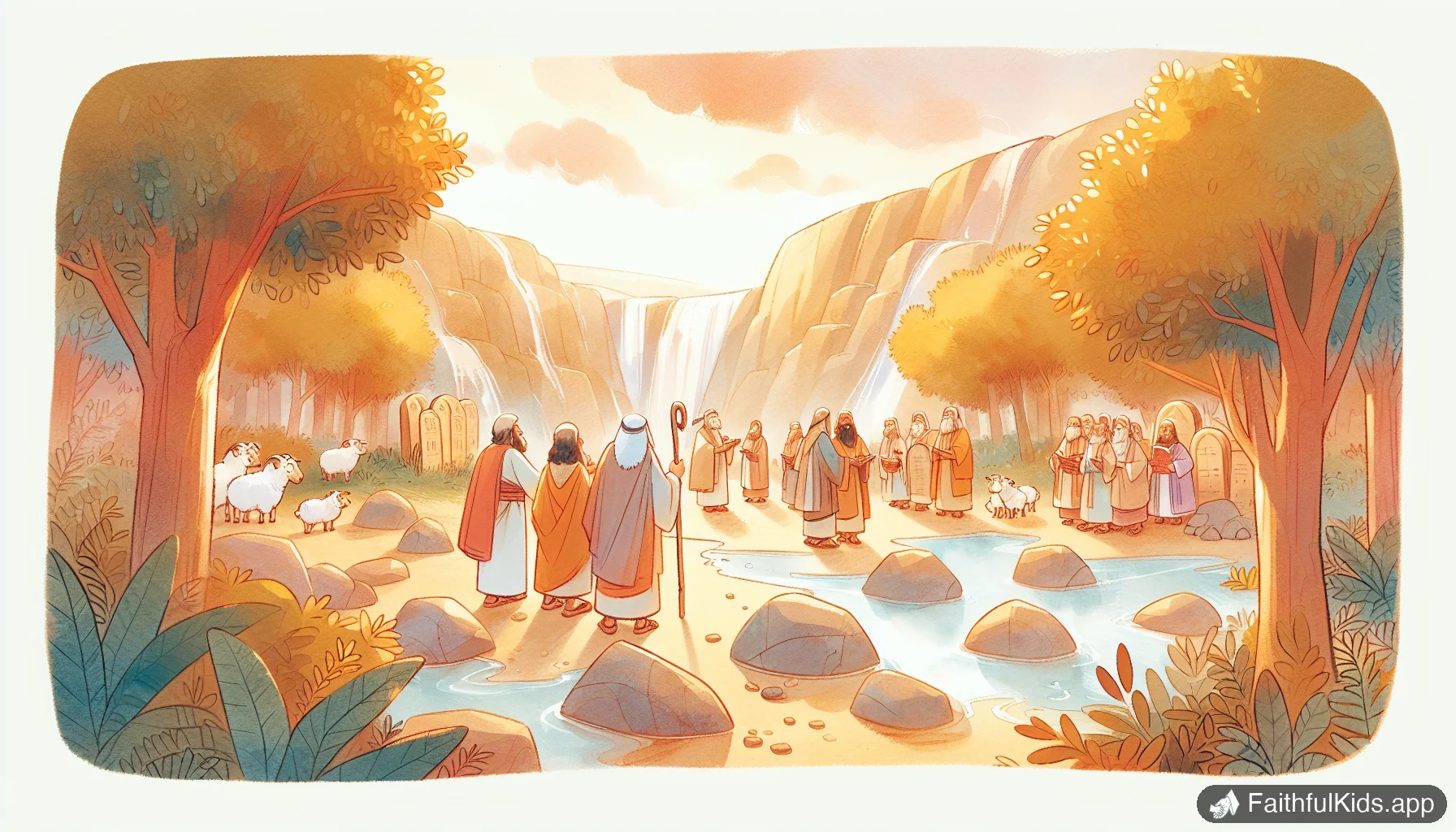
Slavery, a genocide order, a basket in the river, a burning bush, ten escalating plagues, the first Passover, and a nation walking through a split sea -- the most epic rescue narrative ever written.
Why it fits this age: Preteens can finally handle the darkness that makes the rescue mean something -- Pharaoh's cruelty, and a God who hears slaves.
Discussion question: "Pharaoh's heart was hardened. How much of what happened was Pharaoh's fault?"
3. David's Rise and Fall (1 & 2 Samuel)
Kids know David the giant-slayer. Preteens are ready for the whole man: the king who stole another man's wife and arranged that man's death, the prophet who confronted him with a story about a stolen lamb, and the broken repentance of Psalm 51. "A man after God's own heart" -- who committed the worst sin in the book.
Why it fits this age: It detonates the idea that Bible heroes are safe examples. God uses real, failing people -- which means He can use a failing twelve-year-old too. (The hard chapter: David's big mistake.)
Discussion question: "Was David still 'a man after God's own heart' after what he did? What made the difference?"
4. Solomon's Wisdom and Downfall (1 Kings 1-11)
Offered anything by God, young Solomon asked for wisdom -- and got wealth and peace thrown in. Then, slowly, the wisest man alive made fool's choices: accumulating wealth, wives, and idols until the kingdom itself cracked apart after his death.
Why it fits this age: Solomon proves that knowing better isn't the same as doing better -- exactly the gap preteens are discovering in themselves.
Discussion question: "What's the difference between being smart and being faithful?"
5. Daniel's Resolve (Daniel 1-6)
Daniel was a teenager when Babylon destroyed his city and hauled him into the king's re-education program -- new name, new language, new gods on offer. He served the empire with excellence for decades without compromising his faith -- from the king's food to the lions' den.
Why it fits this age: Daniel is the Bible's manual for keeping your faith inside a culture that doesn't share it -- middle school, in other words.
Discussion question: "Daniel served the empire that destroyed his home. When do you cooperate, and when do you refuse?"
6. Elijah's Depression and the Whisper (1 Kings 18-19)
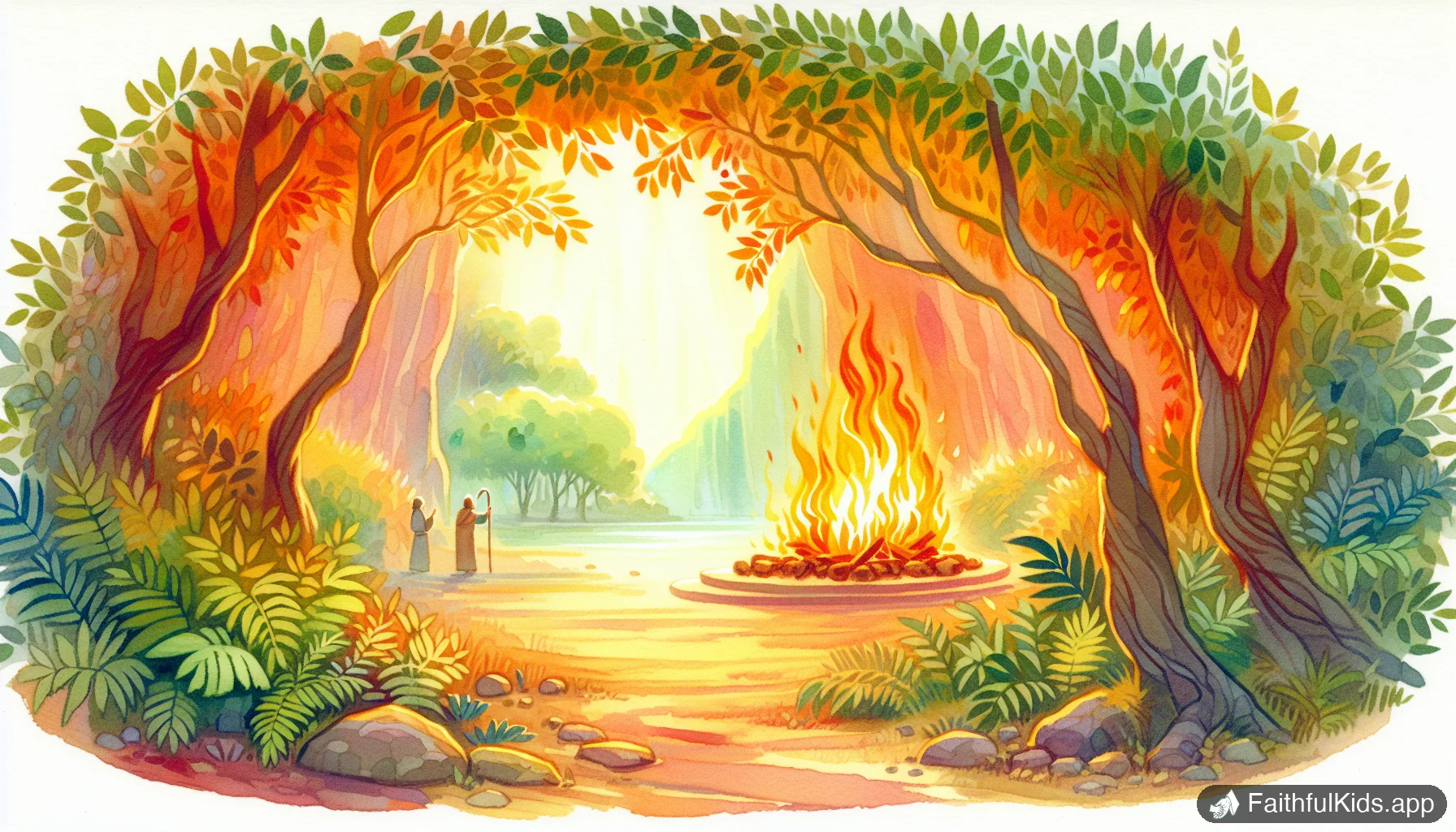
One chapter after his greatest victory -- fire from heaven on Mount Carmel -- Elijah is under a broom tree asking God to let him die. God's response isn't a rebuke -- it's food, sleep, and a gentle question. Then God shows up not in the windstorm, earthquake, or fire, but in a whisper.
Why it fits this age: Preteens are hitting their first real emotional lows -- and here God meets a despairing prophet with care, not shame. (Full retelling: the still small voice.)
Discussion question: "Why do you think the lowest moment came right after the biggest win?"
7. Jonah: The Whole Story (Jonah 1-4)
The fish is chapter 1. The real story is chapter 4: Nineveh repents, God forgives, and Jonah is furious -- he admits he ran precisely because he knew God was "gracious and compassionate" and might spare the people he hated. The book ends on God's unanswered question about mercy.
Why it fits this age: It's the Bible's most honest look at hating the people God loves -- and it has no tidy ending.
Discussion question: "The book ends with a question and no answer. Why do you think it was written that way?"
8. Esther's Courage (Esther 1-10)
An orphaned Jewish girl becomes queen of Persia and hides her identity -- until a genocide decree against her people forces the question: "Who knows but that you have come to your royal position for such a time as this?" She risks execution to approach the king, and saves her nation. God is never named in the entire book -- and His fingerprints are everywhere.
Why it fits this age: Politics, identity, hidden faith, and courage under pressure -- plus the puzzle of a Bible book that never says "God."
Discussion question: "God's name never appears in Esther. Where do you see Him anyway?"
9. The Sermon on the Mount (Matthew 5-7)
Not a story but the manifesto: blessed are the meek, love your enemies, turn the other cheek, don't worry about tomorrow. It flips every playground rule completely upside down.
Why it fits this age: Ten-to-twelve is when social hierarchies get brutal, so Jesus' upside-down kingdom lands as genuinely radical. (Start here: the Sermon on the Mount for kids.)
Discussion question: "Which command from this sermon would be hardest to obey at your school? Why?"
10. The Prodigal Son: Both Brothers (Luke 15:11-32)
Preteens know the runaway son. Give them the second half: the older brother who stayed, obeyed, and seethed -- refusing to enter the party, telling his father "I've slaved for you all these years." The father goes out to him too, and the story never tells us whether he came inside.
Why it fits this age: Most church kids are older brothers, not prodigals -- and resentment can keep you outside the party just as surely as rebellion.
Discussion question: "Which brother are you -- honestly? And which one is actually further from the father at the end?"
11. Paul's Conversion (Acts 9)
Saul was the church's most feared enemy -- hunting Christians city to city -- until a blinding light on the Damascus road and a voice from heaven. Three days blind, then baptized by a believer brave enough to call him "brother," Saul became Paul, the movement's greatest missionary.
Why it fits this age: It's the definitive case that no one is too far gone -- and Ananias, ordered to welcome a known killer, gives preteens a second hero. (Full story: Saul meets Jesus.)
Discussion question: "If you were Ananias, would you have gone? Why or why not?"
12. The Road to the Cross (Matthew 26-28)
Betrayal by a friend for silver, an all-night illegal trial, a crowd choosing a criminal over an innocent man, crucifixion, burial -- and then the stone rolled away. This is the center of the Christian faith, and preteens are old enough to walk through it slowly instead of jumping from Palm Sunday to Easter eggs.
Why it fits this age: The injustice of the trial and the failure of the disciples are moral textures a twelve-year-old can now feel.
Discussion question: "Peter denied Jesus and Judas betrayed Him -- both failed Him the same night. Why did their stories end so differently?"