The Jesse Tree for Kids: A Complete Family Advent Guide
Ages 5+·11 min read··By Faithful Kids Team·Updated August 16, 2026
A Jesse Tree is an Advent tradition where your family reads one Bible story each day of December and hangs a matching ornament on a small tree -- so by Christmas, your kids have walked the entire story of the Bible from Creation to the manger. It's named after Isaiah 11:1: "A shoot will come up from the stump of Jesse; from his roots a Branch will bear fruit" -- Jesse was King David's father, and the "Branch" from his family line is Jesus.
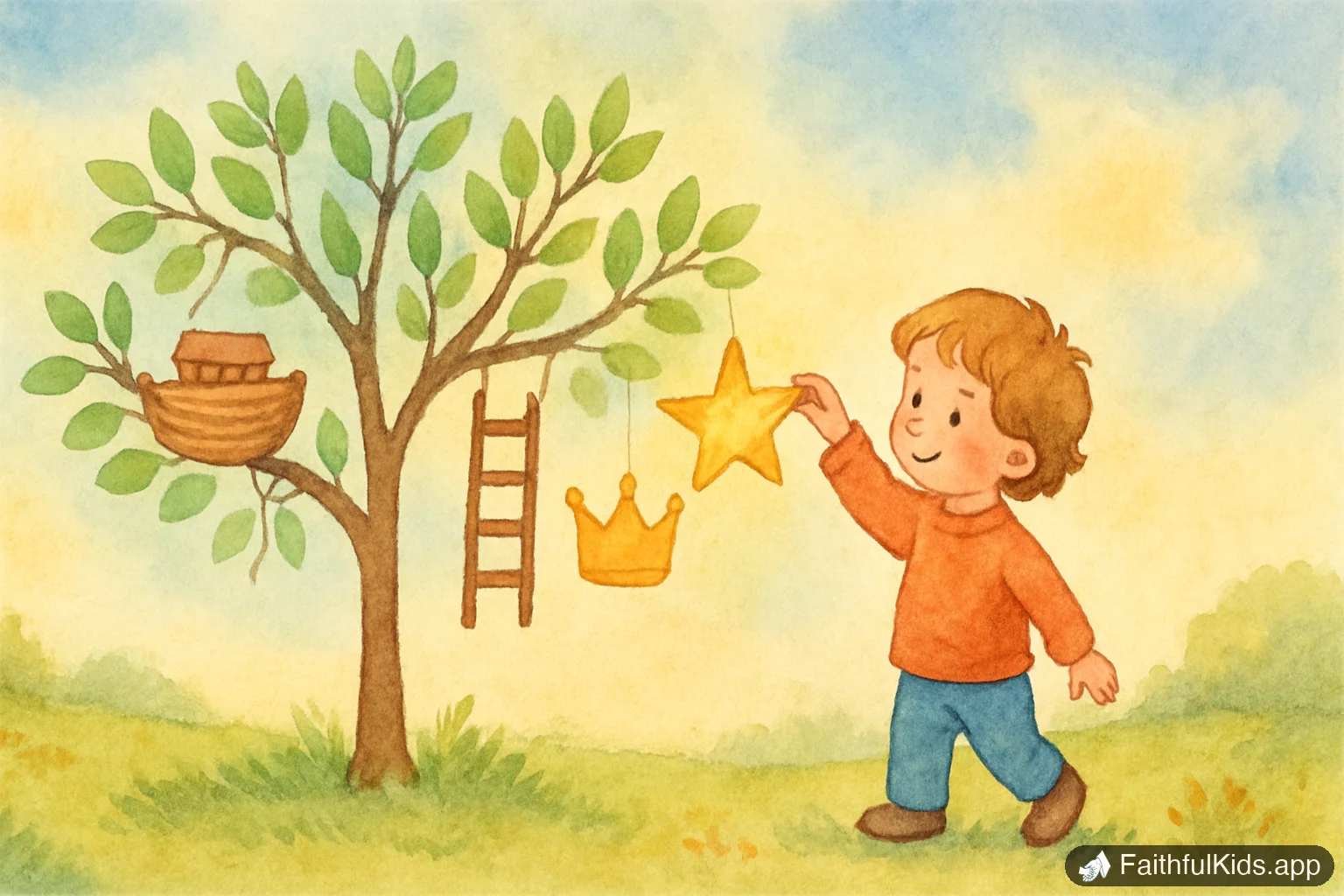
Think of it as an Advent calendar where every door opens onto Scripture. Each day gets a symbol (an apple for the Fall, an ark for Noah, a crown for David), and each symbol hooks a story into your child's memory. By December 25, the tree is covered in 25 ornaments that together tell one connected story: God promising a Rescuer, and then sending Him.
This guide covers everything you need: how the tradition works, all 25 traditional symbols with their stories and readings, three ways to make the ornaments, and a realistic plan for actually finishing.
What Is a Jesse Tree and Where Does It Come From?
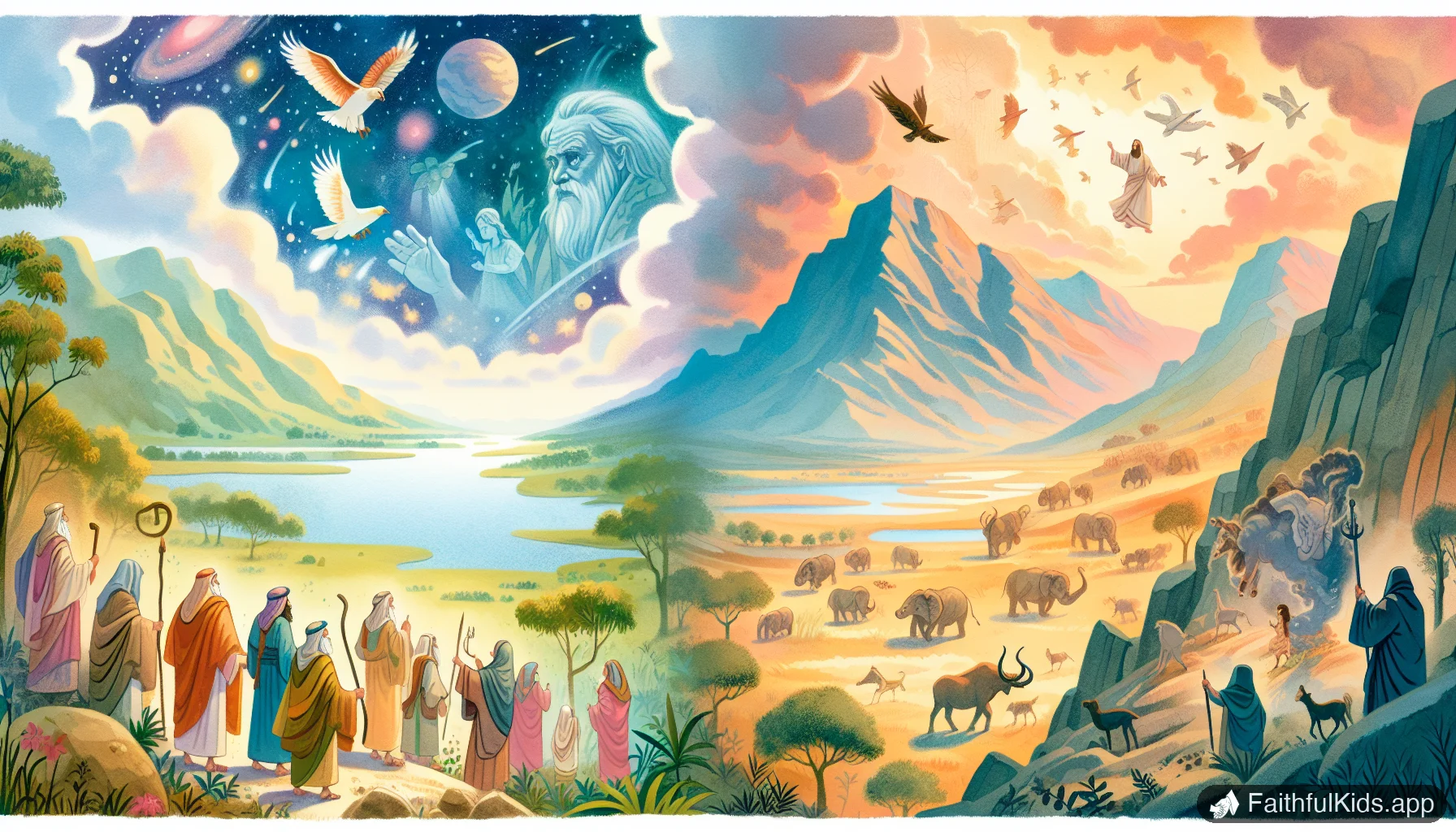
A Jesse Tree is a visual family devotional -- a small tree or branch that fills up with story-symbol ornaments, one per day, through Advent. The tradition goes back to medieval churches, where "Jesse trees" appeared in stained glass and carvings showing Jesus' family tree growing up from Jesse. The modern family version keeps the idea and makes it hands-on: kids see, day by day, that Christmas isn't a standalone story. It's the last chapter of a promise God spent the whole Old Testament making.
You don't need anything fancy. A bare branch in a jar of stones, a small tabletop tree, or even a felt tree shape taped to the wall all work. The tree matters far less than the rhythm: read, talk, hang, done -- about five to ten minutes a night.
The 25 Jesse Tree Symbols and Stories
Here are the 25 traditional days. Each has the symbol, the story in one line, and where to read it. (Traditions vary slightly -- some swap a prophet here or there -- so feel free to adjust. The arc is what matters.)
Week 1: The world God made -- and broke
Dec 1 -- Tree stump with a green shoot (Isaiah 11:1). The overview: from Jesse's family line, God promises a coming King.
Dec 2 -- Globe or sun (Genesis 1). Creation: God makes everything, and it is very good.
Dec 3 -- Apple with a snake (Genesis 3). The Fall: Adam and Eve sin, but God promises the serpent-crusher is coming.
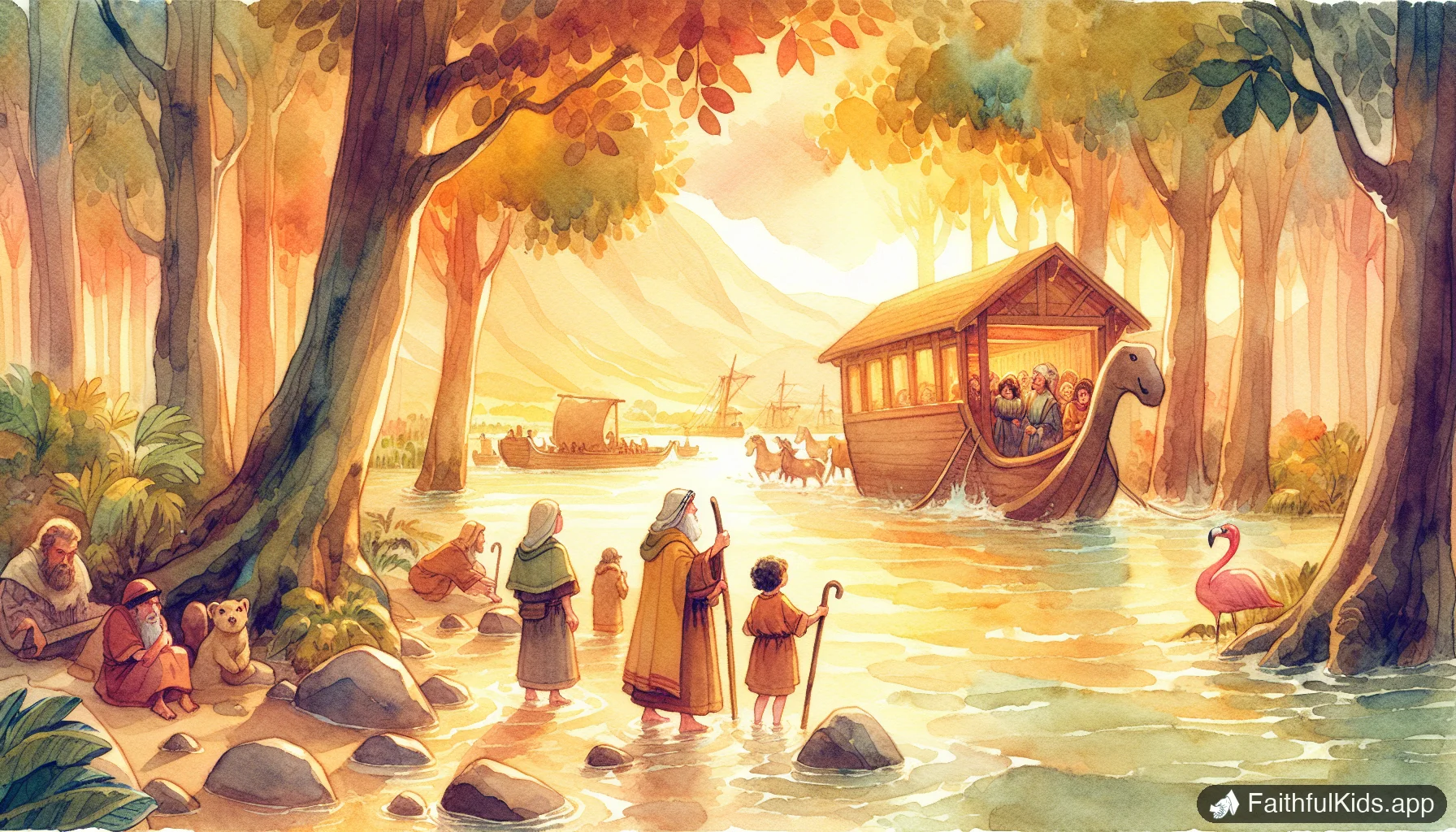
Dec 4 -- Ark and rainbow (Genesis 6-9). Noah: God rescues a faithful family and hangs a promise in the sky.
Dec 5 -- Field of stars (Genesis 12, 15). Abraham: God promises descendants like the stars and blessing for the whole world.
Dec 6 -- Ram in a thicket (Genesis 22). Isaac: God provides a substitute sacrifice on the mountain.
Week 2: The family becomes a nation
Dec 7 -- Ladder (Genesis 28). Jacob: a stairway to heaven and a promise renewed in a dream.
Dec 8 -- Colorful coat (Genesis 37, 50). Joseph: what brothers meant for evil, God used to save many lives.
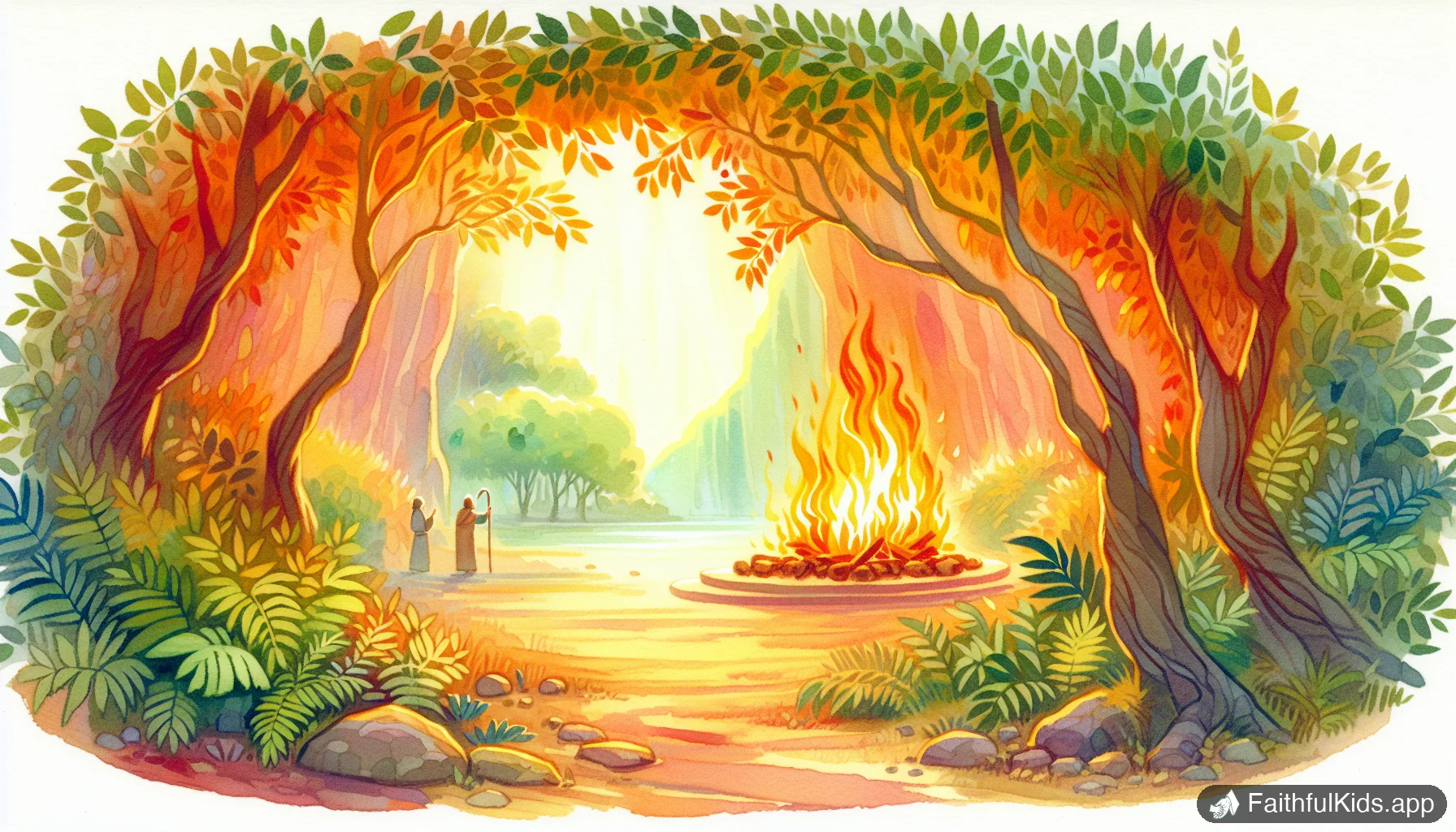
Dec 9 -- Burning bush (Exodus 3). Moses: God speaks from the fire and launches the great rescue from Egypt.
Dec 10 -- Lamb and doorframe (Exodus 12). Passover: the lamb's blood protects God's people -- a preview of the Lamb to come.
Dec 11 -- Stone tablets (Exodus 19-20). The Ten Commandments: God teaches His rescued people how to live.
Dec 12 -- Red cord (Joshua 2, 6). Rahab: an outsider's faith saves her family -- and she becomes Jesus' ancestor.
Week 3: Kings and prophets
Dec 13 -- Sheaf of wheat (Book of Ruth). Ruth: loyal love in the barley fields, and another grandmother in Jesus' family tree.
Dec 14 -- Shepherd's staff (1 Samuel 16-17). David the shepherd: God looks at the heart, not the height.
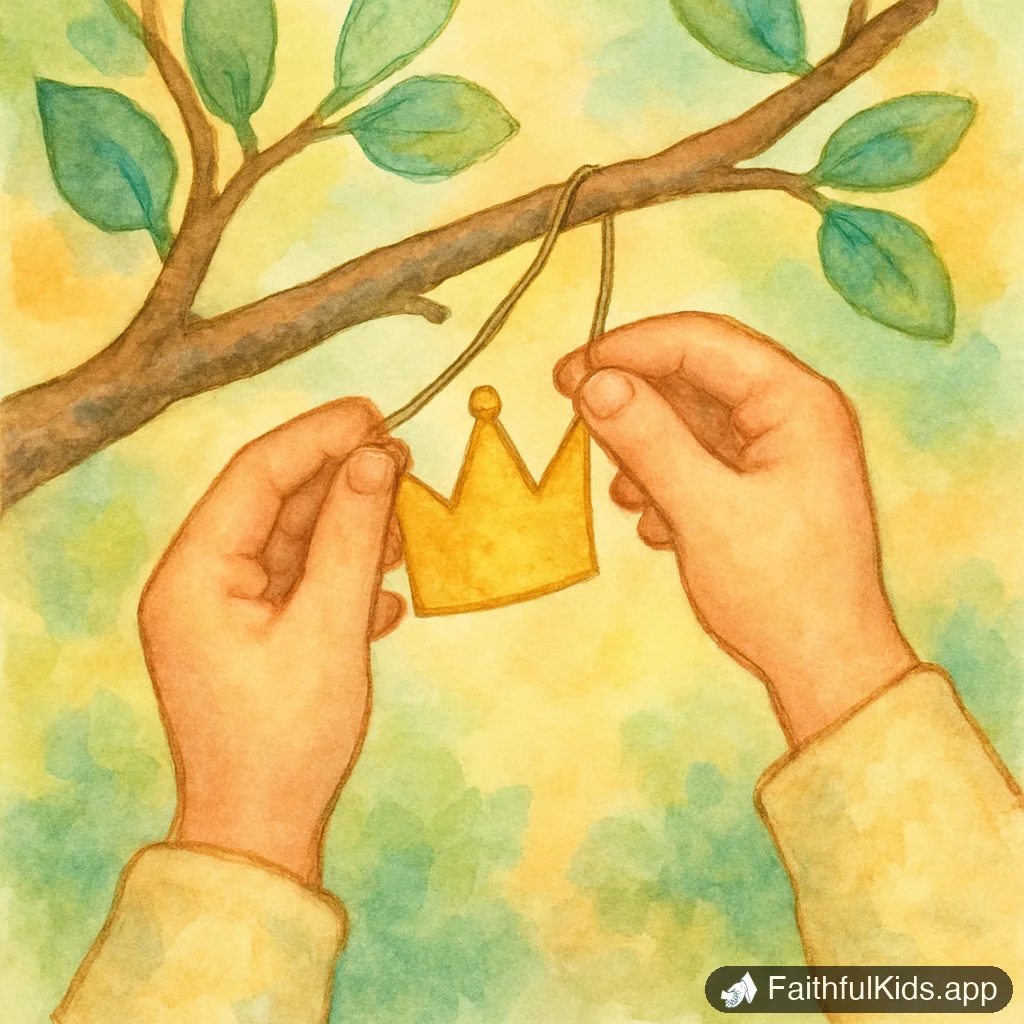
Dec 15 -- Crown (2 Samuel 7). King David: God promises David a throne that will last forever.
Dec 16 -- Temple (1 Kings 6-8). Solomon: a house for God's name -- but the true meeting place of God and man is still coming.
Dec 17 -- Raven with bread (1 Kings 17-18). Elijah: God feeds His prophet and answers with fire on Carmel.
Dec 18 -- Scroll with flame (Isaiah 9). Isaiah: "For to us a child is born" -- the promise gets specific.
Week 4: The promise arrives
Dec 19 -- Tears / a heart with writing (Jeremiah 31). Jeremiah: God promises a new covenant written on hearts.
Dec 20 -- Great fish (Book of Jonah). Jonah: three days in the deep, and mercy for an enemy city.
Dec 21 -- Brick wall (Book of Nehemiah). Rebuilding: God brings His people home and restores the city where the story will continue.
Dec 22 -- Angel (Luke 1:26-38). Gabriel visits Mary, and Mary says yes.
Dec 23 -- Hammer or carpenter's square (Matthew 1:18-25). Joseph: the quiet carpenter obeys and names the baby Jesus.
Dec 24 -- Bethlehem / a small town under a star (Micah 5:2, Luke 2:1-7). No room at the inn -- the King is born in a manger.
Dec 25 -- Baby in a manger, or the Chi-Rho star (Luke 2:8-20). Jesus is here. The shoot from Jesse's stump has bloomed.
Read the passage from a children's Bible for young kids, or straight from Scripture for older ones -- most readings take three to five minutes. If a story is new to your kids, our library of retellings can help; the December entries overlap heavily with our Advent activities for kids roundup.
How Do You Make Jesse Tree Ornaments?
Pick one method based on your time and your kids' ages -- homemade ornaments teach more, but finished ornaments get hung more. Three approaches that work:
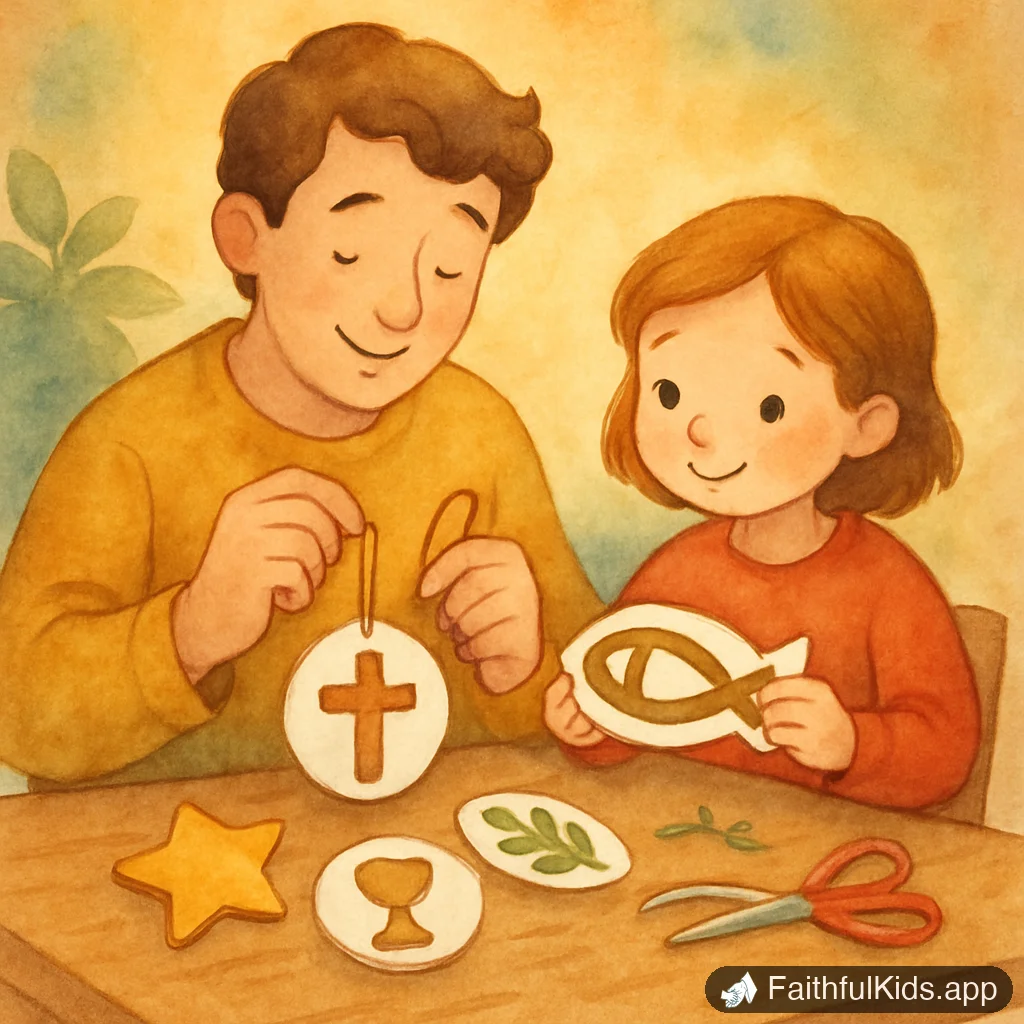
1. Paper circles (easiest -- one afternoon). Cut 25 circles from cardstock, about 3 inches across. Each day, your child draws that day's symbol on a circle after the reading, punches a hole, and hangs it with ribbon. Drawing the symbol is itself the review question: "What should we draw for the burning bush day?"
2. Salt dough or air-dry clay (most keepsake-worthy -- one weekend). Make a batch of salt dough (2 cups flour, 1 cup salt, 1 cup water), cut 25 rounds, poke a hanging hole, and bake. Paint symbols on a few ornaments each week through November, or paint each one the day you hang it. These survive for years and become the family set your kids remember.
3. Felt and glue (best for little hands -- a few evenings). Cut simple symbol shapes from felt and glue them to felt circles. No baking, no paint drying, nothing breakable -- ideal for toddlers who will inevitably "rehang" the ornaments forty times.
A hybrid works too: buy or print a finished set this year and let kids make replacement ornaments year by year. By the third Christmas, the tree is entirely theirs.
There is a free Jesse Tree set on our site too: 25 printable ornaments plus the daily readings, no sign-up.
See what they get
Watch God Chooses David Come Alive
God Chooses David is one of 300+ short narrated video lessons your child will love. Watch the whole episode right here — in the app, every lesson ends with a fun quiz to check what they learned.
A real lesson from the app — watch the whole thing free.
What's a Realistic Jesse Tree Reading Plan?
Attach the reading to an anchor you already have -- dinner or bedtime -- and keep it under ten minutes. The nightly liturgy:
Find the day's ornament (kids' job).
Read the passage -- children's Bible for under-8s, real text for older kids, or a parent's short retelling on chaotic nights.
Ask one question: "What did God promise or do in this story?" That single question, asked 25 nights in a row, teaches kids to read the whole Bible as one story.
Hang the ornament and, if you like, light a candle or sing a verse of "O Come, O Come, Emmanuel" -- the carol is literally a Jesse Tree in song ("O come, thou Rod of Jesse").
If you miss days -- and you will -- hang the missed ornaments in a single catch-up night with one sentence per story. The tree should be full on Christmas morning; guilt is not part of the tradition. Families that travel mid-December sometimes do two-a-day in early December to bank a buffer.
Some families pair the reading with a short video of the same story -- the Old Testament series at Faithful Kids covers most of these 25 stories, which helps on nights when a parent is traveling or wiped out.
Why Do a Jesse Tree Instead of a Regular Advent Calendar?
A Jesse Tree gives kids the one thing chocolate calendars can't: the plot. Most children know Bible stories as disconnected episodes -- Noah over here, David over there, Christmas somewhere else. The Jesse Tree lines them up and lets kids watch the promise travel: made in Eden, carried through Abraham and David, shouted by the prophets, and kept in Bethlehem. That's a theology course disguised as a craft.
It also pairs happily with other traditions rather than replacing them. Plenty of families run a chocolate calendar in the morning and the Jesse Tree at night, alongside the traditions in our guide to Christian Christmas traditions for families. And if you're looking to swap out a tradition that's run its course, a Jesse Tree is the most-loved of the Christian Elf on the Shelf alternatives -- same daily excitement, entirely different center of gravity. For a reading-focused version without ornaments, our Christmas family devotions cover the December 18-25 stretch in more depth. And if the season itself is new territory for your kids, our explainer on what Advent is for kids is the natural place to start before the first ornament goes up.
Frequently Asked Questions
What ages is a Jesse Tree best for?
Ages 4-12 is the sweet spot, but the tradition scales in both directions. Toddlers can hang felt ornaments and hear one-sentence stories; teenagers can read the passages aloud and trace how each story points to Jesus. Because the same 25 symbols repeat every year, the tradition deepens as kids grow -- the apple ornament means more at ten than it did at four.
Do I need a special tree for a Jesse Tree?
No -- a bare branch in a jar, a small tabletop tree, or a felt tree shape on the wall all work. Some families simply dedicate a section of their main Christmas tree. The only requirements are 25 hangable spots and a location kids pass daily, because seeing the tree fill up is half the teaching.
What if we start late -- can we begin a Jesse Tree mid-December?
Yes -- either double up readings until you catch up, or do an abbreviated version with one story per remaining day, keeping the first (Isaiah 11:1) and the last five. The tradition has no penalty box. Starting December 10 and finishing well beats waiting for a perfect December 1 that never comes.
Is the Jesse Tree a Catholic or Protestant tradition?
Both -- it began in medieval church art and is now used across Catholic, Protestant, and Orthodox homes alike. Nothing in it is denomination-specific: it's simply the Old Testament story arranged as a countdown to Christmas. Families adjust the reading list freely, and many church traditions publish their own slight variations of the 25 days.
Where do the readings come from -- do I need a special book?
All you need is a Bible; the reading references are listed above for each day. A children's story Bible makes the readings faster for young kids, and printable Jesse Tree guides are widely available if you want a booklet format. The symbols themselves are the "curriculum" -- each one is a memory hook for a passage of Scripture.
Can we reuse the same ornaments every year?
Yes, and you should -- a reused set is the whole charm. Salt dough or felt ornaments packed away with the Christmas decorations become a once-a-year treasure, and kids who made them at six will insist on hanging "their" ornaments at twelve. Add or replace a few each year as skills grow and pieces break.
🌙 Free: The Bedtime Bible Kit
Seven nights of five-minute stories — a story, a prayer, and one question to whisper about.
Free printable + a few helpful emails. Unsubscribe anytime.