Blog/40 Short Memory Verses (Easy Enough for a 4-Year-Old)
Guide
40 Short Memory Verses (Easy Enough for a 4-Year-Old)
Ages 5+·11 min read··By Faithful Kids Team·Updated August 19, 2026
A short memory verse is one a four-year-old can say in a single breath -- usually eight to ten words, one complete thought, no clauses to get lost in. Below are 40 of them, each quoted with its reference and a one-line meaning in kid language, grouped by theme so you can pick the one that fits this week.
The mistake almost every family makes is starting too long. A child who fails at John 3:16 learns that memorizing is hard and they are bad at it. A child who nails "God is love" learns that memorizing is something they can do. Start with the second child's experience, and the long verses take care of themselves in a year or two.
What Counts as a Short Memory Verse?
Three tests. Length: under about ten words, so it fits in one breath. Completeness: it says a whole thought on its own, not a fragment that needs the next verse to make sense. Concreteness: the words mean something a small child can picture or feel -- love, help, afraid, kind -- rather than abstractions like righteousness or covenant.
All 40 verses below pass all three. Quotations are from the NIV unless noted, and where a well-known verse is longer than ten words, the short, self-contained clause is quoted on its own.
Short Memory Verses About Who God Is (10)
1. Genesis 1:1
"In the beginning God created the heavens and the earth."
What it means: Everything that exists started with God.
2. 1 John 4:8
"God is love."
What it means: Love is not just something God does -- it is who He is.
3. Psalm 23:1
"The Lord is my shepherd; I shall not want." (ESV)
What it means: God takes care of me the way a shepherd takes care of his sheep.
4. Psalm 100:5
"For the Lord is good and his love endures forever."
What it means: God is good today, and He will still be good forever.
5. Psalm 136:1
"Give thanks to the Lord, for he is good."
What it means: Saying thank you to God makes sense, because He is good.
6. 1 John 1:5
"God is light; in him there is no darkness at all."
What it means: There is nothing dark or sneaky in God -- not even a little.
7. Psalm 46:1
"God is our refuge and strength, an ever-present help in trouble."
What it means: God is the safe place you run to when something goes wrong.
8. Hebrews 13:8
"Jesus Christ is the same yesterday and today and forever."
What it means: Jesus never changes, even when everything else does.
9. John 8:12
"I am the light of the world."
What it means: Jesus said He is the light that shows us the way.
10. Psalm 118:24
"This is the day that the Lord has made; let us rejoice and be glad in it." (ESV)
What it means: Today is a gift from God, so let's be happy in it.
Short Memory Verses About How to Treat Others (10)
11. 1 John 4:19
"We love because he first loved us."
What it means: We can love other people because God loved us first.
12. Ephesians 4:32
"Be kind and compassionate to one another."
What it means: Be gentle with people, especially when it is hard.
13. Luke 6:31
"Do to others as you would have them do to you."
What it means: Treat people the way you wish they would treat you.
14. Mark 12:31
"Love your neighbor as yourself."
What it means: Care about other people as much as you care about yourself.
15. John 13:34
"Love one another. As I have loved you."
What it means: Jesus showed us what love looks like, and asked us to copy it.
16. 1 Thessalonians 5:11
"Encourage one another and build each other up."
What it means: Use your words to lift people up, not knock them down.
17. Colossians 3:13
"Forgive as the Lord forgave you."
What it means: Let it go the way God let your wrongs go.
18. Galatians 6:2
"Carry each other's burdens."
What it means: When someone's load is heavy, grab one end of it.
19. Proverbs 17:17
"A friend loves at all times."
What it means: Real friends stick around on the bad days too.
20. 1 Corinthians 13:4
"Love is patient, love is kind."
What it means: If it isn't patient and kind, it isn't really love.
Older kids who find coloring dull usually take to the free books of the Bible word search instead — it plays in the browser or prints on one sheet.
See what they get
Watch The Lords Prayer Come Alive
The Lords Prayer is one of 300+ short narrated video lessons your child will love. Watch the whole episode right here — in the app, every lesson ends with a fun quiz to check what they learned.
A real lesson from the app — watch the whole thing free.
Short Memory Verses About Courage (10)
21. Joshua 1:9
"Be strong and courageous. Do not be afraid."
What it means: God tells you to be brave -- and He means it.
22. Deuteronomy 31:6
"The Lord your God goes with you."
What it means: You are never walking into the scary thing alone.
23. Psalm 56:3
"When I am afraid, I put my trust in you."
What it means: Being scared is fine. Trusting God anyway is the brave part.
24. Philippians 4:13
"I can do all this through him who gives me strength."
What it means: Hard things get possible when God gives you strength.
25. Isaiah 41:10
"Do not fear, for I am with you."
What it means: God's answer to fear is His own presence.
26. Psalm 27:1
"The Lord is my light and my salvation -- whom shall I fear?"
What it means: If God is on your side, fear runs out of reasons.
27. Psalm 118:6
"The Lord is with me; I will not be afraid."
What it means: Knowing God is right there changes how scary things feel.
28. Mark 5:36
"Don't be afraid; just believe."
What it means: Jesus said this to a dad in the worst moment of his life.
29. Psalm 31:24
"Be strong and take heart, all you who hope in the Lord."
What it means: Hoping in God gives your heart something to stand on.
30. 2 Chronicles 20:15
"For the battle is not yours, but God's."
What it means: You are not the one who has to win it.
Short Memory Verses About Comfort (10)
31. Psalm 34:18
"The Lord is close to the brokenhearted."
What it means: When you are sad, God comes closer, not further away.
32. Matthew 11:28
"Come to me, all you who are weary and burdened, and I will give you rest."
What it means: Jesus invites tired people to come and rest.
33. 1 Peter 5:7
"Cast all your anxiety on him because he cares for you."
What it means: Hand your worries to God -- He actually wants them.
34. Psalm 46:10
"Be still, and know that I am God."
What it means: Stop, breathe, and remember who is in charge.
35. Psalm 121:2
"My help comes from the Lord."
What it means: When you need help, you know exactly where to look.
36. Lamentations 3:23
"They are new every morning; great is your faithfulness."
What it means: God's mercy resets overnight -- yesterday does not follow you.
37. Matthew 28:20
"And surely I am with you always."
What it means: These are almost the last words Jesus said, and they are a promise.
38. John 14:27
"Peace I leave with you; my peace I give you."
What it means: Jesus gives a calm that the day cannot take away.
39. Psalm 147:3
"He heals the brokenhearted and binds up their wounds."
What it means: God takes care of the hurts nobody else can see.
40. Psalm 4:8
"In peace I will lie down and sleep."
What it means: You can close your eyes tonight because God is awake.
How to Teach a Short Verse in One Sitting
Say it three times, then stop. Three clean repetitions with your child's full attention beat twenty distracted ones. Do it again at the next meal.
Give the meaning in one sentence. Use the line above the way you'd use a caption. A verse a child understands is a verse they can recall, because meaning gives the memory something to hang on.
Clap or step the rhythm. Short verses have an obvious beat. One clap per word turns "God is love" into something a three-year-old repeats without being asked. Our full list of Bible memory verse strategies for kids has 19 more techniques in the same spirit.
Attach it to a moment. Psalm 4:8 belongs at lights-out. Psalm 56:3 belongs in the car on the way to the doctor. Verses learned in the situation they answer stick far better than verses learned at a table.
Review last month's verse before adding a new one. This is the step everyone skips and the only one that determines whether the verse survives past next week. A two-minute round of one of these memory verse games is the easiest way to make review feel like play rather than a test.
The stories behind these verses matter too. Short animated Bible lessons on Faithful Kids give kids the context that makes a memorized line mean something years later.
Most of these verses land best at bedtime, when kids are calm and talkative. Our free Bedtime Bible Kit gives you seven nights of short readings and a goodnight prayer built for exactly that window -- print it once and it pairs with any verse on this page.
Pair it with the free books of the Bible chart so kids can see exactly where this book lives on the shelf.
Frequently Asked Questions
What is the easiest Bible verse for a preschooler to memorize?
"God is love" (1 John 4:8) is the easiest genuinely complete verse in the Bible -- three words, one idea, and a concept a three-year-old already understands. Close runners-up are "My help comes from the Lord" (Psalm 121:2) and "Be still, and know that I am God" (Psalm 46:10). Start with one of those three and you'll get a win in the first sitting.
How short should a memory verse be for a 4-year-old?
Under ten words, and ideally under six. At four, a child's working memory holds roughly three to four chunks at once, so a verse that breaks into two short phrases is at the top of what they can manage. If your child stalls in the same spot twice, the verse is too long -- cut it to a clause and come back to the full version at six or seven.
Is it okay to memorize only part of a verse?
Yes, as long as the part you use is a complete thought and you don't change its meaning. "Be kind and compassionate to one another" (Ephesians 4:32) stands perfectly well without the rest of the verse. Teach the fuller version later, and tell your child you are adding to what they already know rather than correcting it.
Which Bible translation is best for short memory verses?
The NIV and NLT read most naturally aloud, and the NIrV is written at about a third-grade level if your child is young. Pick one translation and stay with it -- switching mid-verse is the most common reason a child who "knew it last week" suddenly stumbles. Most of the verses above are quoted from the NIV, with two from the ESV where its wording is shorter and more familiar.
How many short verses should a child learn in a year?
One a week is ambitious and one every two weeks is realistic for most families, which puts a child somewhere between 26 and 52 verses a year. The number that matters is not how many they learned but how many they still know in December, so budget time for review. Twenty verses genuinely retained beats forty half-remembered every time.
What do I do when my child memorizes a verse and forgets it a month later?
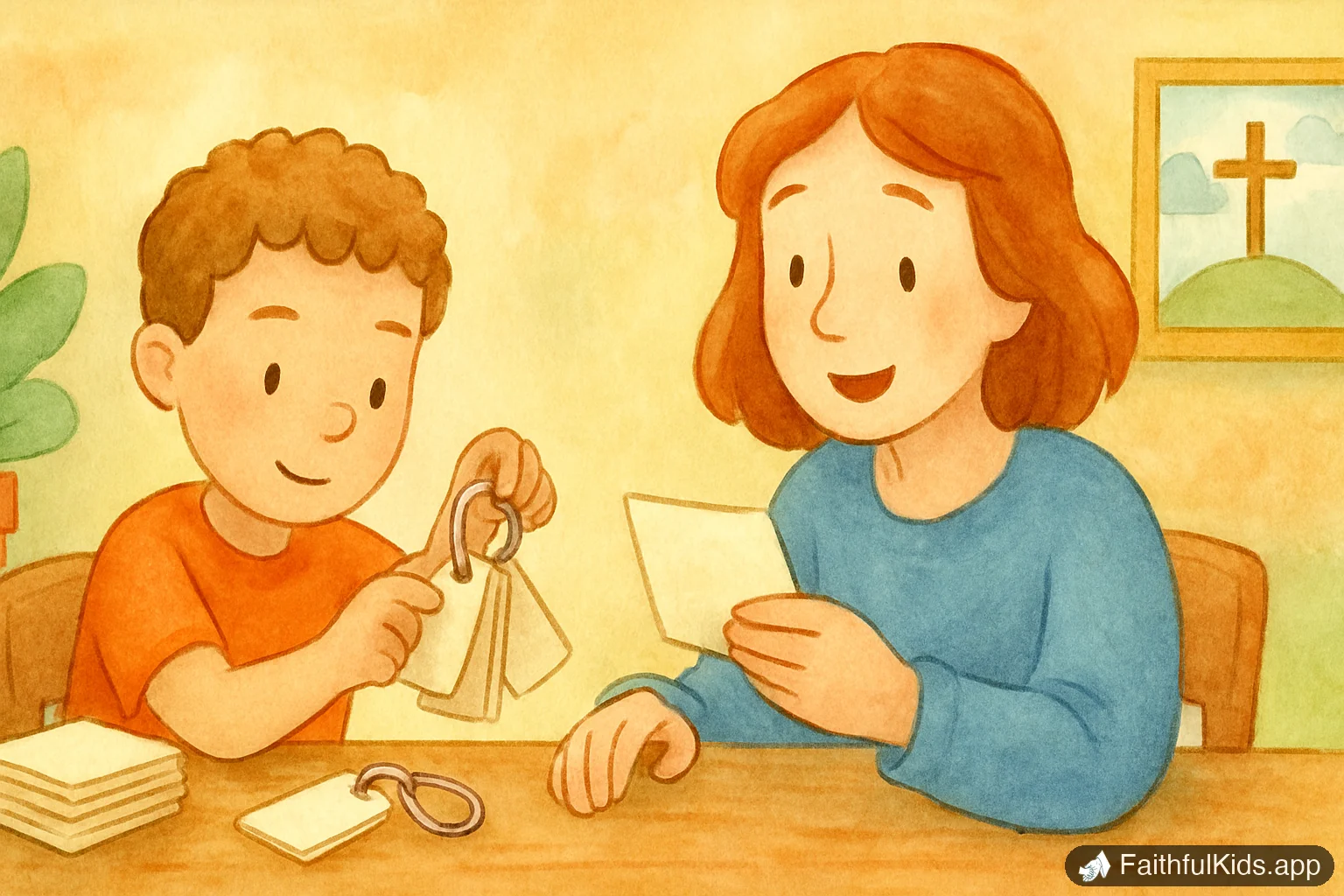
That is normal, not failure -- it means the verse was learned but never reviewed. Keep every learned verse on a card in a box and pull three at random once a week to recite. Two minutes of weekly review is the difference between a child who has a growing bank of Scripture and one who only ever knows this week's verse.
🌙 Free: The Bedtime Bible Kit
Seven nights of five-minute stories — a story, a prayer, and one question to whisper about.
Free printable + a few helpful emails. Unsubscribe anytime.