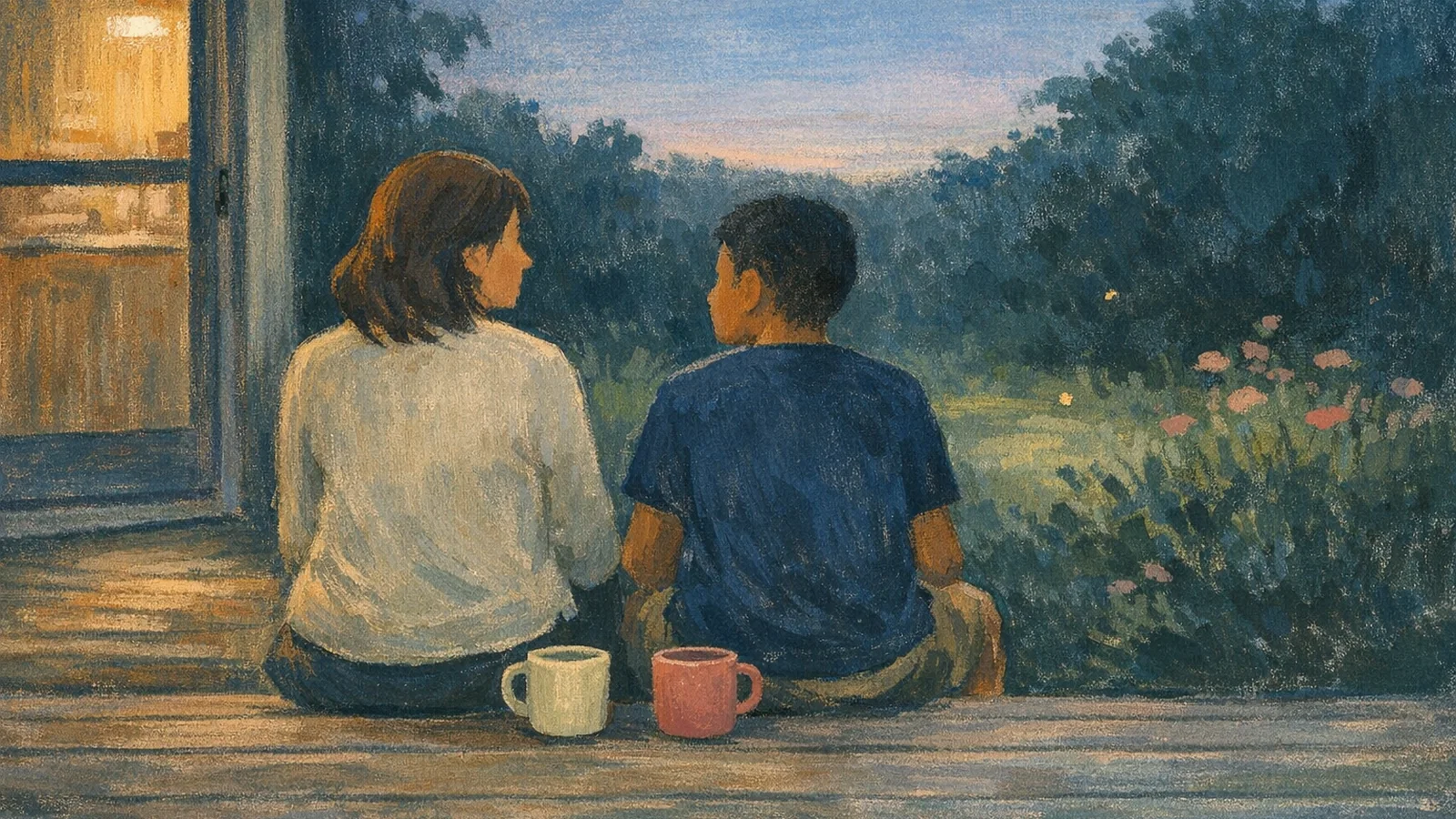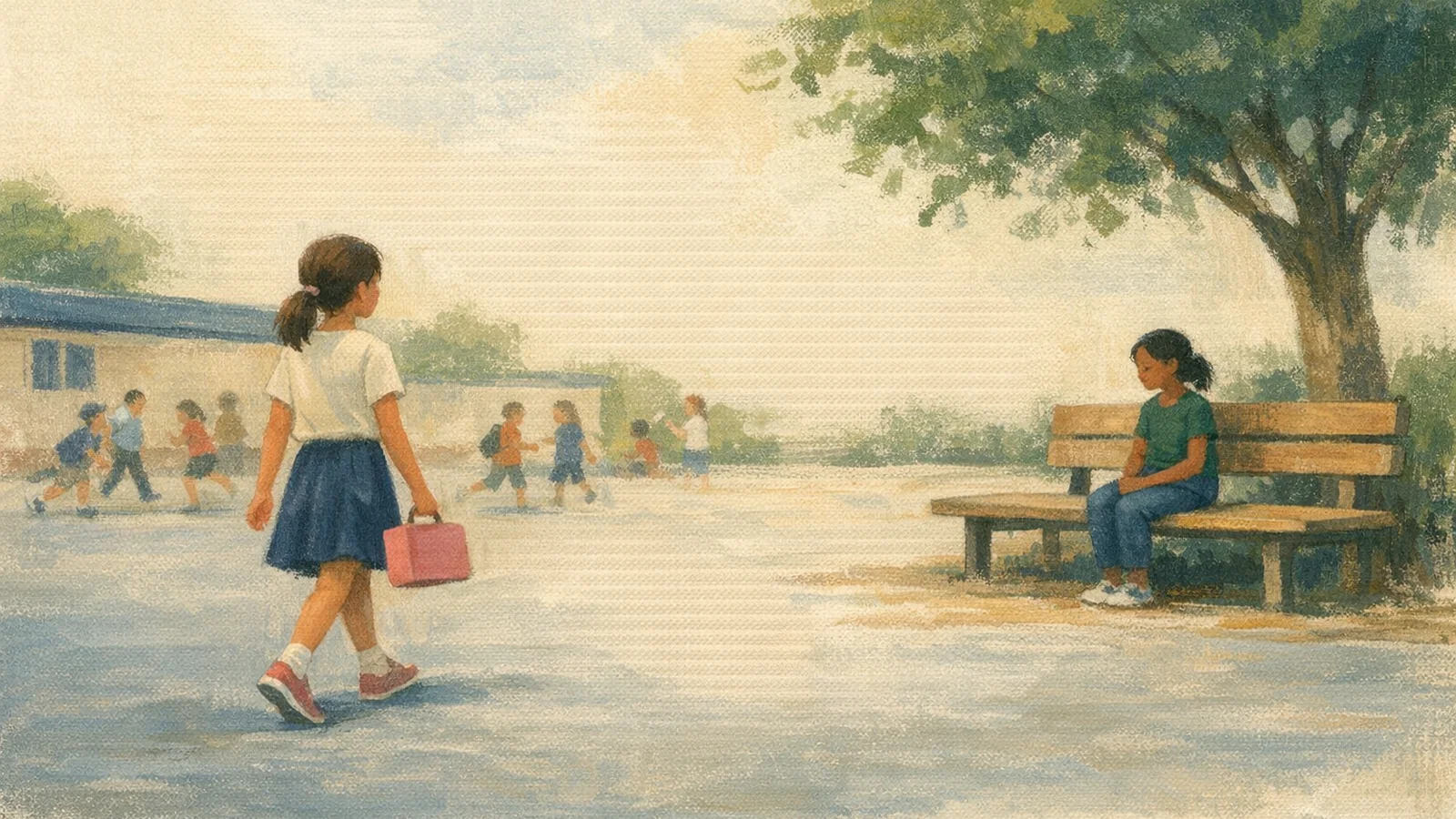
My daughter came home from school last spring and told me, almost in passing, that a new girl in her class ate lunch alone every day. I asked whether she had sat with her. She looked at me as if I had suggested she climb the school roof. "Mom. Nobody sits with her."
It was such a small thing. But I recognised it, because I had spent years teaching her the opposite lesson without meaning to. Be careful. Watch out. Don't talk to people you don't know. Stay with your group. Every one of those instructions was reasonable, and together they had produced a child who knew exactly how to stay safe and had no idea how to be brave.
That evening I went looking for the stories I wanted her to know, and I realised something about the Bible I had somehow missed after a lifetime of reading it. It is not mainly a book about staying safe. It is a book about being brave.
Fear is not the same as wisdom
There is a version of Christian parenting that runs mostly on alarm. The culture is dangerous, the schools are dangerous, the internet is dangerous, and our job is to build walls high enough to keep it all out. Some of those walls are wise. Children need protecting, and no good parent apologises for that.
But walls alone do not make faithful children. They make anxious ones. A child raised only on what to be afraid of learns that the world belongs to everyone except God, and that the right response to it is to hide. That is not the posture of anyone in Scripture whom we hold up as an example.
The command God gives over and over is not "be careful." It is "be strong and courageous." He says it to Joshua three times in one chapter, and the reason he gives is not that the task is easy: "Do not be afraid; do not be discouraged, for the Lord your God will be with you wherever you go" (Joshua 1:9). Courage, in the Bible, is not the absence of fear. It is acting faithfully because of who goes with you.
Courage, in the Bible, is not the absence of fear. It is acting faithfully because of who goes with you.
Three teachers
If you want to teach a child courage, you could do worse than three people: a queen, a captive and a judge.
Esther is the one children relate to first, because she did not feel brave. She was frightened, and she had good reason to be. Going to the king uninvited was against the law, and she knew it. Her cousin Mordecai did not tell her the danger was small. He told her that her position might be the very reason she was there: "who knows but that you have come to your royal position for such a time as this?" (Esther 4:14). Then Esther did something every child can copy. She asked her people to fast and pray with her for three days, and only then did she go. Courage did not mean doing it alone. It meant asking for help, preparing, and then walking through the door.
Daniel teaches a different kind of courage: the quiet, ordinary, daily kind. When a law was passed forbidding prayer to anyone but the king, Daniel "went home to his upstairs room where the windows opened toward Jerusalem. Three times a day he got down on his knees and prayed, giving thanks to his God, just as he had done before" (Daniel 6:10). Just as he had done before. He did not make a speech. He simply kept doing what was right, in plain view, when it would have been easier to stop. That is the courage a child needs on the playground far more often than the dramatic kind.
His three friends showed it too, standing before a king who demanded they bow to a golden statue. Their answer is one of the bravest sentences in Scripture: God is able to rescue us, "but even if he does not," we will not bow (Daniel 3:17-18). That "even if" is worth teaching a child by heart. Faithfulness is not a bargain we make with God for a good outcome. It is trust, whatever the outcome.
Deborah teaches the courage of leading. She was a judge in Israel, settling disputes under a palm tree, when she called the commander Barak and told him God's instruction to go into battle. Barak would only go if she went with him, and she did not hesitate. When the moment came, it was Deborah who said, "Go! This is the day the Lord has given Sisera into your hands. Has not the Lord gone ahead of you?" (Judges 4:14). Has not the Lord gone ahead of you. That question is the root of every brave thing a child will ever do.
Courage is a skill, and skills are practised
Here is the part I most want parents to hear. Courage is not a personality type that some children have and others lack. It is a skill, and like any skill it grows with practice, in small doses, long before it is ever needed in large ones.
So we started practising.
- Name the brave thing out loud. At dinner, each of us shares one brave thing from the day, however small. Asking a question in class. Telling the truth when a lie would have been easier. Trying a food. Children who hear courage named start looking for chances to show it.
- Start smaller than you think. Ordering their own meal at a restaurant. Calling a grandparent on the phone. Saying hello to the new family at church. These are not trivial to a seven-year-old, and every one of them builds the muscle.
- Pray before, not only after. Esther prayed before she went to the king. Before a hard day, a test, a conversation they are dreading, pray with your child and remind them who goes ahead of them. Courage is easier when you know you are not walking in alone.
- Tell your own stories. Children assume their parents were never afraid. Tell them about a time you were frightened and did the right thing anyway, and about a time you were frightened and did not. Both stories teach.
- Give them verses to carry. Joshua 1:9 is the obvious one. Paul's reminder to Timothy is another: "the Spirit God gave us does not make us timid, but gives us power, love and self-discipline" (2 Timothy 1:7). There is a good list of Bible verses about courage for kids here if you want more. A verse learned at home becomes a voice in a child's head when you are not there.
It also helps to read the whole Bible to them, not only the safest stories. Zach Thomas wrote about reading the skipped middle of the Bible to his children, and much of that middle is exactly this: ordinary people asked to be brave. Children who meet Deborah and Esther and Daniel early grow up knowing that bravery is part of what faith looks like.
The girl on the bench
A few weeks after that first conversation, my daughter came home and mentioned, again in passing, that she had sat with the new girl at lunch. I asked how it went. "Fine," she said. "She likes horses." Then she went to find a snack.
It was not Esther before the king. Nobody wrote it down. But it was a nine-year-old walking across a cafeteria toward someone everyone else had decided to ignore, and I am sure her heart was beating hard. That is where courage starts. Not with the walls we build around our children, but with the stories we put inside them, and the God we tell them goes ahead of them wherever they go.
Sources
From Faithful Kids
- Esther saves her people, told for kids
- Daniel in the lions' den, told for kids
- Deborah, a brave leader, told for kids
Faithful Kids publishes this section. Our Bible stories and printables are free for every family.