Ask a child what it means to fear God and watch their face. Most of them picture something close to a strict headmaster in the sky: a being who is watching, keeping score, and likely to be angry. We taught them that, usually without meaning to, by using a word whose meaning has drifted a long way from the one Scripture intends. And then we wonder why so many children grow up and quietly put God down, the way you put down anything that only ever made you nervous.
"The fear of the Lord is the beginning of wisdom" (Proverbs 9:10). The Hebrew word there, yirah, covers more ground than our English "fear." It is the feeling of standing in front of something vastly bigger than you and knowing it. Trembling is part of it. So is wonder. The nearest modern word is awe, and awe is not what you feel toward a headmaster. It is what you feel at the edge of a canyon, or under a sky full of stars, or the first time a child understands that the light reaching their eyes left that star before they were born.
I want to suggest that the single most useful thing a Christian parent can do to keep God in a child's heart and mind is to teach them awe properly, and then to keep feeding it.
Fear closes a mind. Awe opens one.
The two feelings look alike for about a second and then go in opposite directions. Fear makes you smaller. You pull in, you stop asking, you try not to be noticed. A child who is afraid of God learns to manage him: say the right words, avoid the wrong ones, keep your head down. That is not a relationship. It is compliance, and compliance ends the day the child is old enough to leave the room.
Awe does the opposite. It makes you lean in. The thing in front of you is enormous and you want to know more about it. When David writes, "When I consider your heavens, the work of your fingers, the moon and the stars, which you have set in place, what is mankind that you are mindful of them?" (Psalm 8:3-4), he is not cowering. He is looking up, and the looking is making him worship. The smallness he feels is the good kind, the kind that comes with being included in something large.
Which of those two postures do you want your child to carry into adulthood? One of them walks away from God the moment the pressure lifts. The other keeps looking up.
Awe is not a mood. It grows with knowledge.
Here is the part most of us get backwards. We tend to think of awe as something that happens to you, a feeling that arrives in a cathedral or on a mountain and cannot be scheduled. And we tend to think of learning as the thing that spoils it: once you know how the trick works, the magic is gone.
With God's world it works the other way round. The more a child knows about anything real, the more there is to be amazed by. A six-year-old is impressed that the heart beats. A ten-year-old who learns that it will beat roughly three billion times without ever being told to is more impressed, not less. A teenager who learns what the heart is doing at the level of a single cell is standing at the edge of something that does not have a bottom. Every answer in creation opens onto three new questions, and every one of those questions is a place where a child can meet the one who made it.
Fear makes a child smaller. Awe makes a child lean in. Only one of those lasts past the day they are old enough to leave the room.
This is why the burning bush matters as a parenting story and not just a prophet story. "Moses thought, 'I will go over and see this strange sight, why the bush does not burn up'" (Exodus 3:3). Notice the order. The curiosity came first. God speaks to Moses only after he turns aside to look. A man who had walked past would have had no encounter at all. The habit of going over to see is a spiritual habit, and children have it by default until we train it out of them.
Jesus himself, at twelve, is found "in the temple courts, sitting among the teachers, listening to them and asking them questions," and the chapter closes by saying that he "grew in wisdom and stature, and in favor with God and man" (Luke 2:46, 52). Growing in wisdom is listed next to growing taller, as if it were just as natural and just as expected. It was not finished at twelve. It was not meant to be finished at any age.
Growth is where the joy is
Watch a child who has just learned something, anything: to ride a bike, to read a word they could not read yesterday, that an octopus has three hearts. There is a lightness in them that nothing else produces. I think this is close to the design. We were made to grow, and when we are growing we are happy in a way that does not depend on circumstances.
The opposite is also true, and parents see it before anyone else. A child who has stopped growing, who is coasting, bored, being entertained rather than engaged, goes flat. The screen is on and the eyes are dull. Nothing is wrong exactly, and nothing is alive either. Stagnation is sadness with the volume turned down.
Jesus told a story about this. Three servants are given money to look after while their master is away. Two of them put it to work and double it. The third buries his in the ground, and when asked why, he says, "I was afraid" (Matthew 25:25). Fear, not laziness, is the reason he gives, and it is the fearful, stagnant servant who ends up miserable, not the ones who risked growth. The ones who grew hear the words every child longs to hear from a parent: "Well done."
A household that keeps its children learning is not raising little academics. It is keeping them in the posture where joy and worship both happen. A growing child is a glad child, and a glad child who knows where the gladness comes from is a worshipping child.
What this looks like at home
None of this requires a curriculum. It requires a parent who is willing to be amazed out loud and to let a child's questions run.
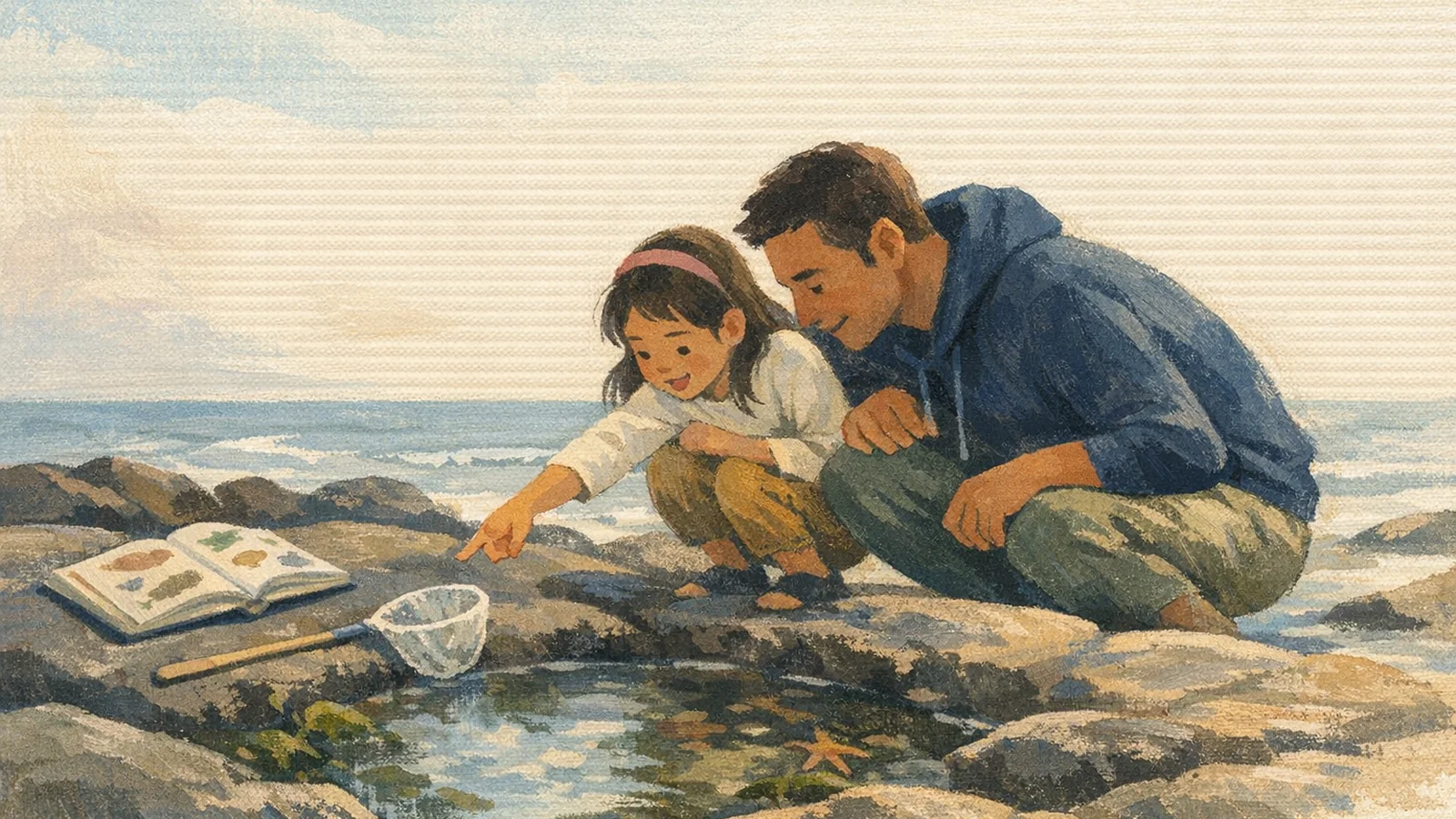
Stop answering questions too quickly. "Why is the sky blue?" is an invitation, not a problem to be closed. "I am not sure. Let's find out" is one of the holiest sentences in a Christian home. It teaches that not knowing is the start of something, not a failure, and it puts you beside your child as a fellow learner rather than above them as the keeper of answers.
Connect what they learn to who made it. This is the move most of us skip. The child learns about migration, or photosynthesis, or how far away the moon is, and the lesson ends at the fact. Add the one sentence that turns a fact into awe: "And God thought of that." Not as a way to shut down the science, but as its natural conclusion. Everything they will ever learn about the world is something he made first.
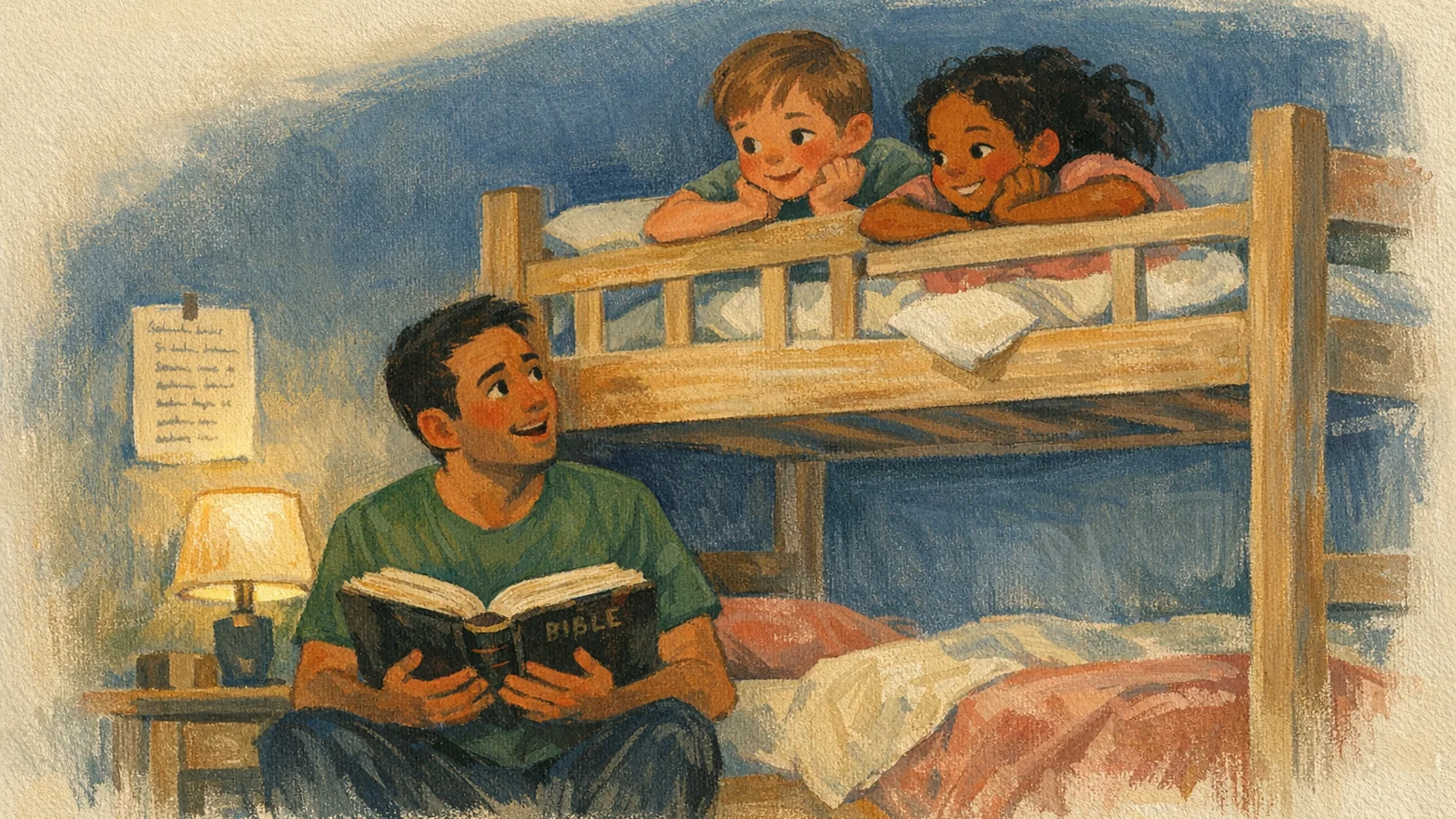
Read the Bible as a book full of people who were amazed. The disciples in the boat after the storm were "terrified and asked each other, 'Who is this? Even the wind and the waves obey him!'" (Mark 4:41). That terror is awe, and it is the right response to what they had just seen. Point it out to your children. The people in these stories are not calm. They are astonished, and they are astonished because they were paying attention.
Keep learning yourself, where they can see it. A parent who has stopped being curious cannot hand curiosity down. Read something hard at the kitchen table. Say "I did not know that" and mean it. Let them watch you be small in front of something big and glad about it. That is the fear of the Lord, demonstrated, and it is caught far more often than it is taught.
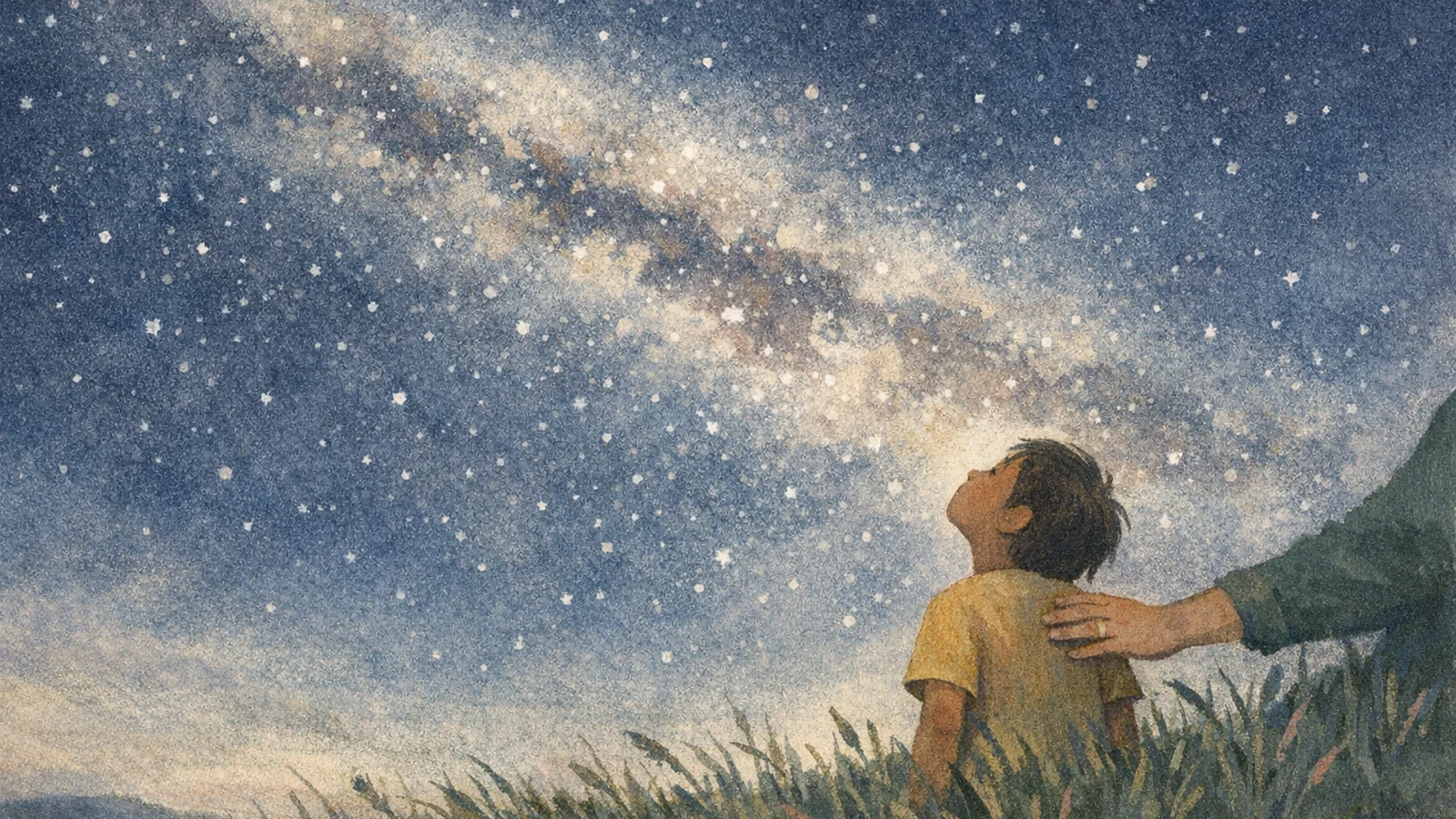
Protect the sky. Take them outside at night, away from the lights if you can, and say nothing for a while. Some of the deepest theology a child will ever do happens with their head tipped back. David did his that way. So can they.
The God who stays
If you want God to stay in your child's heart and mind for the long run, do not build a fence of fear around him and hope they stay inside it. Fences get climbed. Instead, raise a child who never stops learning, who turns aside to look at the strange sight, who grows in wisdom alongside growing taller, and who has been taught that every new thing they discover is one more thing their Father made.
That child will never run out of reasons for awe. And a child who is still in awe is a child who is still looking up, which is exactly where you hoped they would be looking.
Sources
From Faithful Kids
- Curiosity Is a Spiritual Discipline, the second essay in this pair
- Bible discussion questions for kids
- The creation story for kids
Faithful Kids publishes this section. Our Bible stories and printables are free for every family.