Somewhere between the ages of four and ten, most children stop asking why. Not because they ran out of questions. Because they learned, from the adults around them, that questions are a nuisance, that the right answer is the one in the book, and that the point of school is to finish it. Ask a four-year-old why the moon follows the car and you get ten minutes of theories. Ask a twelve-year-old and you get a shrug.
I wrote earlier about awe, and about how the fear of the Lord that Scripture praises is closer to wonder than to dread. I want to follow that thought one step further, because wonder does not survive on its own. It has to be fed, and the food is learning. A child who keeps learning keeps finding new reasons to be amazed. A child who stops learning runs out of them. Which is why I have come to think of curiosity not as a personality trait some children happen to have, but as a discipline, like prayer or reading the Bible, that a Christian home either practises or lets lapse.
The Bible is a book written by curious people
We do not usually read it that way, but look at the posture of the people in it.
"It is the glory of God to conceal a matter; to search out a matter is the glory of kings" (Proverbs 25:2). That is a remarkable sentence. It says God hides things on purpose, and that finding them is not trespass but royalty. The psalmist agrees: "Great are the works of the Lord; they are pondered by all who delight in them" (Psalm 111:2). Delight and study, in the same breath, as the natural response to creation.
Solomon, the Bible's picture of a wise man, is described not only as a judge and a poet but as something close to a naturalist. He "spoke about plant life, from the cedar of Lebanon to the hyssop that grows out of walls. He also spoke about animals and birds, reptiles and fish" (1 Kings 4:33). Daniel and his friends, taken to a pagan court, were given "knowledge and understanding of all kinds of literature and learning" (Daniel 1:17), and the text counts this as a gift from God, not a compromise with Babylon.
And then there is the line about Jesus himself, the only sentence we have about his childhood after the temple: he "grew in wisdom and stature, and in favor with God and man" (Luke 2:52). Grew in wisdom. The boy who had just spent three days asking the teachers questions went home and kept learning. If that was true of him, it is hard to argue that a Christian child should be finished with questions by the fourth grade.
God hides things on purpose, and Scripture calls finding them the glory of kings. A child's why is not a nuisance. It is the family business.
Why Christian homes let it lapse
I do not think any parent decides to raise an incurious child. It happens by accident, in three ordinary ways.
We separate learning from faith. School is school and church is church, and the two never meet at the dinner table. So a child concludes that God lives in one building and facts live in another, and that the two have nothing to say to each other. Later, when a fact seems to press on a belief, the child has no practice at holding them together and lets one of them go.
We treat questions as threats. A child asks why God does not answer every prayer, or how there were days before there was a sun, and the adult tenses up. The child reads the tension perfectly. The lesson is not the answer; the lesson is that some questions are dangerous here. A child who learns that lesson at seven stops bringing the big questions home at fourteen, which is exactly when they most need to.
We reward being right over finding out. Praise goes to the correct answer, the finished worksheet, the memorised verse. Those are fine things. But if they are the only things praised, the child learns that the goal is to already know, and curiosity, which begins by admitting you do not know, starts to feel like failure.
Six habits that keep the questions alive
None of these require a curriculum. They require a household that behaves as if learning were part of loving God, because it is.
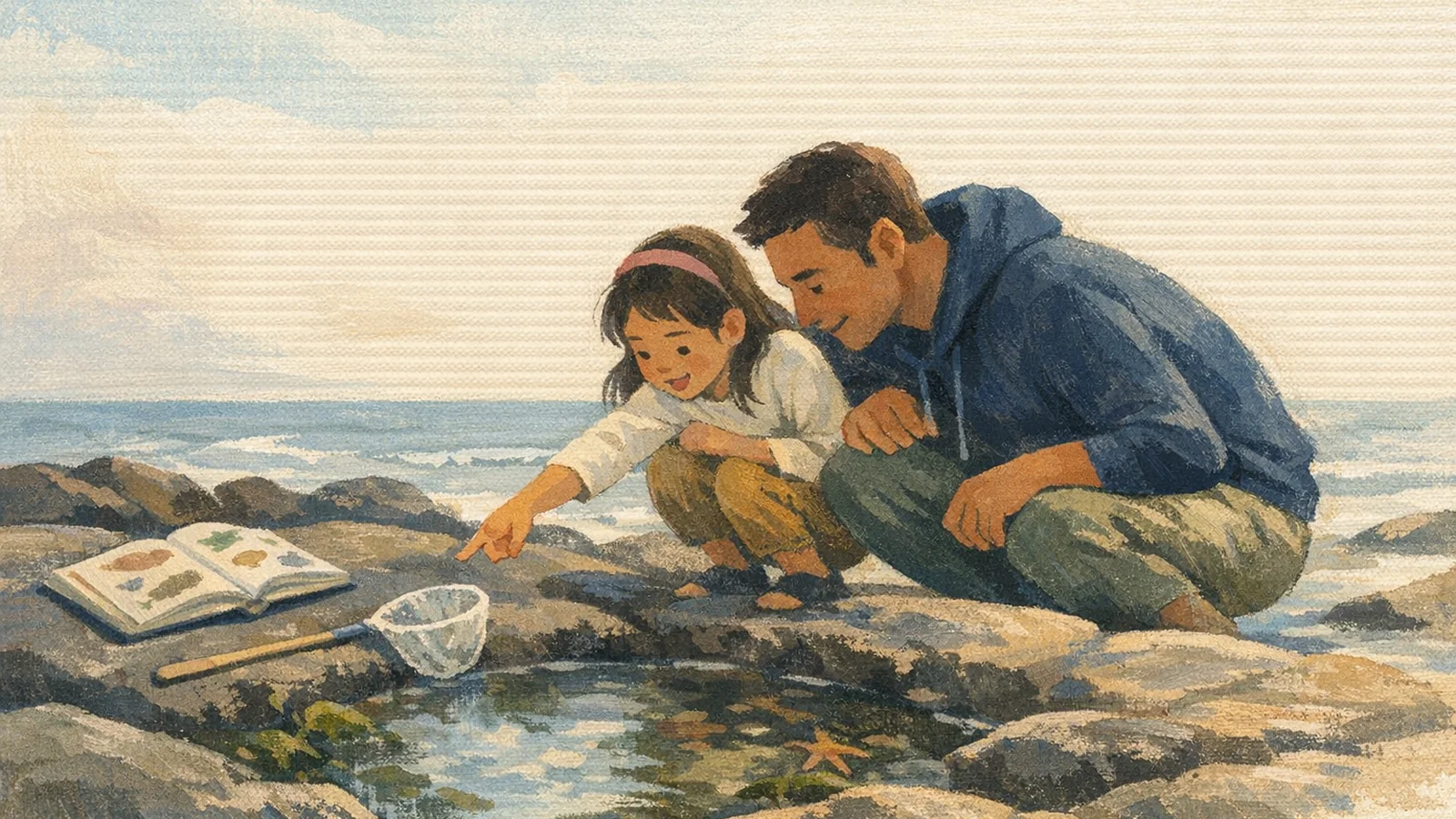
- Answer "why" with "let's find out." Not every time, but often enough that the child learns a question is the start of something and not the end. Look it up together. Turn the book around so they can see. The ten minutes this costs is the most direct investment in a curious child that exists.
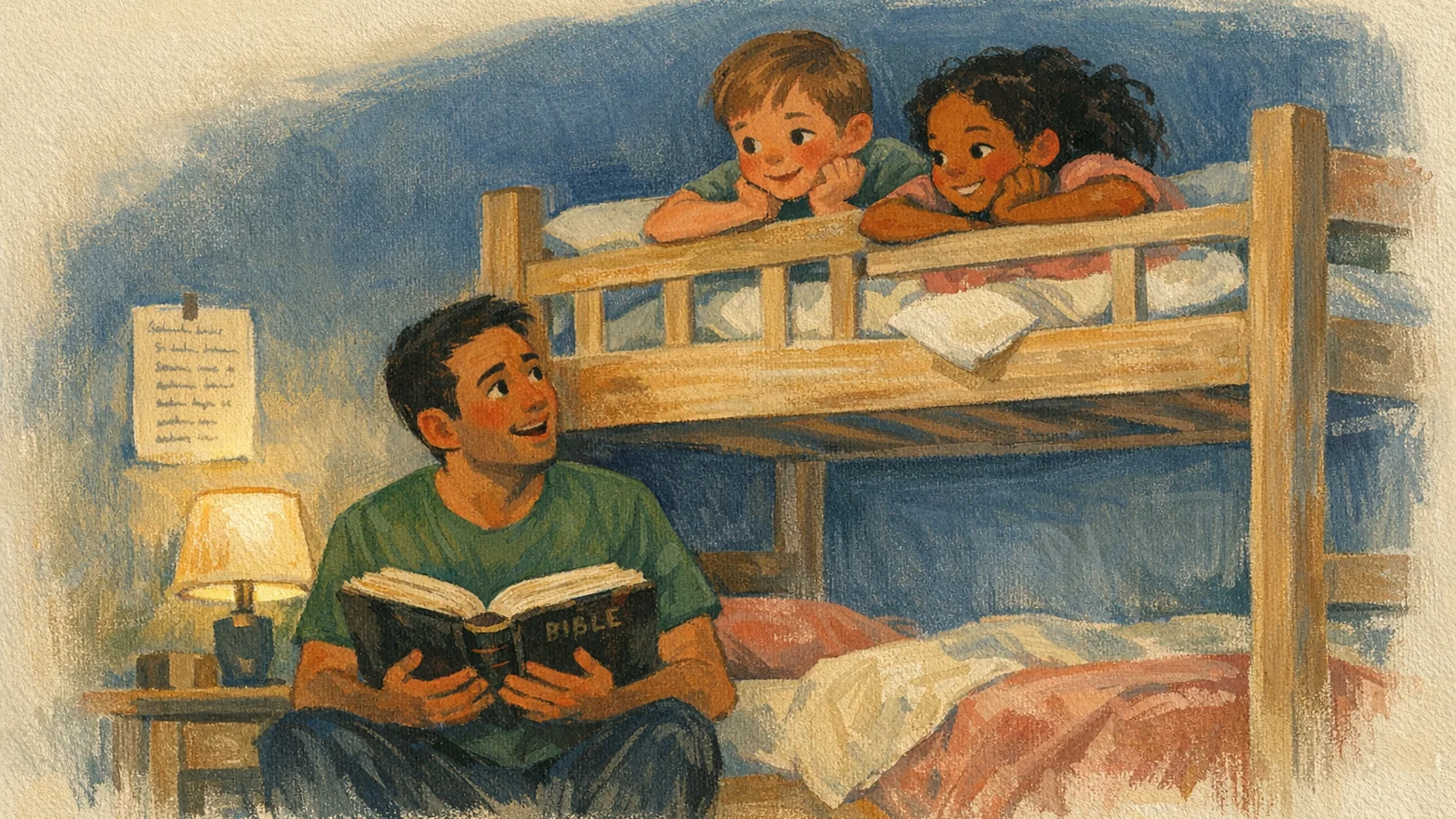
- Let them catch you learning. Children do not become readers in houses where nobody reads, and they do not become learners in houses where the adults have finished. Learn something in front of them: a word, a bird, a passage you did not understand. Say "I didn't know that" out loud. It is the most reassuring sentence a child can hear from a parent, because it tells them that not knowing is survivable.
- Praise the question, not only the answer. "That is a good question" said sincerely, and followed by actual thought, teaches a child that asking is valued here. Praise the trying too. A child who was praised for effort will attempt the hard thing; a child who was praised only for being right will avoid it.
- Connect every subject back to its maker. Not with a sermon. With a sentence. The water cycle: who thought of that? The way a bird's bones are hollow: who designed it that way? Fractions and music and the orbit of the moon all belong to the same God, and a child who hears that connection a few hundred times grows up unable to see a fact without seeing him behind it.
- Let hard questions be welcome, especially the ones about God. When the question is big, say so. "That is one of the biggest questions there is, and people have been asking it for three thousand years. Here is what I think, and here is what I still wonder about." Honesty about your own uncertainty does not weaken a child's faith. It shows them that faith and questions live in the same person, which is the thing they most need to see.
- Keep one thing in the house that is always being learned. A map on the wall. A field guide by the back door. A Bible with the pages worn at the middle, not only the front. Children notice what a family returns to. Make sure one of the things they notice is that this family is still finding out.
What it is for
"Ask and it will be given to you; seek and you will find; knock and the door will be opened to you" (Matthew 7:7). We teach children that verse about prayer, and it is about prayer. But notice the verbs. Ask, seek, knock. They are the verbs of a curious person. Jesus describes the life of faith as a search, and he promises that the searching is answered.
That is the whole case. A child who learns to ask will ask about God. A child who learns to seek will seek him. And a child who has been shown, at home, a few thousand times, that every true thing found leads back to the one who made it, will find in the stars and the tide pools and the hollow bones of birds exactly what the psalmist found: works worth pondering, and a God worth the wonder. Keep them learning. The awe takes care of itself.
Sources
From Faithful Kids
- How to Raise Children with God in Their Hearts and Minds, the first essay in this pair
- Bible discussion questions for kids
- 200 free Bible stories for kids
Faithful Kids publishes this section. Our Bible stories and printables are free for every family.