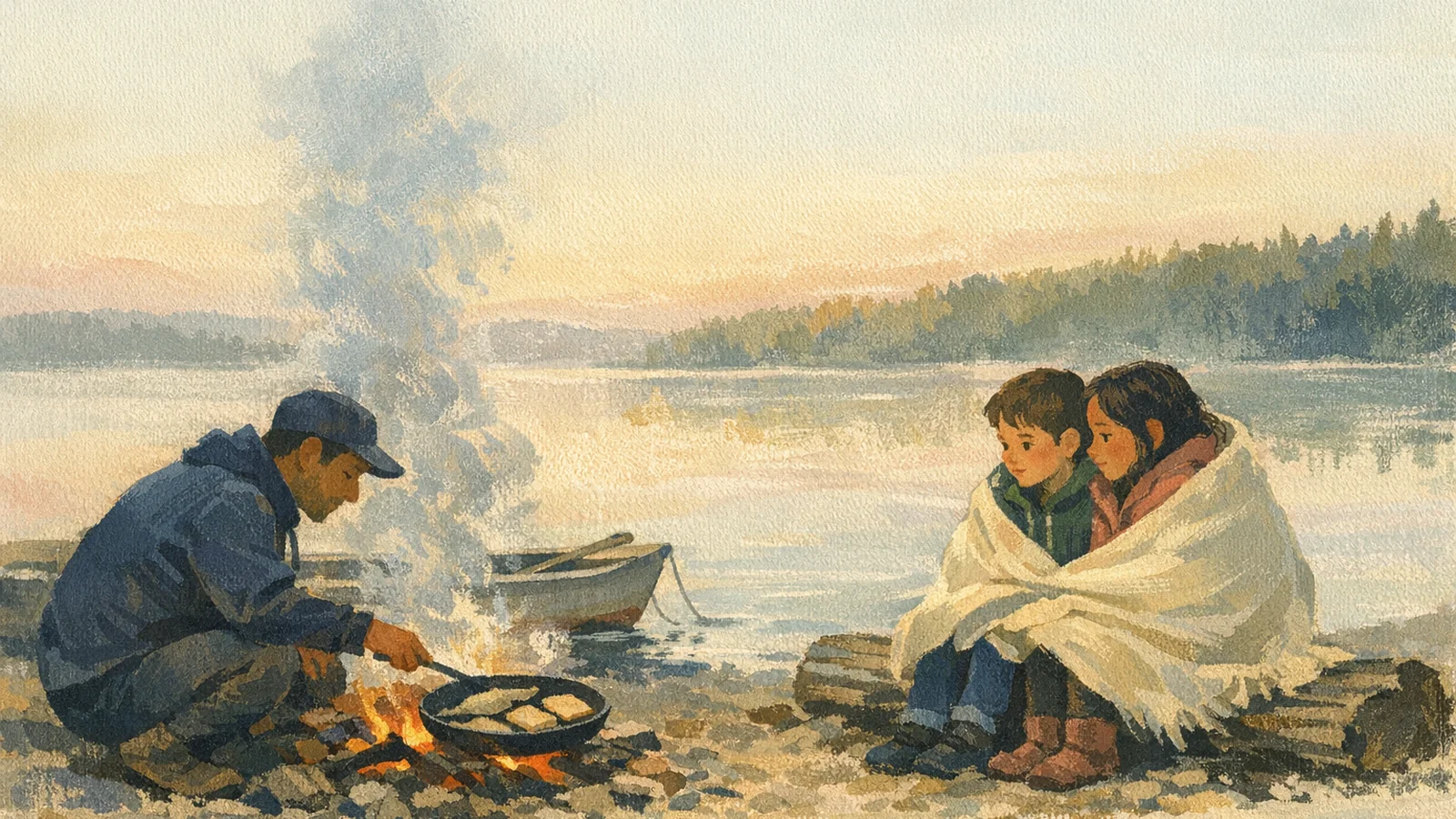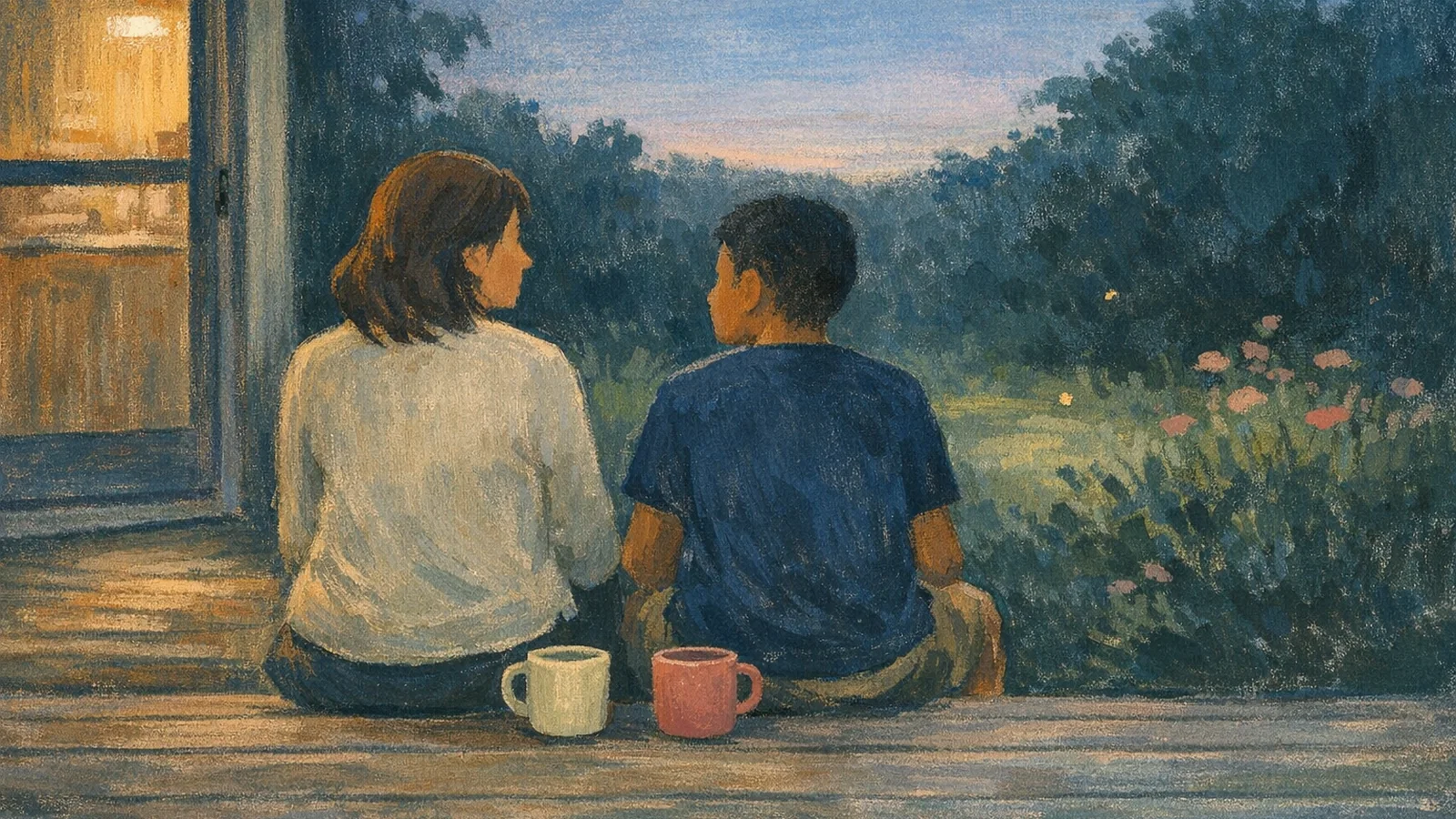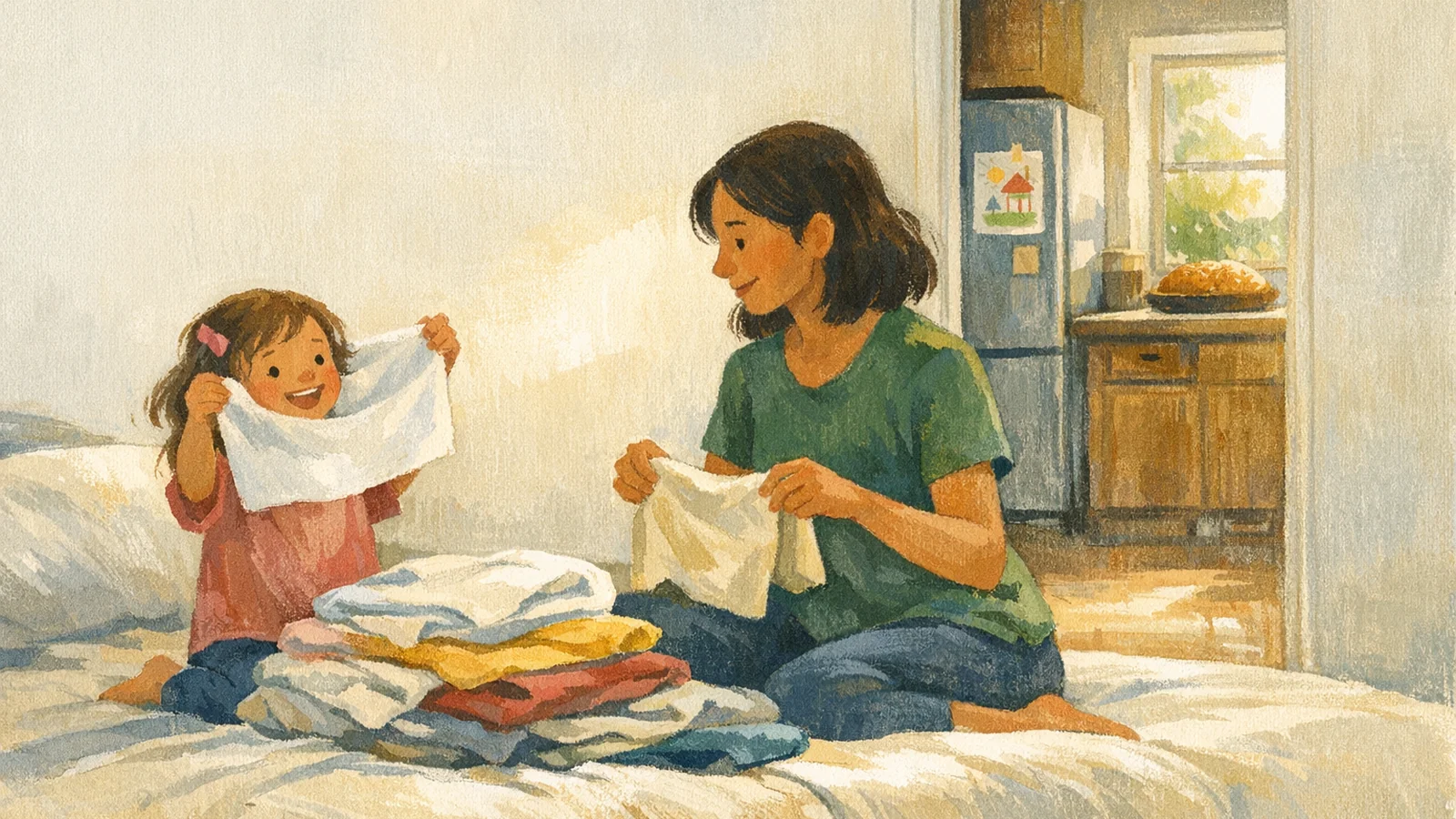
There is a moment most mornings, somewhere between the kettle and the school run, when I stand in my kitchen and see it the way my children must see it. The bread on the board. The lunch boxes open like little mouths. A drawing held to the fridge by a magnet shaped like a lemon. A sink that is never quite empty. It is not a beautiful room by any magazine's standard. But it is the room where my children are learning, every single day, what I actually believe.
Because a home is always teaching. That is the thing I wish someone had told me when I first carried a baby through my own front door. We think of faith as something we pass on in words: the bedtime prayer, the Bible story, the verse on the card. Those matter enormously. But long before a child can read a single verse, they are reading the house. They read the tone of voice at the end of a long day. They read what happens when the milk goes over. They read whether the door opens gladly when someone knocks. A home is a curriculum with no off switch, and the only question is what it is teaching.
I want mine to teach grace.
The house speaks first
When Moses told Israel how to pass on the faith, he did not describe a classroom. He described a household. "Impress them on your children. Talk about them when you sit at home and when you walk along the road, when you lie down and when you get up. Tie them as symbols on your hands and bind them on your foreheads. Write them on the doorframes of your houses and on your gates" (Deuteronomy 6:7-9).
Look at where God's word is meant to live: at the table, on the walk, at bedtime, on the doorframe. In the ordinary traffic of a family's day. The faith was never meant to be kept in a special room. It was meant to soak into the walls.
Proverbs puts it another way, and I have come to love this verse more than almost any other about family life: "By wisdom a house is built, and through understanding it is established; through knowledge its rooms are filled with rare and beautiful treasures" (Proverbs 24:3-4). Rare and beautiful treasures. Not expensive furniture. The treasures are the things that fill a home when wisdom is building it: patience, laughter, forgiveness, welcome, the sense that you are safe here.
Bread
Start with the table, because that is where so much of a family's life happens.
A meal is a daily sermon on provision. When we sit down together, when we pause to give thanks before anyone reaches for the potatoes, we are telling our children that everything on the table came to us as a gift. Our family is not always good at sitting down together. There are nights of cereal and nights of eating in shifts. But the nights we do gather, the children hear the same quiet truth: someone made this, someone provided this, and we are grateful.
Let them help. A four-year-old can tear lettuce and a seven-year-old can set the forks the wrong way round with great confidence. The lesson is not efficiency. It is belonging. A child who helped make the meal knows that a household is something you give to, not only something you take from.
And when the meal goes wrong, as meals do, the table teaches again. Burnt toast can be a disaster or it can be a joke. A spilled glass can bring a sharp word or a towel and a smile. Children notice which. They are learning, in those small moments, what kind of God we believe in: one who scolds every mistake, or one whose mercies "are new every morning" (Lamentations 3:22-23).
Laundry
I used to resent the laundry. It is the one task in a home that is never, ever finished. You fold the last towel and somewhere upstairs a child is already stepping out of their socks.
Then I read Paul's line to the Colossians as if it were written about my laundry basket: "Whatever you do, work at it with all your heart, as working for the Lord" (Colossians 3:23). Whatever you do. Not whatever you do in church, or whatever you do that someone will see. The folding counts. The scrubbing counts. The fourth trip to the washing machine counts.
What changed was not the work. It was who I was doing it for. And my children could tell the difference. When I fold with a sigh, they learn that serving others is a burden. When I fold with them, talking about their day, letting the little one match the socks badly, they learn that care is a form of love. Now the warm pile on the bed is one of our favourite places to talk. Something about a heap of clean clothes makes children chatty.
There is grace in a clean shirt laid out for a child who did nothing to earn it. That is not a bad picture of the gospel.
A home is a curriculum with no off switch. The only question is what it is teaching.
The open door
A Christian home is not meant to be a fortress. Paul's instruction to the church in Rome was short: "Practice hospitality" (Romans 12:13). Practice, the way you practise piano. Something you get better at by doing it often and doing it imperfectly.
Children learn hospitality by watching who comes through the door and how they are treated when they get there. A neighbour invited in for tea. A friend of a friend at the table on a Sunday. A child from school who needs somewhere to wait until her mother finishes work. Every one of those visits tells our children that the love of God is not a private possession. It overflows.
You do not need a tidy house for this. Some of the warmest welcomes I have ever received were in homes with toys on the stairs. Guests do not remember the floors. They remember being wanted.
Martha's kitchen, Mary's chair
Here is the danger in everything I have written so far, and Scripture names it before I can. When Jesus visited the home of Mary and Martha, Martha was "distracted by all the preparations that had to be made" (Luke 10:40), while Mary sat and listened at his feet. Jesus told Martha, gently, that she was "worried and upset about many things," and that Mary had chosen what was better.
I have been Martha more often than I would like to admit. It is possible to keep a lovely home and teach your children nothing but anxiety. If the house is always being perfected and never being enjoyed, the lesson is not grace. It is performance.
So I try to remember that a faithful home is not one where everything is finished. It is one where Jesus is welcome in the middle of the unfinished things. Sometimes the most faithful thing I can do is leave the dishes, sit on the floor, and read a story with a child on my lap. "Unless the Lord builds the house, the builders labor in vain" (Psalm 127:1). The same psalm goes on to say that God "grants sleep to those he loves." Rest is part of the building too.
When the house falls short
It will. Mine does, weekly. There are mornings of raised voices and lost shoes, evenings when I am too tired to be the gentle mother I meant to be. A home that teaches grace is not a home without failures. It is a home where failures are followed by repair.
When I snap at a child over something small, the most important lesson of the day is what happens next: whether I come back, kneel down, and say I am sorry. Teresa Marie wrote beautifully about this in her essay on the lesson your kids remember being the one where you apologised. A child who has been forgiven by a parent, and has watched a parent ask for forgiveness, already understands something about the cross that no lesson could teach as well.
Small, faithful, every day
If you are reading this in a kitchen with crumbs on the counter and a child calling from the next room, I want you to know that you are already doing holy work. The bread you cut, the clothes you fold, the door you open, the apology you make: these are not distractions from raising faithful children. They are how it is done.
Add to them the simple practices that give words to what the house already shows: a short prayer at the table, a Bible story at bedtime, a few minutes of Scripture that fits the life you actually have. Zach Thomas's five-minute family devotion is a good place to start, and the free Bible stories on this site are there for the nights you need something ready.
But do not underestimate the house itself. Your children are reading it right now. Let the bread say provision. Let the laundry say love. Let the open door say welcome. Let the hard days end in mercy. And let every room, crumbs and all, tell them the same quiet truth: in this home, we are held by grace.
Sources
From Faithful Kids
- What the Sunday Morning Scramble Teaches Your Kids
- The Bible Lesson Your Kids Remember Is the One Where You Apologized
- The Five-Minute Family Devotion That Lasts All Year
Faithful Kids publishes this section. Our Bible stories and printables are free for every family.