Every January, a great many Christian households make the same resolution: this is the year we do family devotions. A book is bought. A time is chosen, usually after dinner, usually thirty minutes, usually with a song. The first week is wonderful. The third week is fine. By February somebody has a basketball game on Tuesdays, the book has migrated to the shelf, and the whole thing has quietly become one more thing the family feels bad about.
If that sounds familiar, I want to suggest that nothing was wrong with you. Something was wrong with the plan, and it was not that the plan was too small.
The plan that fails is the good one
Here is the pattern. A family designs a devotional routine for the family they would like to be: attentive, unhurried, gathered at a table with no phones and no homework crisis. Then they try to run it in the family they actually are, with a four-year-old who will not sit, a tween with a project due, and two adults who have been talking to other people since seven in the morning.
The good plan cannot survive contact with the real household, and because it was good, its failure feels like a verdict. We did not just miss devotions; we failed at the thing that matters most. So we stop, not because we do not care, but because caring and failing in the same place every evening is unbearable.
The way out is not more discipline. It is a plan small enough to be boring.
Shrink the unit until missing it is impossible
What is the smallest version of family Bible time that still counts? Not the ideal version. The smallest one. For most families it is something like: one short passage or story, read aloud, followed by one question, and done. Five minutes. Some nights three.
That feels like cheating. It is not. A habit is built by repetitions, not by intensity, and a five-minute routine that happens two hundred times in a year does something to a child that a thirty-minute routine that happens eleven times cannot. The child who hears a little Scripture most nights grows up assuming that Scripture is part of what evenings are. The child who had three ambitious devotions in January grows up assuming that Scripture is what parents attempt and abandon.
Zechariah's question is useful here: "Who dares despise the day of small things?" (Zechariah 4:10). The temple that verse is about got built. It got built by people who kept showing up for small, unimpressive days.
A five-minute routine that happens two hundred times a year forms a child. A thirty-minute one that happens eleven times forms a memory of failing.
Attach it to something that already happens
The second reason good plans die is that they ask the family to create a new slot in the day, and families do not have new slots. The alternative is to attach the habit to an anchor that already exists and is not going anywhere.
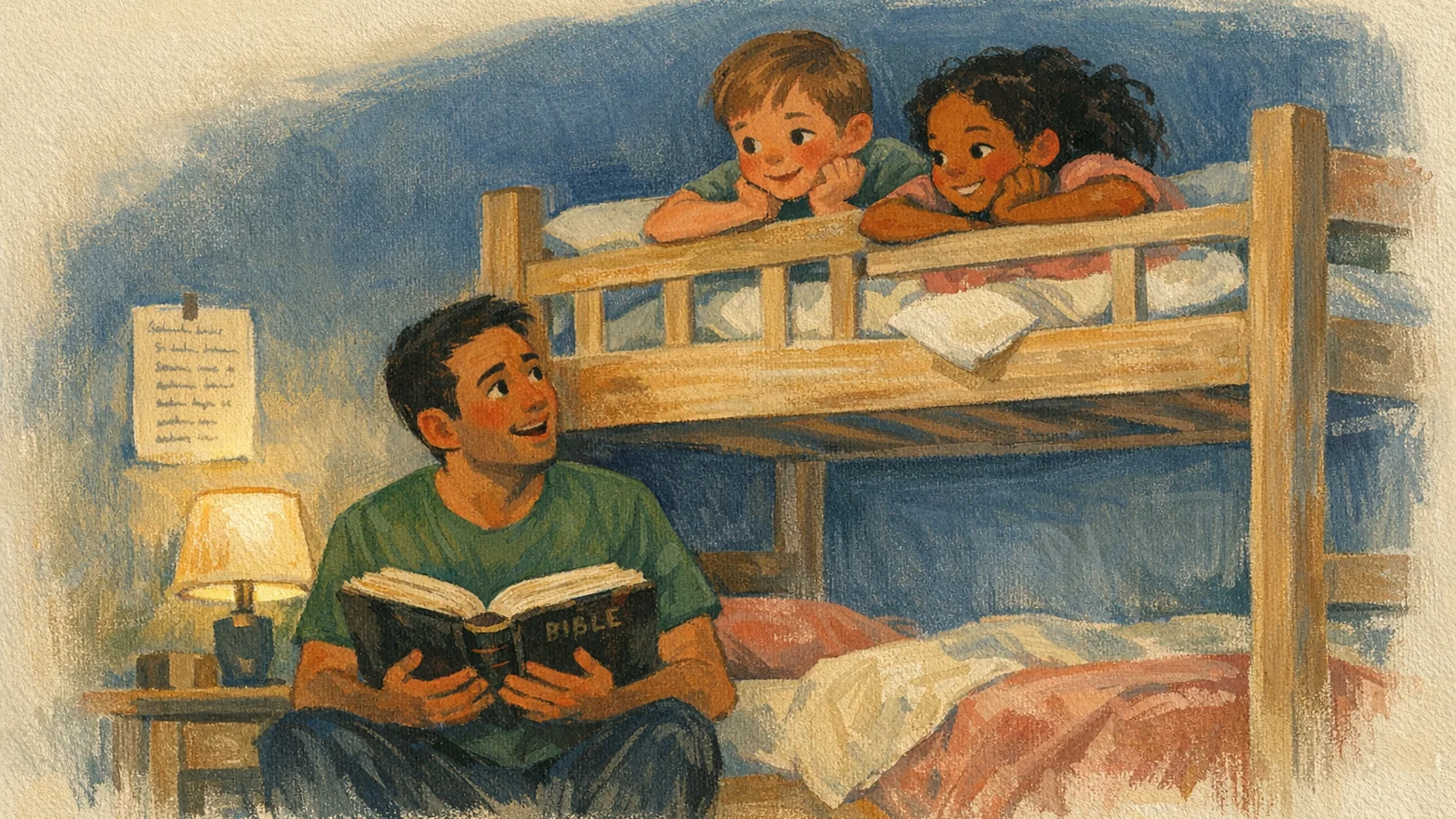
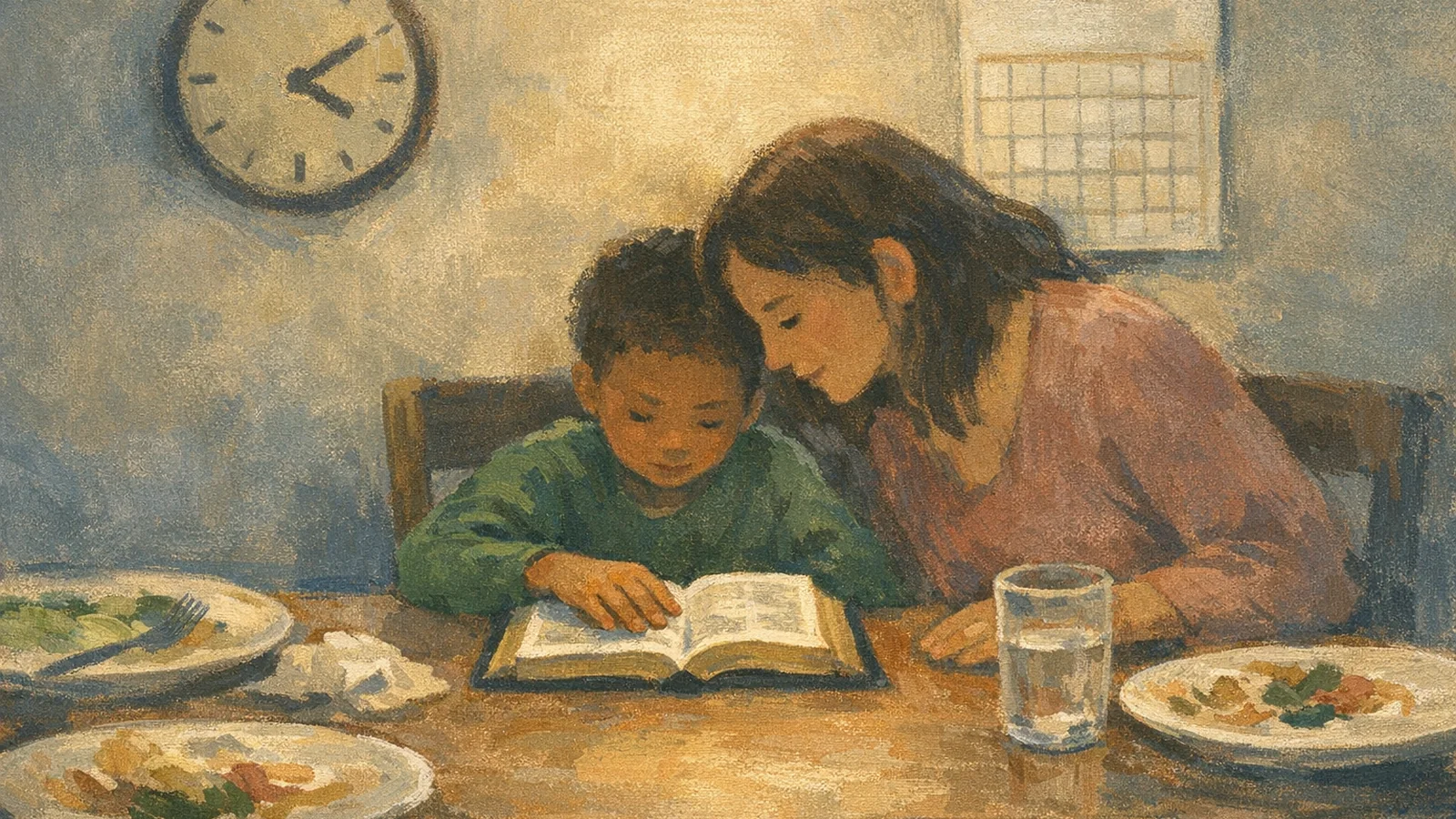
Dinner is one. Not after dinner, when the table scatters, but during it, before the plates are cleared, while everyone is captive. Bedtime is another, and for young children it may be the best one, because the child wants to delay sleep and will sit through almost anything that achieves that. The drive to school works for families who drive. The point is not which anchor; it is that the Bible rides on something that would have happened anyway, so there is nothing to remember and nothing to schedule.
Make missing cheap
Here is the part most plans never think about: what happens when you miss? Because you will miss. There will be a week of sickness, a trip, a season when everything comes apart. A plan that treats a missed night as a broken streak invites the family to quit when the streak breaks, and streaks always break.
So decide in advance that missing costs nothing. No catching up. No doubling tomorrow. No speech. You simply do the small thing again the next night as if nothing happened, because nothing did. The routine was never the point; the child's sense that Scripture belongs in ordinary life was the point, and that sense survives a missed week easily. It does not survive a parent who turns the missed week into a crisis.
"His compassions never fail. They are new every morning" (Lamentations 3:22-23). That is not only a comfort for the one who sinned. It is a design principle for the one who is tired.
What it looks like when it works
It looks underwhelming, which is how you know it is working. A child asks for "the story" at bedtime the way they ask for water. A verse read at dinner on Monday surfaces, garbled, in a question on Thursday. Nobody remembers starting the habit because it was never a project; it was just something the family did, like brushing teeth, and about as glamorous.
If you want more than that, add it later, once the small thing has run for months without effort. A song, a longer reading, a Sunday that goes deeper. Those are good. But they are the roof, and February is the month that teaches most of us we tried to build the roof first.
If yours already died
Then start again tonight, smaller than last time, and do not apologise to anyone, including yourself. One story. One question. Lights out. That is enough, and enough, repeated, is how faith gets handed down in a house where the people are tired and the days are small.
Sources
From Faithful Kids
- Why We Read the Boring Parts of the Bible to Our Kids, where this routine went next
- 15-minute family devotions: a realistic weekly plan
- Bible stories for bedtime
Faithful Kids publishes this section. Our Bible stories and printables are free for every family.