Bible Bingo for Kids: Card Ideas, Word Lists, and Rules
Ages 5+·13 min read··By Faithful Kids Team·Updated August 19, 2026
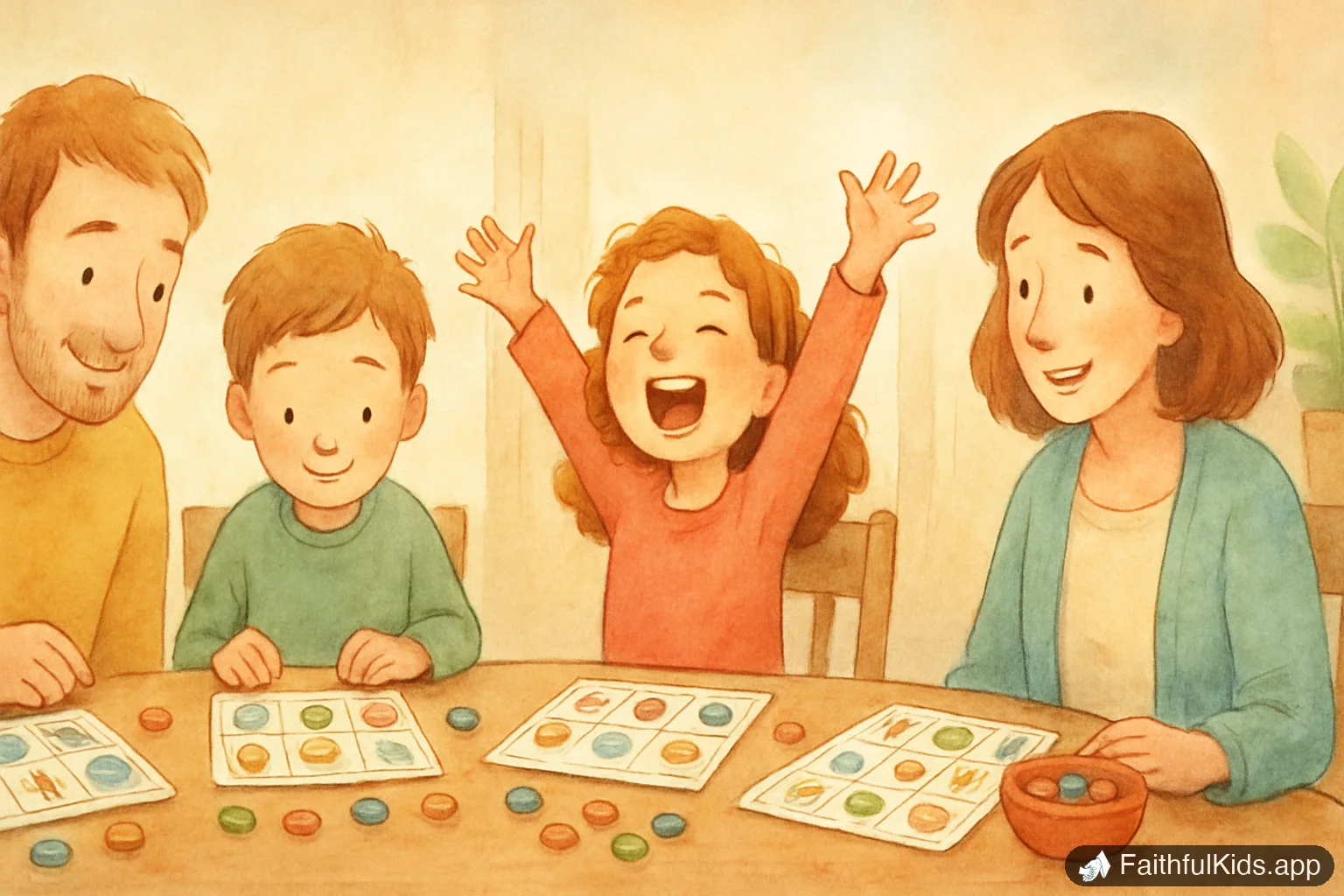
Bible bingo is a 5x5 grid game where each square holds a Bible character, story, or object instead of a number -- a caller reads clues, kids mark their squares, and the first to complete a row shouts "Bingo!" You can make a full set of cards in about 15 minutes with paper, a marker, and the four word lists in this guide.
It works for ages 4 to 12, scales from two kids at the kitchen table to thirty in a Sunday school room, and sneaks in real Bible review while everyone thinks they're just playing a game. Here's everything you need: how to make the cards, four complete themed word lists, four ways to play, and when each version works best.
How Do You Make Bible Bingo Cards?
Draw a 5x5 grid, write "FREE" in the center square, and fill the other 24 squares with words from a master list of 25-30 -- shuffling the placement on every card so no two cards match. That's the whole craft. Step by step:
Pick a theme and a master list. Use one of the four lists below (characters, stories, objects, or Christmas). You need at least 25 words; 30 is better because it guarantees more variation between cards.
Make the grids. Draw a 5x5 grid on paper or print a blank bingo template. One card per player, plus a couple of spares.
Fill the squares in a different order on each card. The easy low-tech method: write the 30 words on a whiteboard, then fill each card by picking words in a scattered, random-feeling order. For young pre-readers, use simple stick-figure drawings or clip-art pictures instead of words.
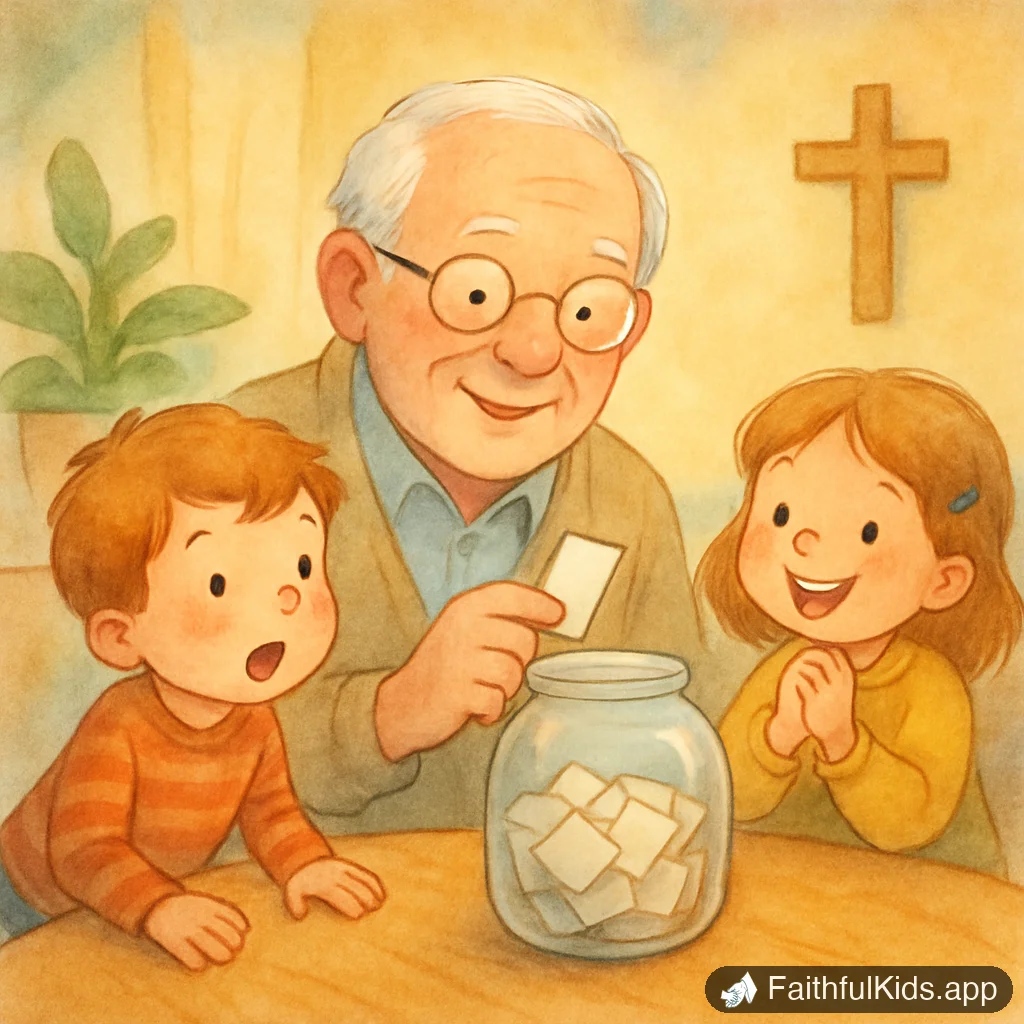
Make calling cards. Write each master-list word on its own slip of paper or index card, and drop them all in a bowl. This is what the caller draws from.
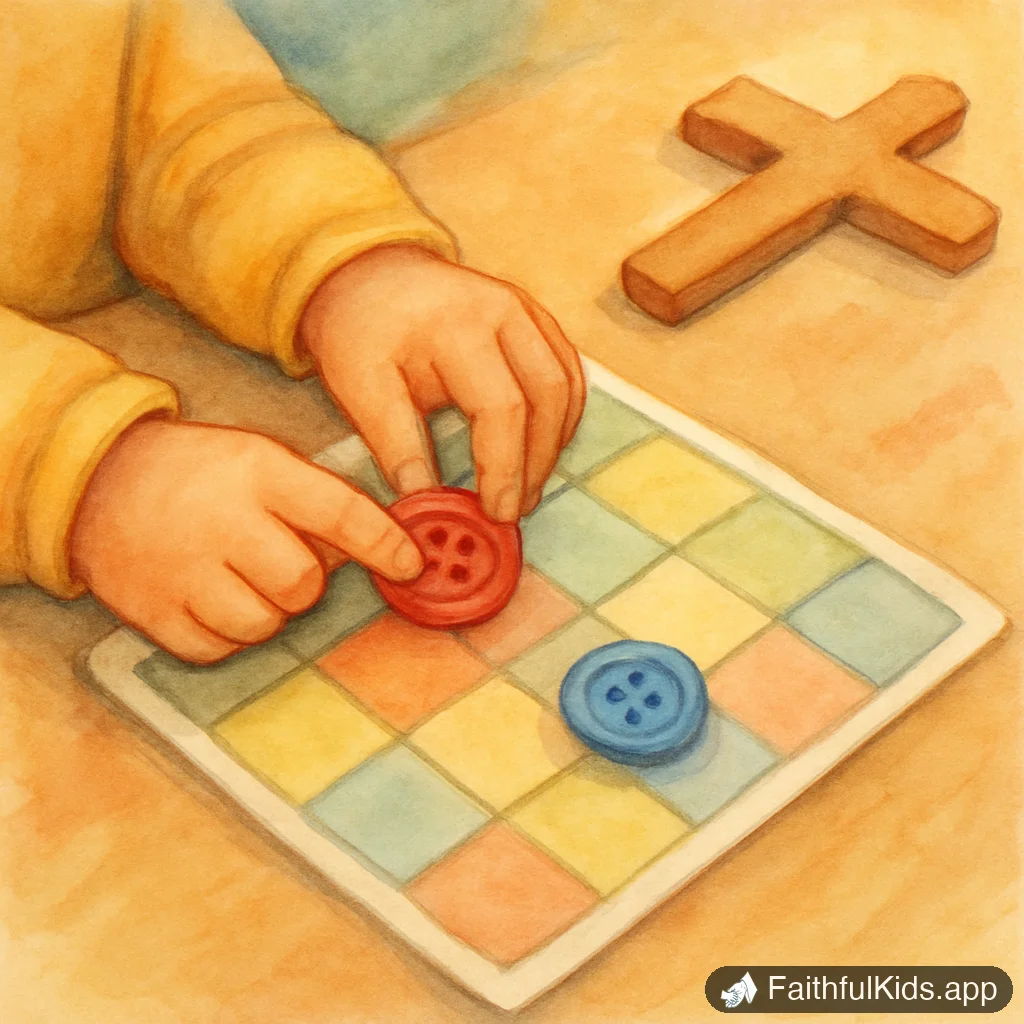
Grab markers. Dry cereal, buttons, pennies, or torn paper squares all work. If you laminate the cards or use page protectors, dry-erase markers let you reuse the set for years.
That's it. If your kids enjoy making things, card creation itself is a great rainy-day activity -- hand each child a blank grid and the word list and let them make their own card, which doubles the review time. For more low-prep game ideas like this, see our roundup of Bible games for kids.
Word List 1: Bible Characters (30 words)
A one-sentence answer for who this list suits: it's the best all-purpose list, because every kid from preschool up recognizes at least half these names.
Adam -- Eve -- Noah -- Abraham -- Sarah -- Isaac -- Jacob -- Joseph -- Moses -- Miriam -- Joshua -- Rahab -- Deborah -- Gideon -- Samson -- Ruth -- Samuel -- David -- Goliath -- Solomon -- Elijah -- Esther -- Daniel -- Jonah -- Mary -- John the Baptist -- Peter -- Thomas -- Zacchaeus -- Paul
Caller clue ideas: Instead of just reading the name, read a clue -- "This shepherd boy beat a giant with one stone" (David), "She became queen and saved her people" (Esther), "He was swallowed by a huge fish" (Jonah). Kids have to know the story to mark the square, which turns bingo into stealth trivia.
Word List 2: Bible Stories (25 words)
This list suits kids 6+ who know the major narratives, and it's ideal for reviewing a year of Sunday school.
Creation -- The Flood -- Tower of Babel -- The Burning Bush -- The Ten Plagues -- Crossing the Red Sea -- The Ten Commandments -- Walls of Jericho -- David and Goliath -- The Fiery Furnace -- The Lions' Den -- Jonah and the Fish -- The Birth of Jesus -- The Wise Men -- Jesus' Baptism -- Feeding the 5,000 -- Walking on Water -- Calming the Storm -- The Good Samaritan -- The Prodigal Son -- The Lost Sheep -- Zacchaeus in the Tree -- Palm Sunday -- The Last Supper -- The Empty Tomb
Caller clue ideas: Describe the story without naming it -- "Everyone started speaking different languages and had to stop building" (Tower of Babel), "A little lunch fed a huge crowd" (Feeding the 5,000).
Word List 3: Bible Objects (25 words)
This list suits mixed ages and works especially well as a picture-bingo for pre-readers, since every item is drawable.
Ark -- Rainbow -- Dove -- Staff -- Basket -- Manna -- Stone Tablets -- Trumpet -- Sling -- Five Stones -- Harp -- Crown -- Scroll -- Lamp -- Oil -- Coin -- Bread -- Fish -- Net -- Boat -- Cup -- Towel -- Donkey -- Crown of Thorns -- Empty Tomb
Caller clue ideas: "Noah's floating zoo" (Ark), "What David used against Goliath" (Sling), "What the shepherds followed the angels to find Jesus lying in" -- careful, that one's a manger, which you can swap in for any word you like. Customize freely; the list is a starting point.
See what they get
Watch a Real Lesson From the App
Press play on David and Goliath — a complete lesson exactly as your child sees it. 300+ episodes cover the whole Bible in order, each ending in a fun quiz to check what they learned.
A real lesson from the app — watch the whole thing free.
Free Bible Bingo Printables
Here's the honest truth about free Bible bingo printables: the download is the least valuable part. Purchased and downloaded sets come with words somebody else picked, which almost never match what your class is studying this month -- and a bingo card full of words kids haven't learned yet is just a lottery ticket. What you actually need is four ready-to-make sets with complete word lists, which is what follows. Photocopy a blank 5x5 grid, fill it from the list, and you have a printable set that matches your lessons exactly.
Each set below is complete: 25-30 words, enough for a full class, ready to hand to a volunteer with no further instructions.
Set 1: Bible Characters (30 words)
Use Word List 1 above. Best for: all-purpose review, mixed ages, first-time players. Print specs: 5x5 grid, FREE center, 10-12 unique card layouts for a class of 25.
Set 2: Bible Stories (25 words)
Use Word List 2 above. Best for: end-of-quarter or end-of-year review with kids 6+. Print specs: 5x5 grid, FREE center. Because the entries are phrases rather than single words, use a slightly smaller font and print landscape so nothing wraps awkwardly.
Set 3: Bible Objects (25 words)
Use Word List 3 above. Best for: picture bingo with pre-readers, since every item is drawable. Print specs: 5x5 grid with a 1-inch square per cell so there's room to draw. If you're making a picture version, draw the master card once, then photocopy and cut apart the images to paste in different arrangements.
Set 4: Christmas Bible Bingo (30 words)
This is the set worth making separately, because December is when bingo gets played most -- church parties, Christmas Eve services, classroom parties, the long week between Christmas and New Year's.
Mary -- Joseph -- Jesus -- Bethlehem -- Nazareth -- Manger -- Stable -- Swaddling Clothes -- Inn -- Donkey -- Shepherds -- Sheep -- Fields -- Angel -- Gabriel -- Heavenly Host -- Star -- Wise Men -- Gold -- Frankincense -- Myrrh -- Herod -- Egypt -- Census -- Emmanuel -- Savior -- Good News -- Peace -- Glory -- Simeon
Best for: ages 4-12, large mixed-age groups, and reading Luke 2 aloud while kids mark squares.
Caller clue ideas: "The town where Jesus was born" (Bethlehem), "The gift that was a sweet-smelling perfume" (Frankincense), "The name that means 'God with us'" (Emmanuel), "The old man in the temple who had waited his whole life to see the Savior" (Simeon). Or skip the clues entirely and simply read Luke 2:1-20 aloud, letting kids mark words as they hear them -- the best listening exercise of the whole season. Pair it with our Christmas Bible trivia for kids for a full party's worth of activity.
How to Print and Store the Sets
Card stock, not paper. Bingo cards get handled by every kid in the room; paper cards last one session.
Page protectors plus dry-erase markers turn any set into a reusable one and eliminate loose markers entirely.
Number the backs of the cards (1 through 12) so you can quickly check which layouts are in play and re-collect the full set.
One large envelope per set, labeled, holding the cards, the calling slips, and a printed copy of the word list. Sets that live in an envelope survive; sets in a pile do not.
For the wider printable toolkit these sets belong to -- coloring pages, word searches, verse cards, and reading charts -- see our roundup of free Bible printables for kids. And if you'd rather have a finished printable in hand than make one, our free Bible Trivia Pack has 100 questions in easy, medium, and hard rounds with every answer cited -- an excellent source of caller clues for Story-Clue Bingo.
What Are the Best Bible Bingo Game Variations?
The four variations below cover everything from a 5-minute filler to a 40-minute event, and each changes the skill the game exercises.
1. Classic Line Bingo
The caller draws slips and reads the word (or a clue); players mark matching squares; first to complete five in a row -- across, down, or diagonal -- wins. Best for first-timers and mixed ages. Keep rounds short and play multiple rounds so more kids get a win. Pro tip: have the winner read their row back so you can verify against the called slips -- and so the group hears the words one more time.
2. Blackout (Cover-All)
Play continues until someone covers every square on their card. This is the long-game version -- 15 to 25 minutes -- and it's the right choice when you want the game to fill a whole session or keep kids occupied on a rainy afternoon. Because nearly every word gets called, every kid hears the full review list. Variation within the variation: "Four Corners" (cover the four corner squares) and "Picture Frame" (cover the entire outer edge) are good middle-length options.
3. Story-Clue Bingo
The caller never says the word on the card -- only a clue, a verse, or a one-sentence story summary, and players must figure out which square it points to. This is the most educational version and the best fit for ages 8+. Ramp difficulty by clue: easy ("He built the ark") to hard ("This judge defeated an army with 300 men, torches, and trumpets" -- Gideon, Judges 7). If your kids love the guessing element, they'll also enjoy our Bible riddles for kids.
4. Action Bingo
When a word is called, kids must do a quick action before marking the square -- act out rowing for "Boat," flex muscles for "Samson," march in a circle for "Walls of Jericho." Best for ages 4-7 and for burning energy in a group setting. It's chaotic in the best way, and wiggly kids who can't sit through classic bingo will happily play three rounds of this.
When Should You Use Bible Bingo?
Bible bingo shines in four situations: reviewing lessons in Sunday school, family game nights, holiday gatherings, and travel. A quick guide:
Setting
Best Version
Why It Works
Sunday school review
Story-Clue Bingo
Reviews the quarter's lessons; clues test real knowledge
Family game night
Classic, best of 3
Fast rounds, everyone can win one
Holiday gatherings
Blackout
Occupies a big mixed-age crowd for 20+ minutes
Road trips
Classic (laminated cards)
Reusable with dry-erase markers, no loose pieces needed if you use markers with clips
Ages 4-7 energy burn
Action Bingo
Movement keeps little ones engaged
A few honest notes from experience. Bingo is a review tool, not a teaching tool -- kids get the most out of it when they already know the characters and stories on the card, so play it after a lesson or a season of lessons, not before. If your kids are learning the stories for the first time, pair the game with the source material: our video lessons at Faithful Kids teach each Bible story with a quiz at the end, and a bingo card full of stories your kids have actually watched becomes ten times more fun.
Also, mind the competitiveness. With kids under 6, consider playing until everyone gets a bingo ("play to the last winner"), or hand out small stickers to every finisher. The goal is Bible words becoming familiar friends, not tears over a cereal-piece prize.
If bingo becomes a favorite, rotate it with other paper-and-pencil classics -- Bible word searches use the same word lists you've already made, and our collection of Sunday school games has a dozen more zero-budget options.
Bible bingo works from about age 4 through 12. Ages 4-6 do best with picture cards and Action Bingo; ages 7-9 handle word cards and classic rules; ages 10-12 stay engaged with Story-Clue Bingo, where the caller gives hints instead of naming the word. It's one of the few games where a 4-year-old and an 11-year-old can genuinely play together.
How many words do I need for a Bible bingo game?
You need a master list of at least 25 words for a 5x5 card with a free center space, and 30 gives you better card variety. Each card uses 24 of the words in a shuffled arrangement. For younger kids, you can shrink to a 3x3 grid, which needs only a 12-15 word master list and produces much faster rounds.
Can I play Bible bingo with a large Sunday school class?
Yes -- bingo scales beautifully to 20-30 kids, which is exactly why it's a Sunday school staple. Make 10-12 unique card layouts and it's fine if a few kids share the same layout, since duplicate cards just mean occasional simultaneous winners. Use Blackout or Picture Frame rules to stretch one round across a longer time slot.
What can I use for bingo markers?
Dry cereal (like O-shaped cereal), buttons, pennies, dried beans, or small torn squares of construction paper all work well. If you laminate your cards or slide them into plastic page protectors, kids can mark squares with dry-erase markers instead -- no loose pieces, and the set becomes reusable for years.
How do I make Bible bingo harder for older kids?
Switch to Story-Clue calling, where you read a clue, a paraphrased verse, or a story detail instead of the word itself -- players must identify the answer before they can mark it. You can also require winners to say one fact about each item in their winning row. Both changes turn the game into genuine trivia while keeping the bingo format kids love.
Do I need to buy a Bible bingo set, or can I make my own?
You can absolutely make your own -- paper grids, a marker, and the word lists in this article are all it takes, and homemade cards let you match the words to exactly what your kids are learning. Purchased sets are more durable and save prep time, but they can't be customized to this month's lessons the way a homemade set can.
🌙 Free: The Bedtime Bible Kit
Seven nights of five-minute stories — a story, a prayer, and one question to whisper about.
Free printable + a few helpful emails. Unsubscribe anytime.