Blog/35 Sunday School Games for Every Age (Preschool-Preteen)
Guide
35 Sunday School Games for Every Age (Preschool-Preteen)
Ages 5+·17 min read··By Faithful Kids Team·Updated August 19, 2026
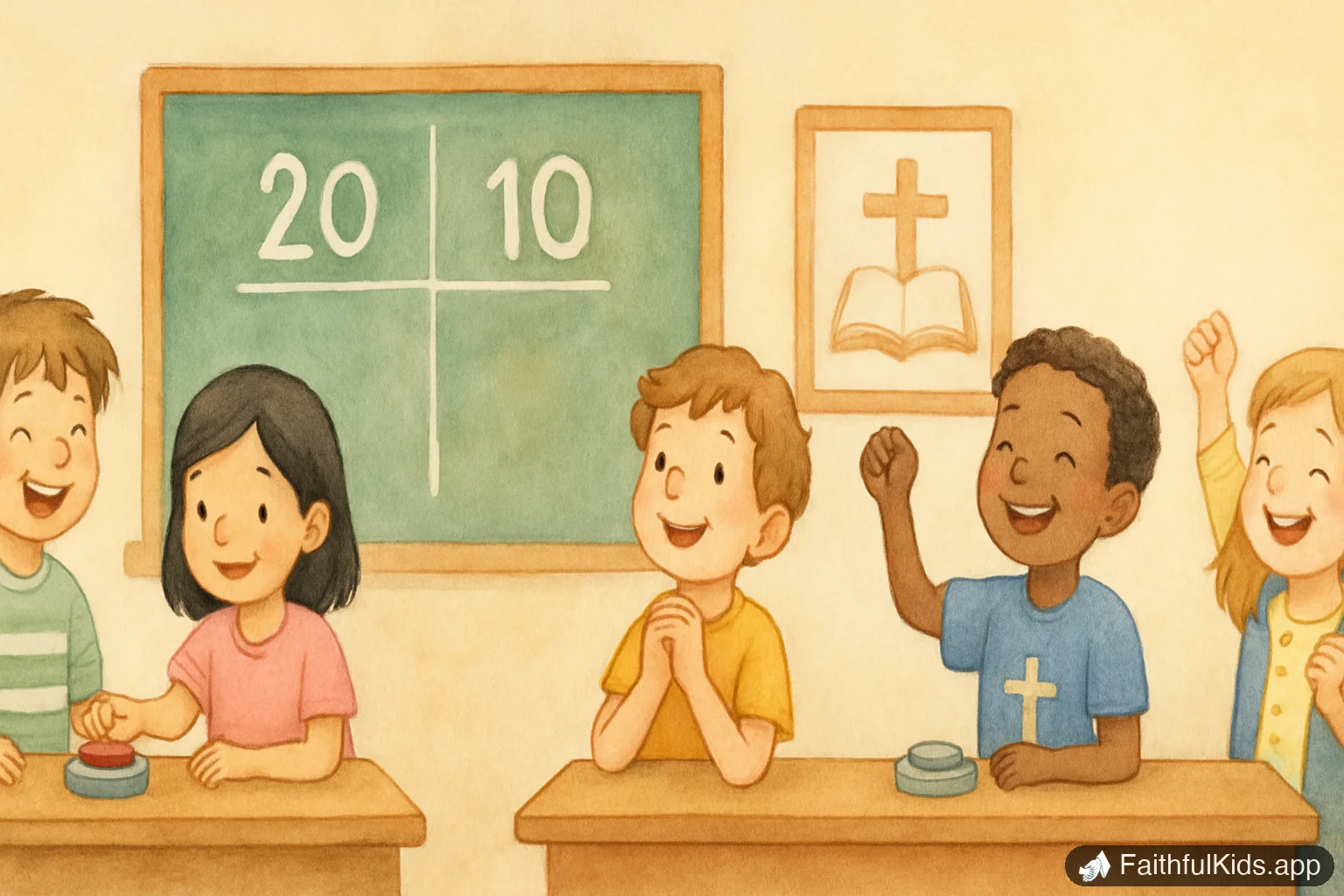
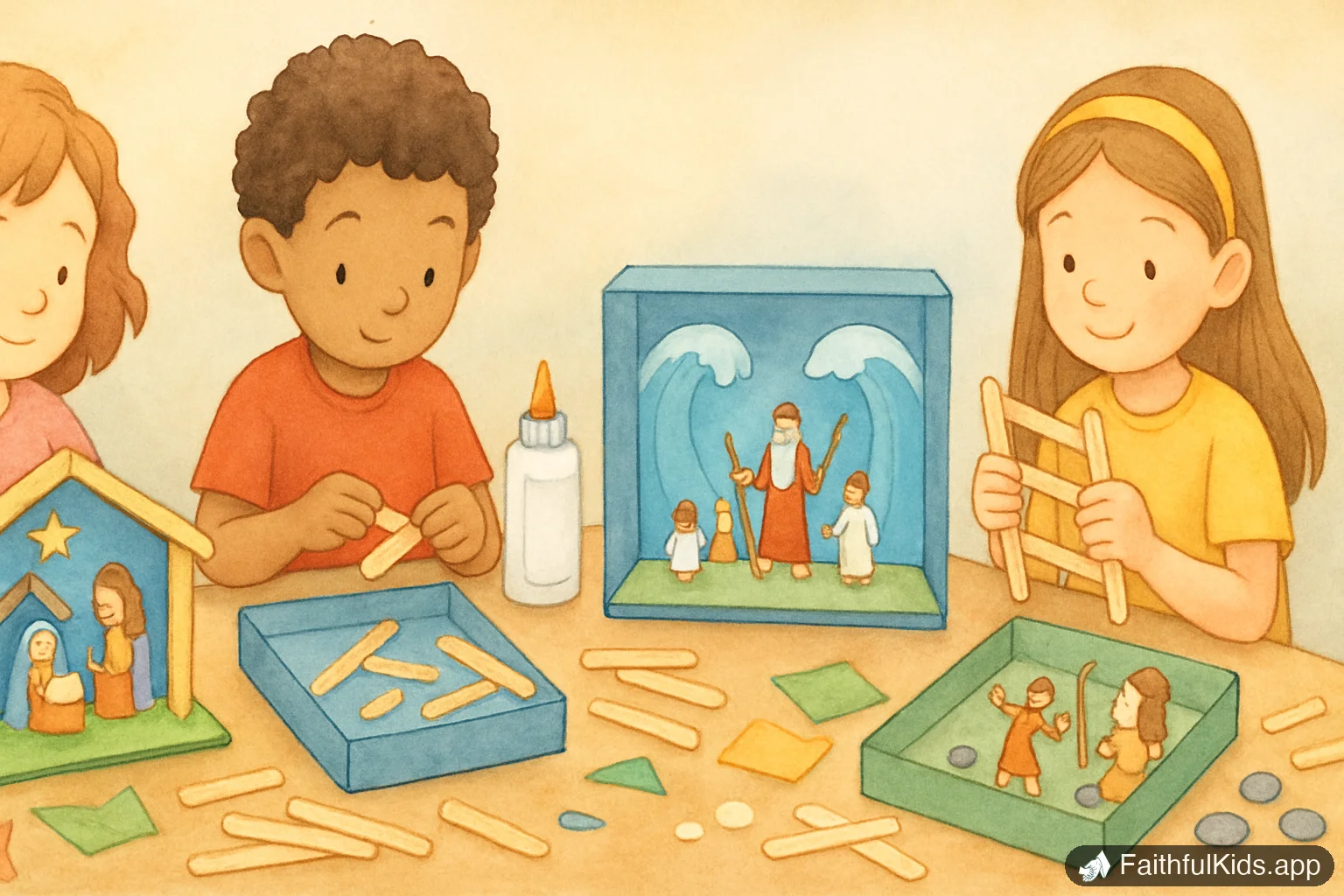
The best Sunday school games are ones that reinforce the actual Bible lesson -- sword drills, Bible charades, Jericho wall knockdown, armor of God relays -- not just games that burn energy before the flannel-graph. Here are 35 games organized by prep level, age, and group size, each with exact instructions and the lesson it teaches, so you can grab one that fits your class in the next five minutes.
Every game below has been kid-tested in real classrooms. Because half the searches for this topic happen at 8:40 on a Sunday morning, we've put the no-prep games first, then sorted the rest by age (preschool, elementary, preteen), by room -- there's a full indoor section for small spaces and rainy days -- and by class size.
What Are the Best No-Prep Sunday School Games?
The best no-prep games are sword drills, Moses Says, Bible charades, and true/false stand-up -- all playable with nothing but Bibles and kids. If you're reading this in the church parking lot, start here.
1. Sword Drill
Ages 7+. Needs: one Bible per kid. Kids hold Bibles above their heads. You call out a reference ("Ephesians 6:11!"), say "Charge!", and the first kid to find the verse stands and reads it aloud. Lesson tie-in: any lesson with a memory verse, and Ephesians 6:17 itself -- "the sword of the Spirit, which is the word of God." Bonus: kids painlessly learn the order of the books.
2. Moses Says
Ages 3-7. Needs: nothing. Simon Says, renamed. "Moses says march in place... Moses says pretend to cross the Red Sea... now sit down -- oops, Moses didn't say!" Lesson tie-in: the Exodus, or any lesson on listening and obeying God's chosen leaders.
3. Bible Charades
Ages 6+. Needs: nothing (or a list of stories). One kid silently acts out a Bible story or character -- David slinging a stone, Noah hammering the ark -- while the class guesses. Lesson tie-in: review of the past month's stories. Great last-ten-minutes filler.
4. Who Am I?
Ages 8+. Needs: nothing. Think of a Bible character. Kids ask yes/no questions ("Are you in the Old Testament?" "Did you meet Jesus?") until someone guesses. Whoever guesses picks the next character. Lesson tie-in: character studies; it forces kids to recall details about many people at once.
5. Stand Up, Sit Down (True or False)
Ages 4+. Needs: nothing. Read statements about today's lesson. True: kids stand. False: kids sit (or stay seated). "Jonah obeyed God the first time -- true or false?" Wrong movers are out, or just play for fun with little ones. Lesson tie-in: instant review of literally any lesson.
6. Pass the Message
Ages 5-10. Needs: nothing. Classic telephone: whisper a sentence from today's story down the line and compare the final version with the original. Then discuss why the disciples wrote the Good News down. Lesson tie-in: the Great Commission (Matthew 28:19-20) and why we can trust Scripture.
7. Bible Alphabet Race
Ages 8+. Needs: nothing (whiteboard helps). As a class or in teams, name something from the Bible for each letter -- Adam, Bethlehem, Commandments... First team through the alphabet (or furthest in 5 minutes) wins. Lesson tie-in: general Bible knowledge; works as an arrival activity while kids trickle in.
What Are the Best Sunday School Games for Preschoolers (Ages 3-5)?
The best preschool games are whole-body, rule-light, and under five minutes -- no teams, no scorekeeping, no waiting in line. Three-year-olds cannot lose gracefully yet, so build games where everyone finishes.
Also good for this age from the sections below: Moses Says (#2), Stand Up, Sit Down (#5), Jericho Wall Knockdown (#22), Noah's Ark Animal Match (#25), Walking on Water (#27), and Lost Sheep Hide-and-Seek (#31).
8. Creation Day Colors
Ages 3-5. Needs: sheets of colored paper taped around the room. Call out a day of creation and kids run to the matching color -- blue for sky and sea, green for plants, yellow for sun and stars, brown for land and animals. Say the day out loud each time. Lesson tie-in: Genesis 1. By week three they'll be calling the days before you do.
9. Sheep, Sheep, Shepherd
Ages 3-5. Needs: nothing. Duck, Duck, Goose with a rename. The kid who is "it" taps heads saying "sheep... sheep... shepherd!" and the shepherd chases them around the circle. Lesson tie-in: "My sheep listen to my voice; I know them, and they follow me" (John 10:27).
10. Jonah's Whale Tunnel
Ages 3-6. Needs: a play tunnel, a big box, or two chairs under a blanket. Kids crawl through the "whale" one at a time while the class counts to three -- three days and three nights -- and pops out the other side saying "Jonah obeyed!" Lesson tie-in: Jonah 1-2. Little kids need the story in their body before it's in their head.
What Are Fun Sunday School Games for Elementary Kids (Ages 6-10)?
Elementary kids can finally handle rules, teams, and a scoreboard, which opens up almost everything. The sweet spot is a game with a simple rule and a twist they discover partway through.
Also good for this age from the sections below: Bible Charades (#3), Memory Verse Scramble (#21), Fishers of Men (#23), David's Sling Toss (#24), Armor of God Relay (#29), Feed the 5,000 Relay (#30), and Red Sea, Red Light (#33).
11. Manna Scramble
Ages 6-10. Needs: cotton balls or mini marshmallows, one paper bag per kid. Scatter "manna" on the floor. Kids gather for 20 seconds -- but the rule is they may keep only what fits in one closed hand. Anyone who hoarded has to give the rest back. On "day six," they get to gather double. Lesson tie-in: Exodus 16. The rule feels unfair right up until you read the passage.
12. Ten Commandments Sort
Ages 7-11. Needs: ten cards, each with a commandment in kid-friendly wording. Teams race to sort the ten cards into two piles: how we love God (1-4) and how we love people (5-10). Then race to put them in order. Lesson tie-in: Exodus 20 and Jesus's summary in Matthew 22:37-39 -- the two piles are the two great commandments.
13. Bible Verse Basketball
Ages 6-11. Needs: scrap paper and a trash can. Ask a review question. Answer correctly and you earn a shot: one point from the close line, two from the far one. Missed shots keep the answer point, so nobody gets punished twice. Lesson tie-in: any review; it's the fastest way to make a worksheet's worth of questions feel like recess.
What Sunday School Games Work for Preteens (Ages 11-13)?
Preteens need competition, choice, or an opinion to defend -- otherwise they will sit out on purpose. Anything that feels babyish gets rejected in about eight seconds, so raise the difficulty rather than the silliness.
Also good for this age from the sections below: Sword Drill (#1), Who Am I? (#4), Bible Pictionary (#26), Bible Trivia Baseball (#32), and Human Knot (#34).
14. Two Truths and a Bible Lie
Ages 10-13. Needs: nothing (Bibles help). Each kid states three things about a Bible story -- two true, one false -- and the class votes on the lie, then proves it with the text. Whoever fools the most people wins. Lesson tie-in: any story you've just taught, plus the habit of checking claims against Scripture.
15. Parable Pitch
Ages 11-13. Needs: nothing. Teams get three minutes to retell a parable as a short modern story -- the good Samaritan on a school bus, the prodigal son and a maxed-out debit card. The class votes on which version keeps the original point. Lesson tie-in: Luke 10 and Luke 15. Kids can only modernize a parable if they understand what it actually meant.
16. Bible Bracket
Ages 10-13. Needs: whiteboard. Eight items on a tournament bracket -- most impressive miracle, bravest character, hardest thing God asked someone to do. Kids argue each matchup for 60 seconds, then vote. Lesson tie-in: whatever list you're reviewing. The arguing is the studying; they just don't notice.
See what they get
Watch a Real Lesson From the App
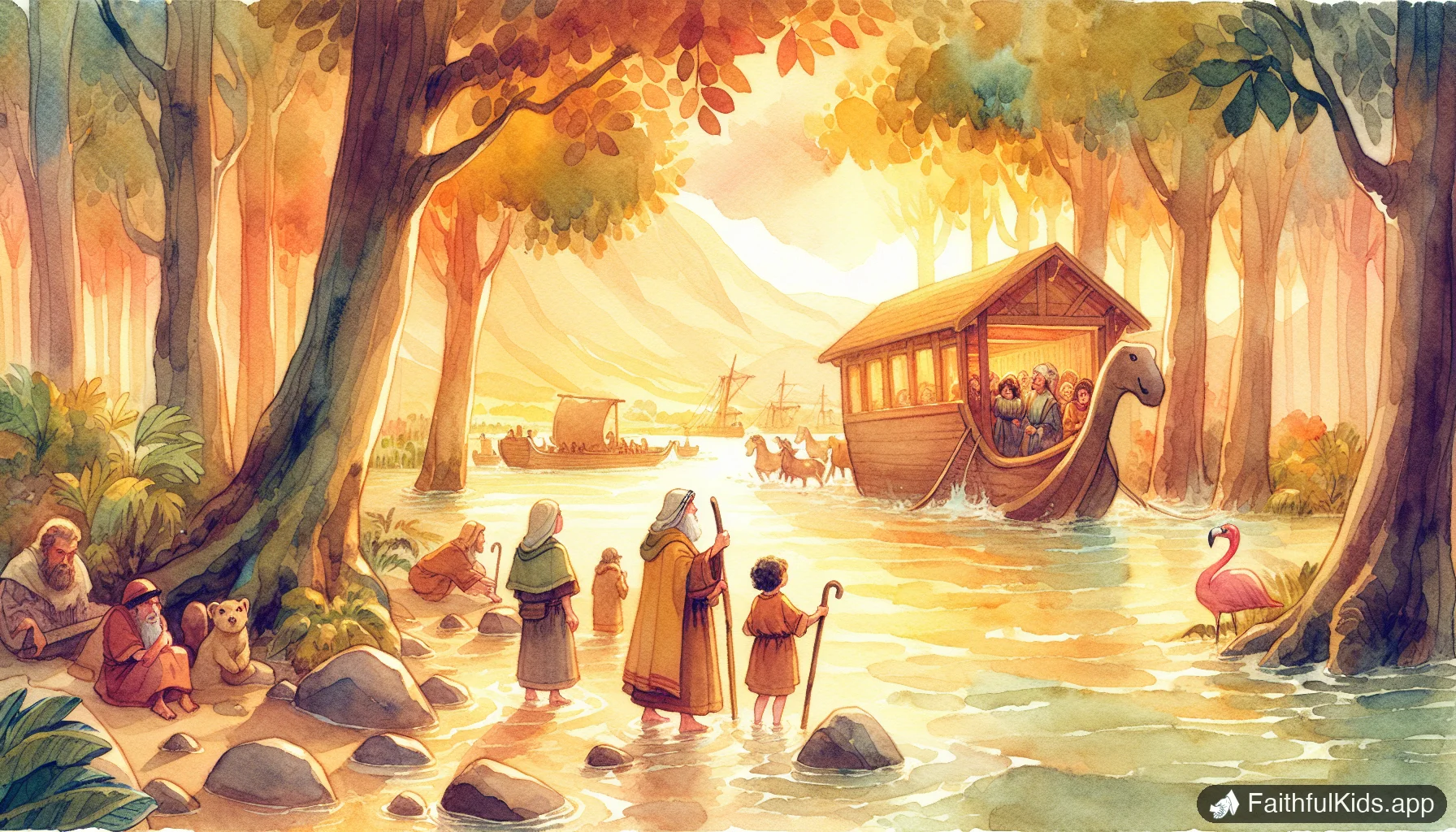
Press play on Noah and the Great Flood — a complete lesson exactly as your child sees it. 300+ episodes cover the whole Bible in order, each ending in a fun quiz to check what they learned.
A real lesson from the app — watch the whole thing free.
Indoor Sunday School Games
Indoor Sunday school games have to work in a carpeted classroom with tables pushed against the wall -- no gym, no running, and a family Bible study going on next door. These four are quiet enough for a shared building and still get kids out of their chairs.
Also good indoors from elsewhere on this list: Sword Drill (#1), Bible Charades (#3), Memory Verse Scramble (#21), Bible Pictionary (#26), Fruit of the Spirit Basket (#28), and Balloon Build-Up (#35) -- all of which need less floor space than a folding table.
17. Musical Bible Books
Ages 7-12. Needs: chairs, music, index cards with book names. Musical chairs where each chair has a book of the Bible taped to it. When the music stops, each kid must say one thing about the book they landed on -- or just whether it's Old or New Testament. Lesson tie-in: the shape of the Bible. Kids learn Habakkuk exists without a lecture about Habakkuk.
18. Beach Ball Bible Toss
Ages 5-12. Needs: a beach ball and a marker. Write a question in each colored panel. Toss the ball around the circle; whoever catches it answers the question under their right thumb. Zero running, endless replay value, and the ball costs two dollars. Lesson tie-in: review of anything -- rewrite the panels with a fresh marker each quarter.
19. Warmer, Colder: The Lost Coin
Ages 4-9. Needs: one coin. Send a kid out, hide the coin, bring them back. The class guides them by singing a memory verse louder as they get closer and quieter as they get colder. Big cheer when it's found. Lesson tie-in: the parable of the lost coin (Luke 15:8-10) -- the woman sweeps the whole house for one coin, then throws a party.
20. Indoor Snowball Verse Fight
Ages 6-12. Needs: paper. Write the memory verse one word per sheet, crumple into balls, and let kids throw for 20 gloriously loud seconds. Then call time: teams collect the paper and race to assemble the verse in order on the floor. Cleanup is built into the game. Lesson tie-in: any memory verse, and it's the single best indoor energy-burner on this list.
What Games Work Best for Small Classes (Under 10 Kids)?
Small classes shine with games where every kid gets many turns. These seven need light prep -- index cards, paper cups, household items.
21. Memory Verse Scramble
Ages 6-12. Needs: index cards. Write the memory verse one word per card, shuffle, and race the clock (or another team) to put it in order. Remove one card each round and have kids recite the missing word from memory. Lesson tie-in: whatever verse you're memorizing this month. For more verse-learning ideas, see our Bible memory games and activities.
22. Jericho Wall Knockdown
Ages 4-9. Needs: paper or plastic cups, a soft ball. Kids build a cup wall, march around it seven times while you count the days, give a big shout -- then take turns rolling the ball to knock it flat. Lesson tie-in: Joshua 6. Kids will retell this story for weeks because their hands built the wall.
23. Fishers of Men
Ages 4-8. Needs: paper fish with paper clips, a stick-and-string rod with a magnet. Kids "fish" for paper fish scattered on a blue blanket "sea." Write a kid-friendly action on each fish (tell a friend about Jesus, invite someone to church). Lesson tie-in: "Come, follow me, and I will send you out to fish for people" (Matthew 4:19).
24. David's Sling Toss
Ages 5-10. Needs: rolled-sock "stones," a bucket or paper Goliath. Kids stand behind a line and toss five "stones" at the target, stepping back a pace each round. Lesson tie-in: 1 Samuel 17 -- and the point that David needed only one stone because the battle was the Lord's.
25. Noah's Ark Animal Match
Ages 3-7. Needs: paper animal pairs (or nothing, for the charades version). Facedown memory-match with animal cards, two by two. No-prep version: whisper an animal to each kid, with each animal assigned twice; on "go," kids act out their animal until they find their partner. Lesson tie-in: Genesis 6-9.
26. Bible Pictionary
Ages 8+. Needs: whiteboard or paper. Kids draw a Bible story, object, or character while their team guesses -- no letters or numbers allowed. Keep a slip jar so you control the difficulty. Lesson tie-in: review; drawing forces kids to remember concrete details (what was in the ark of the covenant?).
27. Walking on Water
Ages 4-8. Needs: two paper plates per kid. Kids cross the room stepping only on their plates, moving the back plate forward each step. Anyone who touches the floor "sinks" and restarts. Lesson tie-in: Matthew 14:22-33 -- talk about Peter keeping his eyes on Jesus versus the waves.
What Games Work for Large Groups (10+ Kids)?
Large groups need games with teams, relays, or everyone-moves-at-once energy. These eight scale to a full children's church.
28. Fruit of the Spirit Basket
Ages 6-11. Needs: chairs in a circle. Fruit Basket Turnover, sanctified. Assign each kid love, joy, peace, or patience. Call a fruit -- those kids swap chairs while the caller steals one. Call "Fruit of the Spirit!" and everyone moves. Lesson tie-in: Galatians 5:22-23; end by reciting all nine fruits together.
29. Armor of God Relay
Ages 6-12. Needs: dress-up items for two teams (hat = helmet, vest = breastplate, belt, boots, a pool-noodle sword, a lid shield). Relay style: each runner dons the full armor, names each piece aloud, strips it off, and tags the next runner. Lesson tie-in: Ephesians 6:10-18. Kids memorize the armor list without trying.
30. Feed the 5,000 Relay
Ages 5-10. Needs: bean bags or paper "loaves," two baskets per team. Teams pass loaves down the line from a full basket to an empty one -- hands only, no throwing. Spill it and it goes back. Lesson tie-in: John 6:1-14 -- a small lunch, passed through many hands, feeds a multitude.
31. Lost Sheep Hide-and-Seek
Ages 3-8. Needs: cotton balls or paper sheep, one marked as the lost one. Hide 100 (okay, 20) sheep around the room before class. Kids find them all -- but the game isn't over until someone finds the marked lost sheep, which gets the biggest cheer. Lesson tie-in: the parable of the lost sheep, Luke 15:1-7.
32. Bible Trivia Baseball
Ages 8-12. Needs: four "bases" and a question list. Questions rated single, double, triple, home run by difficulty. Batters choose their difficulty; correct answers advance runners, misses are outs, three outs swaps teams. Pull ready-made questions from our Bible trivia for kids list, or our Bible quiz questions and answers page when you need singles and home runs already sorted by difficulty. Lesson tie-in: quarterly review that older kids genuinely beg for.
33. Red Sea, Red Light
Ages 4-9. Needs: nothing. Red Light, Green Light across the "Red Sea" (your room). "Walls of water up!" means walk; "Pharaoh's coming!" means freeze. Anyone caught moving returns to Egypt. Lesson tie-in: Exodus 14 -- Israel had to move when God opened the way.
34. Human Knot
Ages 10+. Needs: nothing. Groups of 6-8 stand in a circle, grab hands across the circle (two different people), then untangle into a ring without letting go. Lesson tie-in: 1 Corinthians 12 -- the body of Christ only works when every member works together.
35. Balloon Build-Up
Ages 5+. Needs: one balloon per group. Keep the balloon off the floor -- but before each tap, the kid must say one encouraging thing about someone in the group. Count the class record and try to beat it next week. Lesson tie-in: "Encourage one another and build each other up" (1 Thessalonians 5:11).
How Do You Pick the Right Game for Your Class?
Match the game to attention span first and lesson second: preschoolers need whole-body games under five minutes, elementary kids can handle rules and teams, and preteens want competition or they'll opt out -- for that oldest group, our Bible trivia for youth questions are pitched at a level they won't dismiss as babyish, and once your preteens graduate out of this list entirely, our youth group games guide picks up where it ends. A good rhythm for a 45-minute class is game, lesson, game -- an energy-burner up front, then a review game that makes the lesson stick. If you're planning the teaching half too, our Bible lesson plans for Sunday school and best Bible stories for Sunday school cover the other 30 minutes.
One more multiplier: games work best when kids already know the story a little. Teachers in our community sometimes assign a Faithful Kids video lesson during the week -- each Bible story comes with a built-in quiz -- so kids arrive Sunday with the story fresh and the review game gets ten hands in the air instead of two. Parents can run most of the small-class games above at home too; see our Bible activities for kids at home. And when December arrives, swap the whole list out for our Christmas Sunday school games -- nativity relays, party games, and gift-exchange alternatives that carry a class through Advent.
Want these same questions without reading them all aloud? Play the Bible trivia game instead.
What is a good Sunday school game with no preparation?
Sword drills, Moses Says, Bible charades, and true/false stand-up all require zero prep -- just Bibles and kids. Sword drills are the best of the bunch for ages 7+ because they review the memory verse and teach the order of the books of the Bible at the same time.
What games work for mixed-age Sunday school classes?
Choose games where age gives no big advantage: Lost Sheep Hide-and-Seek, Balloon Build-Up, Feed the 5,000 Relay, and Bible charades all work from preschool through preteen. For competitive games, pair older kids with younger ones on the same team so the big kids become helpers instead of dominators.
How long should a Sunday school game last?
Five to ten minutes is the sweet spot -- long enough for every kid to participate, short enough to end while they still want more. Ending a game at its peak makes kids excited for next week; letting it drag until they're bored does the opposite.
How do I keep games from taking over the lesson?
Only play games that review or set up the day's Bible story, and state the connection out loud ("We knocked down that wall the same way Israel did -- by obeying God"). If a game can't be tied to the lesson in one sentence, save it for the last five minutes or drop it.
What Sunday school games help kids memorize Bible verses?
Memory Verse Scramble, sword drills, the Indoor Snowball Verse Fight, and the Armor of God Relay are the strongest memorization games because kids handle, hunt for, or recite the actual words. Removing one word card per round in Verse Scramble is the fastest route from "never seen it" to "knows it by heart" in a single class.
Are these games okay for kids' church or midweek programs too?
Yes -- everything here works for kids' church, AWANA-style clubs, VBS, and homeschool co-ops. For large midweek groups, lean on the relay and team games (28-35); for small home settings, the under-10-kids section translates directly to the living room, and the indoor games (17-20) were written for exactly that kind of space.
🌙 Free: The Bedtime Bible Kit
Seven nights of five-minute stories — a story, a prayer, and one question to whisper about.
Free printable + a few helpful emails. Unsubscribe anytime.