Blog/Why Do We Go to Church? A Kid-Friendly Answer for Parents
Guide
Why Do We Go to Church? A Kid-Friendly Answer for Parents
Ages 5+·11 min read··By Faithful Kids Team·Updated August 16, 2026
We go to church to worship God together, to learn about Him from the Bible, and to be part of God's family -- because following Jesus was never meant to be done alone. That is the answer to give the kid in the backseat: "Church is where God's family gets together, and we are part of the family."
Every Christian parent eventually gets the question, usually on a Sunday morning with one shoe missing: "Why do we HAVE to go to church?" It deserves a better answer than "because we do." Kids can smell a non-answer, and "because we do" quietly teaches them that church is a habit without a reason -- exactly the version of church people quit at nineteen. Here is the real answer at kid level, plus an honest section for the child who finds church boring (which, at some point, is every child).
What Is the Simple Explanation of Why We Go to Church?
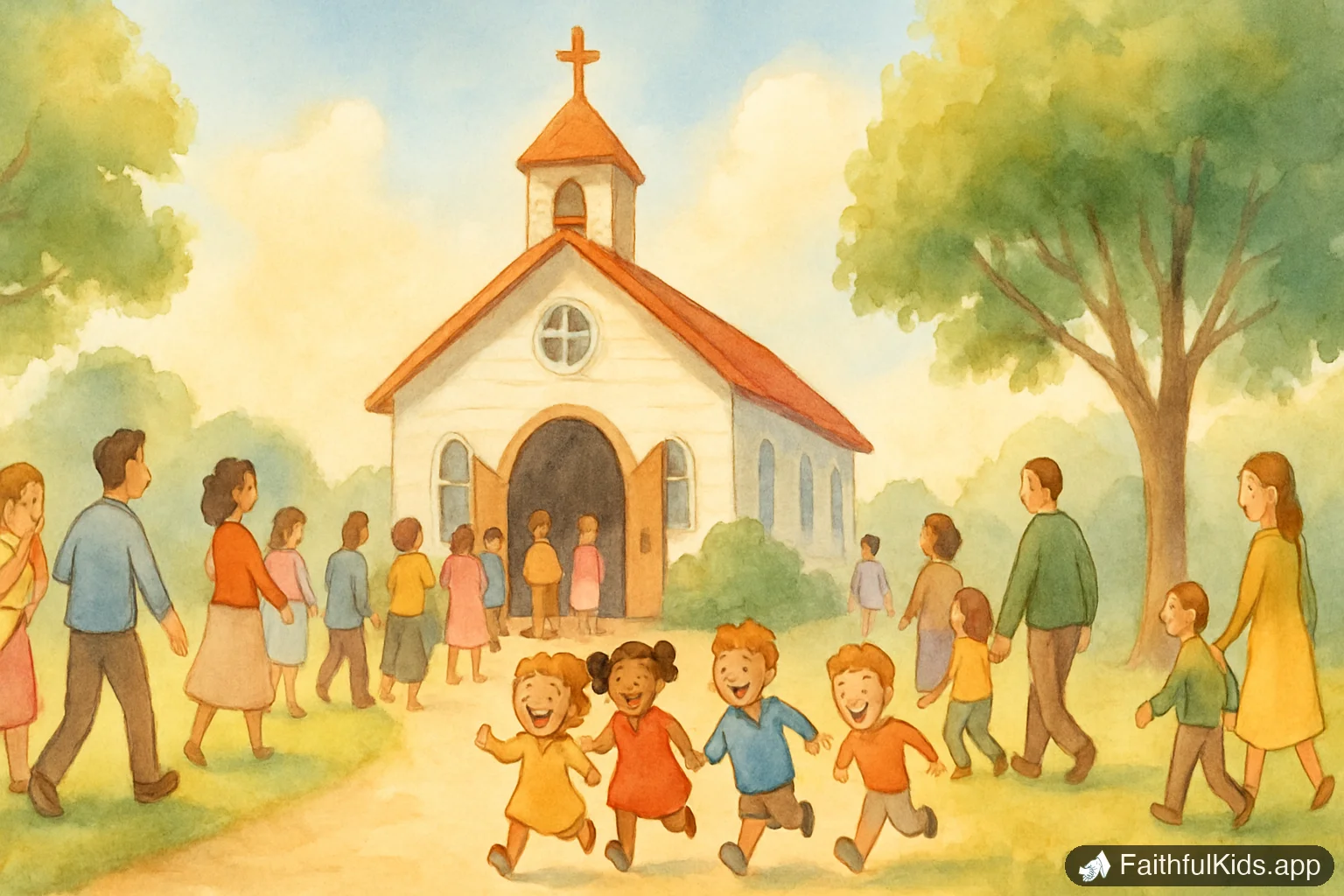
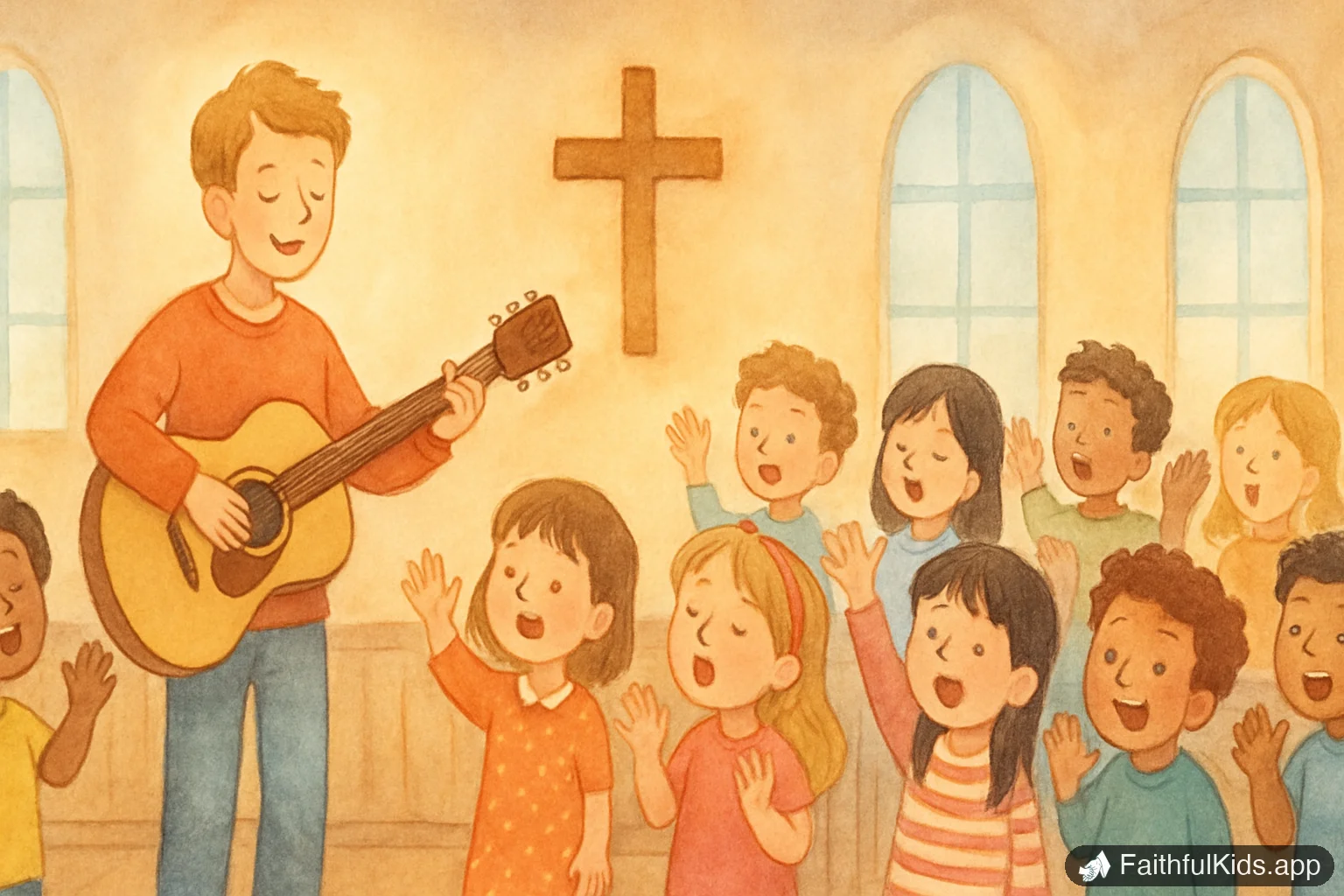
Here is a script you can say word for word: "Church is not really a building -- it is people. It is God's family getting together. We go for three big reasons. First, to worship God together: saying and singing 'God, You are amazing and we love You' with a whole room of people is different from doing it alone -- like the difference between humming happy birthday by yourself and the whole family singing it around the cake. Second, to learn: the Bible is a big book, and at church people help us understand it and grow. Third, because we belong to each other: at church, people pray for us when things are hard, celebrate with us when things are good, and we do the same for them. God made us to need each other. That is why we go -- not because God takes attendance, but because it is where His family lives."
Two verses carry the weight here. Acts 2:42 describes the very first church: the believers "devoted themselves to the apostles' teaching and to fellowship, to the breaking of bread and to prayer" -- learning, belonging, and worship, right from week one. And Hebrews 10:25 gives the direct instruction: keep meeting together and keep encouraging each other. Church is not a rule bolted onto faith; it is the shape faith naturally takes.
For the story of how church even started -- wind, fire, and three thousand people joining the family in one day -- read the Day of Pentecost for kids together.
Why Can't We Just Worship God at Home?
You can worship God at home -- and should -- but Jesus attached a special promise to gathering: "For where two or three gather in my name, there am I with them" (Matthew 18:20). So the honest answer is not "home worship doesn't count." It is "home worship is not the whole meal." Kids usually raise this as a fairness argument ("God is everywhere, so why drive somewhere?"), so answer the actual logic:
Some things only work together. "You can practice soccer alone in the yard, and that is great -- but you cannot play a game alone. Singing with hundreds of people, taking communion, hearing a room full of voices pray -- those only happen together."
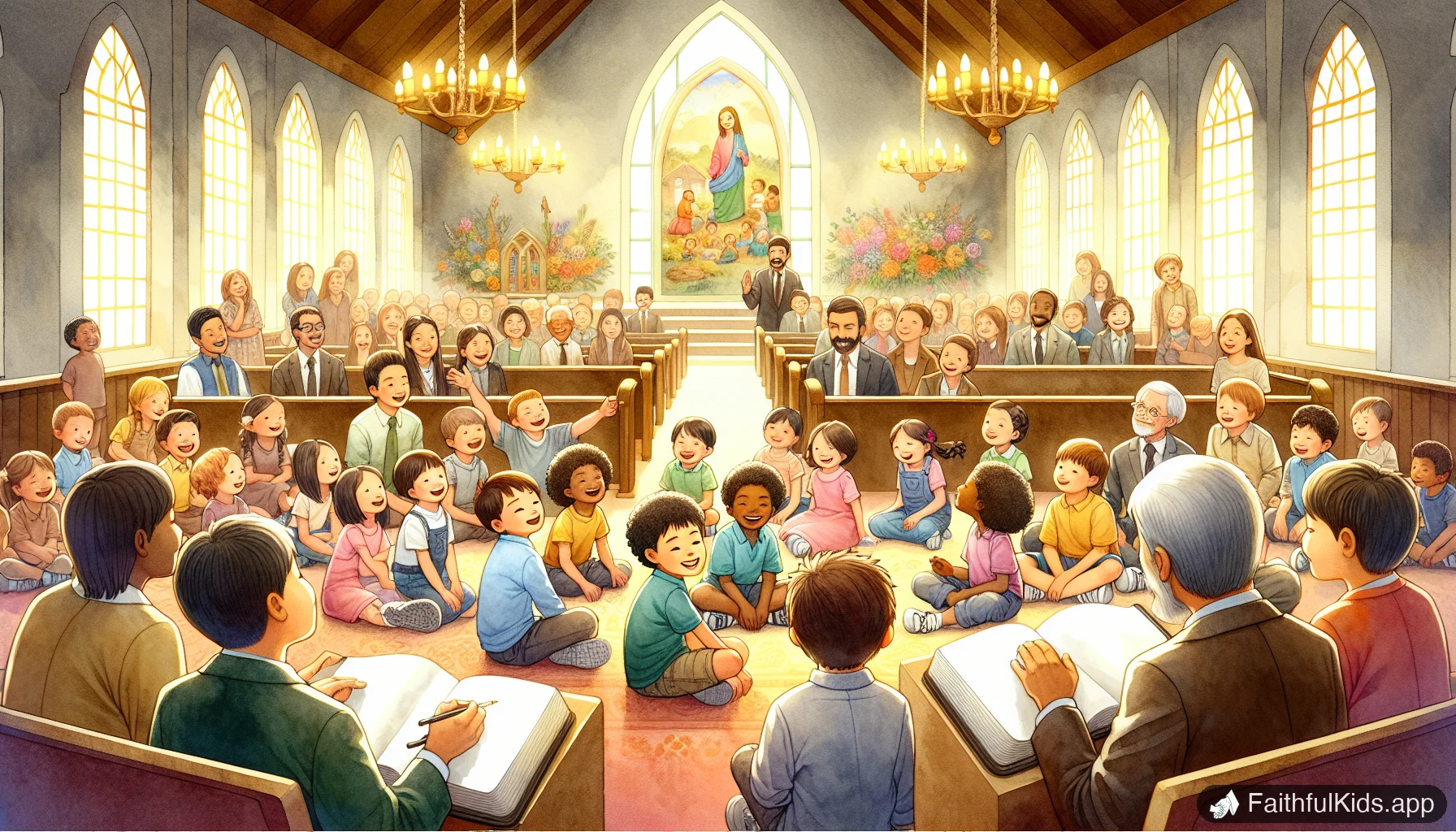
We need people who are not us. "At home, you get Mom and Dad's faith. At church, you get grandmas who have trusted God for seventy years, babies getting dedicated, teenagers, and people from totally different lives who all love the same Jesus. Seeing them helps you believe this is real and big."
We are needed, not just fed. This one reframes everything: "Church is not just what you GET -- it is where you are needed. Your voice in the singing, your hello to the new kid, your prayers -- the family is more complete when you are there." The Bible calls the church a body where every part matters (1 Corinthians 12:27), and kids light up when they realize they are a part, not a passenger.
If your child's question is less "why gather" and more "what even is worship," our companion guide on how to explain worship to a child goes deep on that piece.
How Do You Answer at Every Age?
Ages 4-6: One sentence with a picture: "Church is God's family getting together to sing to Him, hear His stories, and love each other -- and you are part of the family." At this age, connection beats explanation: attach church to faces ("Miss Karen will be so happy to see you") and jobs ("You get to put our offering in"). Belonging comes first; theology rides in on it.
Ages 7-10: Give all three reasons -- worship, learning, family -- and start showing your work. Let them see WHY you go: "I had a hard week, and I need to sing this morning" is a more persuasive sermon than most sermons. This is also the age to read Acts 2:42-47 together and ask, "Which of these things does our church do? Which one is your favorite?" Kids this age also respond well to contribution: greeting, carrying, helping in the younger kids' room once in a while.
Ages 11+: Welcome the pushback -- it is the question maturing, not faith dying. A preteen's "why do we go" often means "does this actually matter or is it just our routine?" Answer with history: Christians have gathered weekly for two thousand years, through persecution and empires, because Jesus rose on a Sunday and His people never stopped meeting to celebrate it. Then hand over ownership: let them pick a way to serve or bring their real questions to the pastor. A teenager with a role stays; a teenager who is only audience drifts.
What If My Kid Says Church Is Boring?
Take it seriously instead of taking offense -- "boring" is a report, not a rebellion, and it usually points at something fixable. Here is the honest playbook:
Agree a little. "You know what? Some parts are slow for me too." This buys you enormous credibility, and it is true. Then add the key sentence: "But we don't only go to church to be entertained. We go to worship God and be with His family -- so let's make the slow parts work better for you."
Find the actual bottleneck. Boring usually means one of four things: I can't see, I don't understand the words, I have nothing to do, or I don't know anybody. Each has a different fix -- sit closer, whisper-translate, give a listening job or sermon-doodle notebook, or invest in one friendship at church.
Give them a mission. "Count how many times you hear the word 'grace.' Find one thing the pastor says to ask me about in the car." Kids endure what they observe and enjoy what they hunt.
Connect Sunday to the week. Church lands differently when the stories are familiar. Ten minutes of Bible stories during the week -- reading together, or the video lessons and quizzes at Faithful Kids -- turns the sermon's references from static into recognition: "Hey, I know that story!"
Never frame church as a punishment. "If you're bad you'll sit through BIG church" teaches that worship is a sentence to be served.
Check your own broadcast. If Sunday morning is all stress and sighing, that is the lesson kids learn about church. One cheerful sentence at breakfast -- "I wonder what God's going to do today" -- changes the forecast.
For a full toolbox on this, see how to make church fun for kids. And remember the long game: a child can find church boring at eight and still be growing roots in it. Familiar songs, known faces, and rhythms of grace do quiet work that "fun" cannot measure.
See what they get
Watch The Day of Pentecost Come Alive
The Day of Pentecost is one of 300+ short narrated video lessons your child will love. Watch the whole episode right here — in the app, every lesson ends with a fun quiz to check what they learned.
A real lesson from the app — watch the whole thing free.
What Questions Will Kids Ask About Church?
"Does God get sad if we skip church?" "God's love does not turn off when we miss a Sunday. But if we quit gathering with God's family altogether, we would be the ones missing out -- like being on a team and never going to practice. We go because it is good, not because God is grumpy."
"Is church the building or the people?" "The people! The building is just where the church meets -- the Bible calls the PEOPLE the church, and the church met in houses for hundreds of years before there were church buildings. If our building disappeared tomorrow, our church would still exist." (Kids who like this idea will love the story of the church being born.)
"Why does church have to be so long?" "Worship that is worth doing takes more than ten minutes -- and notice, a movie is longer than our service, and you sit through that fine. Church feels shorter as it gets more familiar. Let's work on the familiar part."
"My friend doesn't go to church. Is she in trouble with God?" "No -- going to church is not what makes God love someone, and skipping it is not what makes Him stop. Church is for people who follow Jesus to worship, learn, and help each other. Maybe someday you can invite her."
Which Bible Story Should You Read Together?
Read Acts 2:42-47 -- the six-verse snapshot of the very first church -- right after the Pentecost story in Acts 2:1-21. First the Holy Spirit arrives like wind and fire and three thousand people believe in one day; then comes the beautiful part for this question: what those people did next. They learned together, ate together, prayed together, and shared everything, "and the Lord added to their number daily."
Ask your child: "What did the first church do when they got together? Which of those things does our church still do, two thousand years later? Why do you think they WANTED to be together so much?" That last question is the destination -- nobody made the first Christians go to church. They had found the best family on earth, and they could not stay away. That is the vision worth passing on: not "we have to go," but "we get to belong."
What Should You NOT Say About Church?
Don't say "because I said so" (as the whole answer). You have the authority to require church attendance -- use it -- but pair it with reasons, every time. Kids keep the practices they were given reasons for.
Don't say "God is watching whether you go." Attendance-as-surveillance turns the Father's house into a probation office. We are drawn to church, not sentenced to it.
Don't trash the service on the drive home. Roasting the sermon and the music over lunch teaches kids that church is a product we critique rather than a family we belong to. Save legitimate concerns for adult conversations.
Don't promise church will always be exciting. Overselling sets up disappointment. The honest pitch: some parts will move you, some parts are slow, and all of it matters -- like most things worth doing.
Don't make church the measure of goodness. "Good families go to church" curdles into judgment of others and pride in ourselves. We go because of grace, not to earn it.
Frequently Asked Questions
Why do we go to church, in simple words for a kid?
We go to church to worship God together, to learn about Him from the Bible, and to be part of God's family -- the people who follow Jesus and take care of each other. Church is not the building; it is the family, and we go because we belong to it.
Is it okay to just worship at home instead of going to church?
Worshiping at home is good and important, but the Bible tells believers not to give up meeting together (Hebrews 10:25), and Jesus promised special presence where people gather in His name (Matthew 18:20). Home worship and gathered worship are both parts of a healthy faith -- one does not replace the other.
What should I say when my child asks why church is boring?
Agree that some parts feel slow, explain that church is about worship and family rather than entertainment, then fix the practical causes: sit where they can see, explain what is happening, give them a listening job, and help them build a friendship there. Familiarity with the Bible stories during the week also makes Sundays click.
Does the Bible actually say Christians have to go to church?
The Bible instructs believers to keep meeting together (Hebrews 10:25) and everywhere assumes that following Jesus happens in community -- the whole New Testament is written to and about gathered churches. It is less a threat than a design: Christians are parts of one body that need each other (1 Corinthians 12:27).
What if my child refuses to go to church?
Get curious before getting firm -- refusal usually has a specific cause (boredom, no friends, a conflict, big doubts) you can address once you know it. Keep the family expectation warm but steady, give the child a real role in church life, and take their questions seriously rather than treating them as defiance.
🌙 Free: The Bedtime Bible Kit
Seven nights of five-minute stories — a story, a prayer, and one question to whisper about.
Free printable + a few helpful emails. Unsubscribe anytime.