Blog/How to Explain the Holy Spirit to a Child (Simple Guide)
Guide
How to Explain the Holy Spirit to a Child (Simple Guide)
Ages 5+·11 min read··By Faithful Kids Team·Updated August 16, 2026
The Holy Spirit is God Himself -- not a force, not a ghost, but a Person -- who comes to live with and inside everyone who loves Jesus, as their Helper, Teacher, and Comforter. That is the answer, and a child can understand it: "The Holy Spirit is God with you all the time, helping you love what is good."
Of the three Persons of the Trinity, the Holy Spirit is the hardest for kids to picture. The Father is easy -- kids know what a father is. Jesus is easy -- He was a real person who walked and talked and ate breakfast. But the Spirit? Invisible, no body, sometimes called a "ghost" in older Bibles? No wonder kids get confused (and occasionally a little spooked).
The good news: the Bible gives us pictures that kids grasp quickly, and Jesus Himself explained the Spirit in words simple enough for fishermen. Here is how to pass that on to your child.
What Is the Simple Explanation of the Holy Spirit?
Here is a script you can say word for word: "The Holy Spirit is God. There is one God -- the Father, the Son, and the Holy Spirit. When Jesus went back to heaven, He did not leave us alone. He sent the Holy Spirit to be with us and to live inside everyone who believes in Him. You cannot see the Holy Spirit, but He is real -- He helps you know right from wrong, He comforts you when you are sad, He reminds you of what Jesus taught, and He slowly makes your heart more like Jesus' heart."
Jesus called the Spirit the "Advocate" or "Helper": "But the Advocate, the Holy Spirit, whom the Father will send in my name, will teach you all things and will remind you of everything I have said to you" (John 14:26). For a child, "Helper" is the word to build on. Everyone knows what a helper does.
If your child is still working out how the Spirit fits with the Father and Jesus, our guide on how to explain the Trinity to a child pairs well with this one.
What Are Good Analogies for the Holy Spirit?
The two best analogies come straight from the Bible -- wind and breath -- and each one needs a small correction so it does not mislead. Every analogy for God falls short somewhere; the trick is knowing where.
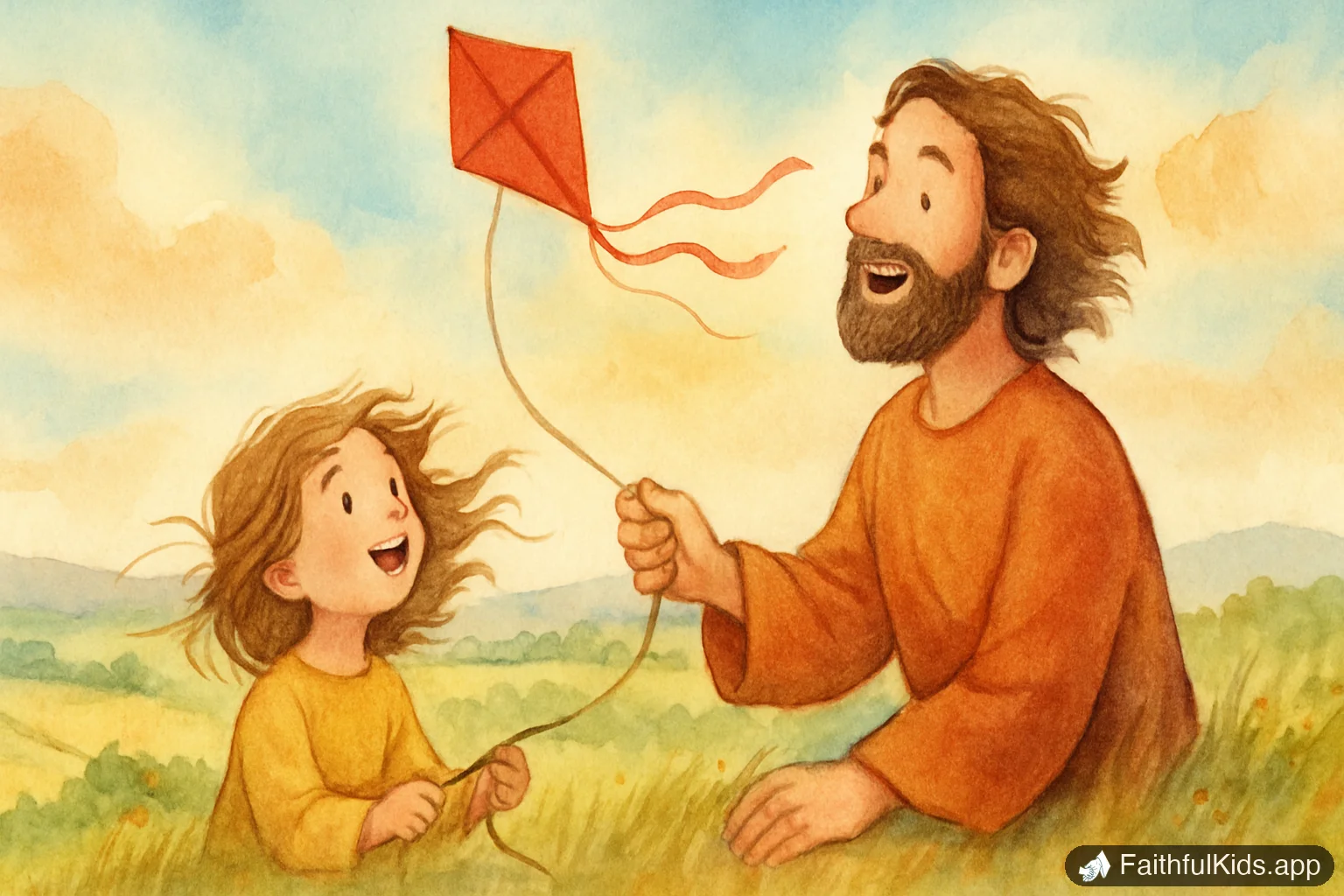
Wind. Jesus used this one Himself: "The wind blows wherever it pleases. You hear its sound, but you cannot tell where it comes from or where it is going" (John 3:8). Say to your child: "Can you see the wind? No. But can you see what the wind does -- leaves moving, kites flying, your hair blowing? That is like the Holy Spirit. You cannot see Him, but you can see what He does in people -- making them kinder, braver, and more loving."
Where it falls short: wind is a thing, not a person. Add: "But the Holy Spirit is not a force like wind. He is a Person -- He loves you, He can be sad, He can speak to your heart. Wind cannot love you. The Holy Spirit can."
Breath. In both Hebrew and Greek, the word for "Spirit" also means "breath." Try this: "Put your hand in front of your mouth and breathe out. You cannot see your breath, but it is what keeps you alive. The Holy Spirit is like God's breath -- His life inside us, keeping our faith alive."
Where it falls short: your breath is just part of you, but the Spirit is fully God, not a piece of God. Add: "The Holy Spirit is not just a part of God -- He IS God, all the way."
One to avoid or use carefully: "the Spirit is like your conscience." The Spirit does speak through our conscience, but He is far more than a feeling of guilt. If you use it, flip it: "Your conscience is like a little bell. The Holy Spirit is the One who can ring it -- and He does so much more than that."
How Do You Explain the Holy Spirit at Every Age?
Match the depth to the age -- the core sentence stays the same, but what you build on it grows.
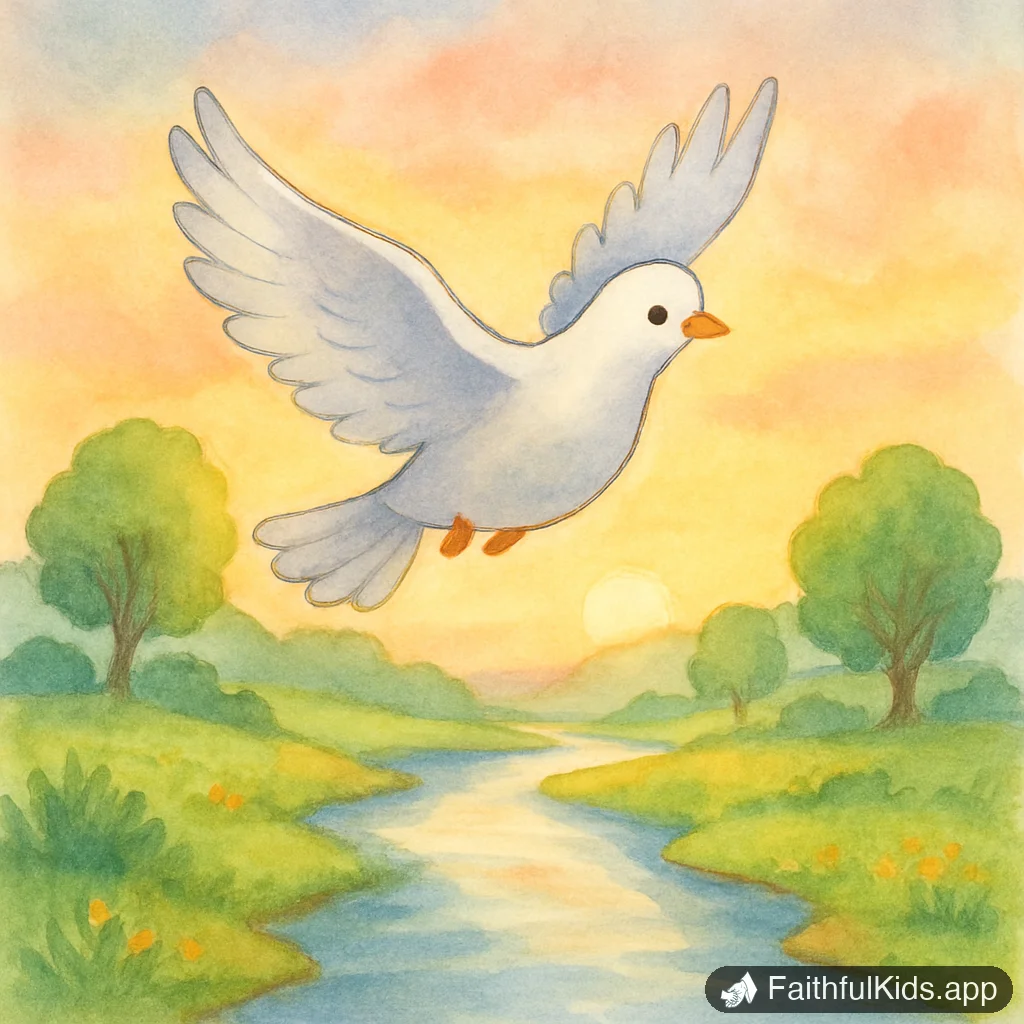
Ages 4-6: Keep it to one idea: "The Holy Spirit is God with you all the time. You cannot see Him, but He never leaves you, and He helps you be kind and brave." Skip the theology of persons and natures entirely. At this age, the felt truth -- I am never alone -- is the whole lesson. If they ask what He looks like, it is fine to say, "He does not have a body like us, but one time he appeared looking like a dove, and one time like little flames -- because God can show up however He wants."
Ages 7-10: Add what the Spirit does. Walk through the Helper jobs: He teaches (helps you understand the Bible), He reminds (brings Jesus' words to mind right when you need them), He comforts (like a warm blanket for your heart when you are sad), and He grows fruit in you. Read Galatians 5:22-23 together -- "the fruit of the Spirit is love, joy, peace" and the rest -- and ask, "Which fruit do you think the Spirit is growing in you right now?" This is also the age to tell the story of Pentecost, when the Spirit arrived like wind and fire and the church was born.
Ages 11+: Go deeper into the personal. Talk about 1 Corinthians 6:19 -- that a believer's body is "a temple of the Holy Spirit." Ask what it changes about daily decisions if God Himself lives in you. This is also the right age for honesty about experience: "How do I know the Spirit is real if I cannot feel Him?" Answer honestly -- sometimes we sense God's nearness, often we do not, and the Spirit's main work is not goosebumps but slow change. The proof is looking back over a year and noticing you are more patient than you used to be.
See what they get
Watch The Day of Pentecost Come Alive
The Day of Pentecost is one of 300+ short narrated video lessons your child will love. Watch the whole episode right here — in the app, every lesson ends with a fun quiz to check what they learned.
A real lesson from the app — watch the whole thing free.
What Questions Will Kids Ask About the Holy Spirit?
Kids ask wonderfully direct questions about the Spirit, so it helps to have answers ready.
"Is the Holy Spirit a ghost?" "No -- older Bibles said 'Holy Ghost,' but that word just meant 'spirit' back then. Ghosts in movies are spooky and scary. The Holy Spirit is God, and He is good, kind, and completely safe. He comes to comfort you, never to frighten you."
"How does the Holy Spirit fit inside me?" "He is not squeezed in there like a toy in a box. The Spirit does not take up space the way your lungs do. 'Inside you' means He is joined to you -- closer to you than anyone else could ever be, everywhere you go."
"Can the Holy Spirit hear what I'm thinking?" "Yes -- and that is good news, because it means you can pray without even saying words out loud. When you do not know what to pray, the Spirit even helps you pray (Romans 8:26)."
"Why can't I feel Him?" "Sometimes people feel warm or peaceful or brave, and that is the Spirit. But most of the time He works quietly, like a seed growing underground. You do not feel a seed growing -- you just notice one day that there is a plant."
"Does the Holy Spirit only live in grown-ups?" "No. The Holy Spirit lives in everyone who believes in Jesus -- and Jesus said kids are some of His favorite people to be close to."
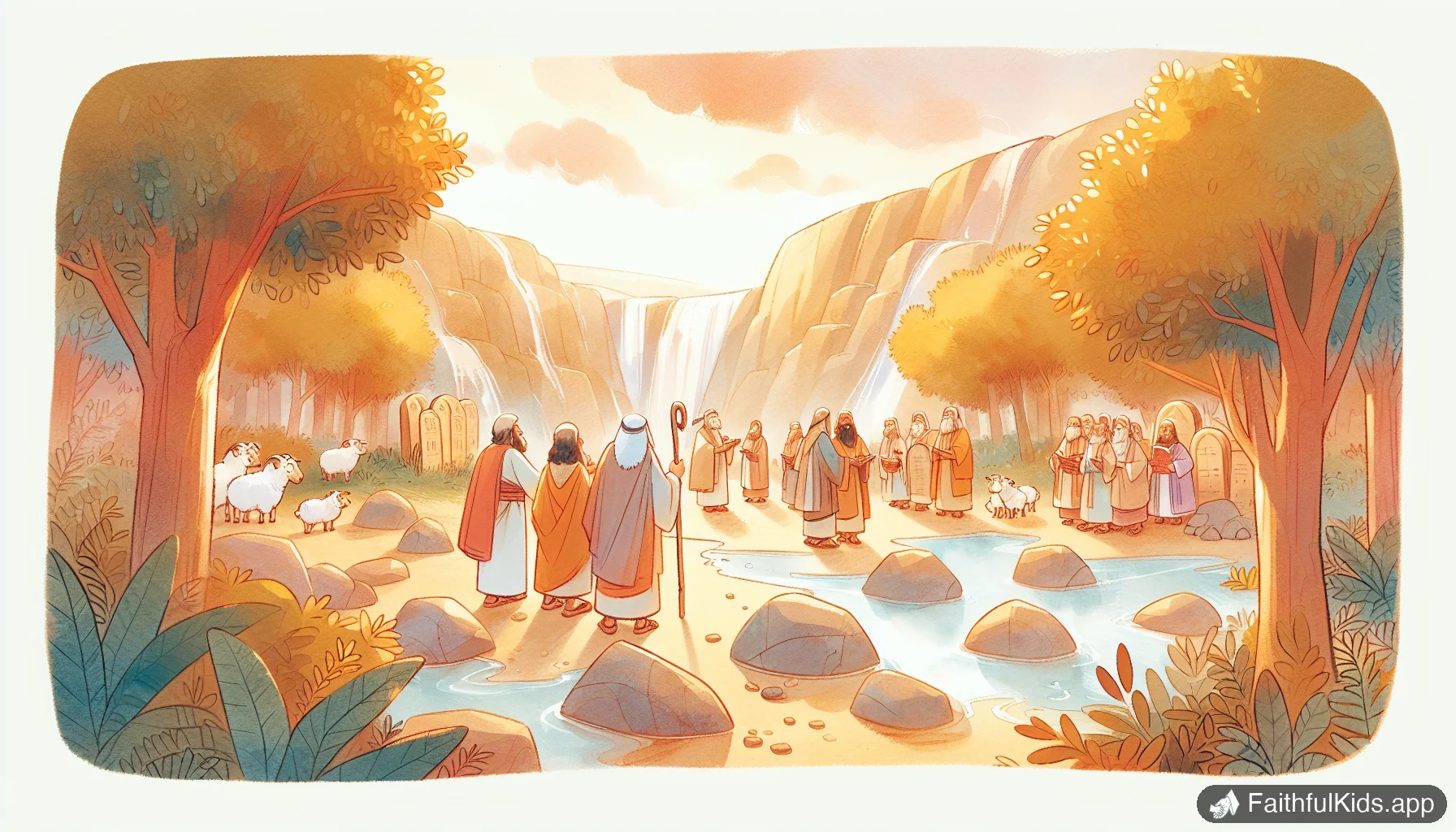
Read the story of Pentecost in Acts 2:1-21 -- it is the Holy Spirit's grand entrance, and kids love it. Wind roars through the house, what look like small flames rest on each believer, and suddenly ordinary fishermen are boldly telling everyone about Jesus in languages they never learned. Three thousand people believe in one day.
As you read, point out the before-and-after: Peter had been so afraid that he denied even knowing Jesus. After the Spirit came, that same Peter stood up in front of a huge crowd and preached without fear. Ask your child: "What changed Peter? What do you think the Holy Spirit could make you brave enough to do?" We have a kid-level retelling at the Day of Pentecost for kids if you want a version younger children can follow easily -- and the video lessons at Faithful Kids walk through the Pentecost story with a quiz that helps it stick.
What Should You NOT Say About the Holy Spirit?
A few well-meaning phrases create confusion or fear -- here is what to skip.
Don't say "the Holy Ghost" without explaining it. For a modern kid, "ghost" means haunted houses. If your church tradition uses the term, explain immediately that it is an old-fashioned word for spirit, not something spooky.
Don't describe the Spirit as "it" or "God's power," full stop. The Spirit is a He, a Person who can be grieved (Ephesians 4:30), who teaches and comforts. "It" turns Him into electricity.
Don't say "the Holy Spirit is watching to catch you being bad." This weaponizes the Spirit into a surveillance camera and teaches dread instead of love. The Spirit convicts us about sin, yes -- but the way a good coach corrects, because He is for us.
Don't promise specific feelings. "You will feel tingly/warm/amazing" sets kids up to doubt their faith on the days they feel nothing. Emphasize trust over feelings.
Don't pretend you have it all figured out. "The Holy Spirit is a wonderful mystery, and I am still learning too" is a perfectly faithful sentence -- and it invites your child into lifelong curiosity instead of shutting the door.
Frequently Asked Questions
What is the Holy Spirit in simple words for a child?
The Holy Spirit is God Himself, who comes to live with and inside everyone who believes in Jesus. He is our Helper -- He teaches us, comforts us, reminds us of what Jesus said, and helps us grow more loving, joyful, and kind. You cannot see Him, but He never leaves.
At what age can a child understand the Holy Spirit?
Around ages 4-5, children can grasp the basic truth that God is with them all the time even though they cannot see Him. Ages 7-10 can understand what the Spirit does -- helping, teaching, comforting, growing good "fruit" in us. Deeper questions about how the Spirit is a Person usually land around 11 and up.
Is the Holy Spirit the same as God?
Yes. The Bible teaches one God in three Persons -- the Father, the Son, and the Holy Spirit. The Spirit is not a lesser part of God or just God's energy; He is fully God, present with believers everywhere at once.
How do I explain the Holy Spirit without scaring my child?
Avoid the word "ghost" (or explain it right away), and emphasize that the Spirit is a kind Helper whom Jesus sent so we would never be alone. Frame Him as a comforter, not a watcher. Most fear comes from spooky vocabulary, not from the actual biblical picture of the Spirit.
What does the Holy Spirit do for kids specifically?
The same things He does for adults, at kid scale: He helps them know right from wrong, gives courage to do hard things (like telling the truth or befriending a lonely classmate), comforts them when they are sad or scared, and helps them understand Bible stories when they hear them.
What Bible verses about the Holy Spirit are best for children?
Start with John 14:26 (the Spirit as Helper and Teacher), Galatians 5:22-23 (the fruit of the Spirit), and Acts 2:1-4 (Pentecost). These three cover who the Spirit is, what He grows in us, and the most vivid story about Him -- all in language kids can handle.
🌙 Free: The Bedtime Bible Kit
Seven nights of five-minute stories — a story, a prayer, and one question to whisper about.
Free printable + a few helpful emails. Unsubscribe anytime.