Ages 5+·8 min read··By Faithful Kids Team·Updated November 2, 2026
Samuel stands at one of the biggest turning points in the whole Bible. He was the last of the judges and the first of the great prophets, the man who closed the era of Deborah, Gideon and Samson, and personally anointed Israel's first two kings. For kids, though, his story starts in the best possible place: he's the boy who heard God's voice in the night.
You'll find his life in 1 Samuel 1-16, with his calling in chapter 3.
An Answered Prayer With a Promise (1 Samuel 1-2)
Samuel's story begins with his mother. Hannah had no children, and in that culture her empty arms brought her years of grief and mockery. At the tabernacle in Shiloh she prayed so intensely, lips moving, no sound, that old Eli the priest thought she was drunk. She wasn't. She was making a promise: God, if you give me a son, I will give him back to you for his whole life.
God answered. She named the boy Samuel, which sounds like the Hebrew for "heard by God"; and she kept her promise completely. When Samuel was still a young boy, Hannah brought him to Shiloh to live and serve with Eli at the house of the Lord. Her prayer of praise in 1 Samuel 2 is so magnificent that Mary's song in Luke 1 echoes it a thousand years later. (We tell her side of the story in Hannah's Prayer.)
Key lesson for kids: Samuel's whole life was an answered prayer. Before he ever heard God's voice, somebody had prayed for him by name; which is true of more kids than know it.
"Speak, Lord, Your Servant Is Listening" (1 Samuel 3)
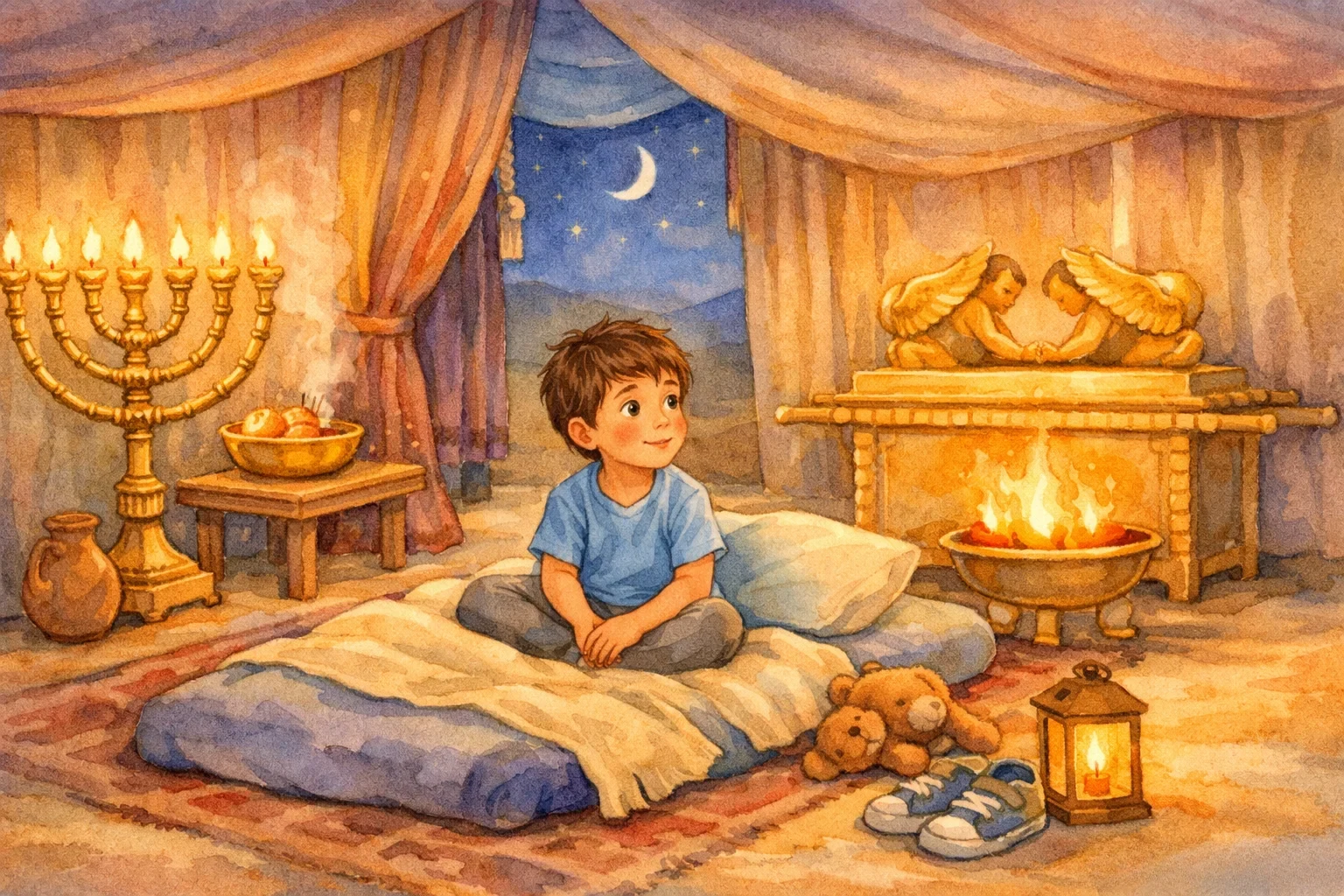
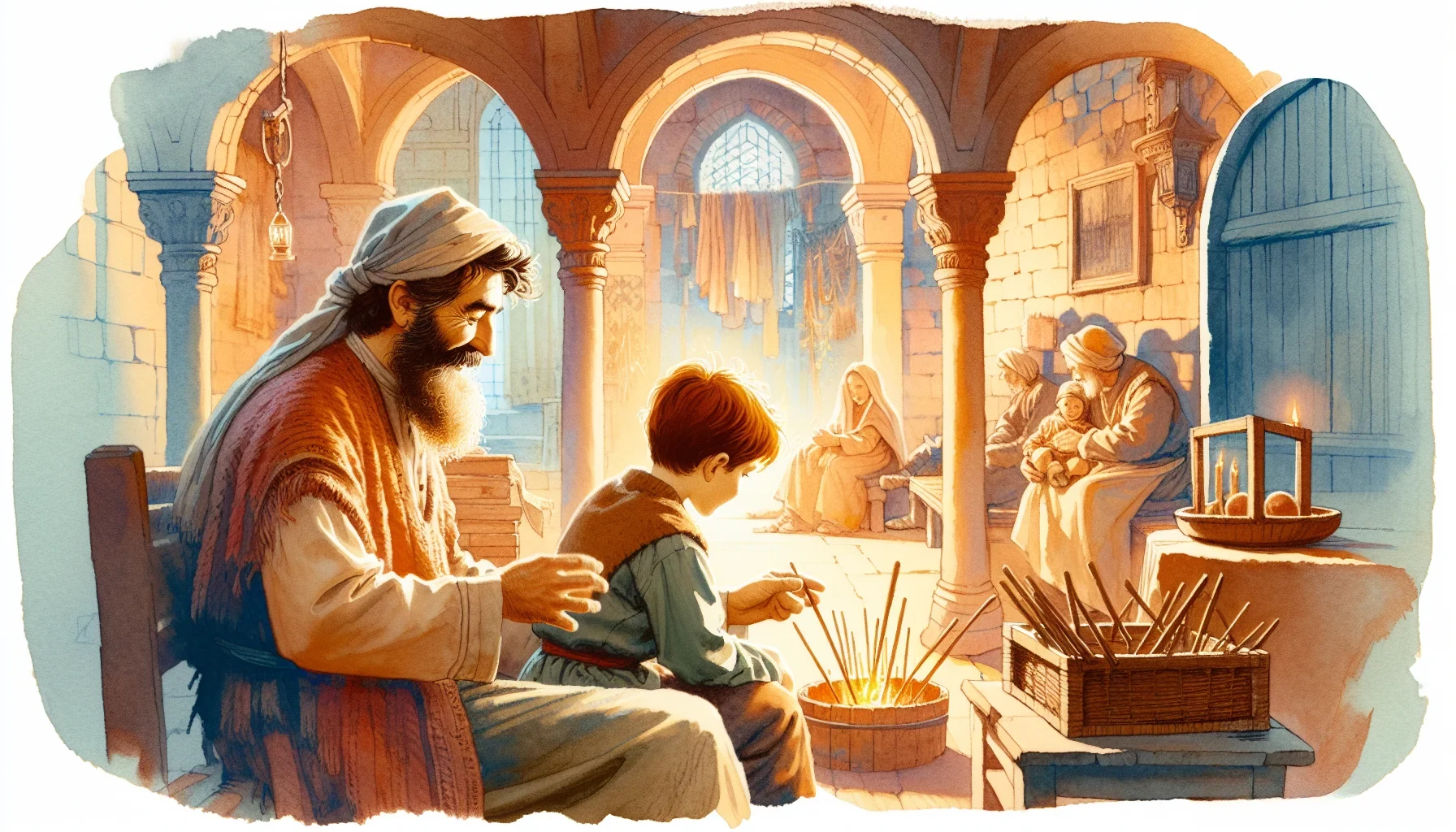
One night, the boy Samuel was lying down in the house of the Lord when a voice called his name. He ran to Eli: "Here I am; you called me." Eli hadn't. It happened again. And again. The text explains, kindly, that "Samuel did not yet know the Lord: The word of the Lord had not yet been revealed to him" (1 Samuel 3:7).
After the third time, old Eli understood. He told Samuel: if the voice calls again, say, "Speak, Lord, for your servant is listening."
The voice called, "Samuel! Samuel!" and the boy answered exactly that. God gave him his first message that night (a hard one, about judgment on Eli's own corrupt sons), and Samuel grew up with a reputation summarized in one of the Bible's best sentences about anyone: "The Lord was with Samuel as he grew up, and he let none of Samuel's words fall to the ground" (1 Samuel 3:19). We retell this night in God Calls Samuel.
Key lesson for kids: God speaks to kids. Samuel was a child when God called him by name; age isn't a qualification God waits for. The right answer hasn't changed either: "Speak, Lord, I'm listening."
The Last Judge (1 Samuel 7)
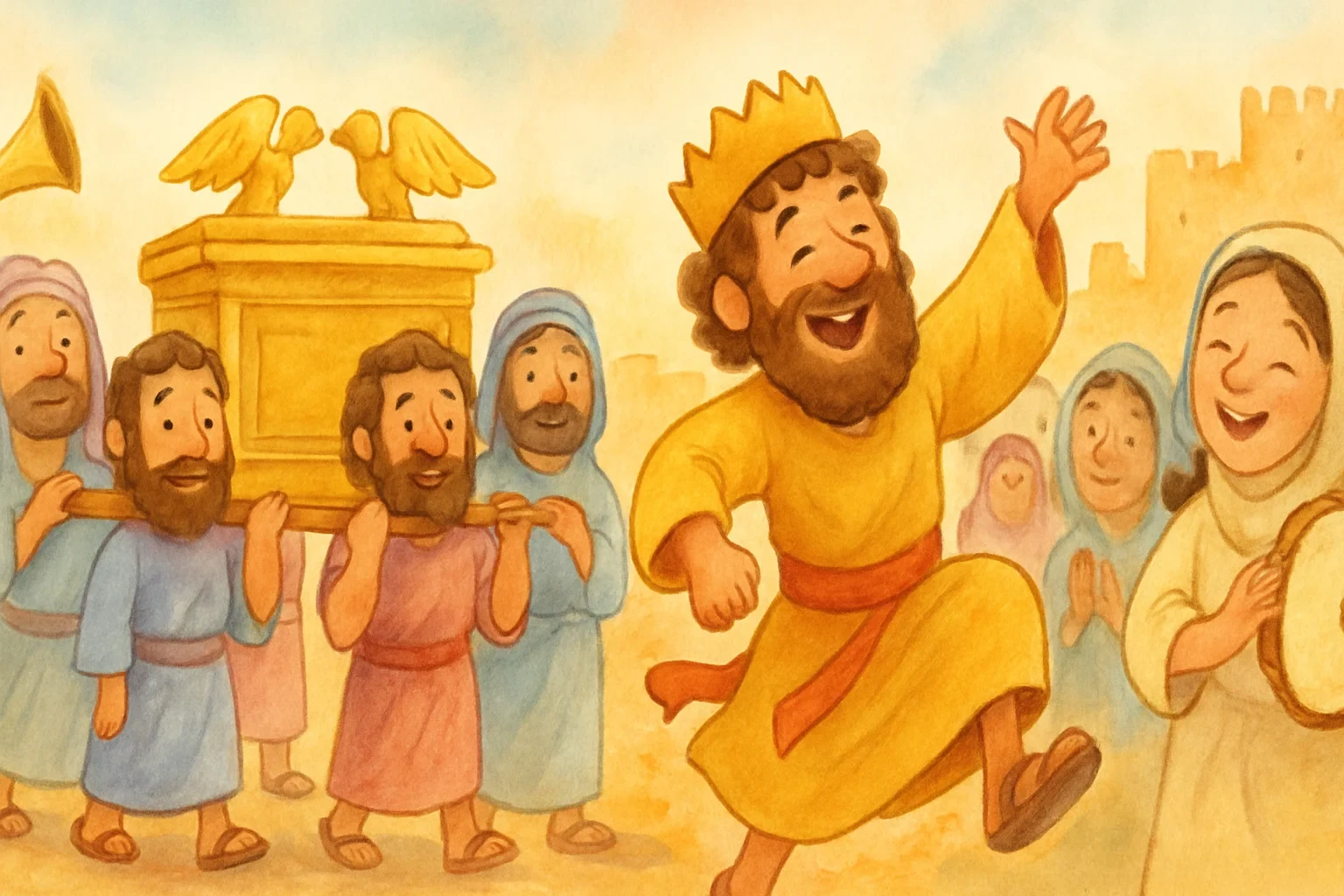
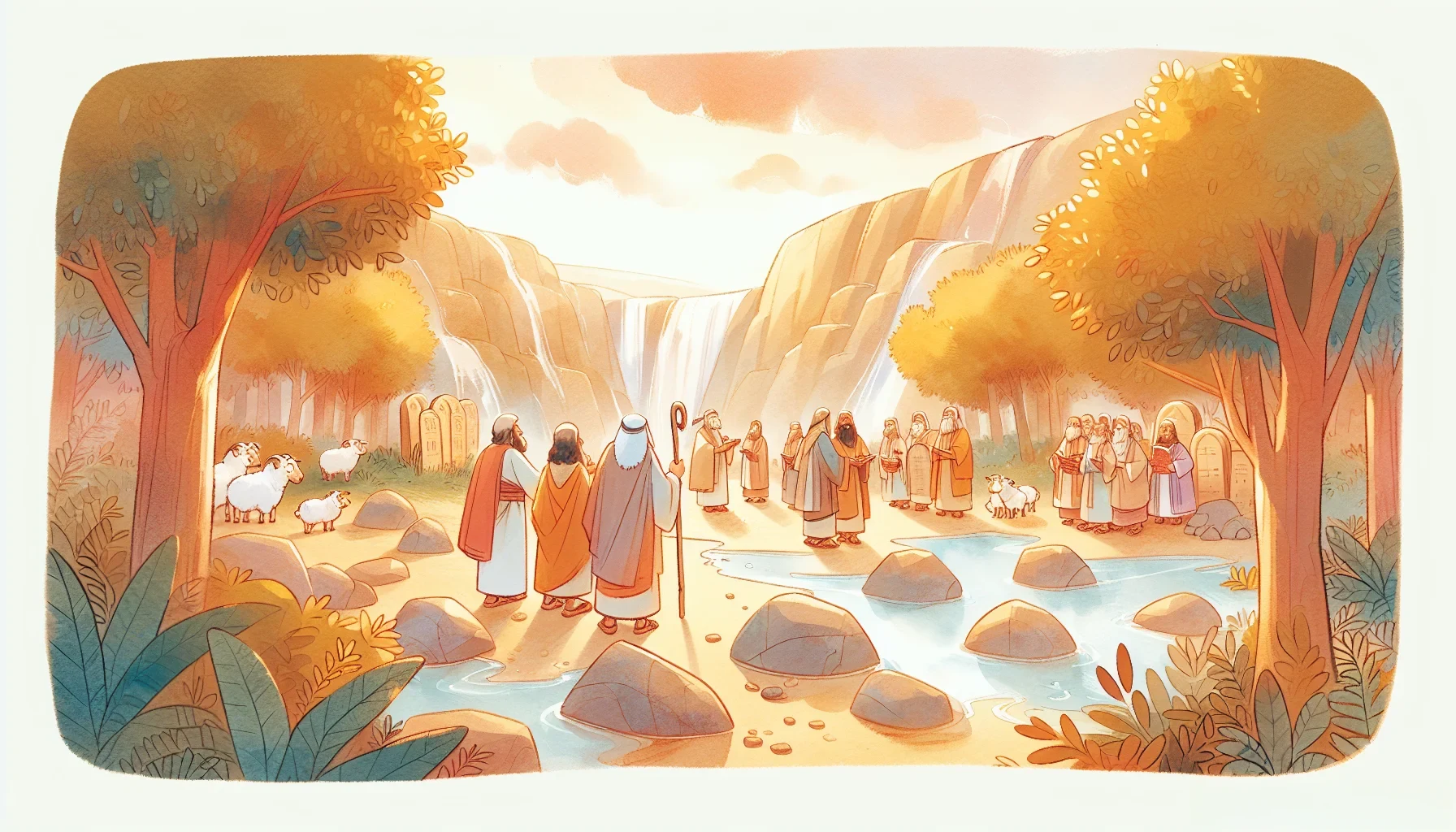
Samuel grew into Israel's leader through dark years; the Philistines even captured the ark of God for a time. As judge, he called the nation to put away their idols and return to the Lord with all their hearts, and at Mizpah God gave Israel a thundering victory over the Philistines.
Samuel set up a memorial stone and named it Ebenezer, "stone of help"; saying, "Thus far the Lord has helped us" (1 Samuel 7:12). Every year he traveled a circuit from town to town, judging Israel honestly. No bribes, no scandals; when he retired, he could ask the whole nation whom he had ever cheated, and no one could name a thing (1 Samuel 12:3-4).
Key lesson for kids: "Thus far the Lord has helped us" is a habit, not just a verse; stopping to mark the moments God came through, so you remember them in the next hard stretch.
"Give Us a King!" (1 Samuel 8-10)
When Samuel grew old, the elders of Israel came with a demand that broke his heart: appoint a king over us, "such as all the other nations have" (1 Samuel 8:5). Samuel warned them exactly what kings would cost: their sons for his armies, their harvests for his table, their freedom for his projects. The people refused to listen.
God told Samuel something important: "It is not you they have rejected, but they have rejected me as their king" (1 Samuel 8:7). Give them what they ask.
So Samuel anointed Saul, tall, impressive, the people's kind of king (1 Samuel 10). We tell that story in Saul: The First King.
Key lesson for kids: Sometimes God lets people have what they insist on, even when it isn't best; and the consequences become the lesson. Wanting what "everyone else has" is exactly how Israel got into trouble.
See what they get
Watch a Real Lesson From the App
Press play on Daniel in the Lions Den, a complete lesson exactly as your child sees it. 300+ episodes cover the whole Bible in order, each ending in a fun quiz to check what they learned.
A real lesson from the app, watch the whole thing free.
The Heart, Not the Height (1 Samuel 15-16)
Saul started well and ended badly; he kept obeying God halfway, and his disobedience finally cost him the kingdom. It was Samuel who had to deliver the verdict, with one of the Old Testament's most quoted lines: "To obey is better than sacrifice" (1 Samuel 15:22).
Then God sent the old prophet to Bethlehem, to the house of Jesse, to anoint the next king. Seven impressive sons passed by, and God said no seven times, teaching Samuel the sentence every kid should memorize: "People look at the outward appearance, but the Lord looks at the heart" (1 Samuel 16:7).
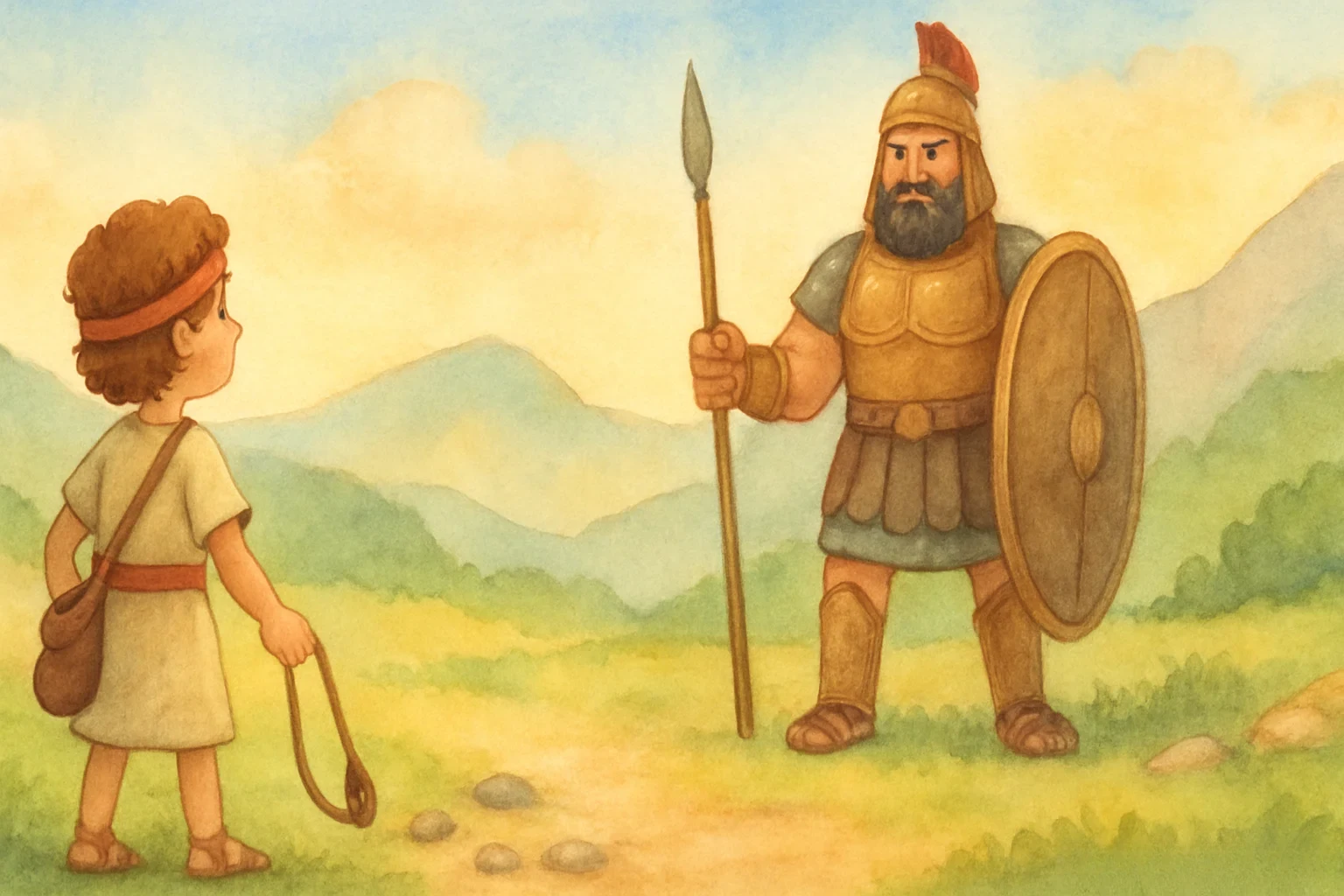
The eighth son was out watching sheep. Samuel anointed the shepherd boy, David, and the rest of the Bible flows from that moment.
Key lesson for kids: God's measuring tape is different from everyone else's. Samuel himself almost picked the tall one, again. God looks at the heart, which means the thing most worth working on is invisible.
🕯️ Free: 25 Days of Advent Bible Readings
December 1 to 25, one short reading a night, from the first promise to the manger. Printable for the fridge.
Free printable + a few helpful emails. Unsubscribe anytime.
Why Samuel Matters
He's the hinge of the Old Testament; the last judge, the first great prophet after Moses, and the king-maker who anointed both Saul and David.
His calling proves God speaks to children. 1 Samuel 3 has given generations of kids their first prayer: "Speak, Lord, for your servant is listening."
His integrity was total. From boyhood in Shiloh to his farewell speech, no one could accuse him of a single dishonest act.
His mother's promise framed his life. Hannah asked, promised, and kept her word; the whole story is a family story. Quiz the era with our 1 Samuel Bible trivia, and find Shiloh and Mizpah on the free map of ancient Israel.
Watch on Faithful Kids
Your kids can watch Samuel's story, the voice in the night, the Ebenezer stone, the anointing of David, in short animated episodes on Faithful Kids, about two minutes each with a quiz and reflection after every story.
The Bible says only "the boy Samuel" (1 Samuel 3:1). The ancient historian Josephus guessed twelve, and most teachers picture somewhere around that age. What the text emphasizes isn't his exact age but his inexperience; he "did not yet know the Lord" (3:7) and still needed Eli to explain what was happening. God called a child who didn't even recognize the call yet.
Was Samuel a judge or a prophet?
Both, and a priest-like figure too, since he offered sacrifices. He's the last judge (1 Samuel 7:15 says he "continued as Israel's leader all the days of his life"), and Acts 3:24 counts him as the first in the line of the prophets. He stands exactly at the seam between the era of the judges and the era of kings and prophets.
Why was asking for a king wrong?
The problem wasn't kingship itself; Deuteronomy 17 had already made provision for a king. It was the reason: Israel wanted to be "such as all the other nations" (1 Samuel 8:5, 20), with a visible warrior-king instead of trusting the invisible God as their true king. God told Samuel plainly, "they have rejected me" (8:7). God granted the request and then worked through it; David's royal line ultimately leads to Jesus.
What is an Ebenezer?
It's the memorial stone Samuel raised after God's victory at Mizpah; Hebrew for "stone of help"; with the explanation, "Thus far the Lord has helped us" (1 Samuel 7:12). That's why the old hymn "Come Thou Fount" sings "here I raise my Ebenezer": it means marking a moment to remember God's help, which is a habit families can copy with a journal, a jar of notes, or a yearly tradition.
🕯️ Free: 25 Days of Advent Bible Readings
December 1 to 25, one short reading a night, from the first promise to the manger. Printable for the fridge.
Free printable + a few helpful emails. Unsubscribe anytime.