Blog/12 Bible Review Games for Sunday School That Kids Beg For
Guide
12 Bible Review Games for Sunday School That Kids Beg For
Ages 5+·8 min read··By Faithful Kids Team·Updated August 16, 2026
The best Bible review games for Sunday school turn your lesson content into questions and make answering them the whole game -- here are 12 formats that do exactly that, from zero-prep quick rounds to full-class tournaments. Every game below reviews what you actually taught, because review is where a Sunday morning lesson becomes a Wednesday memory.
Here's the teaching math that makes review games worth your time: kids forget most of a lesson within days unless it's retrieved -- pulled back out of their heads. A review game is retrieval practice wearing a costume. The kids think they're playing; their brains are re-filing the story where it can be found again.
For every game, you need one thing: a question list. Write 10-15 questions per lesson as you prep (or pull ready-made ones from our Bible trivia for kids collection, which sorts questions by difficulty). Then plug them into any format below.
Zero-Prep Review Games (Start in 60 Seconds)
1. Trash-ketball
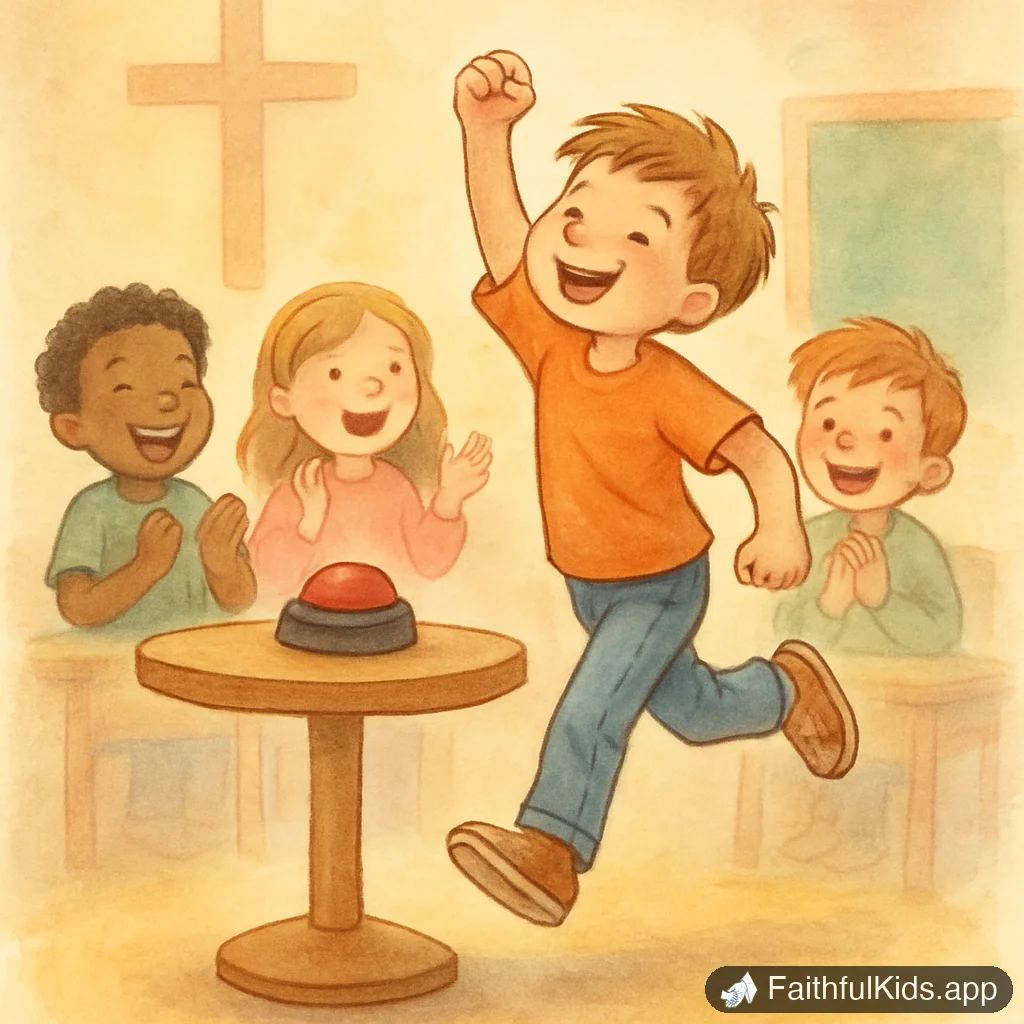
Ask a review question; a correct answer earns a shot at the trash can with a paper ball. One point for the answer, one bonus point for the basket. This is the most reliable review game in children's ministry -- the answer matters, but the shot keeps the whole room watching.
2. Four Corners Quiz
Label the room's corners A, B, C, D. Ask multiple-choice questions about the lesson; kids walk to the corner of their answer. Everyone answers every question with their whole body, nobody is ever eliminated, and you can see at a glance exactly what the class knows.
3. True/False Run
One wall is TRUE, the opposite wall is FALSE. Make statements about the story ("Daniel prayed three times a day" -- true; "David wore Saul's armor into battle" -- false) and kids run to their answer. Perfect for burning energy in the last five minutes while still quizzing content.
4. Hot Seat
One child sits facing the class, back to the board. You write a story word behind them (GOLIATH, MANGER, ARK) and the class gives clues without saying the word. The clue-givers do more reviewing than the guesser -- which is the trick of the game.
5. Sword Drill Showdown
Call out references from today's lesson and kids race to find them; the finder reads the verse aloud. Reviews the passage and builds Bible navigation at the same time. Handicap strong readers by having them wait three seconds after "go."
Low-Prep Team Games (5-10 Minutes of Setup)
6. Bible Jeopardy
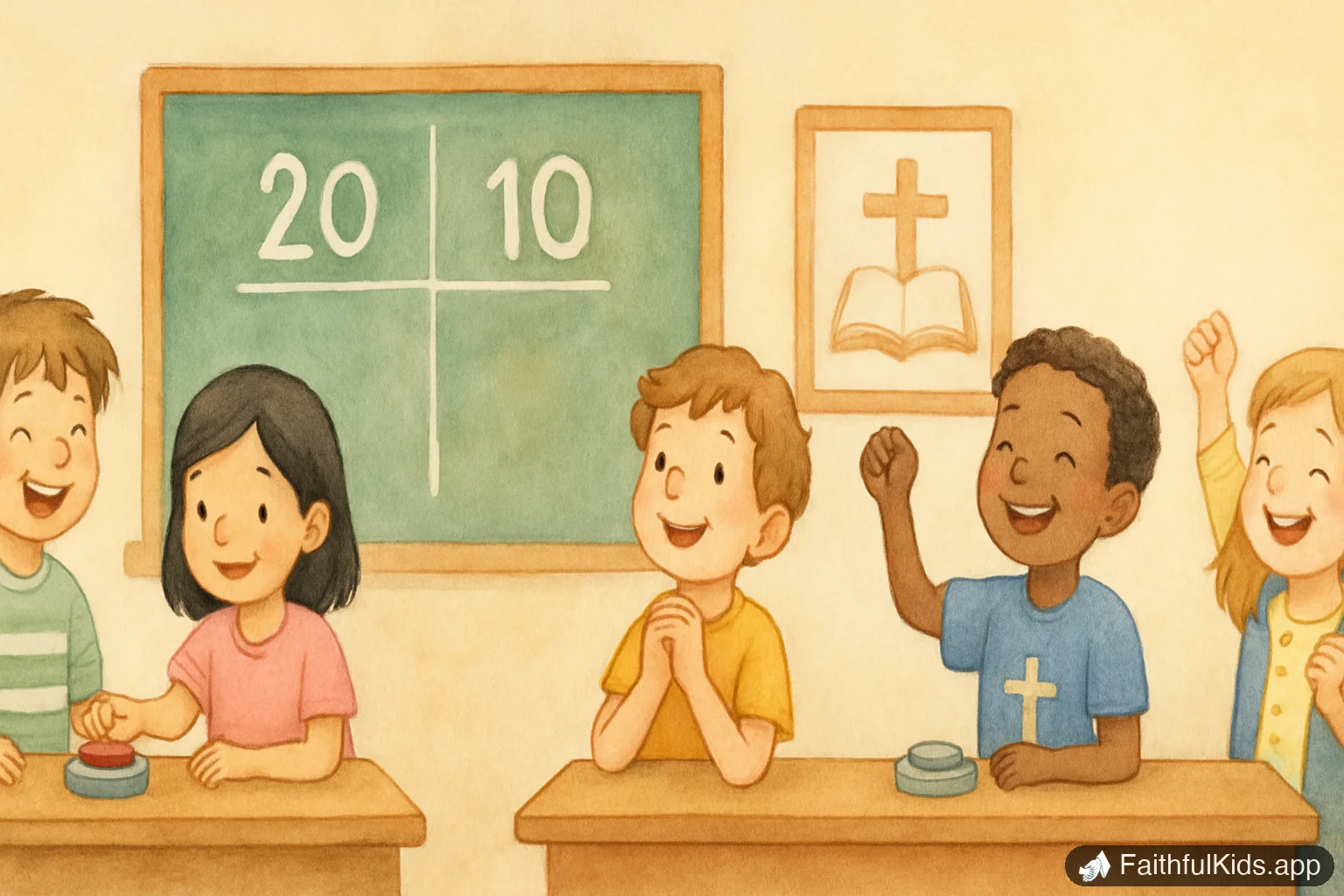
Draw a grid on the board: 3-4 categories from recent lessons ("People," "Places," "What Happened Next," "Memory Verses") with 100-400 point rows. Teams pick a square, hear the question, and confer before answering. The confer step is the gold -- kids teaching kids the answer is the deepest review in this list.
7. Tic-Tac-Toe Review
Draw a tic-tac-toe grid; two teams earn the right to place an X or O by answering a review question correctly. A miss passes the question to the other team. Fast, familiar, and self-balancing: the losing team gets the steal attempts.
8. Balloon Pop Questions
Write question numbers on slips inside balloons before class. Kids pop a balloon (stomp or sit), find the number, and you read that question. Identical quiz content to a worksheet -- unrecognizably more exciting. Best saved for review of a whole unit.
9. Beat the Teacher
Class versus you. Correct class answers score a point for them; a miss scores for you -- and you play it up shamelessly ("Yes! Nobody remembers the shepherds!"). Kids will fight to prove you wrong, which means they'll fight to remember the lesson. End with the class winning by one.
10. Memory Verse Relay
Write the verse's words on separate cards, one shuffled set per team. Teams relay-race to bring one card at a time to their wall and assemble the verse in order. First correct verse wins -- and every runner has now read the verse a dozen times.
Bigger Formats (For Units and Special Sundays)
11. Quiz Tournament Bracket
For reviewing a whole quarter: split into teams of 2-3, run short head-to-head quiz rounds, and advance winners on a paper bracket. Losing teams become "lifelines" that advancing teams can consult once per round, so nobody disengages. Our family Bible trivia night guide has scoring structures and question sets that adapt directly to a classroom bracket.
12. Video Quiz Station
Rewatch the story, then quiz on it. Play a short animated version of the lesson's story and run the questions immediately after -- the second exposure plus instant retrieval is a memory one-two punch. The video lessons at Faithful Kids come with a built-in quiz after every story, so this station runs itself: a volunteer presses play, kids answer as a team, and you get a ready-made review round with zero question-writing.
If small hands need something to do while you read, the free Good Samaritan coloring page is made for exactly that.
See what they get
Watch a Real Lesson From the App
Press play on Noah and the Great Flood — a complete lesson exactly as your child sees it. 300+ episodes cover the whole Bible in order, each ending in a fun quiz to check what they learned.
A real lesson from the app — watch the whole thing free.
How Do You Write Good Review Questions?
Write questions at three levels -- recall, understanding, and application -- and use all three in every game. A question list with only recall ("Who fought Goliath?") reviews names; adding the other two levels reviews meaning:
Level
What it asks
Example
Recall
Who/what/where
"What did David refuse to wear into battle?"
Understanding
Why/how
"Why wasn't David afraid of Goliath?"
Application
So what
"What's a 'giant' a kid your age might face with God's help?"
A practical recipe per lesson: six recall questions, four understanding, two application. Recall questions keep the game moving and let younger kids score; understanding and application questions are where the lesson becomes theirs. For pre-written questions across dozens of stories, the sorted sets in Bible trivia for kids will save you an hour a month.
Two rules that keep review games kind:
No elimination games. The child who's out after question two is the child who needed review most. Every format above keeps everyone playing.
Team answers beat solo answers for kids under 10. Conferring removes the fear of being wrong alone -- and the conference itself is review.
How Often Should You Play Review Games?
Play a short review game every single week, and a big-format game at the end of every unit. The weekly game reviews today's lesson in the last 5-10 minutes of class; the unit game (Jeopardy, balloon pop, tournament) resurfaces the last 4-6 lessons before you move on. Spaced retrieval -- today, next week, end of unit -- is the difference between kids who "did the lesson" and kids who can still tell you the story at Christmas.
A useful habit: start each week's game with two questions from last week before today's questions. It costs 60 seconds and quietly builds the spaced repetition that makes stories permanent. If you want more game formats beyond review -- icebreakers, energy-burners, memory verse games -- our full list of Sunday school games for kids covers the rest of the morning, and Bible games for kids has options families can play at home.
The same questions live in our Bible trivia game if you would rather tap than print.
If you need something with no prep at all, the Bible word search plays on a phone and prints on one sheet.
Youth leaders: the master list of youth group games is sorted by how many students you actually have, not by how many the game wants.
Frequently Asked Questions
What is the best Bible review game for a small class of 3-5 kids?
Trash-ketball, hot seat, and beat the teacher work best for tiny classes because they need no teams. Beat the teacher is the standout: with few kids, every child answers every question, and the class-versus-you framing creates team spirit that a 4-person room can't generate on its own.
How do I run review games with non-readers in the class?
Use games where questions are read aloud and answers are physical: four corners, true/false run, trash-ketball, and balloon pop all work with zero reading. For team games, pair each non-reader with a reader and let the non-reader deliver the team's answer -- they get the spotlight without the reading burden.
How many questions do I need for a 10-minute review game?
Prepare 12-15 questions for a 10-minute game -- fast formats like true/false run burn 1-2 questions per minute. It's always better to have leftover questions than to improvise mid-game, and unused questions become next week's "remember last lesson?" openers.
How do I keep competitive kids from ruining review games?
Rotate scoring so points come from more than knowledge: bonus points for teamwork, for a great explanation, or for the trash-can shot separate the "smartest kid wins everything" dynamic. Team-based answers, no-elimination formats, and occasionally scoring the losing team's sportsmanship keep the temperature down while the review continues.
Are review games appropriate for preschoolers?
Yes, in simplified form: true/false run becomes "yes/no jump," four corners becomes two choices instead of four, and questions stay pure recall ("Did Noah build a boat or a car?"). Keep preschool review to 5 minutes and make every question answerable -- for ages 3-5, the win is saying the story facts out loud, not competition.
Where can I find ready-made questions instead of writing my own?
Use pre-sorted question banks and pull the difficulty band that matches your class -- our Bible trivia for kids set is organized Easy (5-7), Medium (8-11), and Hard (12+), with answers included. Video lessons with built-in quizzes are the other shortcut, since the questions arrive already matched to the story kids just watched.
🌙 Free: The Bedtime Bible Kit
Seven nights of five-minute stories — a story, a prayer, and one question to whisper about.
Free printable + a few helpful emails. Unsubscribe anytime.