Blog/15 Sunday School Opening Activities Kids Actually Love
Guide
15 Sunday School Opening Activities Kids Actually Love
Ages 5+·10 min read··By Faithful Kids Team·Updated August 16, 2026
The best Sunday school opening activities are short, repeatable routines -- a gathering game, a welcome question, a song, or a creative attendance ritual -- that fill the first 10 minutes while kids trickle in. Below are 15 field-tested openers, organized into four categories, that work for ages 4-12 with zero prep or nearly zero prep.
Here's the problem every Sunday school teacher knows: kids don't arrive at the same time. The first child shows up at 9:25, the last one wanders in at 9:47, and if you start the lesson too early, you'll teach it twice. The first 10 minutes need something that latecomers can join mid-stream, that early birds don't get bored of, and that quietly shifts kids from "running down the hallway" energy to "ready to listen" energy.
These 15 openers do exactly that.
Why Do the First 10 Minutes Matter So Much?
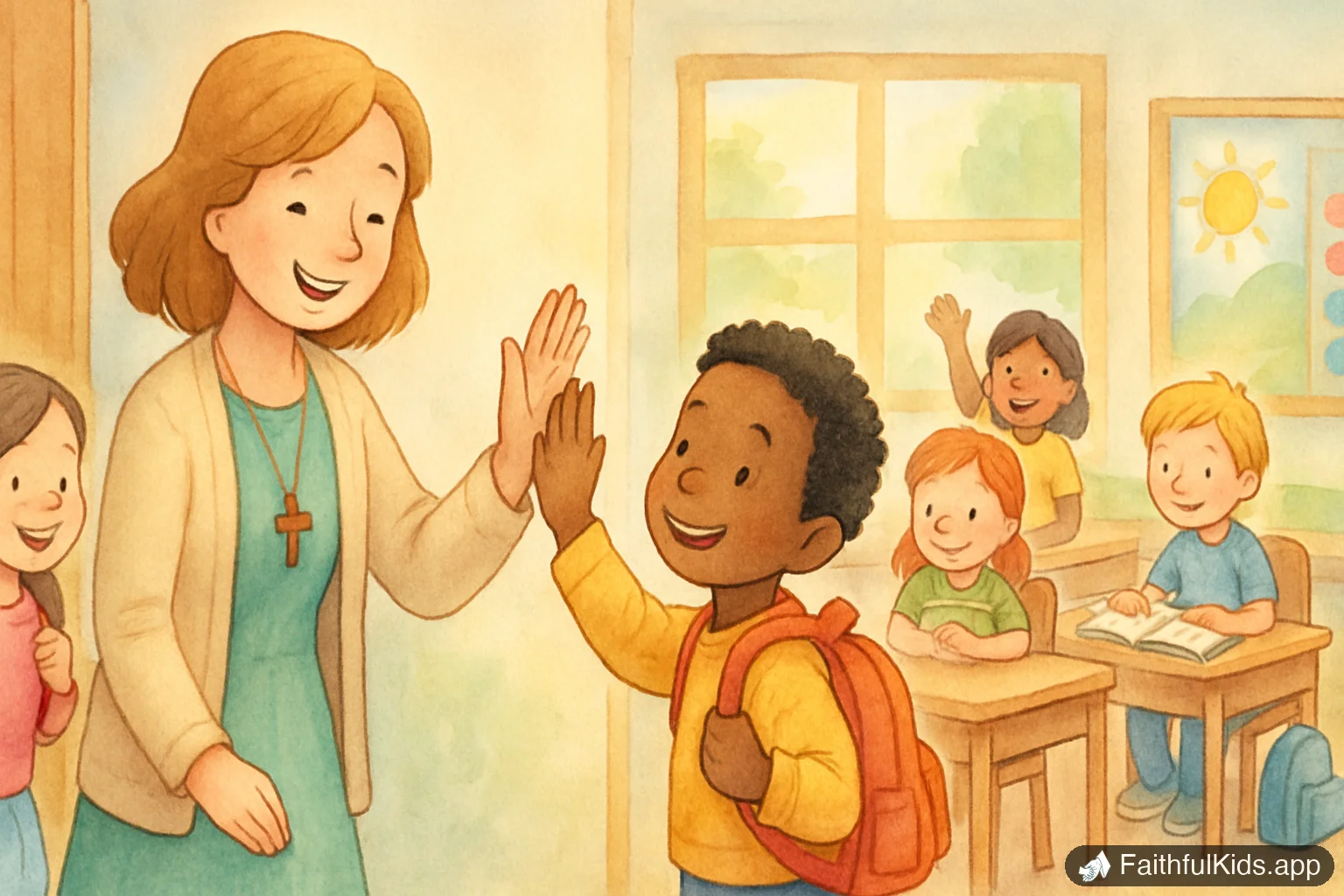
The opening minutes set the emotional temperature for the entire class -- kids decide within moments whether this room feels safe, fun, and worth paying attention to. A child who is greeted by name and immediately handed something to do is far more likely to engage with the lesson than one who stands awkwardly by the door. Openers also serve a practical purpose: they absorb the chaos of staggered arrivals so your actual lesson starts with everyone present and settled.
Gathering Activities (1-5)
These are join-anytime activities that early arrivals can start and latecomers can slide into.
1. The Question of the Day Board
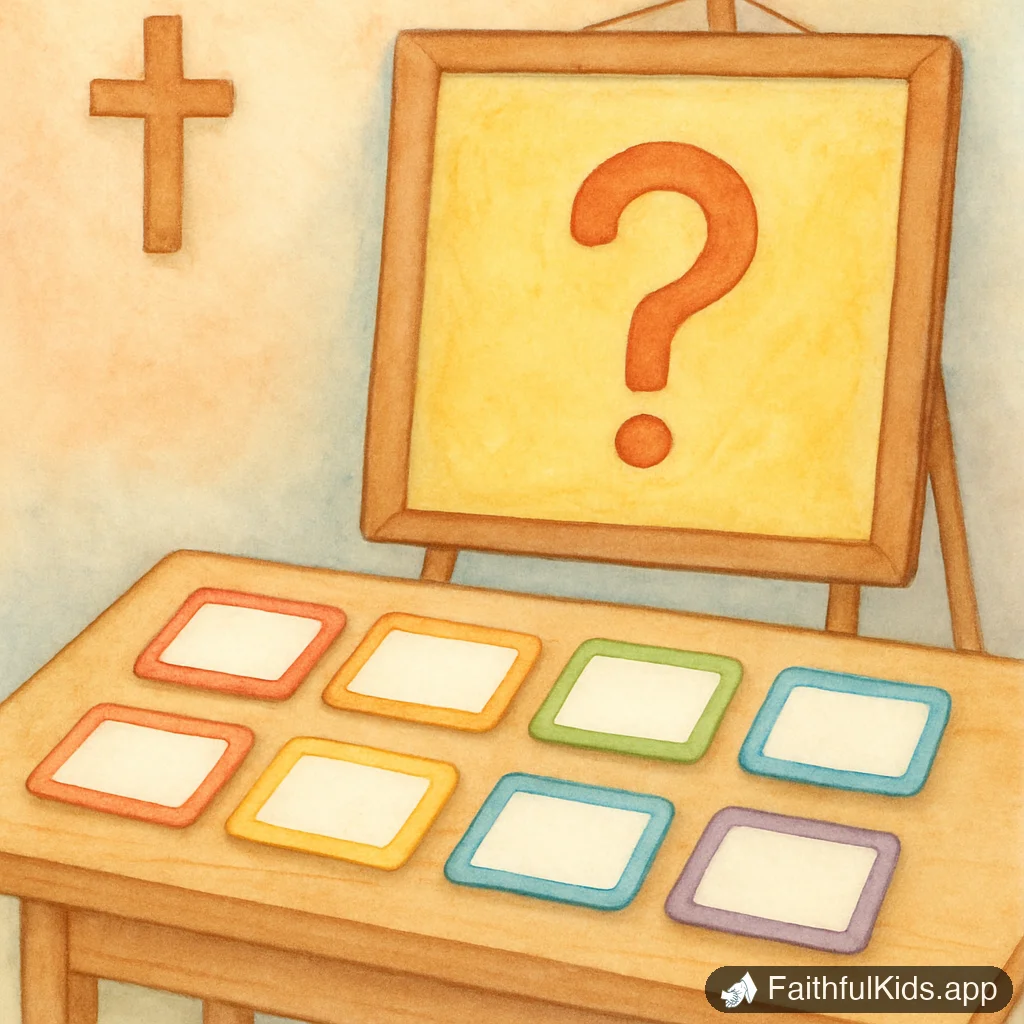
Write one question on a whiteboard before kids arrive -- "What's the best thing that happened this week?" or "If you could ask Noah one question, what would it be?" Kids write or draw their answer on a sticky note and post it on the board. Read a few aloud when class starts. It takes 30 seconds of prep and gives you instant conversation material.
2. Bible Story Puzzle Table
Set out a simple jigsaw puzzle (25-100 pieces depending on age) featuring a Bible story on a corner table. Kids work on it together as they arrive, and the same puzzle carries over week to week until it's done. The shared, slow-burn project builds a little team culture -- kids genuinely cheer when the last piece goes in.
3. Build the Story
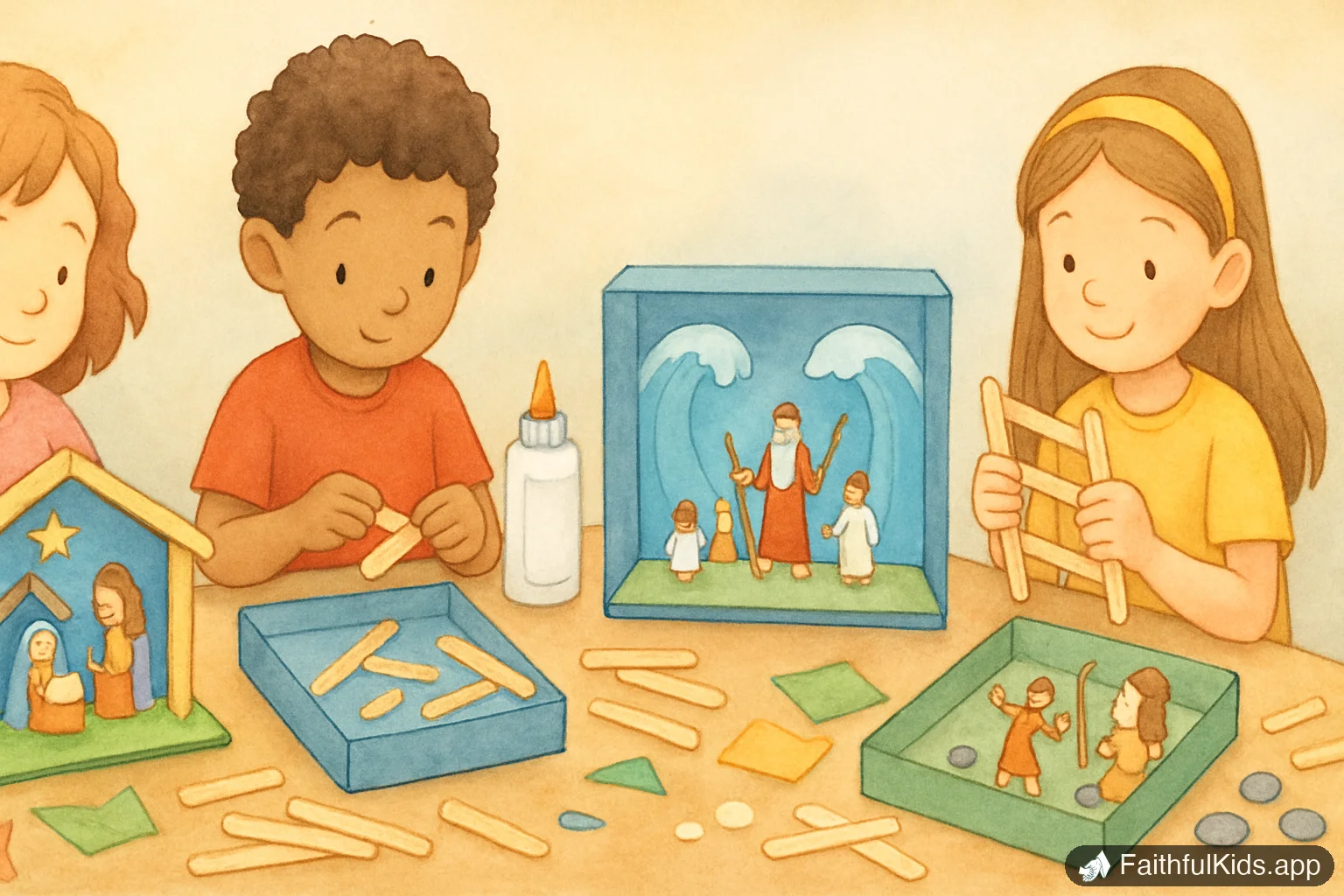
Put out building blocks or LEGO bricks with a challenge card: "Build the ark," "Build the walls of Jericho," "Build the empty tomb." Kids build while they wait, then explain their creation in one sentence when class begins. This one is gold for kids who arrive wound up -- their hands get busy and their bodies calm down.
4. Coloring Page Warm-Up
Keep a folder of coloring pages tied to the day's story on each table with a cup of crayons. It's the simplest opener on this list and it works every single week, especially for ages 4-7. If you want ready-made options, our roundup of Bible coloring pages for kids covers where to find good ones by story.
5. The Mystery Bag
Place an object related to today's lesson inside a cloth bag -- a toy sheep for the lost sheep, a smooth stone for David, a small jar for the widow's oil. Kids feel the bag (no peeking) and write their guess on a slip of paper. Reveal the object when the lesson starts. Instant curiosity about the story before you've said a word.
Welcome Questions and Icebreakers (6-9)
These work best once most kids have arrived, as the bridge between free play and the lesson.
6. High-Low-Hallelujah
Go around the circle and have each child share one high from the week, one low, and one "hallelujah" -- something they're thankful to God for. Keep it fast (10 seconds per kid) and always allow a "pass." Over time, this becomes the routine kids remember most, because it tells them their real life matters in this room.
7. This or That: Bible Edition
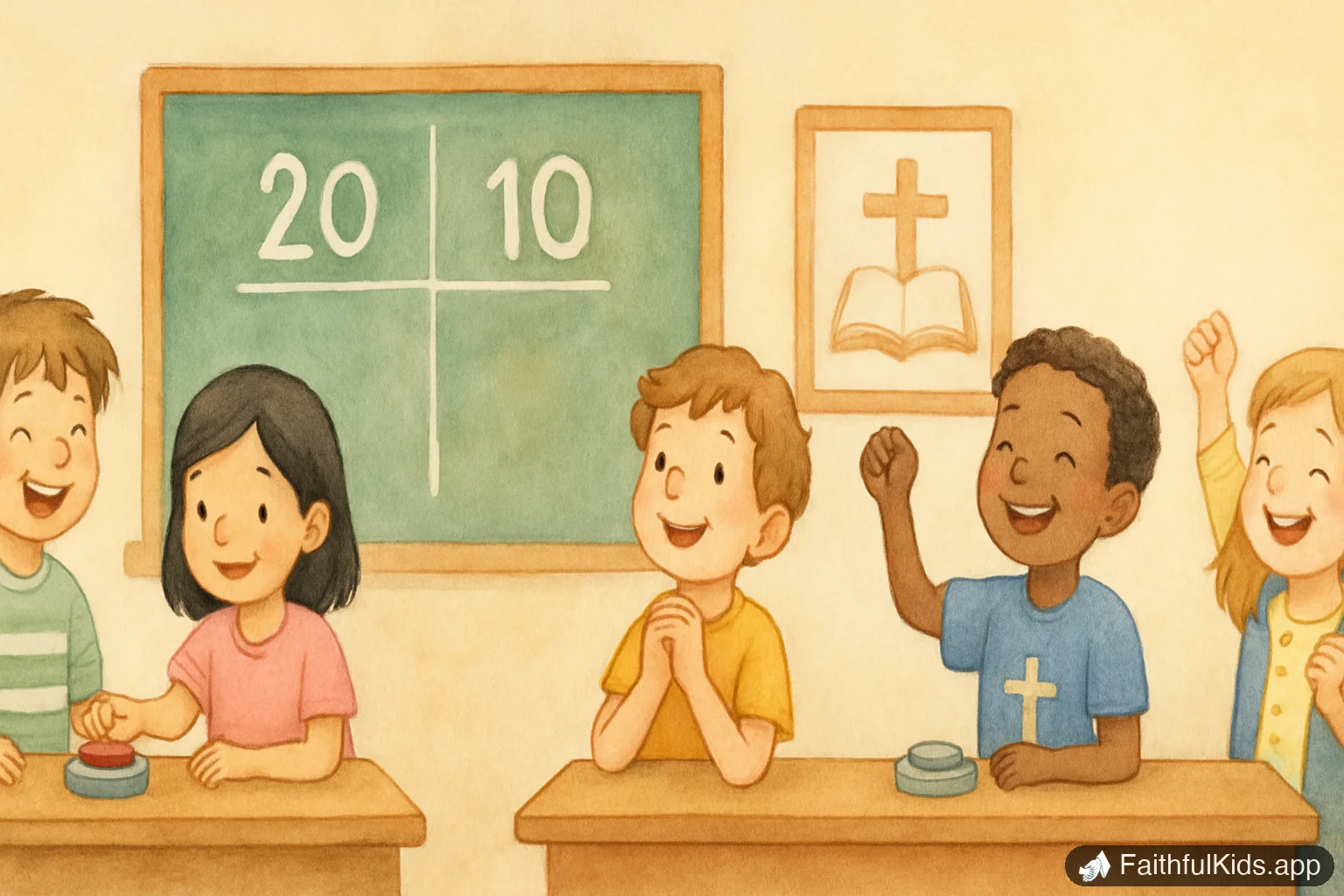
Call out two options and have kids move to one side of the room or the other: "Ark or fiery furnace? Loaves or fishes? Shepherd or king?" Ask one or two kids why they chose their side. It's loud, fast, physical, and requires zero materials -- perfect for burning off wiggles.
8. Riddle of the Week
Open with one Bible riddle and let kids shout guesses: "I was thrown in a pit, sold by my brothers, and ended up ruling Egypt. Who am I?" Kids beg for these week after week. Our collection of Bible riddles for kids has enough to last you a year of Sundays.
9. Two Truths and a Tale
Tell three short statements about a Bible character -- two true, one false -- and have kids vote on the fake. "Jonah ran from God. Jonah was swallowed by a great fish. Jonah was happy when Nineveh repented." (That last one is the tale -- Jonah pouted.) It reviews last week's story and previews this week's in under three minutes.
See what they get
Watch a Real Lesson From the App
Press play on Daniel in the Lions Den — a complete lesson exactly as your child sees it. 300+ episodes cover the whole Bible in order, each ending in a fun quiz to check what they learned.
A real lesson from the app — watch the whole thing free.
Opening Songs (10-12)
Music does something announcements can't: it synchronizes a room. You don't need a worship band -- a phone and a speaker will do.
10. The Same Welcome Song Every Week
Pick one upbeat song -- "This Little Light of Mine," "My God Is So Big," or "Father Abraham" -- and open with it every single week. The repetition isn't boring to kids; it's a signal. When the song starts, bodies find their spots and brains switch into Sunday school mode.
11. Action Song Freeze
Play a motion song and pause it randomly -- kids freeze in position until the music resumes. It's a song and a game at once, and it gives you a built-in way to practice "stop and listen," which pays off during the lesson. If your class responds well to movement, you'll find more ideas like this in our list of Sunday school games for kids.
12. Echo Verse Chant
Turn the memory verse into a call-and-response chant with claps or stomps: you say a phrase, kids echo it back. By the third week of the same verse, they own it. This doubles as memory work, so your opening minutes are quietly doing lesson work too.
Creative Attendance Ideas (13-15)
Taking attendance doesn't have to be a clipboard moment. Make it the fun part.
13. The Sticker Journey Map
Post a large map or poster showing a journey -- Egypt to the Promised Land, or Jerusalem to the ends of the earth. Each week, every child present adds a sticker to move the class forward. Attendance becomes a story the whole group is telling together, and kids who miss a week want to catch up on where the group "traveled."
14. Question Check-In
Instead of calling names, greet each child at the door with the same quick question and record their answer next to their name: "Pancakes or waffles?" "Lion or lamb?" You get attendance, kids get a personal greeting, and you get a small window into each child's personality that will help you teach them better.
15. The Offering of One Word
As kids sit down, each says one word describing how they feel today -- "sleepy," "excited," "hungry," "nervous." Jot the words by their names. It takes 90 seconds, counts everyone present, and tells you exactly who might need extra gentleness during the lesson. Then open in a short prayer that hands all those words to God.
How Do You Choose the Right Opener for Your Class?
Match the opener to your class size, age range, and energy level -- not to what looks cute on paper. Here's a quick guide:
Situation
Best openers
Ages 4-6
Coloring warm-up (4), welcome song (10), sticker map (13)
Ages 7-9
Mystery bag (5), riddle of the week (8), action song freeze (11)
Ages 10-12
Question board (1), two truths and a tale (9), high-low-hallelujah (6)
Kids arrive over 20+ minutes
Puzzle table (2), build the story (3), coloring warm-up (4)
High-energy class
This or that (7), action song freeze (11), echo chant (12)
Small class (under 8 kids)
High-low-hallelujah (6), question check-in (14), one word (15)
Whatever you pick, keep it consistent. Kids thrive on rhythm -- the same two or three openers repeated for a semester beat fifteen novelties rotated weekly. Save your creativity for the lesson itself; if you need story material, our guide to Bible stories for Sunday school is a good place to start. And once the opener has done its job, our full roundup of Sunday school activities for kids can carry you through the rest of the hour.
One more tip: openers work even better when they connect to what kids are learning at home. Several families in my class use the video lessons at Faithful Kids during the week, and kids who watched the story ahead of time arrive ready to answer the mystery bag or riddle before anyone else -- which motivates the rest of the class to keep up.
How long should Sunday school opening activities last?
Aim for 8-12 minutes total, ending 2-3 minutes after your last expected arrival. Any shorter and latecomers miss the lesson opening; any longer and early arrivals burn through their attention span before the Bible story starts. A good rhythm is 5-7 minutes of gathering activity, then 3-5 minutes of a whole-group opener like a song or riddle.
What is the best opening activity for kids who arrive at different times?
Join-anytime activities work best: a puzzle table, coloring pages, a building challenge, or a question board. These have no "start," so a child arriving 15 minutes late can participate just as fully as the first one through the door. Save whole-group openers like songs and icebreaker questions for after most kids have arrived.
Do opening activities need to connect to the Bible lesson?
No -- their first job is relational and behavioral, not educational. A silly this-or-that question that helps a shy child relax is doing important work even if it never mentions Scripture. That said, openers like the mystery bag or riddle of the week can preview the story and build curiosity, so connect them when it's easy and don't force it when it's not.
How do I settle kids down after a high-energy opener?
Use a consistent transition signal: dim the lights, start the same quiet song, or use a call-and-response ("God is good..." "All the time!"). Kids settle faster for rituals than for instructions. Also try scheduling energy strategically -- an active game followed by a seated, hands-on moment like the mystery bag steps energy down gradually instead of demanding an instant switch.
What if I only have one or two kids in class?
Shrink the openers rather than skipping them. High-low-hallelujah, the question of the day, and a puzzle work beautifully with two kids -- often better, because you can go deeper. Small classes are a gift for relationship-building; the routine still signals "Sunday school has started," which matters even for an audience of one.
Do I need a budget for opening activities?
No -- 12 of the 15 activities on this list use materials you already have or can print for free. The only purchases worth making are a Bible-story puzzle ($10-15), a bag of building blocks if your church has none, and stickers for the attendance map. Everything else runs on paper, crayons, a whiteboard, and a phone speaker.
🌙 Free: The Bedtime Bible Kit
Seven nights of five-minute stories — a story, a prayer, and one question to whisper about.
Free printable + a few helpful emails. Unsubscribe anytime.