Blog/8 Bible Lesson Plans for Elementary Kids (Ages 6-10)
Guide
8 Bible Lesson Plans for Elementary Kids (Ages 6-10)
Ages 5+·11 min read··By Faithful Kids Team·Updated August 20, 2026
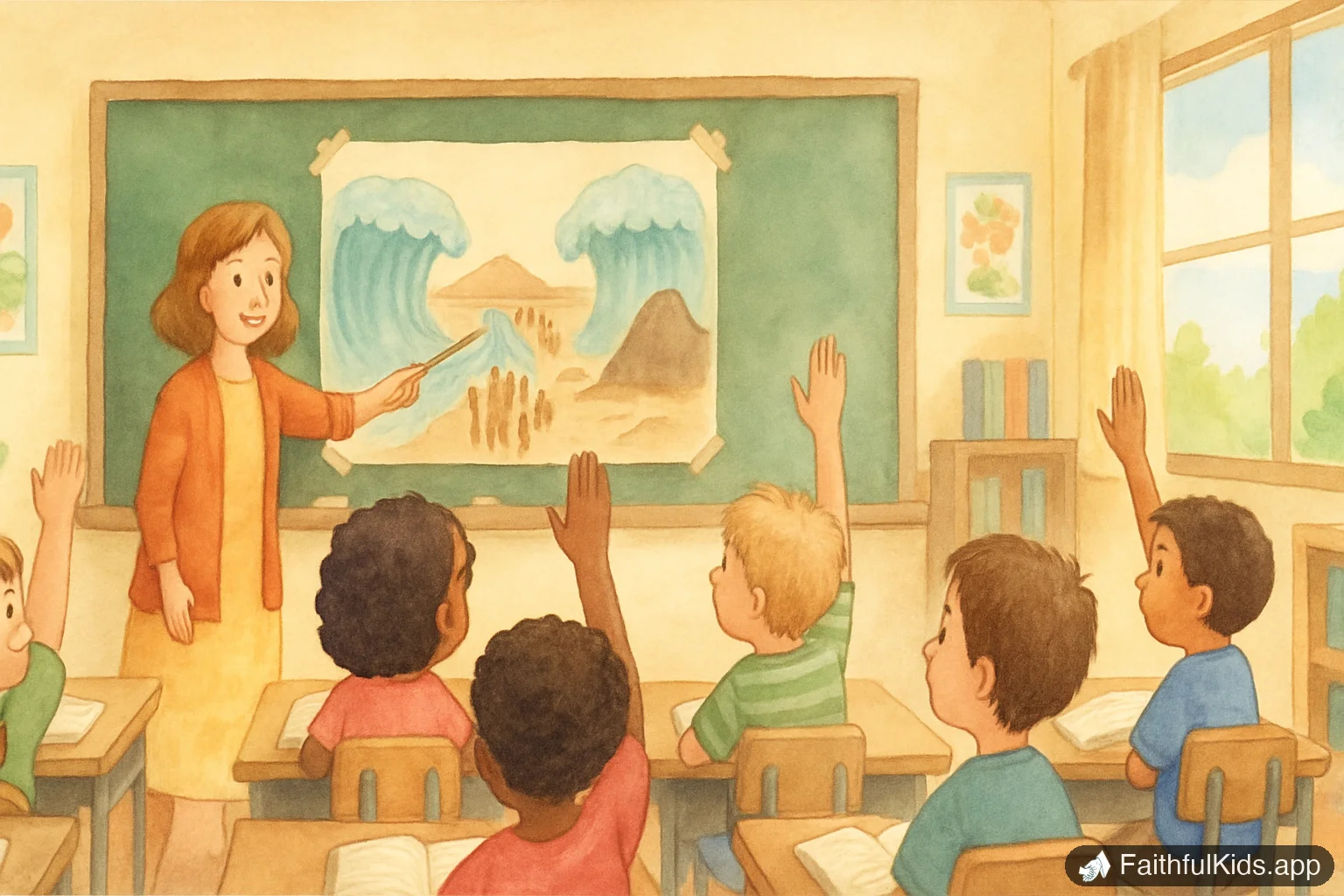
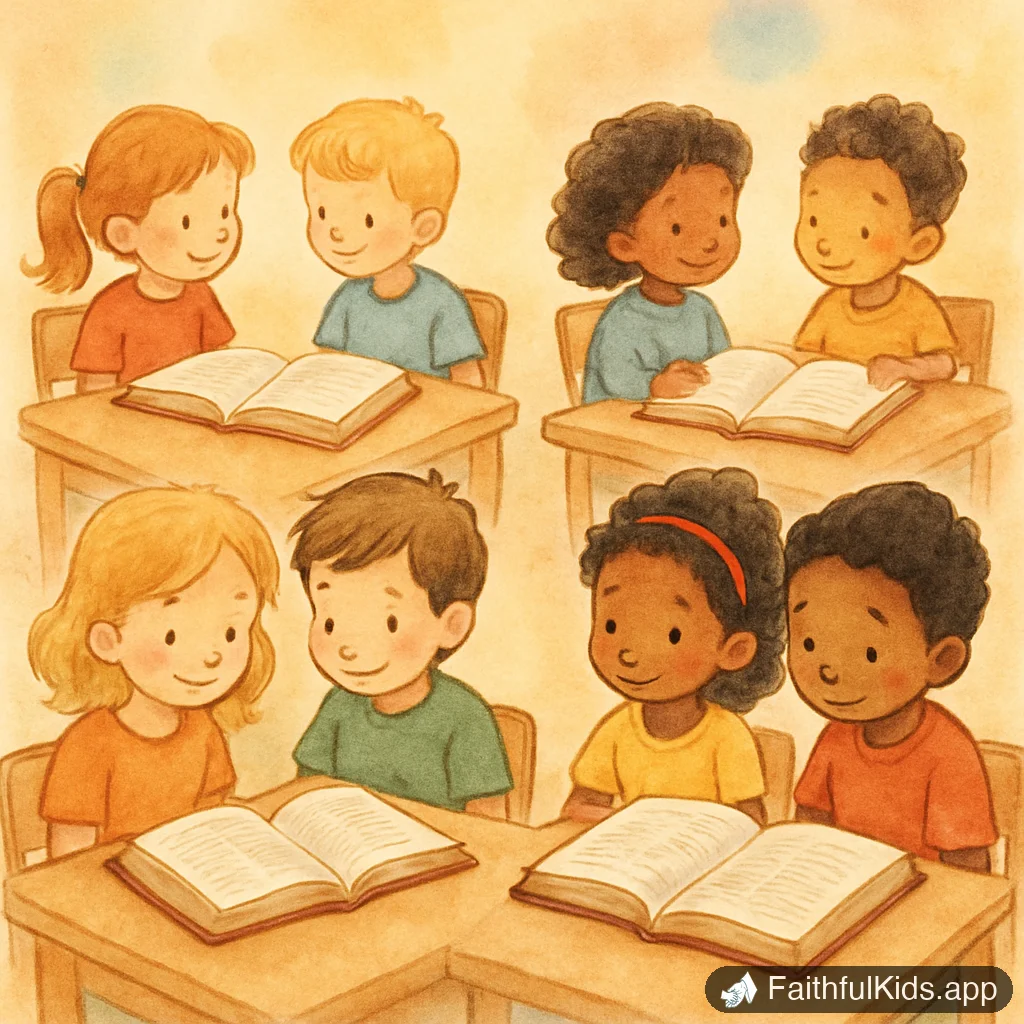
Here are 8 complete Bible lesson plans for elementary kids (ages 6-10), each with a clear objective, story passage, discussion questions, activity, and memory verse -- ready to teach with 15 minutes of prep or less. Each plan fills a 40-45 minute class and follows the same rhythm, so once you've taught one, you've learned the system. Nothing here sits behind a paywall either -- these eight join the rest of our no-cost lesson archive.
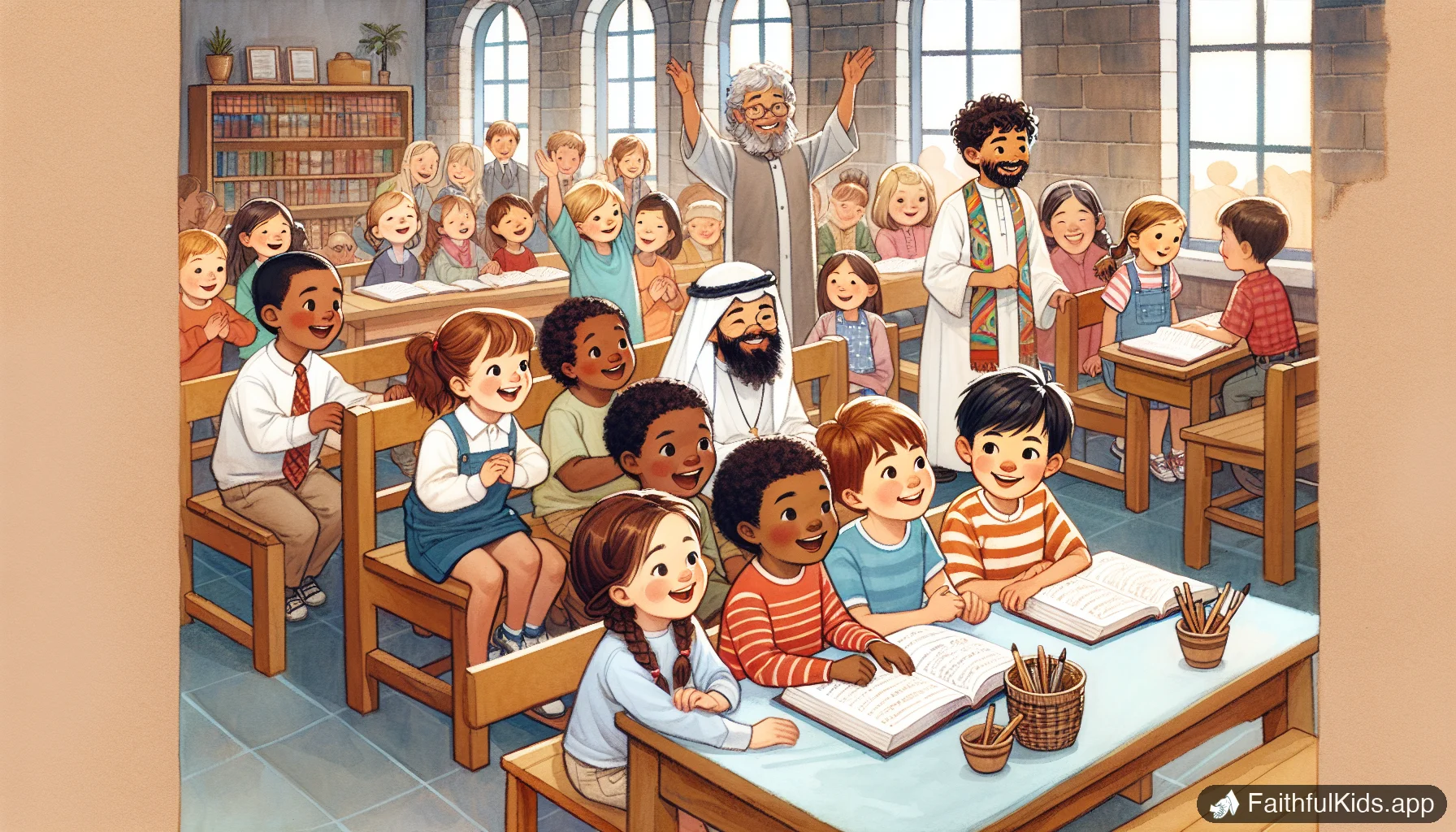
Elementary kids are the sweet spot of Sunday school. They can read, reason, and remember -- but they still think concretely, so every lesson below anchors its big idea to something kids can see, touch, or act out. If you teach a wide age range, aim your questions at the 8-year-olds and let the 6s and 10s meet you there.
The rhythm for every plan: Hook (5 min) → Story (10 min) → Discussion (10 min) → Activity (10 min) → Memory verse + prayer (5 min).
Lesson 1: God Keeps His Promises (Abraham)
Objective: Kids will explain that God always keeps His promises, even when they take a long time.
Story: Genesis 12:1-5 and 15:1-6. God promises Abraham a new land and descendants as numerous as the stars -- and Abraham believes, even though he's old and has no children yet.
Discussion questions:
Has anyone ever broken a promise to you? How did it feel?
Why was God's promise to Abraham hard to believe?
What's the difference between people's promises and God's promises?
Activity: Star count. Give each child a sheet of black paper and a white crayon or star stickers. Kids fill the page with stars while you time one minute -- then try to count them. (Too many! That was the point.) Write the memory verse across the stars.
Memory verse: "For no word from God will ever fail." -- Luke 1:37
Lesson 2: God Uses Unlikely People (David and Goliath)
Objective: Kids will identify one way God can use them even though they're young.
Story: 1 Samuel 17:32-50. The armies of Israel are paralyzed by a giant -- and the youngest brother, dismissed by everyone, wins the battle because he trusts God, not armor.
Discussion questions:
Why did everyone think David couldn't win?
David said he came "in the name of the Lord" (1 Samuel 17:45). What did he mean?
What's something grown-ups think kids can't do -- that you could actually do for God this week?
Activity: "Five smooth stones." Each child decorates five paper stones and writes on them one thing they can already do for God: help, share, pray, invite, encourage. Send the stones home in a snack bag.
Memory verse: "Don't let anyone look down on you because you are young." -- 1 Timothy 4:12
Lesson 3: Forgiveness Changes Everything (Joseph)
Objective: Kids will describe what Joseph's story teaches about forgiving people who hurt us.
Story: Genesis 37:12-28 and 50:15-21, told as one arc: brothers sell Joseph, God raises him up in Egypt, and years later Joseph forgives -- "You intended to harm me, but God intended it for good" (Genesis 50:20).
Discussion questions:
What reasons did Joseph have to stay angry?
What do you think was the hardest part about forgiving his brothers?
Is forgiving someone the same as saying what they did was okay? Why not?
Activity: The heavy backpack. Fill a backpack with books; each book has a sticky note reading "mad at my sister," "friend left me out," and so on. One child wears it while walking across the room -- then removes one book per "I forgive" statement. Kids feel the difference forgiveness makes.
Memory verse: "Forgive as the Lord forgave you." -- Colossians 3:13
Objective: Kids will name a fear and connect it to the truth that God is present in it.
Story: Daniel 6:1-23. Daniel keeps praying when prayer becomes illegal, spends a night with lions, and walks out untouched because "he had trusted in his God" (Daniel 6:23).
Discussion questions:
Daniel knew the law before he prayed. Why did he pray anyway -- with his windows open?
What do you think that night in the den actually felt like?
What's your "lions' den" -- a place or situation where it's hard to trust God?
Activity: Prayer windows. Kids fold paper into a window with opening shutters (like Daniel's open window), and inside write or draw one fear plus the words "God is with me here." Older kids can add a one-sentence prayer.
Memory verse: "When I am afraid, I put my trust in you." -- Psalm 56:3
Lesson 5: Jesus Sees People Others Ignore (Zacchaeus)
Objective: Kids will give one example of including someone who gets left out.
Story: Luke 19:1-10. A cheating tax collector everyone hates climbs a tree just to see Jesus -- and Jesus stops, calls him by name, and invites Himself to dinner. Zacchaeus's whole life turns around.
Discussion questions:
Why did the crowd grumble when Jesus went to Zacchaeus's house?
Jesus knew Zacchaeus's name before they met. What does that tell you?
Who gets "left out of the crowd" at your school? What would Jesus do at your lunch table?
Activity: Perspective drop. Have kids stand on a sturdy chair (spotted by you) and describe what they can see, then sit on the floor and describe the difference. Connect it: Zacchaeus climbed to see Jesus -- but the bigger deal was that Jesus looked up and saw him.
Memory verse: "The Son of Man came to seek and to save the lost." -- Luke 19:10
See what they get
Watch a Real Lesson From the App
Press play on Walking on Water — a complete lesson exactly as your child sees it. 300+ episodes cover the whole Bible in order, each ending in a fun quiz to check what they learned.
A real lesson from the app — watch the whole thing free.
Lesson 6: The Good Samaritan -- Who Is My Neighbor?
Objective: Kids will define "neighbor" the way Jesus did: anyone who needs my help.
Story: Luke 10:25-37. A man is beaten and left on the road; two religious leaders pass by, and the hero is the foreigner nobody expected -- the one who stopped.
Discussion questions:
Why do you think the priest and the Levite walked past?
The Samaritan spent his own money and time. What did helping cost him?
Jesus ended with "Go and do likewise." What does "likewise" look like on your street?
Activity: First-aid role play. Bring a basic first-aid kit. Kids act out the story in pairs -- one traveler, one Samaritan -- actually applying (unwrapped, pretend) bandages. Then brainstorm a class list: "Ways to be the one who stops."
Memory verse: "Love your neighbor as yourself." -- Mark 12:31
Lesson 7: The Lost Son and the Running Father
Objective: Kids will explain that God welcomes us back when we mess up -- gladly, not grudgingly.
Story: Luke 15:11-24. The younger son takes the money, wastes everything, and rehearses an apology on the road home -- but the father is already running toward him.
Discussion questions:
The son planned to ask to be a servant. What did the father do instead?
Why do you think the father was watching the road?
When you do something wrong, do you expect God to be more like a judge or like this father? What does this story say?
Activity: Welcome-home banner. As a class, make one big "WELCOME HOME" banner with handprints, then talk about who gets welcomed: everyone who comes back. Hang it on your classroom door for the next month.
Memory verse: "While he was still a long way off, his father saw him... and ran to his son." -- Luke 15:20
Lesson 8: Easter -- The Empty Tomb
Objective: Kids will state the central Christian claim in their own words: Jesus died and rose again.
Story: Luke 23:33-46 and 24:1-8, told carefully for this age: Jesus willingly died on the cross, was buried, and on the third day the tomb was empty. "He is not here; he has risen!" (Luke 24:6)
Discussion questions:
The women went to the tomb sad. What changed everything?
Why is the resurrection the most important part of the whole Bible?
If Jesus is alive, what difference does that make on a normal Wednesday?
Activity: Resurrection eggs, simplified. Six plastic eggs, each with one object: a leaf (Palm Sunday), bread (Last Supper), a cross shape, a nail, a stone, and one empty egg. Kids open them in order and retell the story from the objects -- the empty egg lands every time.
Memory verse: "He is not here; he has risen!" -- Luke 24:6
How Do You Adapt These Lesson Plans for Different Ages?
Adapt by shifting the discussion questions, not the story or activity. Six-year-olds answer "what happened" questions; ten-year-olds can handle "why" and "what would you do" questions -- so every discussion list above moves from concrete to reflective, and you simply stop at the level your room can reach. Here's a quick calibration guide:
What If You Run Out of Time -- or Have Time Left Over?
If you're short on time, cut the activity and keep the discussion; if you have extra time, add a review game. Discussion is where elementary kids actually process the story, so it's the last thing to sacrifice. For overflow minutes, keep two or three quick games in your back pocket -- our roundup of Sunday school games for kids has options that need zero supplies.
A tip many volunteer teachers have found useful: the animated video lessons at Faithful Kids cover these same core stories with a built-in quiz after each one, which makes them a ready-made curriculum supplement -- play the video as your story segment on the weeks you had no prep time, or point parents to it so the lesson gets a second repetition at home.
How long should an elementary Sunday school lesson be?
Plan 40-45 minutes of structured lesson: 5 for the hook, 10 for the story, 10 for discussion, 10 for the activity, and 5 for the memory verse and prayer. Elementary kids can go deeper than preschoolers, but they still need a change of pace every 10 minutes. If your class hour includes arrival and dismissal chaos, 45 minutes of real teaching is the honest maximum.
What order should I teach these lessons in?
Teach them in the order listed -- it moves from Old Testament (Abraham, David, Joseph, Daniel) to the Gospels (Zacchaeus, the parables, Easter), which quietly builds a timeline in kids' heads. That said, each lesson stands alone, so you can pull the Easter lesson forward in spring or swap freely around your church calendar.
How do I get quiet kids to participate in discussion?
Use pair-shares before whole-group questions: "Turn to the person next to you and answer, then we'll hear a few." Quiet kids will say to one friend what they'd never say to the room. Also try voting questions ("Thumbs up if you'd have been scared in the lions' den") -- every child participates with zero speaking required.
Do I need to be a Bible expert to teach these?
No -- each plan tells you exactly which passage to read, and reading it once during the week is sufficient prep. If a child asks a question you can't answer, say "Great question -- I'll find out and tell you next week," then ask your pastor or children's director. Kids trust teachers who are honest more than teachers who bluff.
How do I handle the crucifixion with 6-year-olds in the Easter lesson?
State it simply and truthfully without dwelling on physical detail: "Jesus died on the cross to take the punishment for our sins, and three days later God raised Him from the dead." Keep the emotional center on the empty tomb, not the suffering. Six-year-olds can hold "Jesus died and came back to life" -- graphic detail can wait for older ages.
What supplies do I need for all 8 lessons?
Everything here uses standard supply-closet items: construction paper, crayons, sticky notes, a backpack and books, plastic eggs, a first-aid kit, and star stickers. Total cost if you're buying from scratch is under $25, and nothing requires advance ordering. Each lesson's prep is 15 minutes or less, mostly reading the passage and gathering materials. If you'd rather hand kids something ready-made than cut and glue, our printable Bible study sheets cover the same stories and need nothing but a printer.
🌙 Free: The Bedtime Bible Kit
Seven nights of five-minute stories — a story, a prayer, and one question to whisper about.
Free printable + a few helpful emails. Unsubscribe anytime.