Here is a full year of Sunday school lessons for kids: 52 weekly outlines that walk children straight through the Bible from Genesis to Revelation, each with an objective, a scripture passage, and a one-paragraph story summary. Print this page, drop the weeks onto your church calendar, and you have a curriculum -- free, non-denominational, and built for volunteer teachers with limited prep time.
The plan is split into four quarters of 13 weeks. Quarters 1 and 2 cover the Old Testament, quarters 3 and 4 cover the life of Jesus and the early church. Every week links to a full story write-up you can read in five minutes before class, so your prep is: read the story, pick a question, grab the supplies.
How Do You Use This 52-Week Sunday School Curriculum?
Use it as a spine, not a script: teach the weeks in order, and hang your own hook, activity, and craft on each one. The value of a sequential year is that kids stop hearing the Bible as a pile of disconnected stories and start hearing one story. By week 20 they will tell you what comes next, which is exactly what you want.
The rhythm that works for most rooms:
Hook (5 min) → Story (10 min) → Discussion (10 min) → Activity (10 min) → Memory verse and prayer (5 min).
For ages 3-5 shorten everything and cut the discussion block -- our Sunday school lessons for preschoolers show that shorter shape. For ages 6-10, our Bible lesson plans for elementary give eight of these weeks in full teaching detail so you can see how one outline expands. For middle and high school, see Sunday school lessons for teens. And if you want additional free curriculum to blend in, we compared the best sources in where to find free Sunday school lessons.
Three questions that work for any week
You do not need a custom question list for all 52 weeks. These three carry almost any story:
- What happened in this story? (Retell it, oldest kid first.)
- What does this show us about God -- what is He like here?
- What is one thing you would do differently this week because of it?
An activity bank you can rotate
Rotate five activity types so you never run dry: act it out (assign parts, no props), draw the moment (fold paper in half: before and after), freeze frame (groups build a still picture of the key scene), object lesson (one household item that makes the truth physical), and review game (see our Sunday school games for kids for zero-supply options).
Quarter 1: In the Beginning (Weeks 1-13)
Genesis and the start of Exodus -- creation, the fall, and God building a family He promised to rescue. Quarter memory verse: "In the beginning God created the heavens and the earth." -- Genesis 1:1
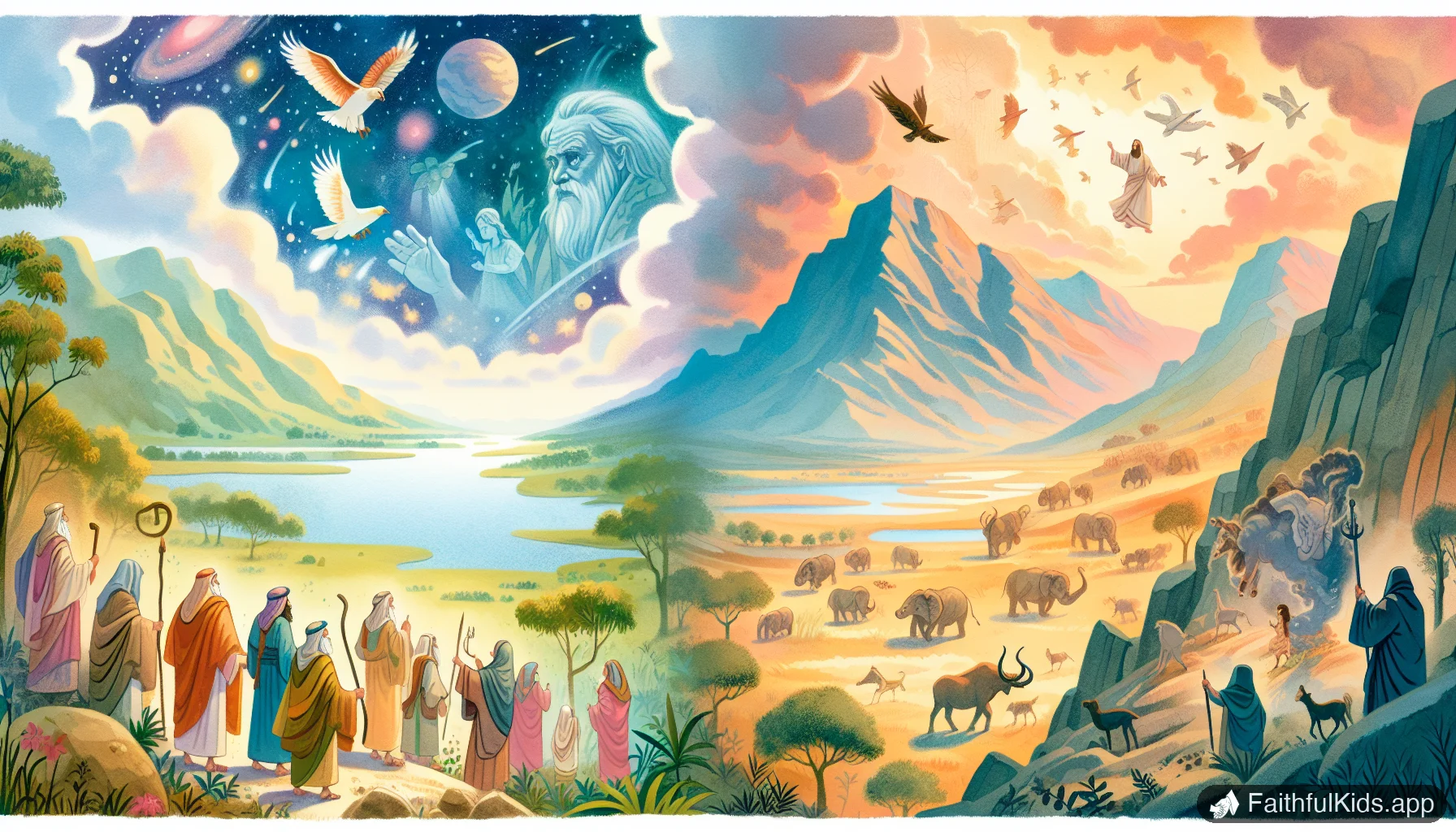
- Week 1 -- Creation. Genesis 1:1-2:3. God speaks light, sky, seas, animals, and finally people into being, then rests. Objective: kids can say that God made everything, including them, and called it good.
- Week 2 -- The Garden and the Fall. Genesis 3. Adam and Eve trust the serpent over God, eat what was forbidden, and everything breaks -- but God still covers them. Objective: kids can define sin as choosing our way over God's.
- Week 3 -- Cain and Abel. Genesis 4:1-16. Jealousy grows into violence, and God warns Cain that sin is "crouching at your door." Objective: kids can name one feeling that needs handling before it grows.
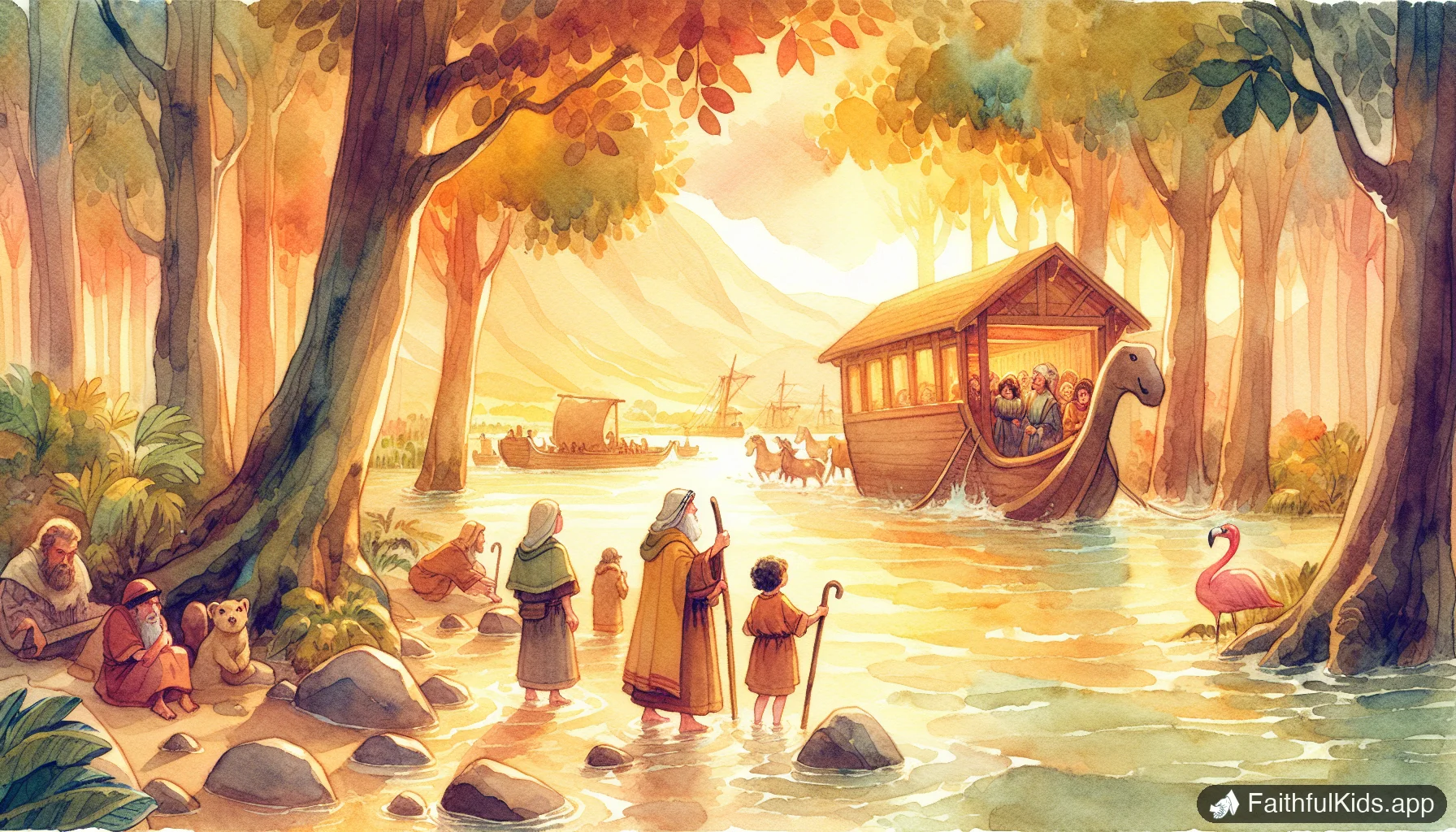
- Week 4 -- Noah and the Great Flood. Genesis 6-9. Noah builds a boat with no rain in sight, God rescues his family and the animals, and a rainbow seals the promise. Objective: kids can explain that obeying God sometimes looks strange to everyone else.
- Week 5 -- The Tower of Babel. Genesis 11:1-9. People build a tower to make a name for themselves; God scatters them and gives them different languages. Objective: kids can contrast making our own name great with trusting God's name.
- Week 6 -- God Calls Abraham. Genesis 12:1-9. God tells Abram to leave everything familiar for a land he has never seen, and promises to bless the whole world through him. Objective: kids can describe faith as going before you can see.
- Week 7 -- Abraham and Isaac. Genesis 22:1-19. Abraham's hardest test ends with God providing a ram in the thicket. Handle gently and keep the focus on God's provision. Objective: kids can say that God provides what He asks for.
- Week 8 -- Jacob and Esau. Genesis 25:27-34; 27; 33:1-11. A stolen blessing splits two brothers for twenty years -- until Esau runs to hug the brother who cheated him. Objective: kids can describe what reconciliation looks like.
- Week 9 -- Joseph the Dreamer. Genesis 37. A favored son with big dreams is thrown in a pit and sold by his own brothers. Objective: kids can name a time being treated unfairly did not mean God had left.
- Week 10 -- Joseph from Prison to Palace. Genesis 41; 45; 50:15-21. Joseph rises to second in Egypt and forgives his brothers: "You intended to harm me, but God intended it for good." Objective: kids can state that forgiving is not pretending the wrong did not happen.
- Week 11 -- A Baby in a Basket. Exodus 1:22-2:10. Moses's mother hides him in a river basket, and Pharaoh's own daughter raises him. Objective: kids can say God protects His people in ways nobody expects.
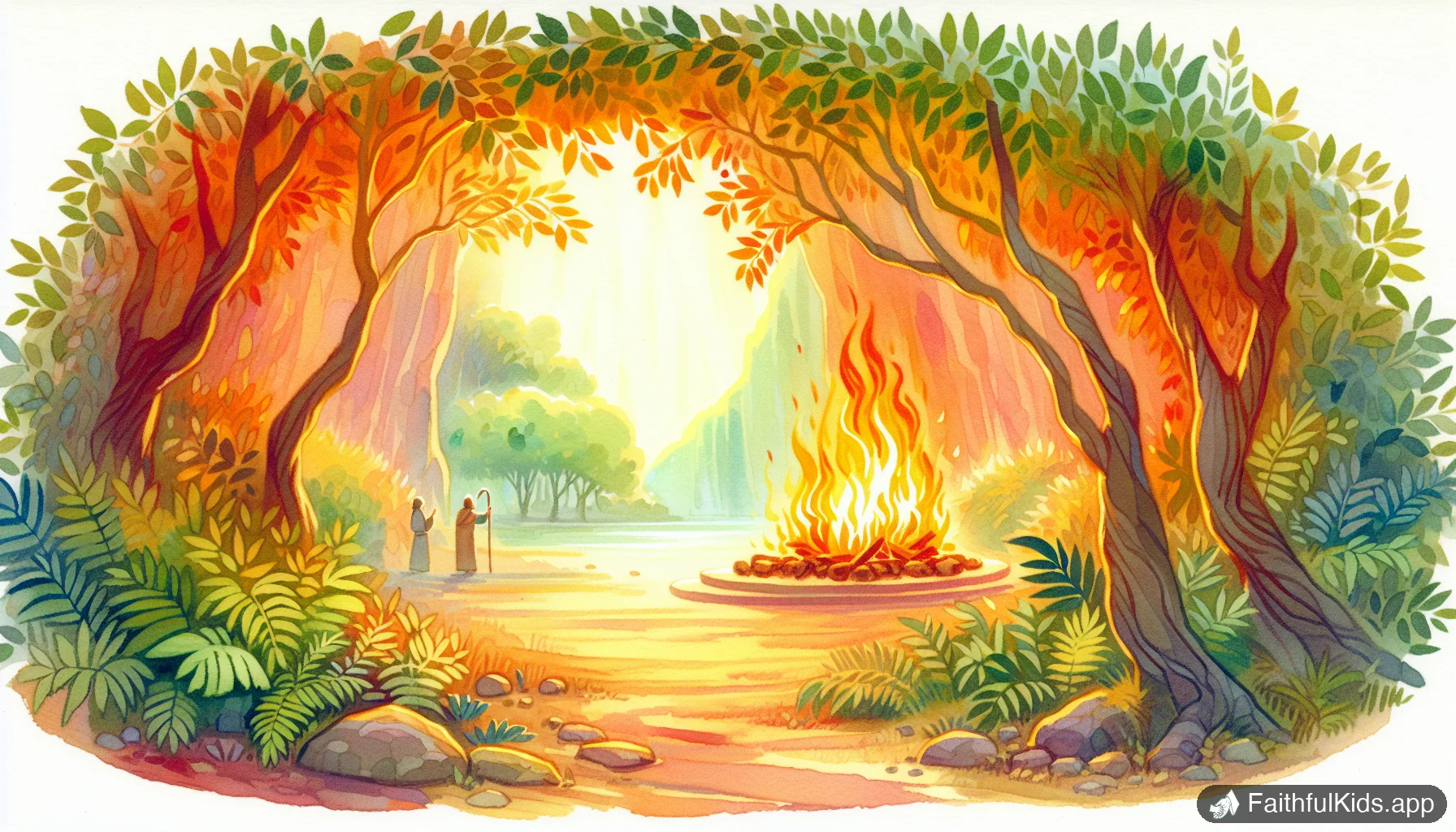
- Week 12 -- The Burning Bush. Exodus 3:1-15. God calls a fugitive shepherd from a bush that burns without burning up, and gives His name: I AM. Objective: kids can explain that God calls people who feel unqualified.
- Week 13 -- Let My People Go. Exodus 5-11 (survey). Moses confronts Pharaoh, plague after plague, until Egypt finally lets Israel go. Objective: kids can explain that God hears people who are suffering.
Quarter 2: Rescue, Law, and Kings (Weeks 14-26)
From the Passover to the prophets -- how God formed a rescued people and gave them a king. Quarter memory verse: "Be strong and courageous... for the Lord your God will be with you wherever you go." -- Joshua 1:9
- Week 14 -- The Passover. Exodus 12:1-30. Lamb's blood on the doorframes means death passes over. This is the picture the whole Bible keeps coming back to. Objective: kids can describe why Passover is remembered every year.
- Week 15 -- Crossing the Red Sea. Exodus 14. Trapped between the army and the water, Israel walks through on dry ground. Objective: kids can name a dead end where they need God to make a way.
- Week 16 -- Manna from Heaven. Exodus 16. Bread appears every morning -- exactly enough for one day, never enough to hoard. Objective: kids can explain daily dependence on God.
- Week 17 -- The Ten Commandments. Exodus 20:1-17. God gives His rescued people ten rules for loving Him and loving each other. Objective: kids can sort the ten into "loving God" and "loving people."
- Week 18 -- The Golden Calf. Exodus 32:1-20. Impatient at the bottom of the mountain, Israel melts its jewelry into a god it can see. Objective: kids can define an idol as anything we trust more than God.
- Week 19 -- The Twelve Spies. Numbers 13-14. Twelve scouts see the same land; ten see giants, two see God. Objective: kids can contrast fear-shaped and faith-shaped reporting of the same facts.
- Week 20 -- The Walls of Jericho. Joshua 6 (with Rahab, Joshua 2). Seven days of marching, one shout, and the walls fall. Objective: kids can describe obedience that looks pointless until it works.
- Week 21 -- Gideon's 300. Judges 7. God shrinks an army from 32,000 to 300 so nobody can claim the credit. Objective: kids can explain why God often uses less instead of more.
- Week 22 -- Ruth. Ruth 1-4. A foreign widow refuses to leave her mother-in-law and ends up in the family line of Jesus. Objective: kids can define loyalty and name someone who needs theirs.
- Week 23 -- God Calls Samuel. 1 Samuel 3. A boy hears his name in the night and finally answers, "Speak, for your servant is listening." Objective: kids can name one way they can listen to God this week.
- Week 24 -- David and Goliath. 1 Samuel 17:32-50. The youngest brother, dismissed by everyone, wins because he comes in the name of the Lord. Objective: kids can say that God can use them at their current age.
- Week 25 -- Solomon Asks for Wisdom. 1 Kings 3:1-15. Offered anything, the new king asks for a discerning heart -- and God gives him more than he asked. Objective: kids can identify something worth wanting more than stuff.
- Week 26 -- Fire from Heaven. 1 Kings 18:16-39. Elijah faces 450 prophets on Mount Carmel and God answers with fire. Objective: kids can explain what it means that "the Lord -- He is God."
Swap-ins for this quarter if your calendar shifts or you want more weeks: Deborah, Samson, Daniel in the Lions' Den, The Fiery Furnace, Esther Saves Her People, Jonah Running from God, and Rebuilding the Walls with Nehemiah.
Quarter 3: The Life of Jesus (Weeks 27-39)
Birth through ministry -- who Jesus is, and what He taught. Quarter memory verse: "For God so loved the world that he gave his one and only Son." -- John 3:16
- Week 27 -- An Angel Visits Mary. Luke 1:26-38. Gabriel tells a teenage girl she will carry the Son of God, and she says yes. Objective: kids can describe saying yes to God before understanding the whole plan.
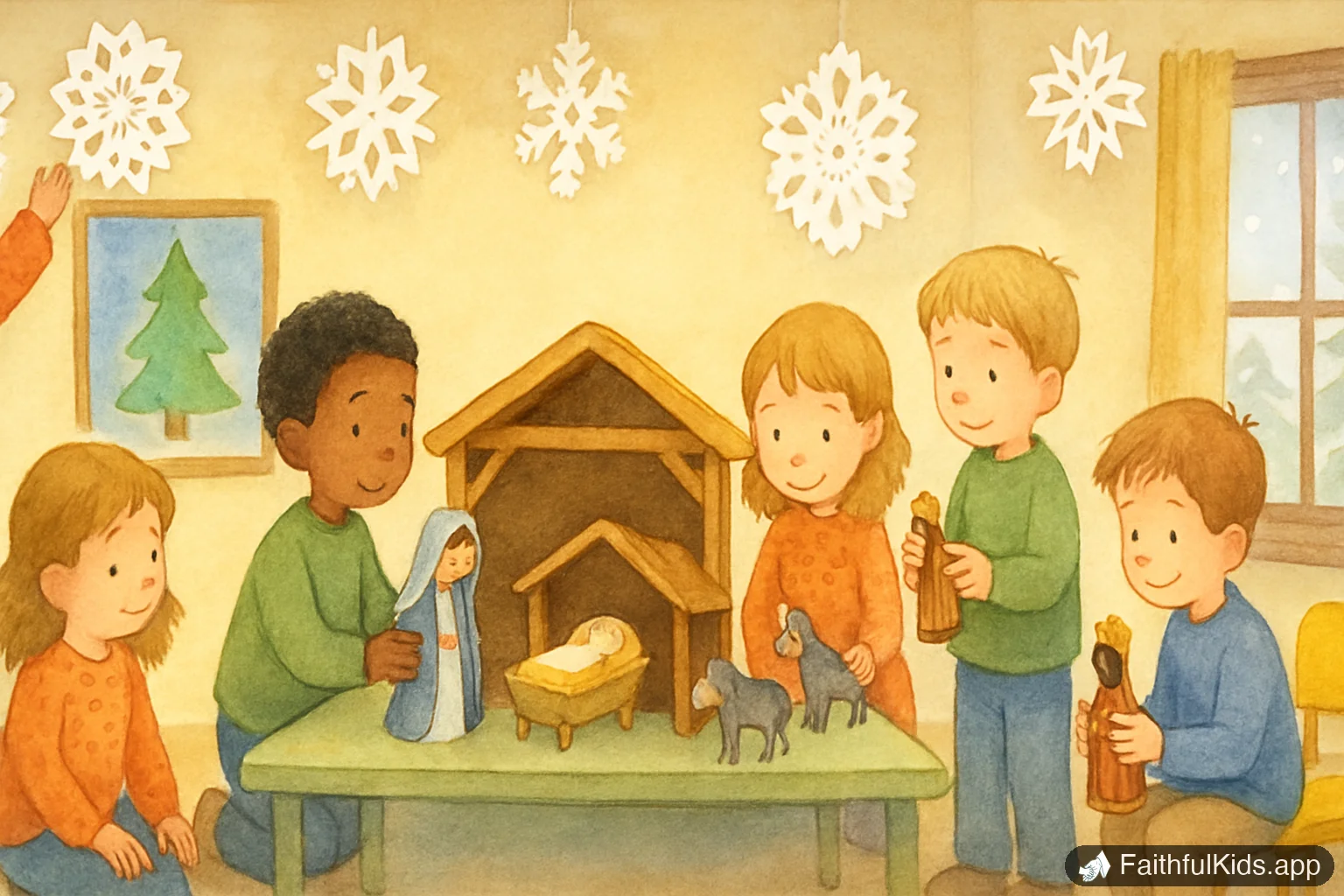
- Week 28 -- Born in a Manger. Luke 2:1-20. No room at the inn; the King of the world is born in a stable and announced to shepherds. Objective: kids can explain why God chose the humblest arrival possible.
- Week 29 -- The Wise Men. Matthew 2:1-12. Scholars from far away follow a star, worship a toddler, and go home another way. Objective: kids can name what it looks like to worship Jesus with what they have.
- Week 30 -- Young Jesus in the Temple. Luke 2:41-52. At twelve, Jesus stays behind to talk with the teachers: "I had to be in my Father's house." Objective: kids can say that Jesus was once their age.
- Week 31 -- The Baptism of Jesus. Matthew 3:13-17. Jesus is baptized, the Spirit descends, and the Father speaks: "This is my Son, whom I love." Objective: kids can state that God's love comes before anything we accomplish.
- Week 32 -- Temptation in the Desert. Matthew 4:1-11. Forty days hungry, three temptations, three answers from Scripture. Objective: kids can name one verse to use when they are tempted.
- Week 33 -- The Four Fishermen. Matthew 4:18-22. "Come, follow me" -- and ordinary fishermen leave their nets that same hour. Objective: kids can describe what following Jesus costs and gives.
- Week 34 -- Calming the Storm. Mark 4:35-41. The disciples panic; Jesus speaks three words and the lake goes flat. Objective: kids can name a storm in their own life and who is in the boat.
- Week 35 -- Feeding the Five Thousand. John 6:1-14. One boy's lunch feeds a crowd with twelve baskets left. Objective: kids can explain that Jesus does big things with small offerings.
- Week 36 -- The Good Samaritan. Luke 10:25-37. Two religious men walk past; the outsider stops and pays. Objective: kids can define "neighbor" as anyone who needs help.
- Week 37 -- The Lost Sheep. Luke 15:3-7. The shepherd leaves ninety-nine to find one, then throws a party. Objective: kids can say that God comes looking for people.
- Week 38 -- The Prodigal Son. Luke 15:11-32. A son wastes everything and comes home to a father already running down the road. Objective: kids can describe how God receives people who come back.
- Week 39 -- The Sower and the Seeds. Matthew 13:1-23. The same seed, four soils, four outcomes. Objective: kids can identify what kind of soil their own heart is right now.
Quarter 4: The Cross, the Church, and Forever (Weeks 40-52)
Holy Week through Revelation -- the center of the Christian faith and how the story ends. Quarter memory verse: "He is not here; he has risen!" -- Luke 24:6
- Week 40 -- The Raising of Lazarus. John 11:1-44. Jesus weeps at a friend's grave, then calls him out of it. Objective: kids can say that Jesus is sad about death and stronger than it.
- Week 41 -- The Triumphal Entry. Matthew 21:1-11. A king arrives on a donkey to shouts of "Hosanna!" Objective: kids can contrast the king people wanted with the king who came.
- Week 42 -- The Last Supper. Luke 22:7-20. Bread and cup, "do this in remembrance of me," on the night before the cross. Objective: kids can explain what communion remembers.
- Week 43 -- The Garden of Gethsemane. Matthew 26:36-46. Jesus prays in agony, "not as I will, but as you will." Objective: kids can describe honest prayer that still trusts God.
- Week 44 -- Peter Denies Jesus. Luke 22:54-62. Three denials, a rooster, and a look that breaks Peter's heart. Objective: kids can say that failing badly is not the end of the story.
- Week 45 -- The Cross. Luke 23:32-49. Jesus dies in our place. Keep the detail plain and the meaning central. Objective: kids can state in their own words why Jesus died.
- Week 46 -- The Empty Tomb. Luke 24:1-12. The stone is rolled away and the grave clothes are folded: He has risen. Objective: kids can state the central Christian claim in one sentence.
- Week 47 -- The Road to Emmaus. Luke 24:13-35. Two travelers walk with the risen Jesus and recognize Him at dinner. Objective: kids can explain that Jesus is in the whole Bible, not just the Gospels.
- Week 48 -- Peter Is Restored. John 21:1-19. Three questions on a beach undo three denials: "Feed my sheep." Objective: kids can describe restoration after failure.
- Week 49 -- The Great Commission. Matthew 28:16-20; Acts 1:6-11. Jesus gives the job and the promise, then ascends. Objective: kids can name one person they could tell about Jesus.
- Week 50 -- The Day of Pentecost. Acts 2:1-41. Wind, fire, languages, and 3,000 believers in a day -- the church is born. Objective: kids can say who the Holy Spirit is and what He does.
- Week 51 -- Saul Meets Jesus. Acts 9:1-19. The church's fiercest enemy is blinded on the Damascus road and becomes its greatest missionary. Objective: kids can say that nobody is too far gone for God.
- Week 52 -- A New Heaven and New Earth. Revelation 21:1-7. No more death, no more crying, God living with His people forever. Objective: kids can describe how the story ends -- with God making everything new.
What If You Miss Weeks or Your Class Rotates?
If you miss weeks, skip forward rather than falling behind -- each outline stands alone. Most churches lose four to six Sundays a year to holidays, camps, and family services, which is why 52 weeks of material realistically covers 13 months of teaching. Keep a running list of the weeks you skipped and use them as filler Sundays in the summer.
If your class rotates teachers, print the whole quarter and hand it to every volunteer at the start. The single biggest reason kids' curriculum falls apart is that the substitute has no idea what happened last week. A shared one-page list solves it.
Many teachers also use short animated video lessons as their story segment on the weeks prep did not happen -- the videos at Faithful Kids cover most of the stories above and follow each one with a quiz, which doubles as your review game and gives families a way to repeat the lesson at home.
Print the Trivia Pack for Review Sundays
At the end of each quarter, teach a review week instead of a new story. Our free Bible Trivia Pack is built for exactly this: 100 questions sorted into easy, medium, and hard rounds, every answer with its Scripture reference. Print it once, split the room into teams, and you have four review Sundays covered with zero prep.
There is a screen version too: our free Bible trivia for kids deals a random ten-question round on any device.
Pair this with a Bible word search puzzle — Noah, Christmas, Easter, David and Goliath and more.
When the lesson lands early and twenty minutes remain, a page of youth group games by group size is the fastest save.
Planning a whole year on no budget? Our roundup of free Bible curriculum for kids ministry lists the genuinely free programs, vendor-verified.
Our books of the Bible in order printable pack (chart, flashcards, bookmarks) turns book-finding into a game worth drilling.
Frequently Asked Questions
Are these Sunday school lessons for kids really free?
Yes -- every one of the 52 outlines above is free to read, print, and teach, with no sign-up, login, or license fee. You may copy them for your volunteers and your church. If you want additional free curriculum from other publishers, we reviewed the best sources honestly in our guide to free Sunday school lessons.
What age range do these 52 lessons work for?
They are written for roughly ages 5-11, the standard Sunday school range, with the objectives aimed at 8-year-olds. Younger classes should keep the story and drop the abstract objective; older classes should keep the objective and add a "why does this matter" question. For a true preschool version of the same stories, use our preschool lessons, and for teens use our teen lessons.
How long does each weekly lesson take to teach?
Each outline fills a 40-45 minute class using the hook-story-discussion-activity-verse rhythm, and can be compressed to 20 minutes by cutting the activity and shortening discussion. The story segment itself should stay at 10 minutes or less regardless of how long your hour is. If your class runs 30 minutes, drop the hook and the activity, and keep the discussion.
Do I need to teach the 52 weeks in order?
Order helps but is not required. Teaching straight through builds a timeline in kids' heads that they carry for life, which is the main argument for a sequential year. That said, most churches pull the Christmas and Easter weeks forward to match the calendar -- weeks 27-29 and weeks 45-46 are designed to move without breaking anything around them.
What supplies do I need for a full year?
Standard supply-closet items cover the entire year: construction paper, crayons or markers, glue sticks, scissors, paper plates, cotton balls, masking tape, and a few household objects for object lessons. Nothing in this plan requires ordering a kit. Budget roughly $30 for a class of ten if you are stocking from empty.
How do I handle hard stories like Abraham and Isaac or the crucifixion?
State what happened truthfully and briefly, then spend your time on what it means rather than on the detail. For Abraham and Isaac, the landing point is "God provided the sacrifice" (Genesis 22:14), not the knife. For the cross, say "Jesus died to take the punishment for our sins, and three days later God raised Him," and put the emotional weight on the empty tomb. If a child asks a follow-up you cannot answer, say so and follow up next week.